
Best Hydroponic Fertilizer for Vegetables: Brand Guide
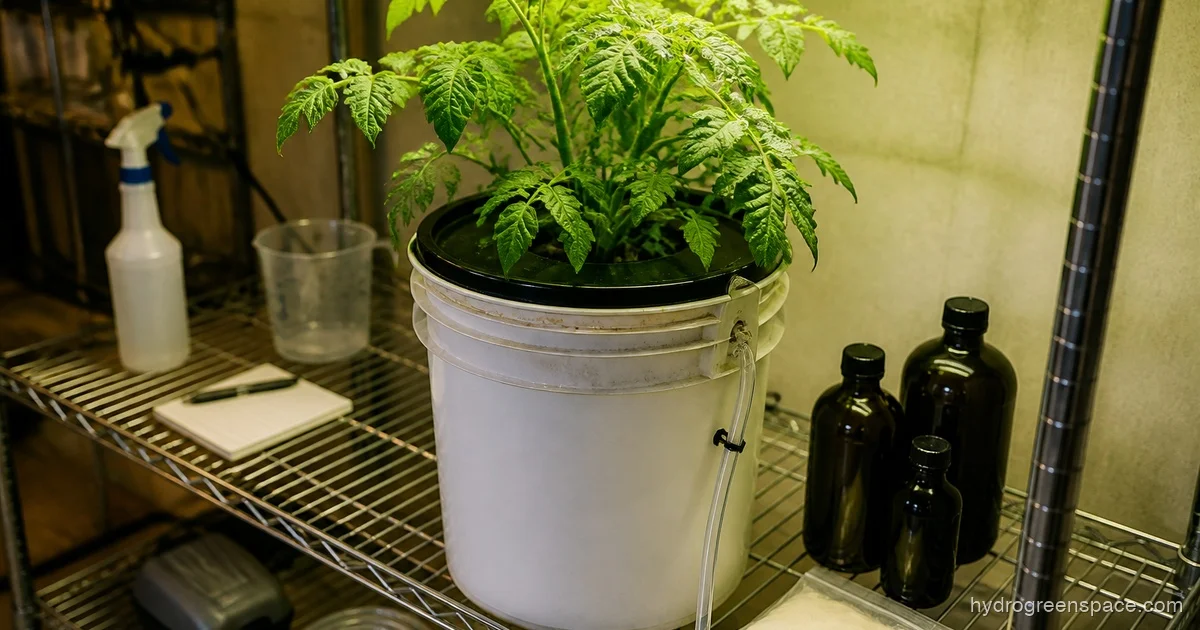
Choosing the right hydroponic fertilizer for vegetables comes down to three questions: Which brand actually performs, how much does it cost per gallon over a full season, and does liquid or powder make more sense for your setup? The internet gives you a lot of opinions on the first question and almost none on the second two.
I’ve grown tomatoes, lettuce, peppers, and cucumbers across DWC, NFT, and ebb-and-flow systems using every major brand on this list. Some I stick with. Some I tried once and never bought again. This breakdown covers actual cost-per-gallon numbers alongside real performance differences so you know what you’re actually spending before you buy.
If you want a deeper look at what goes into a complete nutrient solution, the best hydroponic nutrients for vegetables guide covers the science side in detail. This article is about which brand to buy and why.
| Fertilizer | Best For | Type | Budget |
|---|---|---|---|
| Masterblend 4-18-38 | Fruiting vegetables | Powder | $ |
| GH Flora Series | All crops, DWC | Liquid | $$ |
| Fox Farm Trio | Coco/media grows | Liquid | $$ |
| Advanced Nutrients pH Perfect | pH-sensitive setups | Liquid | $$$ |
| GH MaxiGro/MaxiBloom | Leafy greens, beginners | Powder | $ |
The Cost-Per-Gallon Reality Check
Before comparing brands, you need to see what fertilizer actually costs at the reservoir level. Sticker prices are misleading. A $30 liquid bottle and a $25 powder bag can be worlds apart in what they cost per gallon of finished solution.
| Fertilizer | Format | Package Cost | Yield | Cost Per Gallon |
|---|---|---|---|---|
| Masterblend Combo Kit | Powder (3-part) | ~$25–30 | 200+ gal | ~$0.02–0.05 |
| GH MaxiGro / MaxiBloom | Powder (2-part) | ~$15–20 each | ~100–150 gal | ~$0.10–0.15 |
| GH Flora Series (3-part) | Liquid | ~$35–45 | ~60–80 gal | ~$0.45–0.75 |
| Fox Farm Trio | Liquid (3-part) | ~$50–60 | ~30–40 gal | ~$1.25–2.00 |
| Advanced Nutrients pH Perfect | Liquid | ~$40–50 | ~25–40 gal | ~$1.00–2.00 |
| General Organics GO Box | Organic liquid | ~$70–90 | ~25–35 gal | ~$2.00–3.60 |
These are rough estimates based on standard home reservoir usage at typical EC targets. Your actual yield per package will vary based on how strong you mix and how often you refresh your reservoir. But the order of magnitude differences hold up, and they matter if you’re growing regularly.
General Hydroponics Flora Series vs. Fox Farm Trio
These two are the most commonly compared liquid nutrient systems for vegetable growing, and the comparison usually gets answered with “they’re about the same.” They’re not.
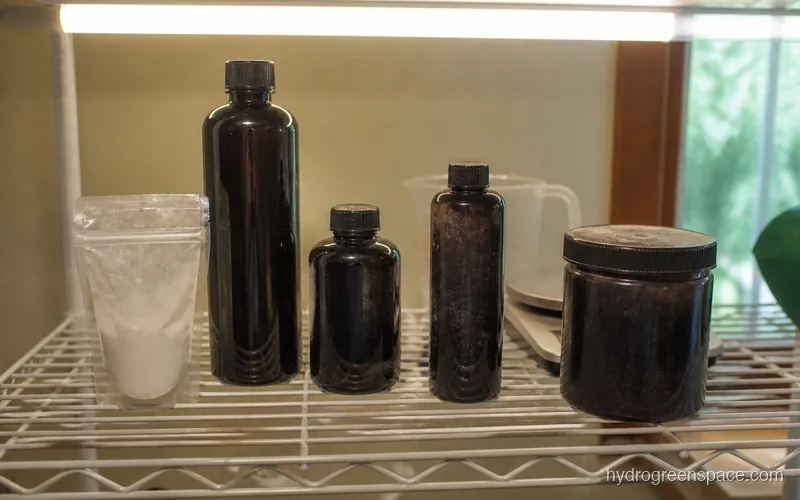
The Flora Series is a 3-part liquid system (FloraGro, FloraBloom, FloraMicro) designed for precise stage-by-stage feeding. The FloraMicro base is one of the best-chelated micronutrient packages available in a consumer product. Chelated micronutrients stay bioavailable across a wider pH range, which matters when your pH drifts between reservoir changes.
Fox Farm Trio (Grow Big, Tiger Bloom, Big Bloom) was built around soil and organic growing. The bloom boosters perform well for fruiting vegetables, but the soil-derived formula isn’t optimized for pure hydroponics. Big Bloom contains bat guano and earthworm castings, which can cause organic matter buildup in recirculating systems over time. For soil or coco coir growing, Fox Farm is excellent. For true hydroponic systems, the Flora Series is the cleaner choice.
General Hydroponics Flora Series
The 3-part liquid system that commercial greenhouse growers have used for decades. FloraGro, FloraBloom, and FloraMicro give you full stage-by-stage control with well-chelated micronutrients.
Best for: All vegetable types across every growth stage
Check price on AmazonFox Farm is the better fit if you’re growing in coco coir or a media-based setup and want a bloom-stage boost for fruiting vegetables. In pure DWC or NFT, the organic matter in Big Bloom can accumulate in your lines over time, so Flora Series stays the cleaner long-term choice for recirculating systems.
Fox Farm Trio
A soil-derived 3-part liquid system with strong bloom performance. Best used in coco coir or media-based hydroponic systems rather than pure recirculating setups.
Best for: Media-based systems growing fruiting vegetables
Check price on AmazonFor a more detailed head-to-head on how these two brands stack up grow by grow, the General Hydroponics vs Fox Farm breakdown goes into the specifics.
Masterblend vs. Advanced Nutrients
This comparison comes up constantly in online growing communities, and the answer depends heavily on what you’re growing and how much you want to spend.
Masterblend 4-18-38 is a commercial greenhouse powder formula. It was developed for tomatoes and fruiting vegetables and is used by professional operations that need consistent, reproducible results at scale. The NPK ratio is 4-18-38, which is heavily weighted toward phosphorus and potassium for fruit development. Combined with calcium nitrate and Epsom salt, it builds a complete nutrient profile from three inexpensive powder components. The Masterblend hydroponic nutrients guide covers the exact mixing ratios and reservoir management in detail.
Advanced Nutrients positions itself as a premium brand with proprietary pH buffering technology (branded as “pH Perfect”). The idea is that the nutrient solution self-adjusts to the optimal pH range without you needing to add pH-up or pH-down solutions. In practice, this works reasonably well in systems with good water quality and stable temperatures. In hard water areas or systems with wide temperature swings, the self-buffering can fall short and you’ll still need to manage pH manually.
The core issue with Advanced Nutrients for vegetable growing is cost relative to performance. Their base nutrients perform well, but the brand’s marketing strongly encourages adding multiple expensive supplements. A full Advanced Nutrients program for vegetables can run $3 to $5 per gallon of solution. Masterblend delivers comparable yields at $0.02 to $0.05 per gallon. For a hobbyist grower who wants professional-grade vegetable yields without the premium price, Masterblend is the clear call. For a full review of the Advanced Nutrients product line, the Advanced Nutrients review breaks down each product individually.
Masterblend 4-18-38 Combo Kit
The go-to powder formula for serious home vegetable growers. Mix with calcium nitrate and Epsom salt for a complete, cost-effective nutrient solution.
Best for: Fruiting vegetables (tomatoes, peppers, cucumbers) in any hydroponic system
Check price on AmazonAdvanced Nutrients is worth considering if pH management is the part of hydroponics you find most tedious. The pH Perfect technology genuinely reduces how often you need to intervene, and the base nutrient performance is solid. You’re paying a significant premium for that convenience, but for some growers the tradeoff makes sense.
Advanced Nutrients pH Perfect Starter Kit
A pH-buffering liquid system that simplifies nutrient management, with strong results in stable growing environments.
Best for: Growers who want to minimize pH management and don't mind the premium price
Check price on AmazonOrganic Hydroponic Fertilizer: Is It Worth It?
Organic hydroponic fertilizer is a genuinely complicated topic. Most certified organic inputs were designed for soil, where microbial activity breaks down organic matter into the ionic form plants can absorb. In a soilless hydroponic system, that microbial step doesn’t happen the same way, which means organic inputs can leave unprocessed organic matter floating in your reservoir.
That said, a few options work reasonably well in practice. General Hydroponics’ General Organics line (GO Box) uses plant-derived and mineral inputs that are compatible with hydroponic systems. BioThrive Grow and BioThrive Bloom are the core products, and they perform best in media-based systems (coco coir, clay pebbles) where there’s some biological activity from beneficial bacteria. In pure DWC or NFT, you’ll likely see more sediment buildup and may need to filter your reservoir more frequently.
The yield trade-off is real. Organic nutrient inputs in hydroponics generally produce slightly lower yields and slower growth than equivalent synthetic programs. If you’re growing for flavor, some growers report improved taste with organic inputs, though this is subjective and hard to verify with home-scale growing.
If the question of whether hydroponics can be truly organic interests you, whether hydroponics can be organic goes deeper into the certification debate and what it means practically.
For most home growers who want to avoid synthetic inputs, a hybrid approach works well: use a high-quality synthetic base like Flora Series or Masterblend but reduce inputs to a simple regimen and supplement with potassium silicate and a calcium-magnesium product for robustness.
Powder vs. Liquid for Small Home Setups
The conventional wisdom is that powders are harder to use. For small setups under 10 gallons, that’s actually backward.
Liquid nutrients are packaged for scale. You measure by milliliters per gallon or liter, and the dosing recommendations on most bottles assume you’re topping off a 50 to 100 gallon reservoir. At 5 gallons, you’re measuring fractions of a milliliter, which is difficult to do accurately without a precise pipette. Small errors in dosing at that scale can push your EC significantly off target.
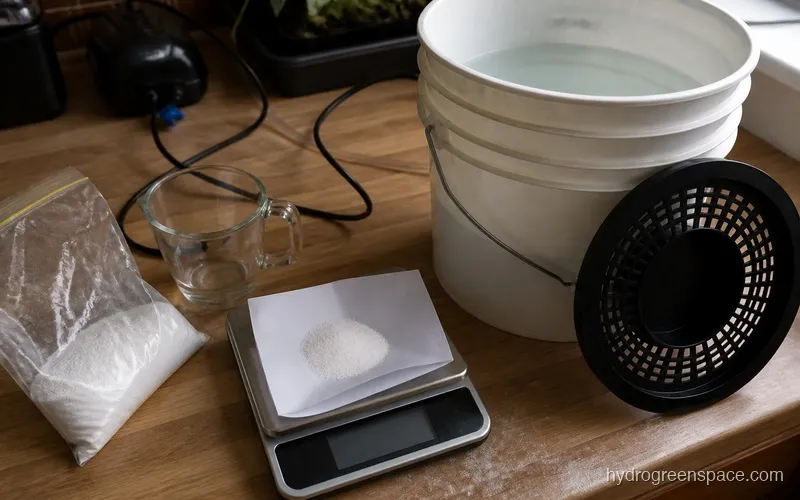
Powders, measured by weight, are actually more forgiving at small volumes. A milligram-precise kitchen scale lets you hit your target EC reliably. You can also mix a concentrated stock solution and use that for small top-ups, which gives you consistency across reservoir changes.
The one place liquids genuinely win for small setups is in the first few weeks of growing. Pre-buffered liquid nutrients are more forgiving of pH drift while you’re learning, and the bottles usually include beginner-friendly dosing guides. If you’re just starting out and want to avoid one variable while you figure out how to feed hydroponic plants, a simple liquid nutrient for the first grow is a reasonable decision.
Tip: If you’re deciding between liquid and powder for the first time, the hydroponic nutrient calculator can show you exactly how much of each to add for your reservoir size, which makes both formats easier to dial in from the start.
Crop-Specific Picks at a Glance
Different vegetables have genuinely different fertilizer requirements. Here’s where each major brand excels:
For tomatoes and peppers: Masterblend 4-18-38 is the most targeted formula available. The high phosphorus and potassium ratio is built specifically for fruiting crops. GH Flora Series is a close second with more flexibility across stages. If you want to go further into tomato-specific nutrient management, the NPK ratio guide for leafy greens and fruiting crops includes the full comparison.
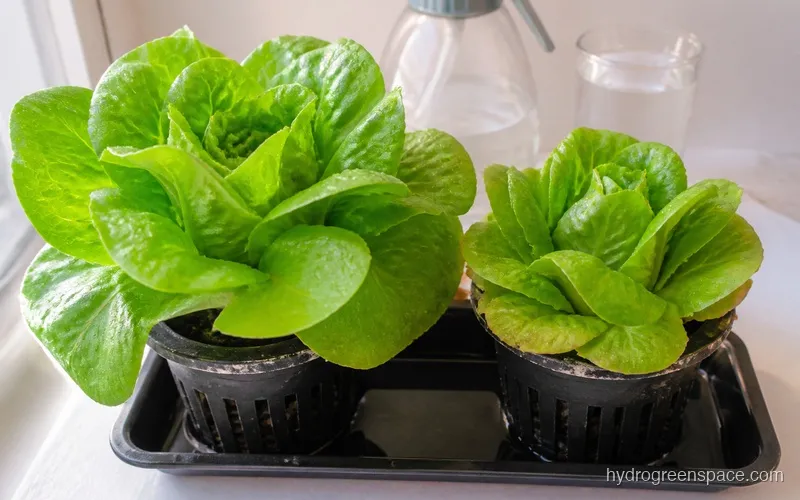
For leafy greens (lettuce, spinach, basil): GH MaxiGro or FloraNova Grow are the simplest picks. You’re not switching between vegetative and bloom formulas because leafy greens never enter a fruiting stage. High nitrogen throughout, moderate EC (1.0 to 1.8 mS/cm for most varieties). If growing hydroponic lettuce is your focus, you don’t need a complex 3-part system.
For beginners: GH MaxiGro or MaxiBloom, depending on what you’re growing. Two products, easy mixing, no complicated ratio adjustments. Once you’ve run two or three grows and you’re watching your EC and pH consistently, move to Masterblend for the cost savings or Flora Series for the control.
General Hydroponics MaxiGro + MaxiBloom Bundle
A two-powder system that covers both vegetative and flowering stages. Simple mixing, low cost per gallon, and an ideal starting point for new growers before moving to a 3-part formula.
Best for: Leafy greens, beginners, and budget-conscious home growers
Check price on AmazonFor cost-conscious growers: Masterblend, no contest. The per-gallon cost is lower than every other option on this list by a significant margin, and the performance for fruiting vegetables matches or exceeds what you’d get from liquid systems at five to ten times the price. If budget is your main concern, the cheap hydroponic nutrients guide walks through exactly how to set up a Masterblend program for the lowest possible cost per harvest.
Nutrient Brands and Your System Type
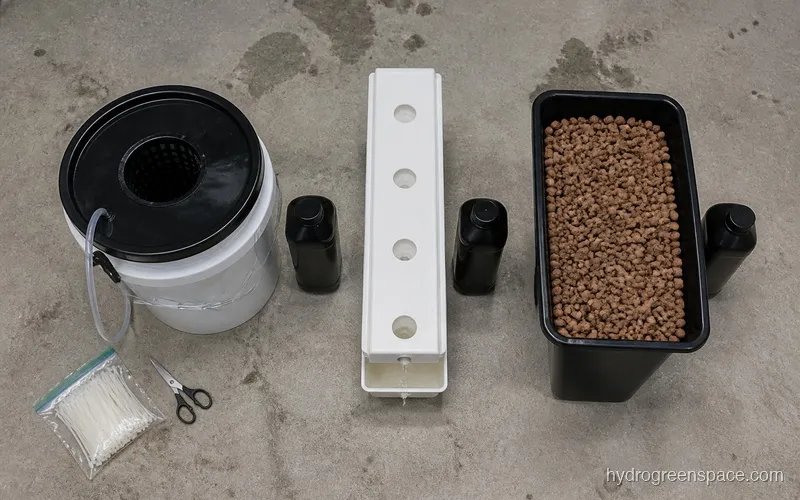
The nutrient line you choose should match your system type, not just your crop.
In recirculating systems (DWC, NFT, recirculating ebb-and-flow), synthetic nutrients are the safest choice. Organic matter from organic inputs or soil-derived fertilizers builds up in lines, pumps, and reservoir walls over time. This creates biofilm that can harbor pathogens and make pH management harder. Synthetic minerals dissolve cleanly and don’t leave residue in your system.
In media-based systems (coco coir, clay pebbles), you have more flexibility. Organic inputs have somewhere to go, and the media supports some microbial activity. Fox Farm’s Trio and the General Organics line both work reasonably well in these setups.
For Kratky (passive non-circulating) systems, simplicity matters most. You’re not topping off or recirculating, so nutrient stability over time is key. Masterblend or a simple GH MaxiGro solution are reliable choices because the synthetic formulas don’t degrade or cause organic buildup during a multi-week passive grow.
Whatever fertilizer you choose and whatever system you’re running, matching your nutrients to your best hydroponic system for vegetables setup will get you further than obsessing over brand differences at the margins. The fundamentals of pH management, EC monitoring, and reservoir hygiene matter more than which logo is on your nutrient bottle.
Pick one of the options above, learn it well for a full growing season, and you’ll develop the practical instincts that make the next system upgrade or nutrient switch much easier to execute. If you’re still deciding where to start, the complete hydroponic nutrients guide covers the full picture, from choosing a nutrient type to mixing ratios and reservoir management.