
How to Feed Hydroponic Plants: EC, pH & Timing
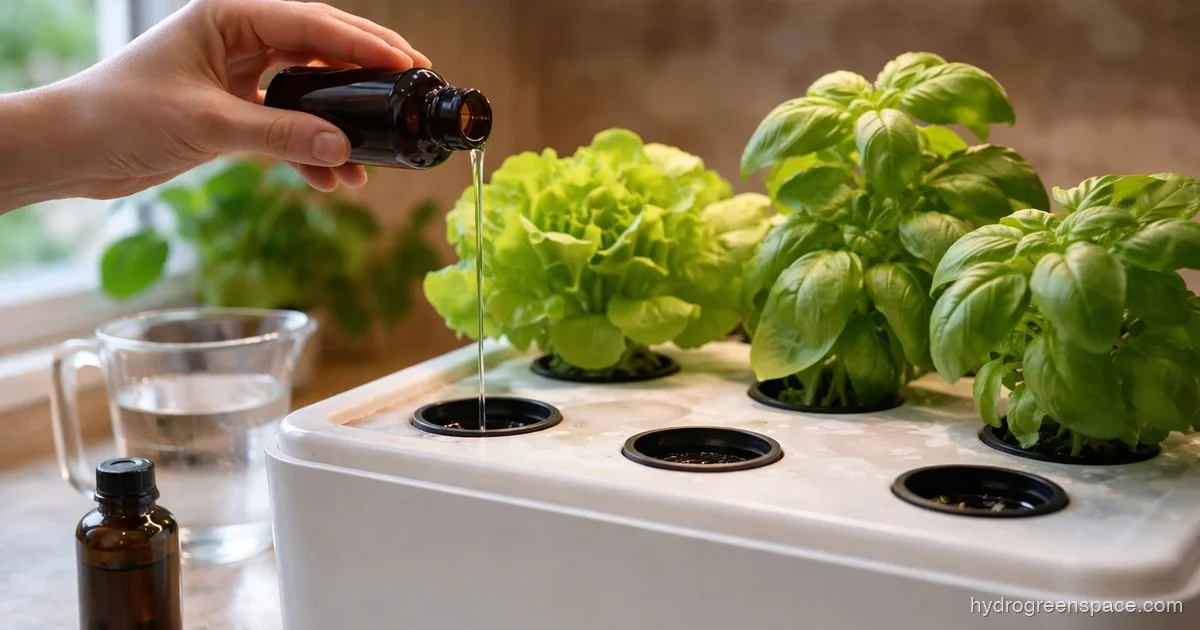
Feeding hydroponic plants sounds complicated until you do it once. After that first mix, you realize it follows a predictable logic: plants need specific nutrients in specific ratios, water carries those nutrients directly to the roots, and your job is to keep everything in range. This guide walks you through the entire process, from choosing a nutrient product to recognizing when something is off.
Plants grown in soil have a built-in buffer. The dirt holds nutrients, microbes break down organic matter, and a beginner’s mistakes get partially absorbed by the system. In hydroponics, there is no buffer. What you put in the water is exactly what your plants get, which means understanding how to feed hydroponic plants correctly matters from day one.
What You Actually Need to Feed Hydroponic Plants
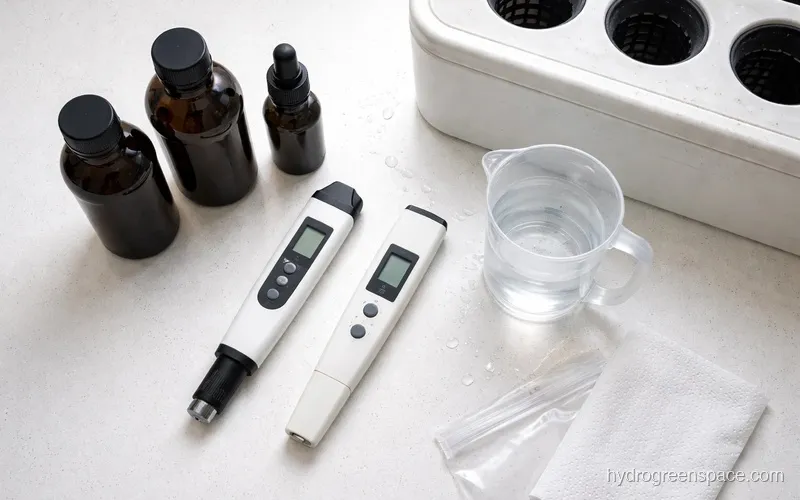
Before you mix anything, you need three things: a nutrient solution, a way to measure it, and a way to adjust pH.
Nutrient solution: Hydroponic nutrients come as liquid concentrates (usually two or three separate bottles labeled Grow, Bloom, and Micro) or as dry powders you dissolve in water. For beginners, a two-part or three-part liquid system is the easiest starting point because the ratios are already worked out. General Hydroponics Flora Series and MaxiGro/MaxiBloom are two products that have been reliable for me across multiple systems. If you want to explore making your own nutrient mix at home, that becomes an option once you understand what each element does.
EC/PPM meter: EC stands for electrical conductivity. It measures how many dissolved solids (nutrients) are in your water. PPM is just EC expressed in a different unit. You cannot eyeball concentration, and you cannot rely on manufacturer dosing instructions alone because your source water already has some dissolved solids in it. A decent EC/TDS pen costs around $15 and is non-negotiable.
pH meter or drops: Hydroponic nutrient solutions need to stay between 5.5 and 6.5 pH. Outside that range, plants cannot absorb certain nutrients even if those nutrients are present in the water. This is called nutrient lockout, and it is one of the most common reasons new growers see deficiency symptoms in what looks like a perfectly fed system.
How to Mix a Hydroponic Nutrient Solution
The mixing process matters as much as the products you use. Add nutrients in the wrong order and you can cause chemical precipitation, which means some nutrients bond together and fall out of solution where your plants can’t access them.
The correct order:
- Start with your water in a clean container or reservoir
- Add your Cal-Mag supplement first if you’re using one (important if you’re using RO or soft tap water)
- Add Part A (or Micro) and mix thoroughly
- Add Part B (or Grow or Bloom) and mix again
- Check EC/PPM
- Adjust pH last, after all nutrients are added
Never mix concentrates directly together before adding them to water. Always add each part to the water separately.
Source water matters. Tap water in most areas already contains calcium, magnesium, and other minerals. If your tap water reads 150 PPM before you add anything, that counts toward your total. Many growers prefer distilled or RO (reverse osmosis) water because it starts at zero, giving you complete control. Tap water can work, but test it first and adjust your nutrient dose accordingly.
Tip: If you’re using tap water, let it sit uncovered for 24 hours before mixing. This off-gasses chlorine, which can affect beneficial microbial populations if you’re running an organic system.
How Much Nutrient Solution to Use: EC and PPM Targets
“How much nutrients for hydroponics?” is the question I get asked most, and the honest answer is: it depends on growth stage. Here is a practical reference table:
| Growth Stage | Target EC (mS/cm) | Target PPM (500 scale) | Notes |
|---|---|---|---|
| Seedling / Clone | 0.8 – 1.2 | 400 – 600 | Start dilute, roots are sensitive |
| Early Veg | 1.2 – 2.0 | 600 – 1,000 | Increase gradually each week |
| Late Veg | 2.0 – 2.5 | 1,000 – 1,250 | Most leafy crops stay in this range |
| Early Flower | 2.5 – 3.0 | 1,250 – 1,500 | Increase phosphorus and potassium |
| Late Flower | 1.5 – 2.0 | 750 – 1,000 | Back off near harvest |
| Flush | 0 – 0.5 | 0 – 250 | Plain water only, last 1–2 weeks |
These ranges work for most vegetables. For a deeper breakdown of EC targets by growth stage, including crop-specific targets for tomatoes, peppers, and lettuce, that reference goes further.
Always start at the low end of any EC range and work up. Plants can tell you they need more. They cannot easily recover from salt buildup.
Warning: Overfeeding is more common than underfeeding in hydroponics. If you see leaf tip burn or wilting with wet roots, flush the reservoir with plain pH-adjusted water and rebuild at half strength. Full symptom details are in the diagnosing section below.
How Often to Feed Hydroponic Plants
This question has a different answer depending on your system type.
Recirculating systems (DWC, NFT, flood and drain): Your plants are in constant or near-constant contact with the nutrient solution. You do not “feed” on a schedule the way you would with soil. Instead, you top off the reservoir as water evaporates, replenishing nutrients in the process, and do a full reservoir change every 7 to 14 days. Monitor EC daily. If it rises between changes, your plants are drinking water faster than nutrients (happens in hot weather or under high-output lights). If EC drops, they’re feeding heavily.
Passive systems (Kratky, wick): Passive Kratky systems work differently because you’re not recirculating. You mix a full-strength solution at the start and let the plant consume it. For short-cycle crops like lettuce, one fill is often enough for the whole grow. For longer crops, you top off as needed and do a full solution change every 3 to 4 weeks.
Drip and top-feed systems: If you’re using a timer-controlled drip setup, feeding frequency depends on media and crop. In coco coir, daily feeding (sometimes multiple times per day) is normal. In clay pebbles or rockwool, you might water 2 to 4 times per day in veg and more frequently in flower. The goal is to keep the media moist without staying waterlogged.
For simple bucket systems, the general rule is: check your reservoir daily, top off with plain water when the level drops by 10 to 20%, and do a complete change every 7 to 10 days for actively growing plants.
When to Change Your Hydroponic Nutrient Solution
Nutrient ratios shift over time as plants consume some elements faster than others. A solution that started at the right balance at day 1 will be out of balance by day 10. This is why regular full changes matter regardless of EC readings.
General guidelines for a full reservoir change:
- Every 7 to 14 days for leafy greens and herbs
- Every 10 to 14 days for fruiting crops in veg
- Every 7 days in late flower or if you see any signs of algae or root discoloration
- Immediately if you see brown, slimy roots (root rot)
For a detailed protocol on timing and what to look for, see the guide on when to replace your nutrient solution.
What I’d do: Keep a simple notebook (or a note on your phone) logging the date of each reservoir change, the EC you mixed to, and any observations about plant appearance. After a few grows, you’ll see patterns that tell you exactly how your system behaves.
Diagnosing Overfeeding and Underfeeding
Plants communicate clearly once you know what to look for.
Signs of overfeeding (nutrient burn):
- Brown, crispy leaf tips starting on the newest growth
- Leaves curling downward (“clawing”)
- White or rust-colored mineral crust on net pots or growing media
- Wilting even though roots are wet
Signs of underfeeding (deficiency):
- Yellowing starting on older, lower leaves (nitrogen deficiency)
- Purple or red tints on stems and leaf undersides (phosphorus)
- Interveinal chlorosis, where veins stay green but the tissue between them yellows (magnesium or iron)
- Stunted growth and small leaves
Many deficiency symptoms overlap with pH problems. Before you add more nutrients, always check pH first. If your solution is outside the 5.5 to 6.5 range, correcting pH alone will often resolve what looked like a deficiency. The guide on diagnosing nutrient deficiencies has a visual reference if you’re not sure what you’re looking at.
Can You Use Regular Fertilizer in Hydroponics?
Technically yes, but practically it’s a bad idea. Soil fertilizers are designed to be processed by soil microbes before plants can use them. They often contain slow-release coatings or organic compounds that don’t dissolve cleanly in water, which can clog pumps, cloud your reservoir, and create a bacterial mess. They also don’t contain the full range of micronutrients hydroponic plants need since soil plants get those from the soil itself.
Use fertilizers specifically formulated for hydroponics. They’re water-soluble, pH-stable, and contain the full macro and micronutrient profile your plants need when there’s no soil to fill in the gaps. For an overview of the best nutrient products for vegetables, including options at different price points, that comparison covers the main categories.
If you’re interested in going organic, there is a path there. Composting and organic inputs can work in hydroponic systems, but the approach is different from synthetic nutrients. Making your own nutrients from compost is one way experienced growers reduce input costs while staying organic.
A Quick Note on Macronutrients and Micronutrients
Every hydroponic nutrient product provides a mix of macronutrients (nitrogen, phosphorus, potassium) and micronutrients (calcium, magnesium, iron, zinc, manganese, and others). The NPK ratio on the label tells you the relative proportion of the big three. Veg-stage nutrients are typically higher in nitrogen. Bloom-stage nutrients shift toward phosphorus and potassium.
Understanding NPK ratios explained in depth is worth doing once you’ve run a few grows and want to fine-tune. At the beginning, following the manufacturer’s feeding chart and adjusting based on EC measurements is enough to produce strong results.
For anyone setting up your grow space indoors and running their first system, keep it simple: pick a two or three-part nutrient system designed for hydroponics, start at half the recommended dose, check EC and pH daily, and do full reservoir changes every week to ten days. Complexity can come later. Your first goal is to finish a crop, learn what your system tells you, and iterate from there.
Once you’ve dialed in nutrients, the next piece to work on is how to adjust pH in your reservoir precisely, because even a perfect nutrient mix won’t perform if pH is working against you. For a broader look at nutrient types, when to use each, and how they compare across systems, the hydroponic nutrients guide covers the full picture.