
Best Hydroponic Nutrients for Vegetables: Our Top Picks
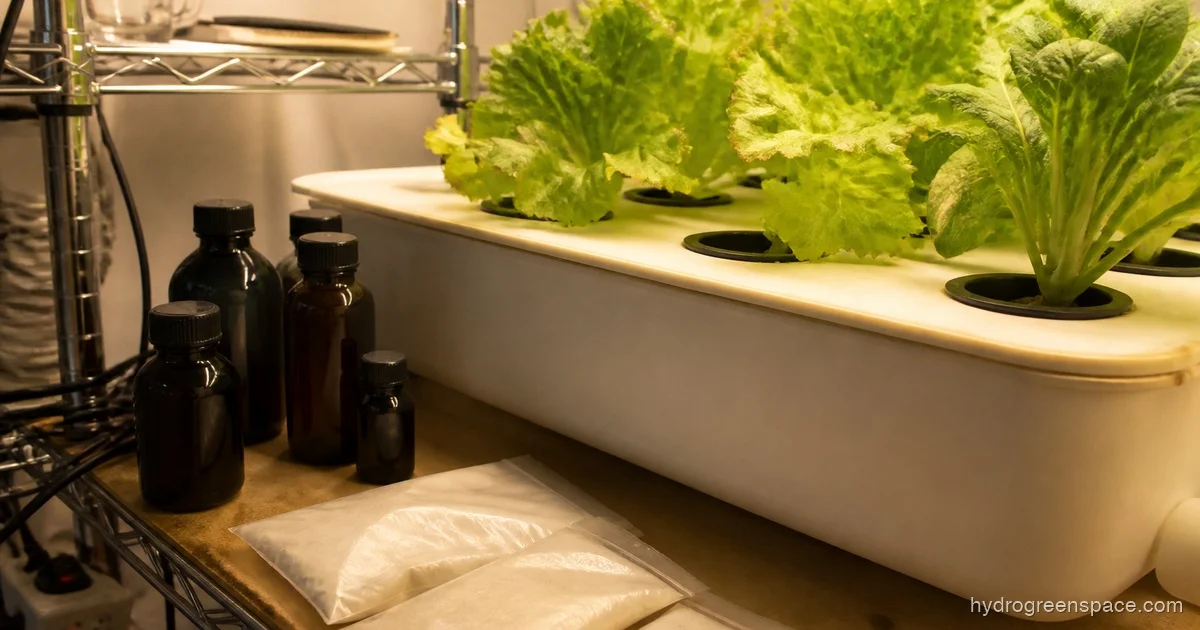
Walk into any hydroponics store and you’ll find 40 different nutrient bottles staring back at you. Half of them were developed for cannabis. A quarter are rebranded versions of the same thing. And the one that’s actually great for home vegetable growing is the least flashy thing on the shelf. Picking the wrong nutrient line won’t kill your plants immediately, but it will cost you yield, flavor, and weeks of troubleshooting.
This guide cuts through the noise. Whether you’re growing romaine in a Kratky bucket or running tomatoes through a recirculating DWC system, I’ll show you exactly which nutrients to use, why they’re the right call for vegetables specifically, and what to look for when you start comparing labels.
Before you dive into individual products, it helps to understand the three decisions that actually matter: liquid vs. powder, 2-part vs. 3-part systems, and which formulas are built for the crop you’re growing. Get those three right and picking a brand becomes obvious.
Quick-Pick Table: Best by Category
| Nutrient | Best For | Type | Budget |
|---|---|---|---|
| GH Flora Series | All vegetables, all stages | 3-part liquid | $$ |
| Masterblend Combo Kit | Fruiting vegetables | Powder | $ |
| GH FloraNova Bloom | Tomatoes, peppers in flower | 1-part liquid | $$ |
| GH MaxiGro + MaxiBloom | Stage-specific control | 2-part powder | $ |
Liquid vs. Powder: Which One Is Right for You?
This is the single most underrated decision in home hydroponics. Most YouTube tutorials default to liquid nutrients because they’re easy to film. But for vegetable growing specifically, powders are almost always the better call for anyone not running a commercial operation.
Here’s the practical difference: a 1 lb bag of Masterblend costs around $15 and makes roughly 200 gallons of solution. The equivalent liquid nutrient at a similar EC will cost you five to six times more per gallon. If you’re growing regularly, that gap adds up fast.
The knock against powders is that they’re “harder to use.” That’s mostly not true for home growers. You’re measuring a few grams into water. The only real complication is that some powders need to be dissolved separately before combining (more on that below), and some cheaper powders don’t fully dissolve in cold water. Use water at 65 to 75°F and you’ll be fine.
Liquid nutrients have one genuine advantage: they’re pre-buffered and easier to dial in for beginners on their first system. If you’ve never mixed nutrients before, starting with a liquid 3-part like the Flora Series while you learn pH and EC management makes sense. Once you’re comfortable, Masterblend is almost always the smarter move for vegetables. If you’re weighing the full cost breakdown, check out cheap hydroponic nutrients that actually work.
2-Part vs. 3-Part Nutrient Systems: What the Labels Don’t Tell You
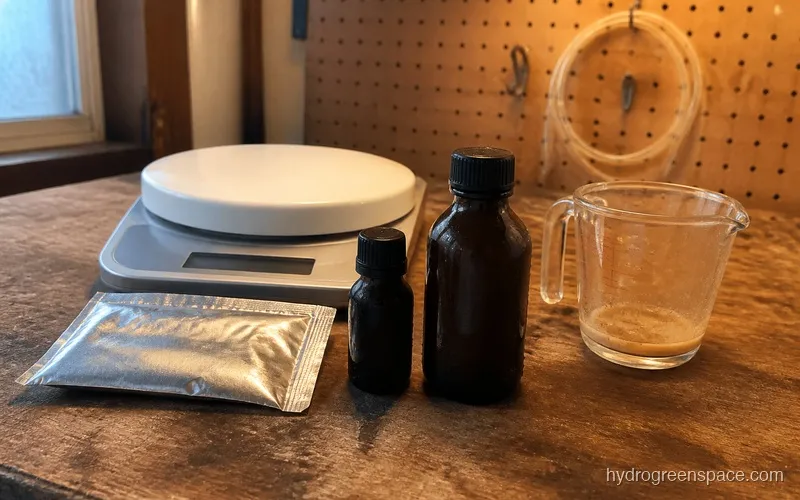
The number of “parts” in a nutrient system tells you how many separate bottles or components you mix. This matters because calcium and certain other nutrients will react and precipitate if mixed together in concentrate form. They need to stay separate until diluted in water.
A 2-part system (like GH MaxiGro/MaxiBloom, or FloraNova) is simpler: one formula for vegetative growth, one for flowering and fruiting. You swap from grow to bloom when the plant’s needs shift, usually once fruit set begins. The tradeoff is less precise fine-tuning across growth stages.
A 3-part system (like the GH Flora Series: FloraGro, FloraBloom, FloraMicro) gives you more control. You adjust the ratio of the three parts depending on whether you’re in seedling, vegetative, or fruiting stage. A common seedling ratio is 1-0-0.5 (heavy on micro, low everything else). Vegetative is often 3-1-2. Fruiting flips to 0-1-2 or 1-2-3. The upside is precision. The downside is that beginners often over-complicate it and end up chasing numbers instead of watching their plants.
What I’d do: Start with a 2-part system if you’re new. Once you’ve run two or three successful grows and understand how your plants respond to EC changes, then graduate to a 3-part for the control it offers. For beginners overwhelmed by the choices, the beginner’s guide to hydroponics is worth reading first.
Best Hydroponic Nutrients for Vegetables, Reviewed
General Hydroponics Flora Series (3-Part)
The Flora Series (FloraGro, FloraBloom, FloraMicro) has been the benchmark for hydroponic nutrients for over 40 years, and it earned that reputation with vegetable growers, not just cannabis cultivators. The formula is clean, the NPK ratios are well-documented, and there’s a massive library of community-tested feeding schedules for tomatoes, peppers, lettuce, herbs, and every other vegetable you’d want to grow.
The FloraMicro provides calcium, magnesium, and micronutrients as your stable base. FloraGro and FloraBloom adjust the nitrogen-to-phosphorus balance across growth stages. For a fruiting vegetable like tomatoes, you’ll shift heavy toward FloraBloom once flowers appear. For leafy greens, you stay in a high-nitrogen, low-bloom ratio throughout the entire grow.
One thing I’ll flag: the recommended doses on the GH bottle are often higher than what home growers actually need. Start at about half the suggested dose and build from there based on your EC meter reading.
General Hydroponics Flora Series
A 3-part liquid system that covers all growth stages, widely used by commercial and home growers.
Best for: All vegetables, from seedling to harvest
Check price on AmazonGeneral Hydroponics FloraNova Bloom
FloraNova is a one-part liquid that gets unfairly overlooked because it looks simple. But the bloom formula is genuinely dialed in for fruiting vegetables, and many tomato and pepper growers swear by it for the second half of their grow. The high phosphorus and potassium levels support fruit development without the calcium deficiency problems you see with cheaper bloom boosters. If you’re growing hydroponic peppers and want something straightforward for the fruiting stage, FloraNova Bloom is an excellent pick.
General Hydroponics FloraNova Bloom
A one-part liquid formula that simplifies the flowering and fruiting stage without sacrificing yield.
Best for: Tomatoes and peppers in the second half of their grow
Check price on AmazonMasterblend 4-18-38 (3-Part Powder System)
Masterblend is the nutrient that growers figure out after they’ve paid too much for liquid nutrients for a couple of years. It’s a water-soluble powder used in a specific 3-part recipe: Masterblend 4-18-38 tomato formula + calcium nitrate + Epsom salt, mixed in a specific ratio. The full kit costs a fraction of comparable liquid systems and performs just as well, often better for vegetable crops.
The 4-18-38 NPK ratio is specifically designed for fruiting vegetables like tomatoes, peppers, and cucumbers. Paired with calcium nitrate for calcium and nitrogen, and Epsom salt for magnesium and sulfur, you get a complete nutrient profile. For leafy greens, growers typically adjust the Masterblend ratio slightly toward higher nitrogen by bumping the calcium nitrate. If you want to go deeper on the Masterblend mixing ratios, the Masterblend hydroponic nutrients breakdown covers the full math.
The one genuine learning curve: you need to dissolve the calcium nitrate separately before adding the Masterblend powder. Mix them in a concentrated form together and you’ll get precipitation. Add them both diluted into your reservoir and it’s not an issue.
Masterblend 4-18-38 Combo Kit
A powder trio (Masterblend + calcium nitrate + Epsom salt) that delivers professional results at a fraction of liquid nutrient cost.
Best for: Fruiting vegetables: tomatoes, peppers, cucumbers
Check price on AmazonGeneral Hydroponics MaxiGro and MaxiBloom
This is the easiest entry point into powder nutrients for beginners. MaxiGro and MaxiBloom are water-soluble powders that dissolve easily and behave like a simplified 2-part system. MaxiGro is your vegetative formula, MaxiBloom handles flowering and fruiting. No complicated mixing ratios, no separate parts to balance.
The performance is solid for vegetable growing. MaxiGro is particularly good for growing hydroponic lettuce and other leafy greens because you stay in the high-nitrogen vegetative phase for the entire grow. MaxiBloom shines for herbs and fruiting vegetables once they transition. If you’ve been hesitant to try powders, this is the one to start with.
GH MaxiGro + MaxiBloom
Two dry soluble powders that let you dial in vegetative and flowering nutrition separately.
Best for: Growers who want stage-specific nutrient control on a budget
Check price on Amazon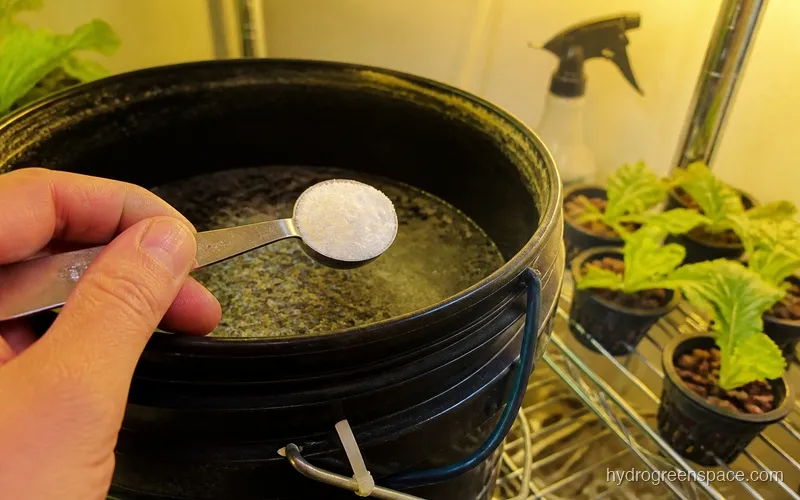
Nutrient Needs by Vegetable Type
The best hydroponic fertilizer for vegetables isn’t one-size-fits-all. Leafy greens and fruiting vegetables have fundamentally different NPK requirements, and buying the wrong formula for your crop is one of the most common beginner mistakes in hydroponics.
Leafy Greens (Lettuce, Spinach, Kale, Herbs)
Leafy greens need a high-nitrogen formula throughout the entire grow. You’re optimizing for vegetative growth, not reproduction. A good target NPK for leafy greens is roughly 3-1-2 (nitrogen-phosphorus-potassium). EC targets for lettuce and spinach are typically 0.8 to 1.6 mS/cm, which is lower than most fruiting crops. Push the EC too high on leafy greens and you’ll get tip burn, especially on romaine and butterhead varieties.
For vegetables that grow well in hydroponics, the leafy green category is the easiest starting point precisely because the nutrient requirements are so forgiving.
Fruiting Vegetables (Tomatoes, Peppers, Cucumbers, Beans)
Fruiting vegetables need a two-phase approach. During the vegetative stage (first 3 to 5 weeks), you want higher nitrogen. Once flowers appear, you shift toward higher phosphorus and potassium to support fruit set and development. A typical fruiting EC range is 2.0 to 3.5 mS/cm, significantly higher than leafy greens.
The NPK ratio matters more during fruiting than any other stage. A ratio in the range of 1-3-4 (low nitrogen, high phosphorus and potassium) is common for heavy-fruiting crops during peak production. If you want a reference for target EC values across crop types, the hydroponic EC chart has the numbers organized by vegetable.
Warning: If you’re using a nutrient formula developed primarily for cannabis (common with brands like Advanced Nutrients in their flowering products), check whether the bloom booster ratios match what vegetables actually need. Cannabis and vegetable fruiting crops have overlapping but not identical requirements, and many cannabis-forward bloom formulas are higher in phosphorus than what vegetable crops actually benefit from.
Root Vegetables and Brassicas
Root vegetables like carrots and beets need a different balance: lower nitrogen in the later stages (to avoid excessive foliage), with moderate phosphorus for root development. Brassicas (broccoli, cabbage, bok choy) are heavy feeders overall but are sensitive to sodium accumulation, so reservoir refresh frequency matters more than with leafy greens.
Growth-Stage Feeding: What Changes and When
One of the best investments you can make in your hydroponic grows is understanding how nutrient needs shift across growth stages. This applies regardless of which nutrient brand you choose.
Seedling stage (weeks 1-2): Keep EC very low, around 0.4 to 0.8 mS/cm. Young roots are fragile and can be burned easily. If you’re using a 3-part system, run a heavy FloraMicro-forward ratio. If using Masterblend, dilute to 25-50% of full strength.
Vegetative stage (weeks 2-5 for most crops): This is where you want high nitrogen and moderate everything else. Gradually increase EC toward your crop’s target range. For tomatoes, this means hitting 2.0 to 2.5 mS/cm by week four or five.
Fruiting and flowering stage: Reduce nitrogen, increase phosphorus and potassium. If you’re using a 3-part system, the ratio shift is where the control pays off. If you’re on a 2-part, switch from your grow formula to your bloom formula when flowers open.
For the full feeding schedule with specific ratios week by week, use the hydroponic nutrient calculator to generate targets for your specific system volume and crop.
How to Tell When Your Plants Need More Nutrients
The best nutrient solution in the world doesn’t help if you’re not adjusting it correctly as plants grow.
EC climbing without adding nutrients: This means your plants are drinking more water than nutrients. Add fresh water to bring EC back to target. This is common in hot weather or under intense light.
EC dropping faster than expected: Plants are using nutrients faster than water. Add a dilute nutrient solution at target EC to bring the reservoir back up. This often happens during peak fruiting.
Yellowing lower leaves: In most cases, this is nitrogen deficiency. Lower leaves yellow first because nitrogen is mobile and the plant pulls it up to new growth. Increase nitrogen concentration or bring your overall EC up slightly.
Purple or reddish leaf undersides: Often phosphorus deficiency, though cold temperatures can cause the same symptom. Confirm with a hydroponic nutrient deficiency chart before adjusting.
Tip burn on lettuce: Usually a calcium uptake issue, often caused by EC that’s too high or insufficient airflow. Lower your EC and ensure good circulation before adding more calcium.
Tip: Change your reservoir completely every 7 to 14 days rather than just topping up. Salt accumulation from partial top-ups can throw your nutrient ratios off even when EC looks normal. If you’re not sure when to make the switch, when to change hydroponic nutrients gives you the exact signals to watch for.
Picking the right nutrient line is step one, but what gets you consistent results is watching your plants closely, keeping a grow journal, and adjusting based on what you see rather than just following a preset schedule. The growers who get the best vegetable yields aren’t necessarily using the most expensive nutrients. They’re the ones paying attention. Start simple, dial in your feeding process using a solid hydroponic feeding guide, and upgrade your nutrient approach as your system scales. The hydroponic nutrients guide is a good reference once you’re ready to dig into the mechanics of types, ratios, and reservoir management in one place.