Can Hydroponics Be Organic? Certifications Explained
The short answer is: it depends on who you ask. If you ask the USDA, the answer has been a moving target for over a decade. If you ask the EU or Canada, the answer is a clear no. If you ask an actual home grower who wants to feed their family clean food without synthetic chemicals, the question itself kind of misses the point.
Here’s what’s actually going on with the “can hydroponics be organic” debate, why it matters for certification but maybe not for your grow, and what nutrients you can actually use if you want to run your system as cleanly as possible. If you’re still building a foundation for the method itself, what is hydroponics is worth reading first.
The Certification Debate Is Real (and Unresolved)
In the United States, USDA certified organic hydroponic produce has been legal since a 2017 National Organic Standards Board (NOSB) ruling allowed it, over the objection of many soil-based organic farmers. That ruling was controversial enough that a coalition of farmers sued the USDA over it. The lawsuit failed, and hydroponic and aquaponic operations can still receive USDA NOP (National Organic Program) certification today.
The argument against certification centers on the soil microbiome. Organic farming philosophy holds that true organic growing depends on feeding soil biology, which then feeds the plant. Without soil, there’s no microbiome to cultivate, no humus cycle, no biological buffering. Critics argue that running a hydroponic system with OMRI-listed nutrients is organic in name only: you’re still feeding the plant directly, just with approved inputs instead of synthetic ones.
Canada and the EU took the opposite stance. Both prohibit hydroponic operations from receiving organic certification, full stop. The rationale is the same: no soil means no organic farming, regardless of what goes into the reservoir.
What the Regulatory Split Actually Looks Like
| Country/Region | Hydroponic Organic Certification Allowed? | Governing Body |
|---|---|---|
| United States | Yes (since 2017) | USDA NOP |
| Canada | No | Canada Organic Regime |
| European Union | No | EU Organic Regulation 2018/848 |
| United Kingdom | No (post-Brexit) | UK Organic Regulations |
For home growers, this debate is about commercial labels and market access. What actually matters is what goes into your plants and reservoir.
What “Organic Hydroponics” Actually Means in Practice
Setting aside the certification question, organic hydroponics in practice means building your nutrient solution primarily from naturally derived sources rather than synthetic mineral salts. The standard reference point is the OMRI (Organic Materials Review Institute) listing. OMRI reviews inputs against USDA NOP standards and publishes a list of products approved for use in certified organic operations.
If a nutrient product is OMRI listed, it has been evaluated and approved as a natural-source input. This doesn’t mean it’s certified organic on its own, but it does mean it’s derived from organic matter rather than synthesized from petroleum or mineral extraction processes.
The practical challenge: organic nutrients behave differently in water than synthetic ones. They’re less precise, they can promote microbial activity in your reservoir (which isn’t always bad, but requires management), and they tend to be lower in bioavailability compared to the chelated mineral salts in conventional hydroponic nutrients. You’ll need to account for that in your feeding schedule.
What I’d do: If you’re just starting out and want a cleaner approach without going fully organic, look for a conventional hydroponic nutrient line that is free from urea-based nitrogen and relies on mineral sources like calcium nitrate and potassium nitrate. It’s not “organic” by any definition, but it’s significantly simpler and cleaner than the worst synthetic options.
Nutrient Sources That Work for Organic Hydroponics
Here’s what actually works.
Fish Emulsion and Fish Hydrolysate
Fish emulsion is probably the most commonly used organic nitrogen source in hydroponics. It’s derived from fish byproducts and typically provides nitrogen in the range of 2–5% by volume. Fish hydrolysate is cold-processed (rather than heat-treated like emulsion), which preserves more of the amino acids and growth-promoting compounds.
Both will work in your reservoir. Fish hydrolysate tends to smell less and provide better plant uptake. The downside: both can encourage algae growth and bacterial activity if your reservoir isn’t managed carefully. Keep light out of your reservoir and use an air stone to prevent stagnation.
Compost Tea and Vermicompost Tea
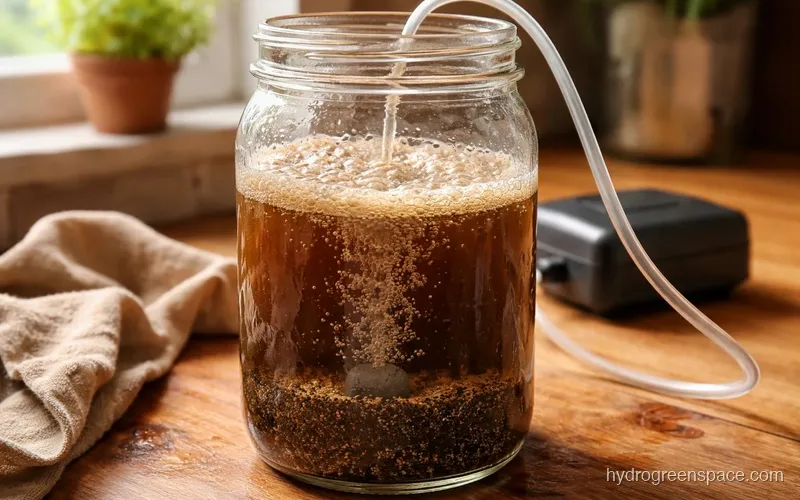
Compost tea is made by aerating water with mature compost or worm castings for 24–48 hours. The goal is to multiply beneficial bacteria and fungi, then deliver them directly to the root zone. In a soil system, those microbes process organic matter into plant-available nutrients. In a soilless system, the dynamics are different, but the microbial activity can still support root health and suppress pathogens.
Vermicompost tea (made from worm castings specifically) tends to be more consistent than general compost tea because worm castings are more biologically stable. If you want to experiment with this, I’d start here rather than with raw compost tea.
Make your own organic nutrient solution from compost if you want to go that route rather than buying a bottled product.
OMRI-Listed Bottled Nutrients
Several commercial hydroponic nutrient brands now produce OMRI-listed product lines specifically designed for hydroponic use. General Organics (a division of General Hydroponics) and Raw Organics are two of the more well-known options. These are designed to work in a reservoir without the algae and clogging problems that can come with less processed organic inputs.
If you’re growing in a recirculating system like a DWC or NFT setup, a bottled OMRI-listed nutrient is the most practical organic option. If you’re running something passive like a Kratky setup, you have more flexibility because you’re not recirculating through pumps or drip emitters that could clog.
Seaweed and Kelp Extracts
Kelp meal and liquid seaweed extracts are commonly used as supplements rather than primary nutrient sources. They’re naturally high in potassium and trace minerals, and they contain plant growth hormones (cytokinins and auxins) that have documented effects on root development and stress resistance. Use them as an additive, not a base nutrient.
What Organic Nutrients Won’t Give You (Be Honest About This)
Organic hydroponics is not a magic upgrade. There are real trade-offs worth understanding before you commit.
Precision: Synthetic nutrients like General Hydroponics Flora Series or Masterblend dissolve completely and give you exact ppm readings. Organic inputs are variable. A batch of fish emulsion from one supplier may test differently from another. Your EC meter will still give you a reading, but the nutrient composition behind that reading is fuzzier.
Reservoir life: A conventional hydroponic reservoir with proper pH management can run for weeks without issues. An organic reservoir is biologically active. Done right, that’s actually beneficial. Done poorly, it turns into a soup that stresses your roots. Plan for more frequent reservoir changes (every 7–10 days rather than every 2–3 weeks) until you learn how your system behaves.
Speed of uptake: Organic nutrients often require microbial activity to convert nitrogen into plant-available ammonium and nitrate. In soil, that happens naturally. In a hydroponic reservoir, you need to either establish a beneficial microbial community or use pre-digested organic inputs (like liquid fish hydrolysate) that are already closer to plant-available form.
The drawbacks of hydroponics cover some of this ground too, and the nutrient management piece applies doubly when you’re working with organic inputs.
You Don’t Need a Label to Grow Clean Food
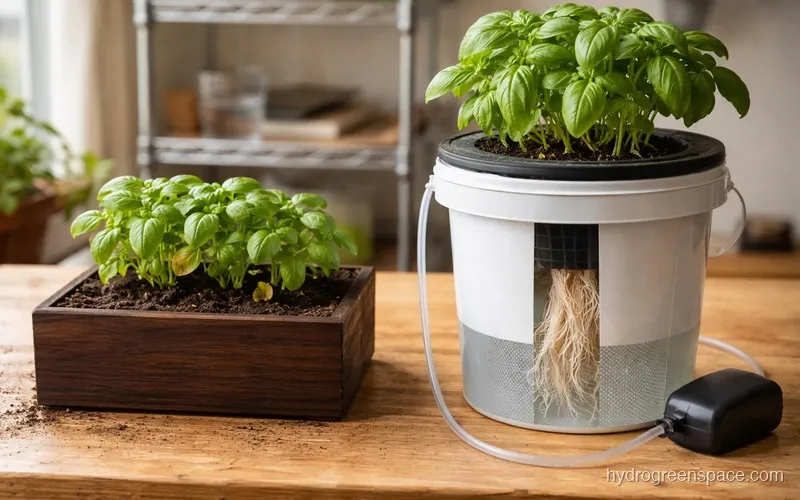
Here’s the thing the certification debate tends to obscure: you don’t need a USDA stamp to decide what goes into your system. Home growing exists outside all of this regulatory friction. You can choose OMRI-listed nutrients, use fish hydrolysate, brew compost teas, and add beneficial bacteria to your root zone, all without ever interacting with the NOSB or worrying about what the EU thinks.
Compared to how hydroponics differs from soil growing, the soil-less system already gives you advantages in water efficiency and controlled growing conditions. Adding organic or near-organic inputs on top of that is genuinely achievable, it just requires more active management than dropping a synthetic nutrient schedule into your grow.
The environmental benefits of hydroponics are real regardless of whether you’re using organic or synthetic nutrients. Reduced water use, no soil runoff, no herbicides. Those wins don’t require certification either.
If you want to take your organic approach further, the next logical step is introducing beneficial bacteria into your hydroponic system and potentially working with compost tea as a living amendment. That’s where the real depth of organic hydroponic growing opens up: not just swapping out your nutrients, but building a functioning root-zone ecosystem in a soilless environment.
That’s harder than conventional hydroponics. It’s also more interesting.