Yellowing Leaves in Hydroponics: Causes and Fixes
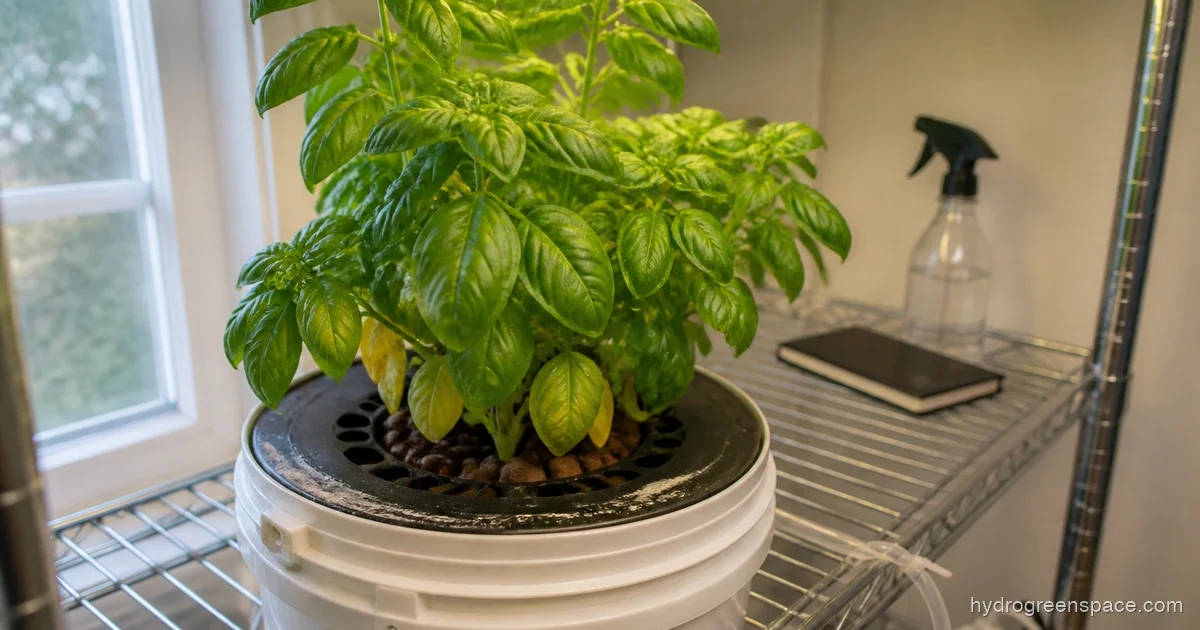
Yellow leaves are one of the most common things growers panic about, and also one of the most misdiagnosed. Before you drain your reservoir or dump in a bottle of iron chelate, take thirty seconds to look at which leaves are yellowing and how they’re yellowing. That single observation narrows down the cause faster than anything else.
Yellowing leaves in hydroponics almost always point to one of five things: a nutrient deficiency, a pH problem causing nutrient lockout, root disease, light stress, or normal senescence. The trick is knowing which one you’re dealing with, and the location and pattern of the yellowing tells you exactly that.
The Fast Diagnostic: Old Leaves vs. New Leaves
This is the most useful thing you can learn about yellowing leaves.
Plants move certain nutrients from old tissue to new growth when supplies run low. Nitrogen, magnesium, and phosphorus are mobile nutrients. If the plant is deficient, it will cannibalize lower, older leaves to feed the new growth at the top. That means deficiencies in mobile nutrients show up on the bottom leaves first, working upward.
Immobile nutrients (iron, calcium, manganese) can’t be moved once deposited in leaf tissue. So deficiencies there show up on new growth first, at the top of the plant.
If your bottom leaves are yellowing: suspect nitrogen, magnesium, or phosphorus deficiency, or just natural aging.
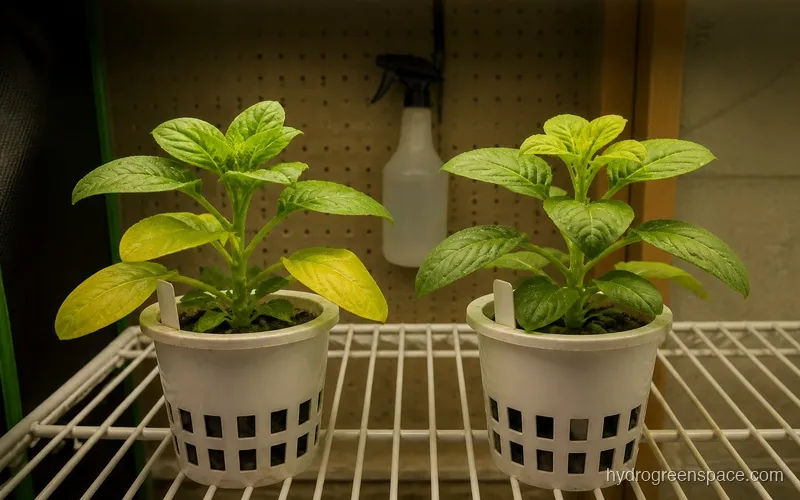
If your top leaves or newest growth is yellowing: suspect iron, calcium, or manganese deficiency, or pH-driven lockout preventing uptake of those nutrients.
This two-second check saves hours of guessing.
Why pH Is the Real Culprit More Often Than You Think
A common situation: plants aren’t actually deficient in anything. The nutrients are in the reservoir, but the pH is too high or too low for the roots to absorb them. That’s nutrient lockout, and it mimics every deficiency symptom in the book.
Hydroponic nutrient uptake has a narrow pH window. For most crops, that’s 5.5 to 6.5. Outside of that range, individual nutrients become chemically unavailable even when the concentration in the water is correct:
- Iron, manganese, and zinc become unavailable above pH 7.0
- Calcium and magnesium become unavailable below pH 5.5
- Phosphorus availability drops off sharply above 6.5
So if you’re seeing interveinal chlorosis on new leaves (the veins stay green while the tissue between them yellows), your first move should be to correct your pH, not to add iron. If your pH is off and you start dosing extra micronutrients on top, you’ll create a new problem.
Nitrogen Deficiency: The Most Common Yellowing Cause
Nitrogen is the most common deficiency in hydroponic systems, and it’s also the easiest one to fix. Plants need nitrogen in large amounts throughout their entire life cycle, as it’s the backbone of chlorophyll, which is literally what makes leaves green.
Symptoms are hard to miss: uniform yellowing starting from the oldest, lowest leaves and moving upward. The whole leaf turns pale yellow (not just between the veins), and affected leaves drop early. New growth at the top looks normal or slightly light green at first.
Causes in a hydroponic system:
- EC (electrical conductivity) is too low, meaning the nutrient solution is too diluted
- Using a nutrient formula that’s too low in nitrogen for your growth stage
- Reservoir hasn’t been topped up, dropping nutrient concentration over time
Check your EC first. If it’s below the target range for your crop and stage, mix a fresh batch at the correct strength. If EC is fine, look at your base nutrient formula, as some bloom formulas cut nitrogen significantly, which is fine for fruiting plants but will starve leafy greens. The nutrient deficiency chart can help you cross-reference symptoms with specific elemental causes.
Magnesium and Iron: The Two You’ll Confuse
These two look similar at first glance, both showing up as yellowing leaf tissue with green veins still visible. That’s interveinal chlorosis. But the location tells you which one you’re dealing with.
Magnesium deficiency appears on older, lower leaves first. The pattern is distinct: the center of the leaf yellows while the veins and leaf edges stay green longer.
Iron deficiency (or iron lockout) shows up on the youngest, newest leaves first. The newest growth comes in pale yellow or almost white, while older leaves stay green.
Before treating either, confirm your pH is in range. Magnesium deficiency in hydroponics is often genuine (especially if you’re using soft water or a calcium-magnesium-light base formula). Iron deficiency is almost always a pH problem, since iron becomes unavailable quickly above 6.5. You can learn more about how micronutrients behave in solution in the micronutrients guide.
Common mistake: Adding iron chelate to fix interveinal chlorosis on new leaves without checking pH first. If pH is 7.0 and you dump in more iron, the chelate may temporarily help, but you haven’t fixed the root issue.
Root Rot: When Yellow Leaves Are the Least of Your Problems
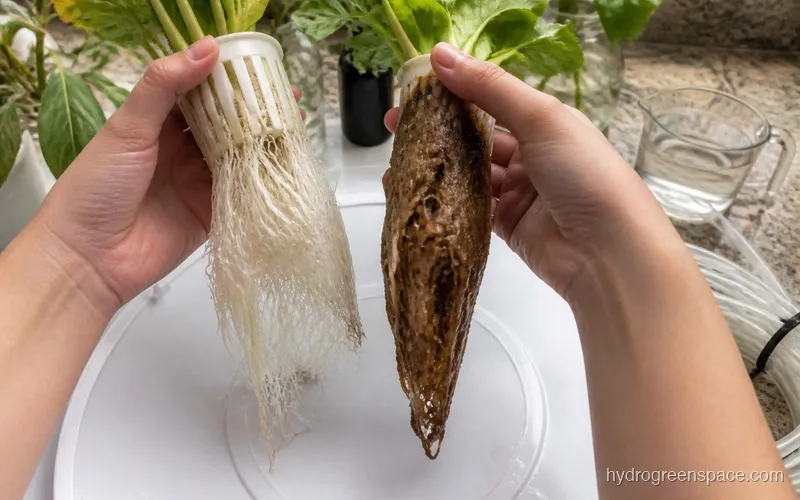
If your leaves are yellowing and wilting at the same time, and your reservoir smells off, you might be dealing with root rot rather than a nutrient issue. Root rot (usually Pythium or Phytophthora) destroys the root system’s ability to absorb water and nutrients, so the plant starves despite a full reservoir.
Signs that root rot is behind the yellowing:
- Yellowing accompanied by wilting that doesn’t recover after lights come on
- Brown, slimy roots instead of white, firm ones
- Foul smell from the reservoir
- Rapid progression, with many leaves yellowing at once
If you suspect root rot, check the roots directly. A quick look at what root rot looks like in hydroponics can confirm whether you’re dealing with a pathogen problem vs. a nutrient issue.
Too Much Light Can Cause Yellowing Too
This one catches growers off guard. Intense light, especially in LED systems running at full power close to the canopy, can bleach leaves. Light bleaching typically appears on the uppermost leaves (the ones closest to the light source), and the yellowing starts at the tips or the whole upper leaf surface washes out.
The difference from a nutrient deficiency: light bleaching appears on the leaves that are literally in the path of the most intense light. The pattern matches your light footprint. Nutrient deficiencies follow the mobile/immobile pattern described earlier.
Fix: raise your lights or reduce intensity. A good rule of thumb for most LED fixtures is to keep at least 18-24 inches between the canopy and the light during the vegetative stage, adjusting based on your fixture’s PPFD specs.
Bottom Leaves Yellowing: When It’s Actually Normal
Not every case of yellowing leaves is a problem. If you’re several weeks into a crop and the very lowest leaves are yellowing and dropping, but the rest of the plant looks healthy, new growth is vigorous, and your nutrient and pH numbers are on target, you’re probably seeing natural senescence.
Lower leaves on mature plants get shaded out by the canopy above them. They stop contributing to photosynthesis and the plant withdraws nutrients from them before dropping them. This is completely normal.
How to know it’s not a deficiency: the progression is slow (one or two leaves at a time), the rest of the plant looks healthy, and your EC and pH are dialed in. If yellowing is rapid or spreading up the plant, that’s when you investigate further. For context on what healthy lower-leaf drop looks like versus a deficiency spreading upward, the leaves curling down guide covers related leaf stress signals worth knowing.
A Simple Diagnostic Checklist
When you see yellow leaves, run through this sequence before doing anything:
- Check pH. Is it between 5.5 and 6.5? If not, correct it first before anything else.
- Check EC. Is it in the right range for your crop and growth stage? If it’s low, your plants are underfed. Understanding your EC targets for different crops saves a lot of guesswork here.
- Identify location. Old/lower leaves or new/upper growth?
- Identify pattern. Uniform yellowing, interveinal chlorosis, tip yellowing, or bleaching?
- Check roots. Are they white and healthy, or brown and slimy?
- Check light distance. Is the canopy too close to the fixture?
Once you’ve worked through the checklist and identified the cause, the fix is usually straightforward. The next thing worth understanding is how nutrient ratios interact with your specific crops. The NPK ratios guide explains why the same symptom can mean different things depending on what you’re growing.
Yellowing leaves often show up alongside other symptoms. If you’re seeing more than one issue at once, the hydroponic troubleshooting guide covers the full range of common problems and how they interact.