Leaves Curling Down in Hydroponics: Fix It Fast
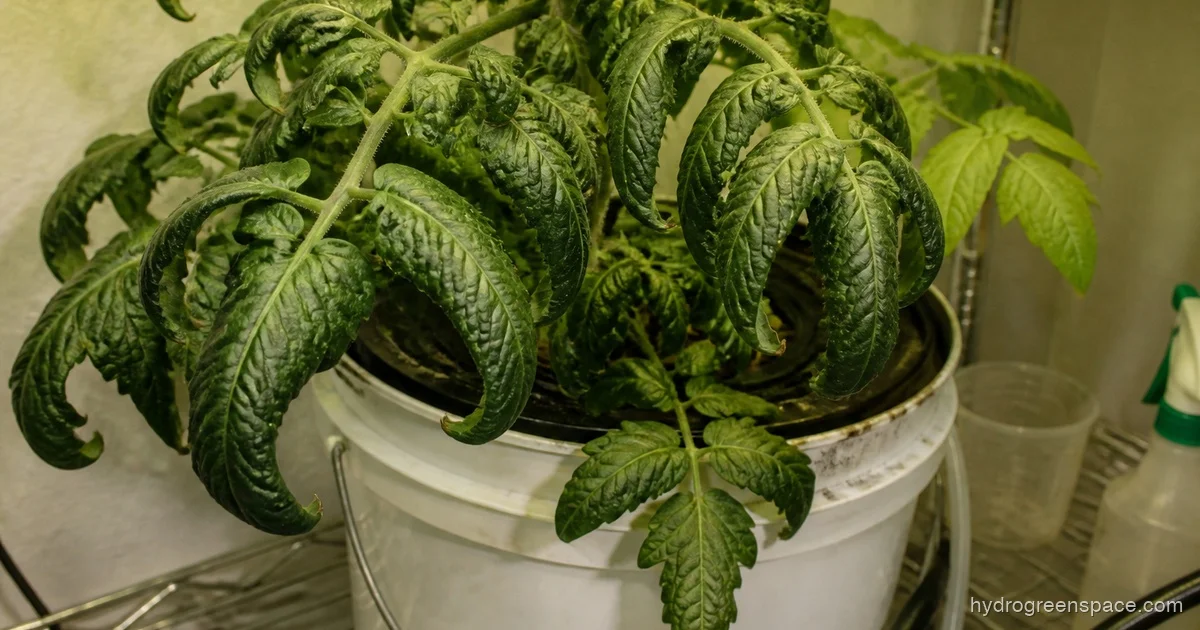
Leaves curling downward in a hydroponic system is one of those symptoms that looks alarming but actually narrows your diagnosis considerably. Upward curl and downward curl have almost nothing in common as causes, and treating them the same way wastes time. If your plant’s leaves are clawing downward, cupping under at the tips, or folding along the midrib toward the roots, that’s a specific distress signal with a short list of culprits.
The good news: in most cases you can identify the cause within an hour and have a fix running the same day.
Downward Curl vs Upward Curl: Not the Same Problem
Before going through causes, it’s worth being clear about what you’re actually seeing. Upward curl (leaves cupping or rolling inward from the edges) is almost always heat stress or low humidity. Downward curl, which growers often call “the claw,” is a different signal entirely.
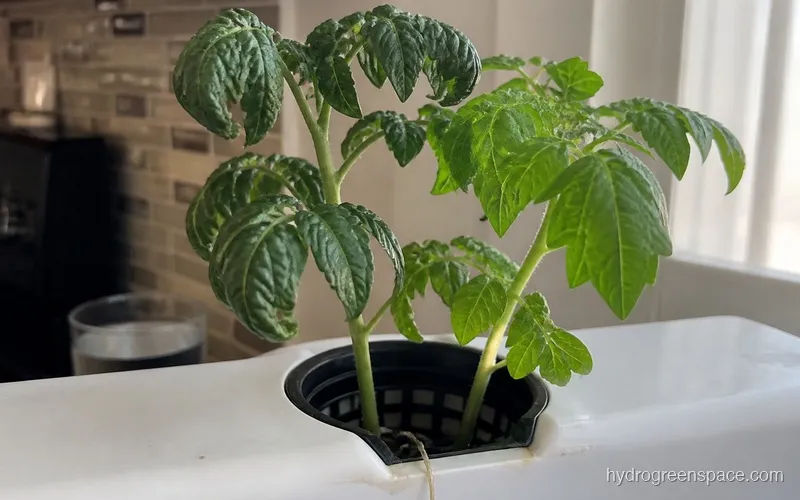
The claw looks like the leaf is trying to point its tips toward the ground. On lettuce, you’ll see the outer leaves folding under. On tomatoes and peppers, leaflets curl down and inward, sometimes twisting slightly. On herbs like basil, the whole leaf takes on a concave shape facing down.
If you’re seeing branches curling and not just leaves, that’s an escalation sign. It usually means the underlying stress has been ongoing for a week or more and the plant has been responding at the stem level. Fix the root cause before expecting branches to straighten.
Check EC and pH Before Anything Else
This is where I always start, because EC and pH are the source of at least 60% of the leaf curl cases I’ve seen in food crops.
Nitrogen toxicity is the single most common cause of downward clawing in hydroponics. When you’re overfeeding, nitrogen uptake goes into overdrive, and the plant literally can’t process it fast enough. The leaves respond by curling down and darkening to a deep, almost waxy green. This is especially obvious in lettuce and basil, where healthy leaves are a lighter, bright green. If your leaves look like they’ve been varnished, nitrogen toxicity is almost certainly your problem.
The fix is to drop your EC. For leafy greens in DWC, target 1.0 to 1.6 mS/cm. For fruiting crops like tomatoes and peppers, stay between 2.0 and 3.5 mS/cm depending on growth stage. If you’ve been running higher than that, do a 50% reservoir flush with fresh, pH-balanced water and rebuild at a lower concentration. For more on nutrient burn in hydroponics, that guide covers it in detail.
pH imbalance causes leaf curl through nutrient lockout, not toxicity. When your pH drifts outside the optimal range (5.5 to 6.5 for most hydroponic crops), nutrients become chemically unavailable even if they’re present in the reservoir. The plant shows stress symptoms including curling while being surrounded by food it can’t absorb. If your pH is fluctuating daily, that’s its own problem covered in pH fluctuation problems.
Reservoir Temperature and the Oxygen Chain
This one is underdiagnosed, especially in summer or in grow rooms where ambient temps creep up.
Warm water holds less dissolved oxygen than cold water. When your reservoir temperature rises above 70-72°F (21-22°C), dissolved oxygen levels drop sharply. Roots need oxygen to drive nutrient uptake. When they don’t get enough, uptake slows, the plant enters a mild stress state, and leaves start clawing downward.
The chain reaction looks like this: reservoir warms, dissolved oxygen drops, root zone becomes oxygen-depleted, plants start showing symptoms that look like overfeeding or nutrient issues, grower adjusts nutrients instead of temperature, symptoms persist or worsen.
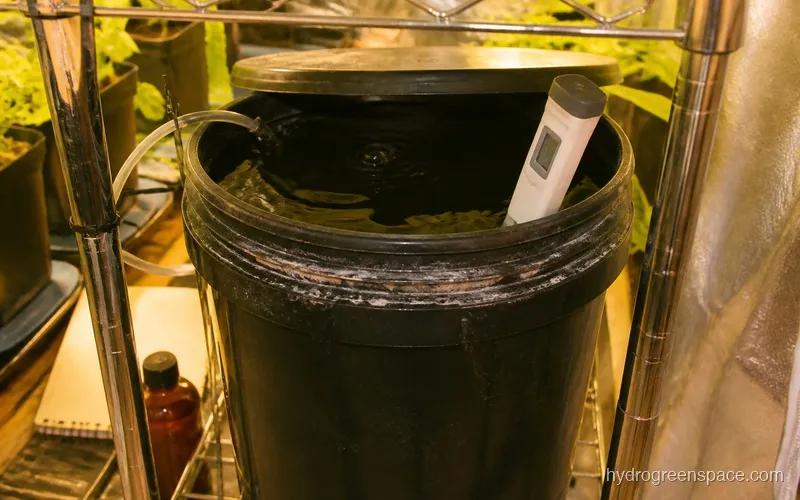
Keep your reservoir between 65°F and 68°F (18-20°C). If you don’t have a thermometer in your reservoir, that’s the first thing to fix. An aquarium thermometer costs a few dollars and gives you immediate visibility into a variable that drives a lot of unexplained symptoms. For a full breakdown on this, the ideal reservoir temperature guide covers the dissolved oxygen relationship in more depth.
“Overwatering” in Hydroponics Is a Real Thing
A common point of confusion: if you’re in DWC, how can you overwater? Your plants are sitting in water constantly.
In DWC, “overwatering” isn’t about too much water directly. It’s about root zone oxygen starvation, which produces nearly identical symptoms to soil overwatering. When your air pump is undersized, your air stone is clogged, or your water level is too high and covering the root collar, the roots run low on oxygen. The result is the same clawing, drooping, dark-green response you’d see in a soggy soil pot.
In NFT and flood-and-drain systems, actual overwatering is possible. If your flood cycle runs too frequently, the growing medium never gets a chance to bring in fresh oxygen between floods, and the root zone stays waterlogged. Scale back your flood intervals and watch whether symptoms improve over 48-72 hours.
If you’ve built a DWC hydroponic system and are seeing these symptoms, check your air pump output against the recommended volume for your reservoir size. A general rule: at least 1 watt of air pump per gallon of water, with a quality air stone that produces fine bubbles rather than large ones.
Heat, Humidity, and Stomatal Stress
High ambient temperatures cause transpiration to outpace water uptake. The plant closes its stomata to conserve moisture, growth slows, and leaves curl under as a physical response to stress. This looks almost identical to overfeeding symptoms at first glance, which is why measuring your environment before adjusting nutrients matters.
Target grow room temperatures between 70°F and 78°F (21-26°C) during lights-on, with humidity between 50% and 70% for leafy greens and 40% to 60% for fruiting crops in the later stages. If both temperature and EC are elevated at the same time, fix both together rather than one at a time.
Pests: Less Common, Worth Ruling Out
Pests are a less frequent cause of downward curl in hydroponics compared to soil growing, but they’re worth a quick check before closing your diagnosis.
Broad mites and russet mites are the ones most likely to produce curling symptoms in hydroponic food crops. Unlike spider mites, which leave visible webbing, these are near-microscopic and cause distorted, curled new growth that can look like a nutrient problem. The telltale difference: pest-related curl tends to appear on new growth first, while nutrient toxicity affects older, mature leaves more heavily.
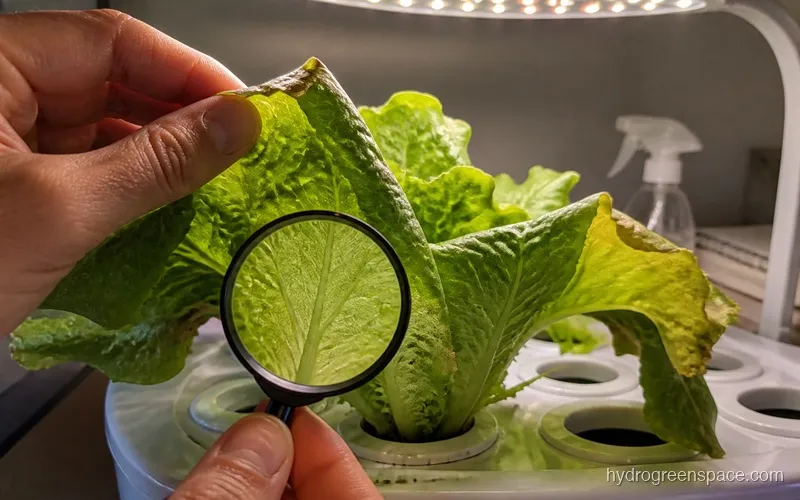
Aphids on hydroponic plants can also cause curling in heavy infestations as their feeding disrupts cell structure. Check under the leaves with a loupe or magnifying glass. Hydroponic strawberries are particularly susceptible to both aphid pressure and mite damage. If you’re growing berries and seeing curl alongside stippling or distorted berries, check the hydroponic strawberry diseases guide for the specific pest patterns.
Diagnostic Order of Operations
When you see leaves curling down, work through this sequence before making any changes:
- Measure EC and pH. Note both numbers.
- Check reservoir temperature with a thermometer.
- Inspect the air pump and air stone. Confirm bubbles are present and fine.
- Look at which leaves are affected. New growth or old? Widespread or isolated?
- Check under leaves and at growing tips for pest activity.
- Only after collecting all five data points, make one change at a time.
The biggest mistake growers make is stacking changes: flush the reservoir, lower EC, adjust pH, and add a pest treatment all in the same day. When symptoms improve (or don’t), you have no idea what actually worked.
Recovery Timeline
After you’ve identified the cause and made the right fix, here’s what to expect:
- Nitrogen toxicity flush: New growth should look normal within 5 to 7 days. Already-clawed leaves rarely unfurl completely, but they’ll stop progressing.
- pH correction: If lockout was short-lived (under a week), improvement shows in new growth within 3 to 4 days.
- Temperature reduction: Symptoms from oxygen depletion resolve within 48 hours once dissolved oxygen levels return to normal.
- Root zone oxygen fix (DWC): New root tips should look white and healthy within a few days. Leaf symptoms take a week to fully stabilize.
If you’ve done everything right and symptoms persist past two weeks, consider whether multiple stressors are stacked. A plant dealing with both nitrogen toxicity and slightly elevated reservoir temps is harder to read than one with a single clear cause.
Common mistake: Growers who flush and switch to half-strength nutrients sometimes don’t give the plant enough time before concluding the fix didn’t work. A plant with nitrogen toxicity isn’t going to snap back overnight. Hold your corrected solution stable for at least five days before evaluating.
For a broader view of what’s happening in your system, the full hydroponic troubleshooting guide walks through how to sequence your diagnosis when you’re dealing with multiple symptoms at once, including cases where yellowing leaves in hydroponics and curling appear at the same time. Curling by itself is solvable. Curling alongside yellowing, brown spots, or wilting needs a more structured approach to avoid chasing your tail.
Once you’ve got your system dialed in and leaf symptoms are gone, the next logical step is learning how to feed hydroponic plants at each growth stage so you’re building a feeding schedule that prevents this from recurring rather than reacting to it after the fact.