
Why Is My Hydroponic Water Cloudy? Causes and Fixes
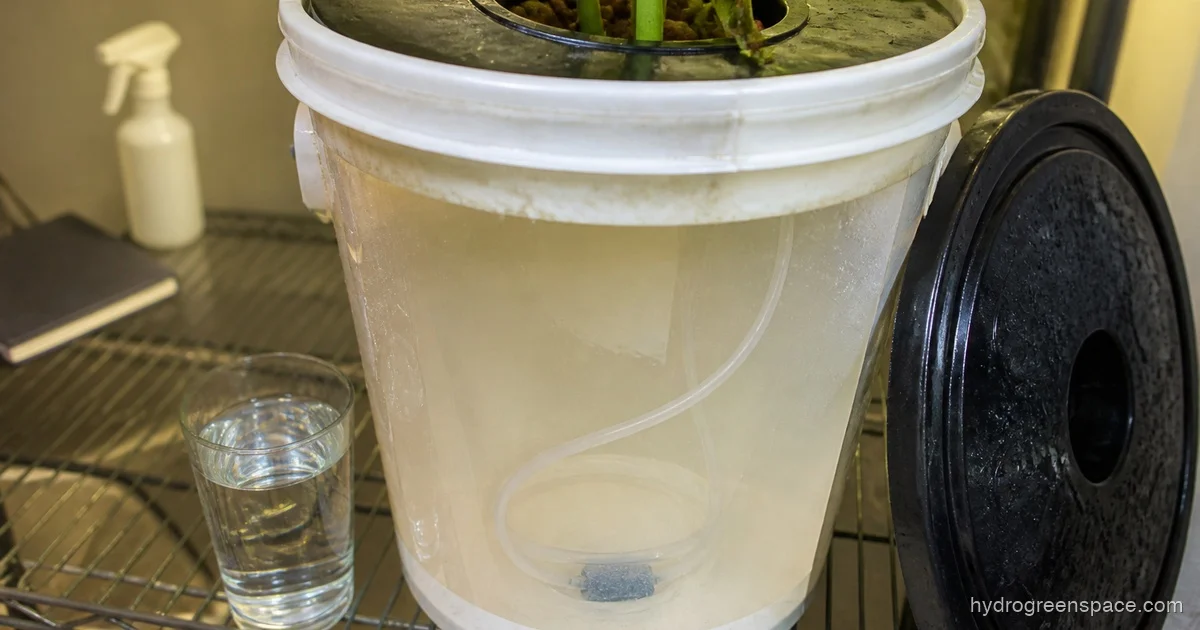
Cloudy water is one of those problems that looks minor but can collapse a healthy reservoir fast. The tricky part is that “cloudy” can mean five different things depending on what’s actually happening in your system, and the fix for one cause will do nothing for another.
Start here: what color is the cloudiness? That single observation narrows the diagnosis from a dozen possibilities to two or three.
What Color Is Your Water? (The Quick Diagnostic)
Before you flush anything or reach for hydrogen peroxide, look at the water in your reservoir under good light.
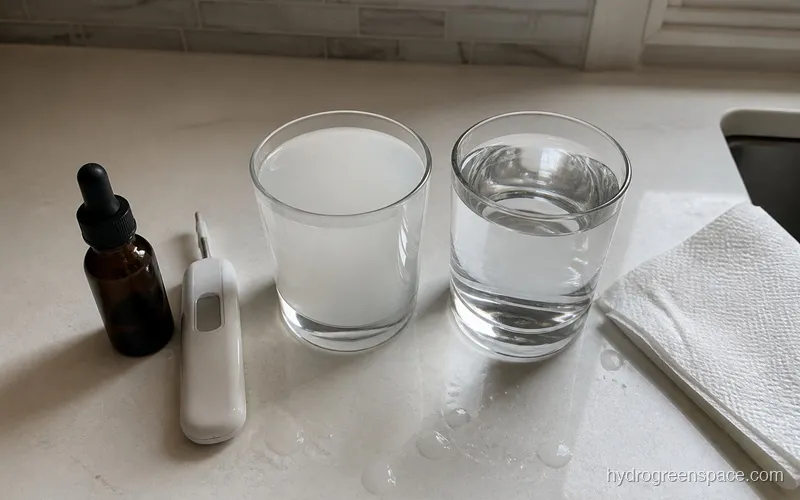
- White or milky: mineral precipitation or a chemical reaction
- Green or yellow-green: algae growth
- Brown or gray, slimy: bacterial biofilm or the early stages of root rot
- Foggy with no color tint: aeration foam or a dissolved nutrient issue
Each one has a different cause, a different fix, and a different prevention strategy. Let’s go through them.
White or Milky Water: It’s Usually Chemistry, Not Biology
Milky white cloudiness in a hydroponic reservoir is almost always a chemistry problem. The two most common causes are calcium precipitation and a nutrient mixing error.
Calcium Carbonate Precipitation
When your reservoir pH climbs above 6.6, calcium and magnesium can bind with carbonate ions and fall out of solution as a white powder. This is called calcium carbonate precipitation, and you’ll notice it fast: the water can go from clear to chalky within a few hours of a pH swing.
You’ll often see a white residue coating the inside of the reservoir walls or settling at the bottom. If you’re also noticing nutrient lockout symptoms in your plants (interveinal chlorosis, slow uptake despite adequate feeding), precipitation is likely the culprit. The nutrients are there, they’re just no longer bioavailable.
Fix: test your pH first. If it’s above 6.5, bring it back down slowly. Do a partial water change (about 30-40%) and recalibrate from there. Clean the white residue off reservoir walls with diluted white vinegar before refilling.
If your pH keeps climbing back up between checks, read about why pH swings happen and how to stabilize it.
The Silica Timing Error
This one catches a lot of experienced growers off guard. Silica (potassium silicate) must be added to plain water and allowed to mix for at least 30 minutes before any other nutrients go in. If you add silica at the same time as your other nutrients, it reacts immediately and creates a chalky white cloud that doesn’t dissolve back out.
The cloudiness from a silica error looks almost identical to calcium precipitation. The tell is timing: if it went cloudy within seconds or minutes of mixing, it’s likely a silica reaction. If it developed over several hours and your pH was high, it’s precipitation.
Fix for silica error: do a full reservoir change. You can’t unmix those compounds.
Green or Yellow-Green Water: Algae Has Moved In
Green cloudiness is algae, full stop. Algae need two things to grow: light and nutrients. Your reservoir has plenty of nutrients, so if green water is showing up, light is getting into your reservoir somewhere.
Common entry points: gaps around net pot holes, a lid that doesn’t seal tight, translucent reservoir walls, or tubing that runs through an exposed section.
A small amount of algae in the water isn’t immediately dangerous to your plants, but it competes for nutrients and oxygen, produces carbon dioxide at night, and can coat root zones over time. Left unchecked, the algae in your system can foul pumps, clog drip lines, and provide a food source for bacterial pathogens.
Fix:
- Block the light source first. Wrap the reservoir in black-and-white poly film (white side out), use opaque lids, and cover any tubing that runs in exposed areas.
- Do a full reservoir flush and clean.
- Keep water temperature below 72°F (22°C), as algae growth slows significantly in cooler water.
Tip: If you’re running a system with white net cups or a clear lid, that’s your entry point. Black net pots and opaque lids eliminate most algae problems before they start.
Brown or Sludgy Water: Take This One Seriously
Brown, gray, or sludgy water is the most urgent color on this list. It usually signals one of two things: a bacterial biofilm is building up, or you’re looking at the early signs of pythium (root rot).
Bacterial Biofilm Buildup
Biofilm forms when bacteria colonize the walls of your reservoir, tubing, and pump housing. The colony breaks loose in fragments that cloud the water and give it a faintly musty or earthy smell. This isn’t always catastrophic (some bacterial activity is normal), but dense biofilm in warm water combined with poor circulation tips quickly toward pathogenic territory.
Temperature is the main driver. Reservoirs above 75°F (24°C) become incubators. If you’re not already using a water chiller or temperature management strategy, this is the moment to address it.
Root Rot (Pythium)
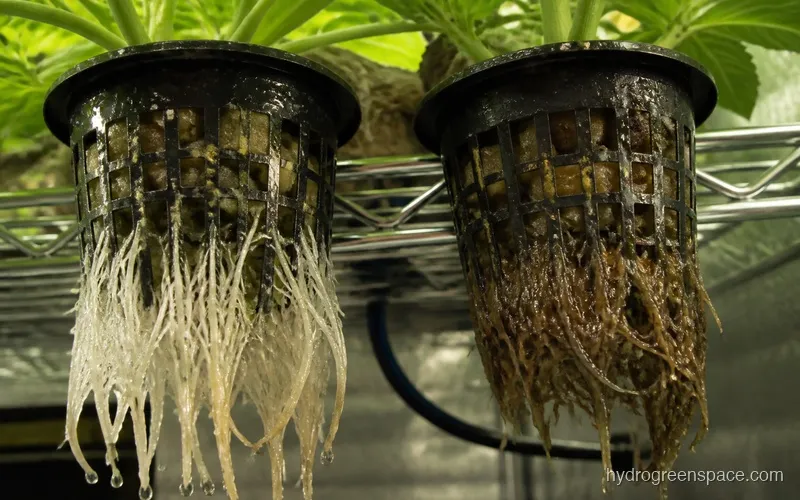
Pythium produces a distinctive brown sludge that smells like sewage. Look at your roots: if they’ve turned from white to brown, tan, or gray and feel slimy, you’re dealing with root rot. The water will be brownish and the smell will be unmistakable.
Root rot in hydroponics can kill a crop in days under the right (wrong) conditions. High water temperature, low dissolved oxygen, and overcrowded root zones accelerate it fast.
Immediate fix for root rot:
- Remove affected plants and trim off any completely dead root material.
- Drain and fully clean the reservoir with a diluted hydrogen peroxide solution (3% H2O2 at 3ml per liter of water), then rinse thoroughly.
- Refill with fresh, properly pH-adjusted nutrient solution.
- Add beneficial bacteria (Bacillus subtilis-based products like Hydroguard) to re-establish a healthy microbial environment.
- Address root cause: lower water temperature, increase aeration, reduce root crowding.
Can Hydrogen Peroxide Fix Cloudy Water?
Yes, with caveats. Hydrogen peroxide (H2O2) can knock back bacterial populations and break down organic matter. It’s most effective for brown/biofilm cloudiness and less useful for white (mineral) or green (algae-light) issues.
The limitation: H2O2 breaks down quickly in the presence of light and organic material, so it doesn’t provide lasting protection. It’s a reset tool, not a prevention strategy. It will also kill beneficial microbes if you’re using them, so don’t add it to a reservoir you’ve just inoculated with Hydroguard or similar products.
Use it during a full reservoir clean, not as a top-off additive.
How Often Should You Change Your Hydroponic Reservoir?
The standard recommendation is every 1-2 weeks, and for most systems that’s about right. But the actual trigger isn’t the calendar; it’s your nutrient solution data.
Change your reservoir when:
- PPM (TDS) drifts significantly from your target even after topping off with fresh solution
- pH becomes difficult to stabilize and keeps shifting direction unpredictably
- You notice a color change or smell developing
- You’ve been top-filling with plain water for more than a week (nutrient ratios shift as plants uptake different elements at different rates)
Letting a reservoir go 3-4 weeks without a change is asking for trouble, especially in warm environments. If you’re seeing cloudiness recur a few days after every water change, that’s a sign something in your environment (temperature, light exposure, contaminated source water) is actively promoting growth.
Tip: When you do a full change, take 5 minutes to wipe down the inside walls and lid with diluted hydrogen peroxide or a food-safe sanitizer. The film that builds up between changes is where the next problem starts.
Preventing Cloudy Water Long-Term
The growers who never deal with recurring cloudy water do a few things consistently:
Temperature control. Keep reservoir water between 65-72°F (18-22°C). This is the single biggest lever. Everything (algae, bacteria, pythium) gets worse above 75°F.
Light exclusion. Zero light penetration into the reservoir. Check gaps around net pots after harvest and replanting.
Proper nutrient mixing. Add nutrients to water in the correct order. Silica always goes first, alone, with a 30-minute wait. Use a nutrient mixing checklist until it becomes muscle memory.
Regular sanitization cycles. Every time you do a reservoir change, clean the walls. Don’t just refill over residue.
Source water quality. Tap water with high chlorine levels can disrupt the beneficial microbial balance over time. If you’re on chlorinated municipal water, let it sit for 24 hours or use a filter before adding it to your reservoir. Chlorine in hydroponic water is a separate but related topic worth understanding.
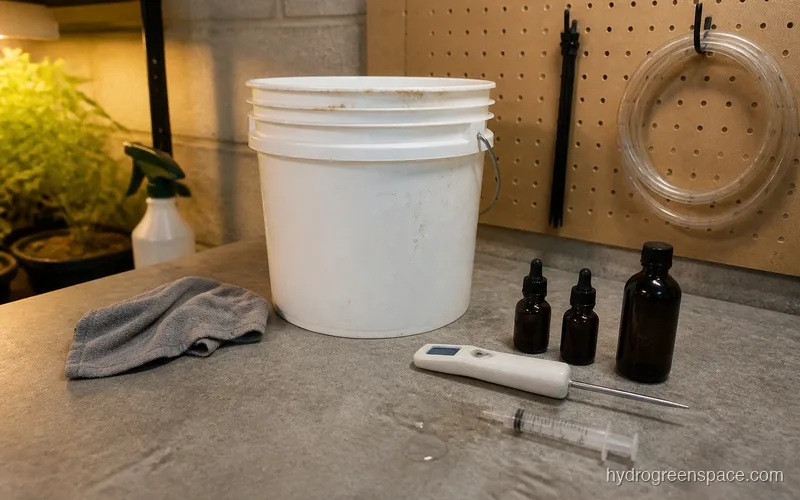
If you’ve identified the color, traced the cause, and done a clean reset, the last step is locking in a routine that keeps it from coming back. A cloudy reservoir is rarely a one-time fluke; it’s usually a signal that temperature, light, or mixing discipline needs tightening. Dial those in and you’ll spend a lot less time troubleshooting water quality and more time actually growing.
Cloudy water is one of the more common reservoir problems covered in the hydroponic troubleshooting guide, which walks through the full range of issues affecting water quality, roots, and plant health in one place.