
Beneficial Bacteria for Hydroponics: How They Work
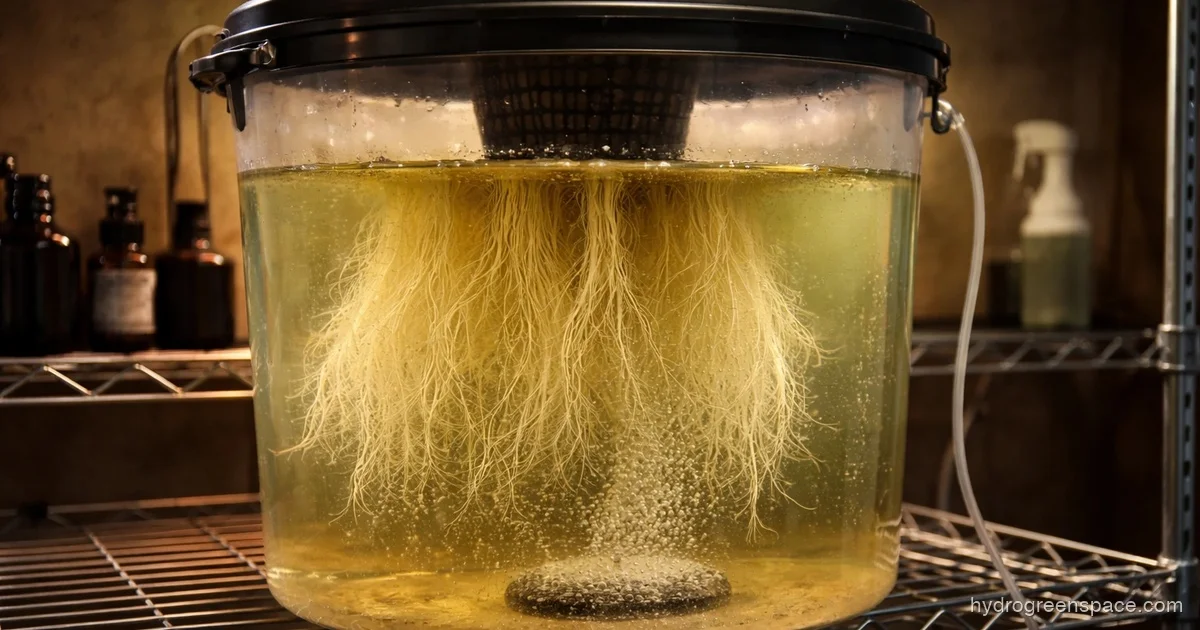
Sterile water and synthetic nutrients sound like the ideal hydroponic setup, and for a long time that was the standard advice. But if you have watched a perfectly healthy reservoir slowly turn into a slimy, root-rotting disaster despite doing everything “right,” you already know that sterile does not mean stable. Introducing beneficial bacteria to your hydroponic system shifts the biology in your favor, and once you understand how it works, it is difficult to go back.
A healthy root zone microbiome is not about going organic or following a trend. It is about giving your roots a competitive edge.
What Beneficial Bacteria Actually Do for Your Plants
Beneficial bacteria for hydroponics are not magic. They are specific strains of microorganisms that occupy the root zone and perform functions that either directly feed your plants or protect them from pathogens.
The most useful category is plant growth promoting bacteria (PGPB), a term you will see in research and on product labels alike. These bacteria work through a few distinct mechanisms:
Nitrogen fixation and phosphorus solubilization. Some strains convert atmospheric nitrogen into forms plants can absorb. Others break down phosphorus compounds that are bound in your water or substrate into plant-available phosphate. Neither is a massive contributor in a well-dialed nutrient solution, but as biostimulants they reduce the chemical workload on your reservoir.
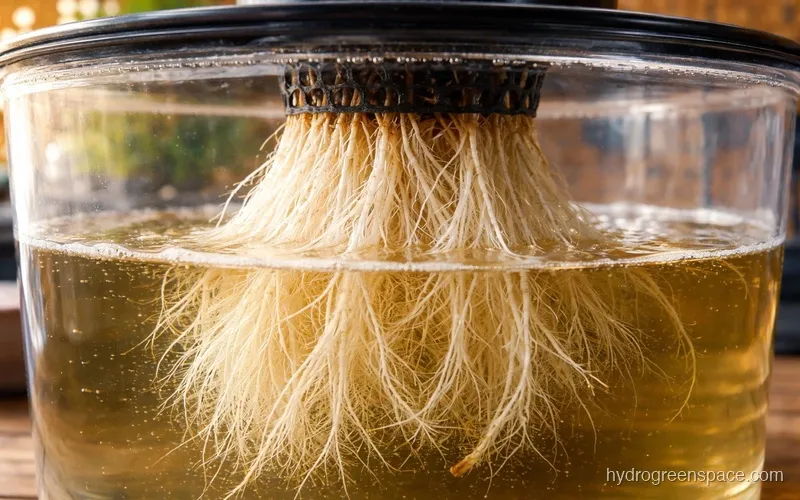
Root development signals. Certain rhizobacteria produce auxins and cytokinins, hormones that trigger root branching. More root surface area means faster nutrient uptake. This is where you see the “bigger, denser roots” effect that growers notice when they add a quality inoculant.
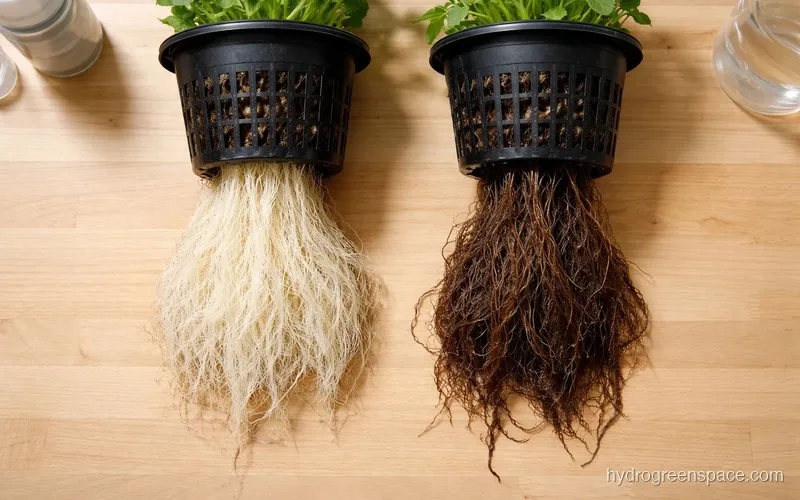
Biocontrol through competitive exclusion. This one is the most practical for home growers. Beneficial bacteria occupy the same physical space that pathogens like Pythium would otherwise colonize. A root zone already dense with competitive organisms is far harder for root rot to establish in. You can read more about how this plays out in practice in our guide to preventing root rot in hydroponics.
Do Hydroponic Systems Even Need Bacteria?
Short answer: no, they do not need bacteria to function. Long answer: the absence of bacteria does not mean a stable system, it just means a different kind of instability.
In a truly sterile system, any microbial contamination that does get in (from a plant, the air, your hands) has zero competition. One Pythium spore in a sterile DWC bucket can wipe a crop. In a system with an established beneficial population, that same spore is fighting for resources in an already-occupied space.
That said, not every system benefits equally, and the approach differs.
DWC and Kratky
Deep water culture and Kratky systems are the trickiest because the entire root mass is submerged. Bacteria need oxygen to survive and thrive, so in DWC you are fine because your air pump delivers enough dissolved oxygen (DO). In a passive Kratky setup, DO levels are lower and the case for bacteria is weaker. Some Kratky growers have success with low-dose inoculants, but if oxygen is already marginal, you are asking bacteria to work in conditions they barely tolerate.
NFT
Nutrient film technique is actually a good candidate for bacterial inoculants. The thin film keeps roots partially exposed to air, oxygen levels stay high, and the constant flow creates a consistent environment. The challenge is that NFT systems run lean on substrate, which limits the surface area bacteria can colonize. Combine your inoculant with a net pot filled with clay pebbles or a small amount of growing medium to give the bacteria somewhere to anchor.
Drip Systems
Drip systems with a solid growing medium (rockwool, coco, clay pebbles) are the most forgiving for beneficial bacteria. The medium gives microorganisms a physical structure to colonize, and the regular wet/dry cycles provide oxygen. If you want to experiment with a bacterial inoculant, drip is the lowest-risk place to start.
Which Bacteria Strains Are Worth Using
Walk into any hydro shop and you will see dozens of products claiming to transform your root zone. Most of them contain one or more of the same core strains.
Bacillus subtilis is the workhorse of hydroponics inoculants. It is tough, forms spores that survive storage and mild chemical exposure, and has a strong track record for biocontrol against Pythium and Fusarium. Any quality bacteria product for hydroponics should have this one.
Bacillus amyloliquefaciens is close to B. subtilis in function but has shown stronger results for phosphorus solubilization in research settings. You will often see both in the same product.
Trichoderma is a fungal species, not a bacterium, but it appears alongside bacteria in most commercial inoculants. It colonizes root surfaces aggressively and strengthens the physical barrier against pathogens. Worth having, but keep in mind it is a different organism with slightly different requirements.
Mycorrhizal fungi are a separate category entirely. They form a direct symbiosis with plant roots and extend the root system’s reach, which is more relevant in soil or substrate-heavy systems than in true water culture. The comparison between bacteria and mycorrhizae is worth understanding before you buy a product that bundles both. Check the detailed breakdown in our upcoming guide to mycorrhizae in hydroponics.
What I’d do: For most home DWC or NFT setups, a single-strain Bacillus subtilis product is a better starting point than a complex multi-organism blend. You can troubleshoot it. If it works, add complexity. If something goes wrong, you know what variable changed.
How to Add Beneficial Bacteria to a Hydroponic System
Getting the dosing wrong is the most common issue, and it usually goes in one direction: growers add too much, assume more is better, and end up with cloudy water, biofilm on reservoir walls, and confused plants.
Step 1: Start with clean infrastructure. If your system has visible algae, slime, or old mineral deposits, clean it first. You cannot establish a healthy microbiome on top of a contaminated one. Beneficial bacteria will not outcompete an existing pathogen load from day one. See the section on common beginner mistakes for what to avoid before you start.
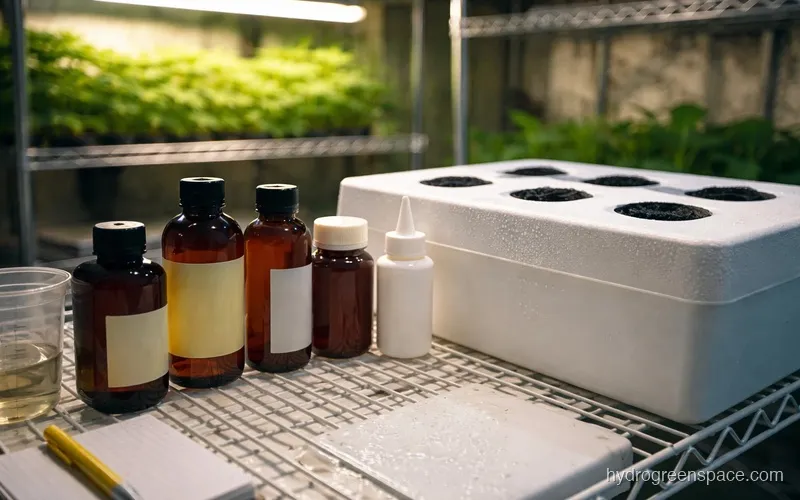
Step 2: Use the manufacturer dose, then back off. Most products are concentrated. The establishment dose is usually higher, and then you maintain with a lower weekly or biweekly application. Follow the label for the first application, then reduce by 30 to 50 percent for maintenance.
Step 3: Apply to roots directly when possible. Drenching the root zone at transplant gives bacteria the best possible start. In a reservoir system, adding to the water is fine, but pour near the inlet or pump so the solution distributes evenly.
Step 4: Reapply after any reservoir change. Large water changes flush a significant portion of your bacterial population. If you do a full reservoir swap, add a half-dose inoculant afterward.
Warning: Do not add beneficial bacteria on the same day you use hydrogen peroxide (H2O2) for sterilization. H2O2 does not discriminate between pathogens and beneficial organisms. Wait at least 48 to 72 hours after any H2O2 treatment before reintroducing bacteria.
Things That Will Kill Your Bacteria Before They Can Help
Chlorinated tap water. Municipal water contains chlorine and chloramine specifically because they kill microorganisms. If you are filling from tap and adding bacteria on the same day, you are working against yourself. Let tap water sit out for 24 hours to off-gas chlorine, or use a dechlorination product. Chloramine does not off-gas and needs a neutralizer. There is a full walkthrough on dealing with this in the guide to chlorine in hydroponic water.
Certain fungicides and pesticides. Broad-spectrum fungicides used to treat powdery mildew or root issues can wipe out beneficial fungi and some bacteria. If you are treating a disease, the bacteria inoculant comes after the treatment is done, not during.
UV sterilizers. UV sterilizers in the reservoir line will kill everything they contact, including your beneficial bacteria. These two approaches are mutually exclusive. Choose one strategy: UV sterilization for a fully sterile system, or bacterial inoculants for a biologically managed one.
High EC and pH swings. Extreme nutrient concentrations stress bacteria just like they stress plants. If your EC is running above 2.8 to 3.0 and you are adding bacteria, results will be inconsistent. Keep conditions stable and bacteria perform predictably.
The DIY Option: Compost Teas
If you want the benefits of a root zone microbiome without buying commercial inoculants, actively aerated compost tea is a real option. Brewing involves aerating compost in water with a food source (molasses or kelp) for 24 to 48 hours to multiply the microbial population before applying. The results are less predictable than a standardized inoculant because compost quality varies, but the cost per application is almost nothing.
The DIY hydroponic nutrients from compost guide covers the compost side of this in detail, and we have a dedicated deep-dive on compost tea for hydroponics coming that will walk through the brewing process step by step.
The main limitation with tea in a closed hydroponic system is that you introduce whatever organisms are in your compost, beneficial or not. In an outdoor or semi-outdoor setup, that risk is manageable. In a sealed indoor system, sterilize or filter before use.
Bacteria vs. Fully Organic: Where They Overlap
Beneficial bacteria are one component of what makes a fully organic hydroponic system work. If you are interested in going further down that road, the biology here directly applies. The root zone microbiome in an organic hydroponic system is what bridges the gap between raw organic inputs and plant-available nutrients.
Whether you are keeping things conventional with synthetic nutrients or moving toward biological inputs, the bacteria approach is compatible with how you feed your hydroponic plants at every stage.
If you have been running a sterile reservoir and wondering why your plants plateau in week 4 or why root rot keeps coming back despite clean practices, bacteria are the variable worth testing next. Once you have a stable bacterial population, the logical next step is dialing in the rest of your root zone environment — temperature, dissolved oxygen, and reservoir hygiene all interact with your microbial population and determine whether it thrives or collapses under pressure. Bacteria are one tool in a larger advanced hydroponic techniques toolkit for growers who want to go beyond basic nutrient management.