History of Hydroponics: From Ancient Roots to Today
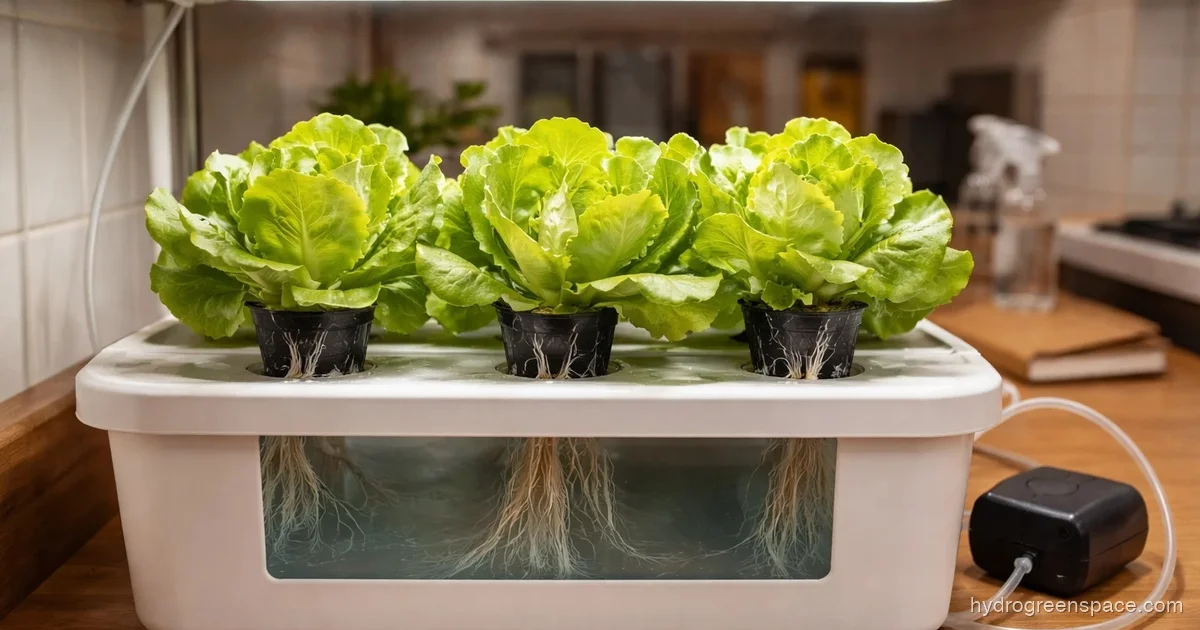
Hydroponics is not a Silicon Valley invention or a 21st-century trend. People have been growing plants without soil for thousands of years, and the reasons they turned to soilless growing back then are almost identical to the reasons you’re reading about it today: limited land, unreliable soil, and the need to feed people reliably. The history of hydroponics is really the history of human ingenuity applied to food.
If you’ve ever wondered whether this is a proven method or an experimental novelty, here’s your answer. What is hydroponics traces the fundamentals, but the history behind it tells you why those fundamentals actually work.
The Ancient World Was Already Doing This
The oldest examples of hydroponic-style growing date back over a thousand years, and two civilizations stand out.
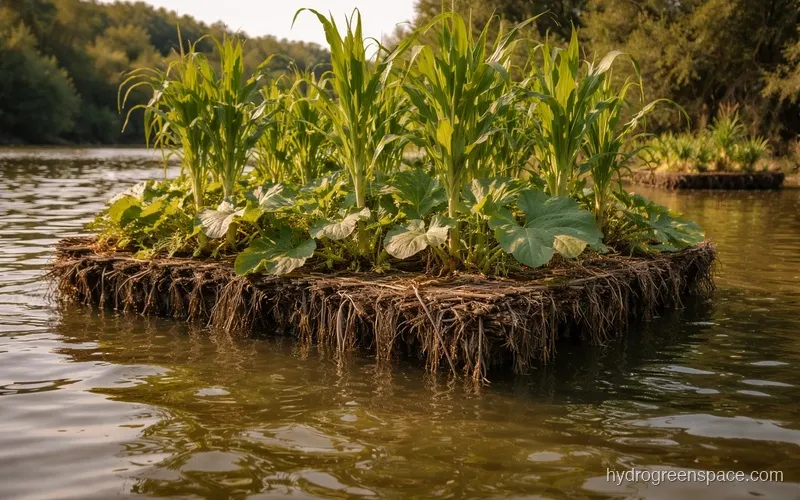
The Aztecs developed a system called chinampas around 1200–1500 AD in the lakes around what is now Mexico City. These were floating garden beds built from mud, reeds, and aquatic plants layered on shallow lake beds. Roots grew down through the raft structure and into the water below, drawing nutrients directly from the lake. Crops like corn, beans, and squash grew on these platforms year-round. The Aztecs weren’t calling it soilless farming, but structurally that’s exactly what it was. Some chinampas are still in use near Xochimilco today.
The Hanging Gardens of Babylon are often cited as an ancient hydroponic system, and the claim isn’t without merit, though the archaeological evidence is debated. The gardens, described by ancient Greek writers as one of the Seven Wonders of the World, were said to be tiered stone terraces with an elaborate water-lifting mechanism to irrigate plants above the Euphrates river level. Whether the plants were truly soilless or just intensively irrigated is hard to say with certainty. What’s not debated is that ancient Babylonian engineers were actively solving the problem of growing plants in an inhospitable environment using water as the delivery mechanism.
The core lesson from both: delivering water and nutrients directly to roots, without waiting on soil biology, has been feeding people for centuries.
Early Science Starts to Ask “Why”
Ancient civilizations proved soilless growing worked. European scientists, starting in the 17th and 18th centuries, started asking why.
In 1648, Belgian scientist Jan Baptist van Helmont planted a willow cutting in a weighed pot of dried soil and watered it with rainwater for five years. The tree gained over 160 pounds. The soil lost almost none of its weight. His conclusion: plants got their mass from water, not soil. He was partially wrong (he missed carbon from CO2), but he cracked open the right question.
By the 1800s, German botanists Julius von Sachs and Wilhelm Knop developed what became the first true nutrient solution experiments. In the 1860s, von Sachs grew plants in a mineral salt solution with no soil at all, documenting exactly which elements plants needed to survive and thrive. This was the birth of soilless growing as a scientific discipline. The solution he developed, containing nitrogen, phosphorus, potassium, magnesium, calcium, and sulfur, reads almost exactly like the ingredient list on a modern hydroponic nutrient bottle.
Tip: When you mix a two-part or three-part nutrient solution today, you’re following the same elemental logic von Sachs worked out in the 1860s. The chemistry hasn’t changed. Only the delivery has gotten more refined.
The science was clear by the late 19th century: soil was never the source of nutrition. It was just the medium that held nutrients near the roots. Remove the soil, keep the nutrients accessible, and plants don’t know the difference.
William Gericke Names the Thing
Fast forward to the 1920s and 1930s, and the most important figure in the modern history of soilless growing steps onto the stage: William Frederick Gericke, a plant scientist at the University of California, Berkeley.
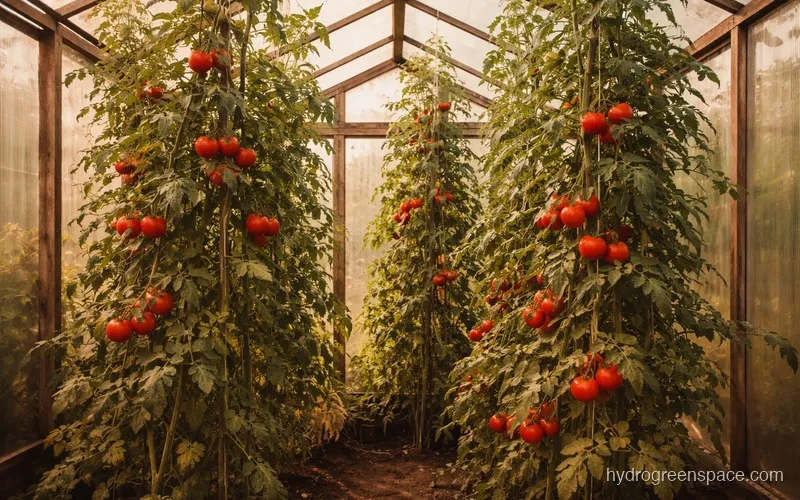
Gericke spent years testing whether agricultural-scale crops could be grown without soil. In 1929, he grew tomato vines in his backyard using a water-based nutrient solution, reportedly reaching 25 feet in height. The results were dramatic enough that he published widely and drew significant public attention.
More importantly, Gericke gave the practice its name. In 1937, he coined the term “hydroponics” from the Greek words hydro (water) and ponos (labor). Water working. The name stuck.
His 1940 book The Complete Guide to Soilless Gardening was the first comprehensive guide to the practice, and it brought the concept out of university labs and into the hands of ordinary people.
Around the same time, Gericke’s Berkeley colleagues Dennis Hoagland and Daniel Arnon published what became one of the most referenced documents in the history of plant science: the Hoagland nutrient solution formula, released in 1938. This formula defined the mineral concentrations needed to grow a wide variety of crops hydroponically. It has been refined since, but it remains the basis for almost every commercial nutrient formulation on the market today.
World War II Puts Hydroponics to Work
Hydroponics moved from academic curiosity to operational food production during World War II, and the circumstances were severe enough to prove what the system was capable of at scale.
The US military needed to feed troops stationed on remote Pacific islands where the soil was coral rubble and volcanic rock, entirely unsuitable for conventional farming. The solution was large-scale hydroponic operations. Wake Island, Ascension Island, and Iwo Jima all saw military hydroponic farms producing fresh vegetables. At its peak, the Army was running hydroponic installations capable of producing thousands of pounds of food per week in conditions where soil agriculture simply wasn’t possible.
The postwar period saw this momentum carry into commercial agriculture. Japan and parts of Europe began experimenting with greenhouse hydroponics for high-value crops. The infrastructure built for military production became a template for controlled environment agriculture that would shape commercial growing for the next several decades.
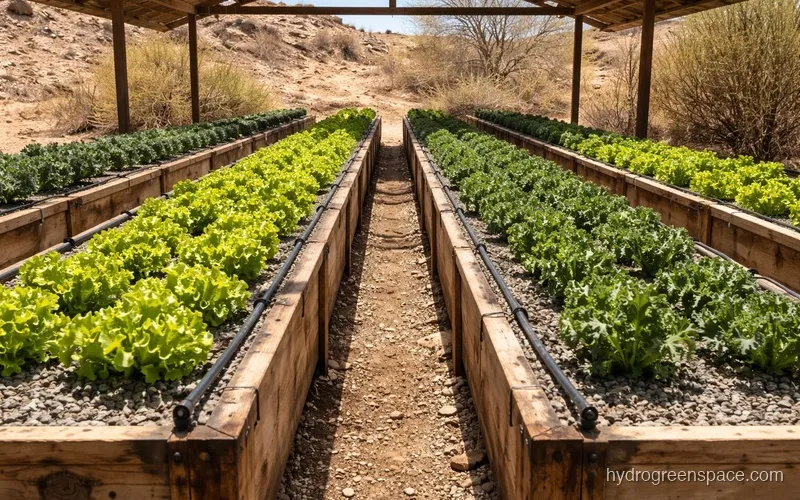
The WWII connection matters for a reason that goes beyond trivia. It’s proof that hydroponics isn’t a niche or a hobby workaround. It was chosen specifically because it was more reliable and more productive than soil in constrained conditions.
From Greenhouses to Home Grow Rooms
The decades from 1960 to 2000 saw hydroponics move into commercial greenhouse production in a serious way, particularly for tomatoes, cucumbers, and leafy greens in the Netherlands and the UK. The Dutch greenhouse industry, which today supplies a significant portion of Europe’s tomatoes, built its dominance largely on refined hydroponic systems, nutrient film technique (NFT) and rockwool substrate growing in particular.
The different hydroponic systems that evolved from these early techniques, including NFT, deep water culture (DWC), and ebb-and-flow, were originally developed at commercial scale. The same systems are now available to home growers for a few hundred dollars or less.
By the 2000s, LED grow lights made indoor hydroponics genuinely practical for home use. Prior to efficient LEDs, the heat load and electricity cost of HID lighting made small-scale indoor growing expensive and difficult to manage. LED technology removed the biggest barrier, and a home grower could now run a 4x4 grow tent with meaningful yields without burning through a utility bill.
The controlled environment agriculture (CEA) industry today, including vertical farms, container farms, and large-scale greenhouse operations, is a direct descendant of everything from Aztec chinampas to Gericke’s backyard tomatoes. And the community of home growers running DWC buckets, Kratky jars, and NFT channels in spare bedrooms is the same lineage applied at the smallest, most accessible scale.
What I’d do: If you’re new to this and the history feels abstract, here’s the practical takeaway: every principle that makes hydroponics work (nutrient delivery to roots, controlled environment, no soil as a limiting variable) was figured out before you were born. You’re not pioneering anything unproven. You’re using a method with a longer track record than most conventional farming techniques.
Why Any of This Matters for Your Setup
The history of soilless growing is worth knowing not because of the dates but because of what it tells you about the fundamentals. Every system from chinampas to a modern Kratky method jar is doing the same thing: keeping nutrients accessible to roots without soil acting as the delivery mechanism.
When your plants struggle, the problem is almost always one of those original variables: water quality, nutrient balance, root access to oxygen, or light. Scientists worked out the chemistry in the 1860s. Gericke proved the scale in the 1930s. The military proved the reliability in the 1940s. What’s left for you is dialing in the execution.
How hydroponics works is the logical next read if you want to go from history into the actual mechanics. And if you want to understand where the method sits today, who uses hydroponics today covers the full range from home growers to industrial vertical farms.
The question isn’t whether hydroponics works. That was answered long before either of us showed up.