How Hydroponics Works: Nutrients, Roots & Systems
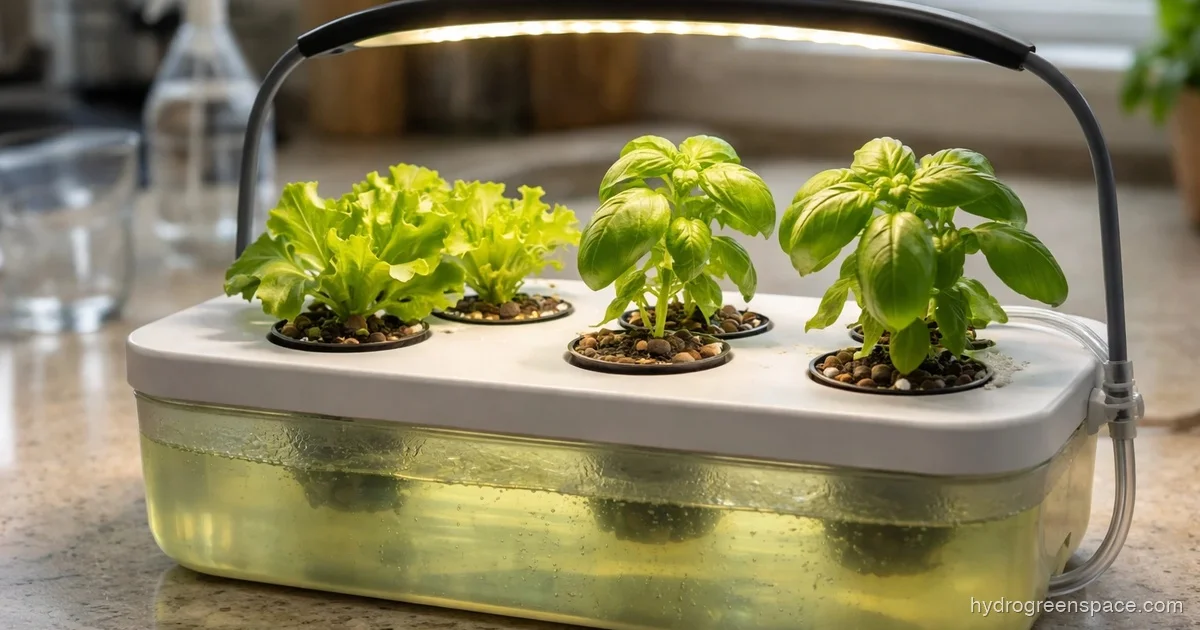
Soil is just a delivery vehicle. It holds nutrients, retains moisture, and gives roots something to grip. Once you understand that, the whole idea of growing plants without it stops feeling like a trick and starts making obvious sense.
Hydroponics removes soil from the equation and delivers water, nutrients, and oxygen directly to the roots. That’s the entire mechanism. Everything else (the tanks, the pumps, the timers, the different system types) is just engineering around that core idea. For the full overview of the topic, including the history, who uses it, and how it compares to soil growing, the what is hydroponics guide covers it all in one place.
What’s Actually Happening at the Root Zone
When a plant grows in soil, its roots are constantly searching. They push outward and downward looking for water and dissolved minerals. The soil doesn’t feed the plant. The water moving through the soil does, carrying dissolved nutrients the plant can absorb.
In a hydroponic system, you skip the search. Roots sit directly in (or very close to) a nutrient solution: water with the right minerals already dissolved in it at the right concentrations. The plant doesn’t burn energy hunting for food. It spends that energy on growth instead, which is a big part of why hydroponic plants can grow 30–50% faster than their soil-grown counterparts.
The Oxygen Question (This Is Where Most Beginners Get Confused)
Here’s the part that trips people up: if the roots are sitting in water, won’t they drown?
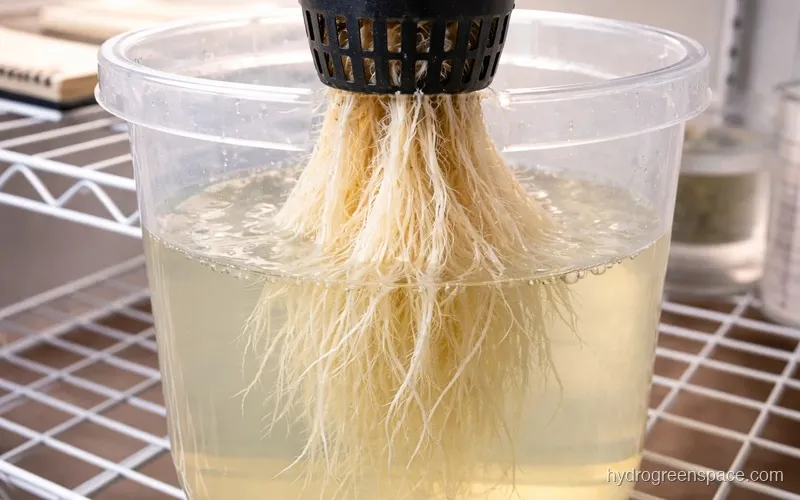
Yes, they will, if the water has no dissolved oxygen. But that’s the point. In a well-designed hydroponic system, the nutrient solution is actively oxygenated, either by an air pump bubbling through the water, by the way the water flows and splashes, or by exposing the roots to air in intervals.
Root rot, the most common hydroponic failure, isn’t caused by water. It’s caused by anaerobic conditions: roots starved of oxygen. Keep oxygen levels up and your roots stay white, firm, and healthy. Let them stagnate and they turn brown and slimy within days.
This is also why water temperature matters. Cold water (around 65–68°F / 18–20°C) holds dissolved oxygen better than warm water. Anything above 72°F (22°C) starts to deplete oxygen levels and creates conditions where root rot pathogens thrive. Water temperature is easy to overlook but it’s one of the first things to check when roots start looking unhealthy.
What I’d do: If you’re starting out, get a cheap aquarium thermometer for your reservoir. Check it for the first two weeks until you know how your setup behaves in your actual room temperature. It’s a 10-minute habit that prevents most root problems.
The Nutrient Solution: What Goes In the Water
Plants need 17 essential nutrients. In soil, most of these come from decomposed organic matter or added fertilizer. In hydroponics, you add them directly to the water using a concentrated nutrient solution, typically a two- or three-part liquid formula (Part A, Part B, sometimes a bloom booster).
The key measurement is EC (electrical conductivity), which tells you how concentrated the solution is. Seedlings want a low EC (around 0.5–0.8 mS/cm). Full-grown fruiting plants like tomatoes or peppers want 2.0–3.5 mS/cm. EC meters cost less than $20 and are non-negotiable for serious growing.
pH is the other critical variable. Nutrient availability in a hydroponic solution is almost entirely pH-dependent. The sweet spot is 5.5–6.5. Outside that range, plants can be sitting in a perfectly dosed nutrient solution and still starve, because the nutrients lock out and become chemically unavailable to the roots. This is called nutrient lockout, and it’s the reason “I’m feeding them but they’re still yellowing” is such a common complaint.
For a deeper look at managing this, pH in hydroponics is worth understanding before your first grow.
Common mistake: Mixing nutrients into the water first, then adjusting pH. Always get your nutrient solution fully mixed before checking pH, since adding nutrients changes the pH significantly.
The 6 Main Hydroponic System Types
Understanding how hydroponics works in theory is one thing. These are the six systems you’ll encounter in practice, from the simplest to the more complex:
Deep Water Culture (DWC): Plants sit in net pots suspended over a reservoir. Roots hang directly into oxygenated nutrient solution. An air pump runs continuously. This is the most beginner-friendly active system. Low cost, easy to monitor, hard to mess up.
Kratky Method: A passive variation of DWC with no pump. You fill a reservoir, let the roots grow down, and as the plant drinks, an air gap forms naturally above the waterline. No electricity required beyond your grow light. Best for leafy greens and herbs. The Kratky method is genuinely the simplest way to start.
Nutrient Film Technique (NFT): A thin film of nutrient solution flows continuously along the bottom of sloped channels. Roots trail inside the channels, absorbing nutrients from the film while the upper root mass stays in air. Efficient and popular for lettuce. Requires a pump and return reservoir.
Ebb and Flow (Flood and Drain): A grow tray floods periodically with nutrient solution, then drains back into a reservoir. Roots are in growing media (like clay pebbles or rockwool), not bare in water. Good for larger plants. Requires a pump and timer.
Drip Systems: Nutrient solution drips onto the base of each plant via emitters. Common in commercial operations. Highly scalable. Recirculating versions reuse runoff; drain-to-waste versions don’t.
Aeroponics: Roots hang in a dark chamber and are misted with nutrient solution at intervals. The highest-performing system type; roots get maximum oxygen exposure. Also the most equipment-intensive and least forgiving if something fails.
For beginners, DWC and Kratky are the honest answer to “where do I start.” Both are forgiving, inexpensive, and let you see what’s happening with your roots. You can run a working DWC system for under $50.
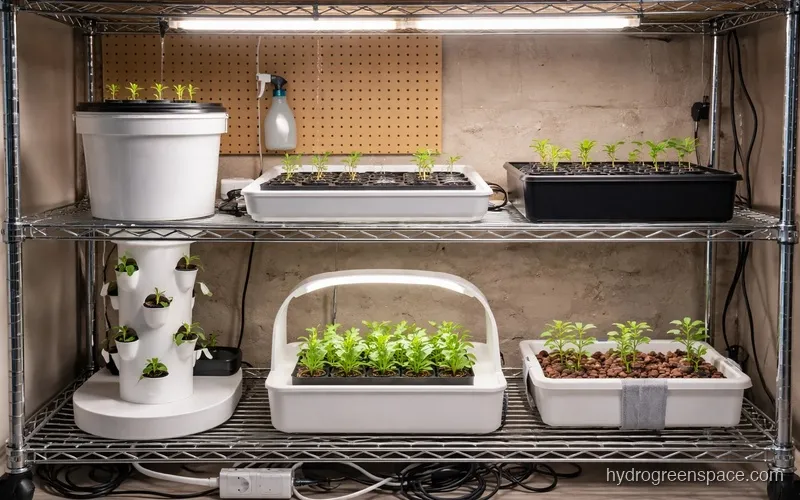
For a full breakdown, different types of hydroponic systems covers each one in detail with setup options.
Does Hydroponics Need Sunlight?
Not necessarily. Plants need light, but it doesn’t have to come from the sun. Most indoor hydroponic setups use grow lights. LED panels are the current standard because they run cool and cover the full spectrum plants need for vegetative growth and flowering.
If you have a south-facing window with strong direct light (6+ hours), you can grow leafy greens without supplemental lighting. Fruiting plants like tomatoes and peppers almost always need a grow light indoors regardless of window exposure. The light requirement doesn’t change just because soil is removed; that part of plant biology stays exactly the same.
What Hydroponics Actually Uses (and Saves)
One of the most cited advantages of hydroponic growing is water efficiency. A closed hydroponic system recirculates the nutrient solution rather than letting it drain away, which means you’re using roughly 90% less water than field agriculture for the same crop. That comparison is against outdoor commercial farming, but even at home scale, a 5-gallon DWC bucket growing lettuce uses far less water than the same lettuce in a container of soil that needs regular watering.
The tradeoff: you’re buying nutrients instead of relying on what’s in the ground. And you’re paying for electricity for pumps, timers, and lights. The economics make most sense when you’re growing high-value crops (herbs, leafy greens, specialty peppers) or when space and water are genuinely constrained. Why hydroponics matters covers the environmental case in more depth.
Is This Hard to Do at Home?
The mechanism is simple. The management takes practice.
You can have a lettuce crop growing in your kitchen within a weekend. A Kratky jar, a net pot, some clay pebbles, a small bottle of two-part hydroponic nutrients, a pH meter, and a grow light if your light is poor. That’s it. Basil, lettuce, spinach, and kale will grow reliably in that setup with almost no intervention once you’ve dialed in your initial nutrient mix.
Where beginners run into trouble is usually: not checking pH consistently, letting reservoir temperature get too warm, or not topping off water when levels drop (which concentrates the nutrient solution to harmful levels). None of these are complicated problems. They’re just things you need to know to look for.
The honest comparison to soil: hydroponics requires more attention to water chemistry and less attention to everything else. No watering schedule, no soil amendments, no weeds, no pests in the root zone. Hydroponics vs. soil growing breaks down the full tradeoff if you’re still deciding which direction to go.
Tip: Your first grow will teach you more than any article can. Don’t aim for perfect; aim for finished. Even a half-successful crop of lettuce will show you exactly what to adjust next time.
Can you use tap water? Yes, in most cases. Let it sit uncovered for 24 hours to off-gas chlorine, or use a dechlorinator. Well water can work but may have minerals that throw off your baseline EC reading, so test it first. Heavily chlorinated municipal water or water with high dissolved solids may need filtering.
Once you’ve gotten one successful grow under your belt, the system types start making more sense, the numbers feel less arbitrary, and you’ll find yourself thinking about a bigger setup. That’s how it tends to go. If you want a structured starting point, the beginner’s guide to hydroponics walks through your first build step by step.