Best Seeds for Hydroponics: Varieties That Thrive
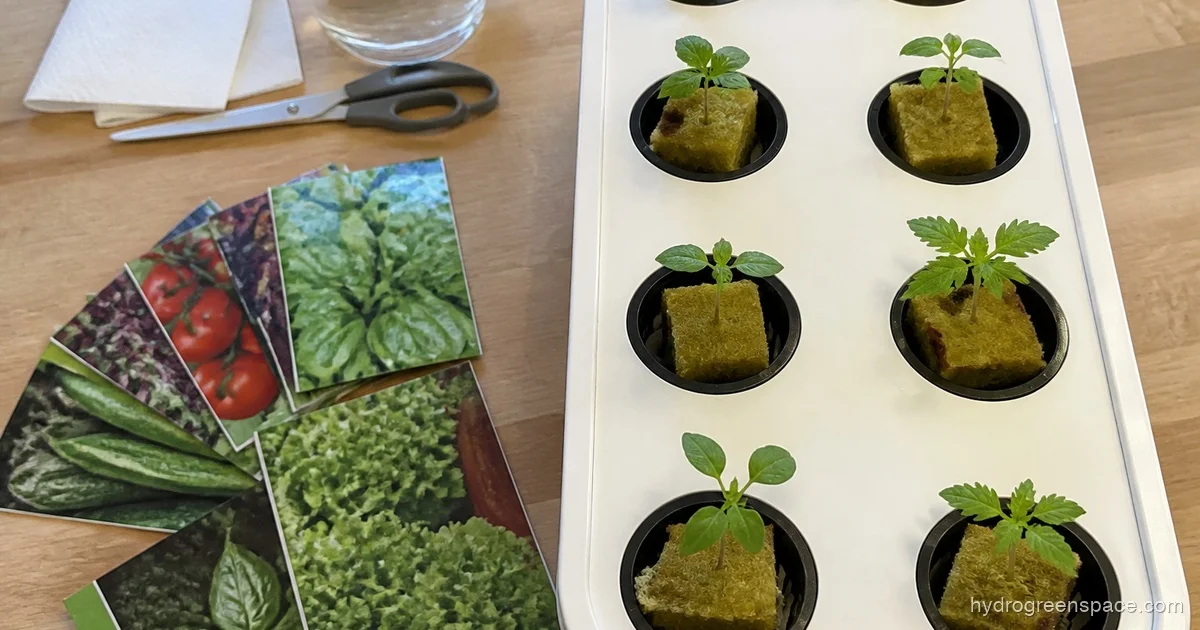
The most common question I hear from new growers: “Do I need to buy special hydroponic seeds?” The short answer is no. Seeds don’t know whether they’re going into soil or a nutrient reservoir. What matters is which varieties you choose, because not every plant is built for a compact, soilless indoor setup.
This guide cuts through the noise. You’ll learn the three criteria that actually determine whether a seed variety will thrive hydroponically, then get specific variety recommendations by crop category, and finally, a list of plants that will waste your time and space. If you’re putting together your first seed order, this is where to start.
You Don’t Need “Hydroponic Seeds,” But Variety Selection Still Matters
Walk into any garden center or browse Amazon and you’ll see seed packets labeled “hydroponic.” That label is a marketing move, not a meaningful category. Any open-pollinated or F1 hybrid seed that meets the right growth criteria will perform in a hydroponic system.
What you’re actually looking for are varieties selected for:
- Compact growth habit: plants that stay small enough for indoor systems and don’t require aggressive pruning
- Days to harvest under 60: the faster you turn a crop, the more efficiently you use your system and your lights
- Shallow or fibrous root systems: tap-rooted plants (think carrots, parsnips, beets) are technically possible but awkward in most systems
A fourth factor people overlook: heat tolerance. Hydroponic grow rooms, especially those using HID lighting, run warmer than outdoor gardens. Lettuce and spinach varieties bred for bolt resistance will give you weeks more production before the plant turns bitter and goes to seed.
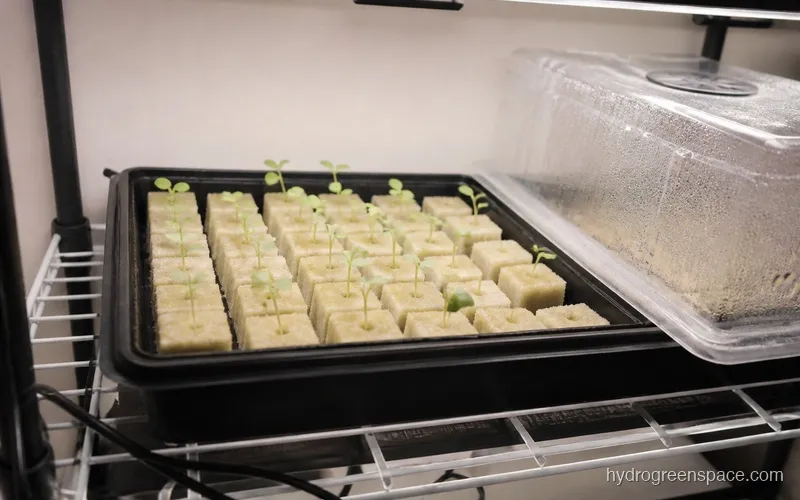
One note on seed form: pelleted seeds are easier to handle for precision sowing but have a slightly lower germination rate compared to raw seed. For soilless growing, where you’re typically germinating in rockwool or a grow medium, raw seed works fine. If you’re seeding into a rockwool starter cube, go raw.
Leafy Greens: The Best Starting Point
Leafy greens are the reason most home growers fall in love with hydroponics. Fast germination rate, short days to harvest (most are ready in 30–45 days), and they tolerate the fluctuations in pH and EC that beginners inevitably cause. This is where you build your confidence.
Lettuce
Lettuce is the undisputed king of beginner hydroponic seeds. Loose-leaf varieties outperform head types in most home setups because they don’t need the space or the perfectly dialed climate to form a dense head.
Best varieties:
- Black Seeded Simpson: a loose-leaf variety that hits harvest in 28 days, extremely forgiving of light fluctuations
- Buttercrunch: a butterhead type with compact heads, sweet flavor, and solid bolt resistance; ready around 55 days
- Red Sails: adds color to a grow rack, similar harvest window to Black Seeded Simpson, and handles warmer temps better than most
Avoid iceberg and crisphead types. They need a wider temperature swing to form heads properly, which is hard to create indoors without significant equipment.
If you want to go deeper on specific cultivars, the full lettuce variety breakdown is worth reading before you buy seeds.
Spinach
Spinach has a narrower operating window than lettuce. It wants cooler temps (60–70°F), and in a warm grow room it will bolt fast. That said, Tyee and Corvair are F1 hybrids with solid bolt resistance that have worked well for me even in rooms running 72–74°F. Harvest at baby leaf stage (around 25 days) rather than waiting for full leaves, and you’ll get 2–3 cuts before the plant shifts into reproductive mode.
Kale and Chard
Both work well hydroponically and are slower-growing (50–65 days), which makes them better suited to DWC or media bed systems where you’re willing to let a plant occupy a net pot for a while. Lacinato kale and Bright Lights chard are reliable choices. Don’t bother with full-size kale if space is tight.
Herbs: Fast Returns, Small Footprint
Herb seeds for hydroponics perform exceptionally well because most culinary herbs evolved in lean, well-drained conditions. A nutrient solution hits them like a performance upgrade.
Basil
Basil is one of the fastest-growing seeds for hydroponics. Genovese is the standard, but Lettuce Leaf basil grows bigger leaves and stays more compact. Either will give you harvestable leaves in 3–4 weeks. The catch: basil hates cold water (below 65°F causes root stress) and is sensitive to overfeeding. Start at lower EC (0.8–1.2 mS/cm) and bring it up gradually.
Cilantro
Cilantro is the herb that trips people up. It’s fast (ready in 21–30 days at baby leaf stage) but bolts quickly. The trick is to treat it as a cut-and-come-again crop at the baby leaf stage rather than waiting for full plants. Calypso is a slow-bolt variety worth seeking out. Sow densely, harvest early, and resow constantly if you want a continuous supply.
Chives and Parsley
Both are slower and less dramatic than basil or cilantro, but they’re reliable producers. Fine de Boulogne parsley is more compact than flat-leaf Italian types. Chives germinate slowly (14–21 days) but once established in a system they’re extremely low maintenance.
Tip: Skip mint from seed entirely. Mint grown from seed produces inconsistent plants with weak flavor compared to cuttings. Source a cutting from an established plant, root it in a net pot, and you’ll have a much better result.
Fruiting Vegetables: Possible, But Know What You’re Getting Into
Fruiting vegetables are possible in a home hydroponic setup, but they require more light, more vertical space, and more attention to nutrients than leafy greens or herbs. For a grower who’s put in a few harvests and wants to expand, they’re worth the effort.
Cherry Tomatoes
Full-size tomato varieties (beefsteak, roma) are a poor fit for most home hydroponic systems because of their vigor and space requirements. Cherry and dwarf varieties are the practical choice.
Good options:
- Tiny Tim: a true dwarf that tops out around 12 inches, good for smaller systems
- Tumbling Tom: compact, productive, works well in vertical or bucket systems
- Sweet Million: indeterminate, so it needs trellising, but extremely productive
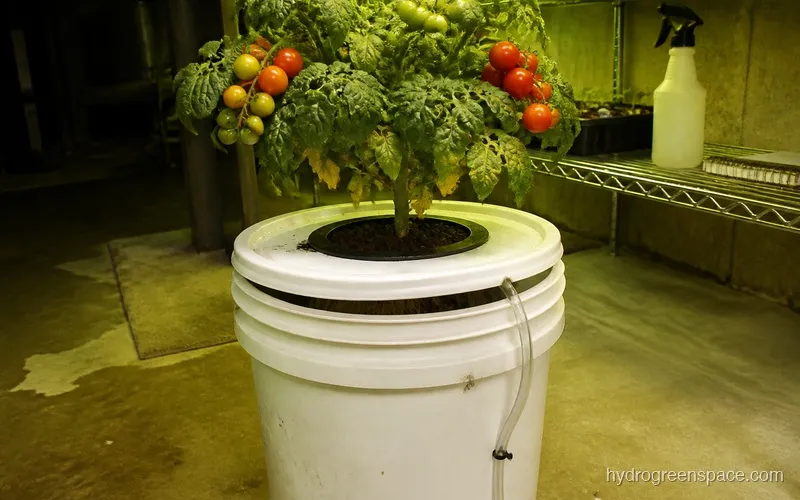
Tomatoes need significantly more light than greens (16–18 hours under LED, or full HID). And they’re heavy feeders; your EC needs to run 2.0–4.0 mS/cm at peak fruiting. If you’re starting out, learn the basics of feeding first before committing a big system to tomatoes.
Peppers
Peppers are patient plants. They’re slow to germinate (10–21 days), slow to first fruit (60–90+ days), and they need warm roots and high light. But once they’re producing, a single pepper plant in a 5-gallon DWC bucket will outperform anything you’ve grown in soil. Lunchbox snack peppers and Mini Belle are compact types that work well in home systems. For more on setup and timing, the hydroponic peppers guide covers the specifics.
Cucumbers
The easiest fruiting vegetable for hydroponics. Bush Pickle and Spacemaster are compact, shorter-vining varieties. Standard slicing cucumbers (like Straight Eight) will take over a grow room fast. Cucumbers want warm temps, high humidity, and consistent feeding. Days to harvest: 50–60 days from seed.
What to Avoid Growing From Seed Hydroponically
These are the crops that cause the most frustration and wasted resources for new growers.
Root vegetables: Carrots, radishes, beets, and turnips are theoretically possible in deep gravel beds, but you need a system designed for root crop depth. Most net pot setups can’t accommodate them. The one exception: radishes in a deep ebb-and-flow system can work if you’re experimenting.
Corn: Large plant, huge nutrient demand, does not produce efficiently indoors. Just not worth it.
Melons and large squash: The vining habit alone eliminates most indoor setups. Even compact varieties like Sugar Baby watermelon need more space than the return justifies.
Large brassicas: Broccoli, cauliflower, and Brussels sprouts need a temperature drop to trigger heading. Without that seasonal trigger, you’ll get leafy, non-productive plants. Baby broccoli (broccoli raab) is an exception and works well as a leafy green.
Peas and beans: They can work in larger systems, but they occupy a lot of space, produce modest yields per square foot, and there are better choices for maximizing your system.
What I’d do: For your first seed order, pick two lettuce varieties (one green, one red), one basil variety, and one herb you actually cook with. Get those harvests under your belt before adding fruiting crops. Your system, your light schedule, and your nutrient management will all be better dialed in by then.
Practical Tips for Buying Seeds
Non-GMO matters here, not for any ideological reason, but because non-GMO seeds are typically open-pollinated varieties with more predictable germination rates and growth habits in controlled environments. F1 hybrids are fine too (and often have better disease resistance), but avoid anything described as “treated” or coated with fungicide, as that coating can interfere with sensitive seedling roots in a soilless medium.
Buy from seed companies, not hardware stores. The seed packets at big-box stores are often left over from the previous season, and germination rates drop sharply after the first year. Johnny’s Selected Seeds, True Leaf Market, and High Mowing Organic Seeds all offer varieties suited to intensive growing and their germination rates are reliably good.
Germination rate matters more than price. A $4 packet of lettuce seed from a quality supplier will outperform a $1 packet every time. When you’re starting seeds in rockwool or grow plugs, a poor germination rate means gaps in your system and wasted space.
If you’re tracking your results, a germination rate tracker helps you identify which varieties and suppliers are actually performing for your setup over time.
Once you’ve got seeds picked out and ordered, the next step is dialing in your seed-starting process for hydroponics, covering your germination medium, temperature, and light timing from day one.