
Damping Off Prevention for Hydroponic Seedlings
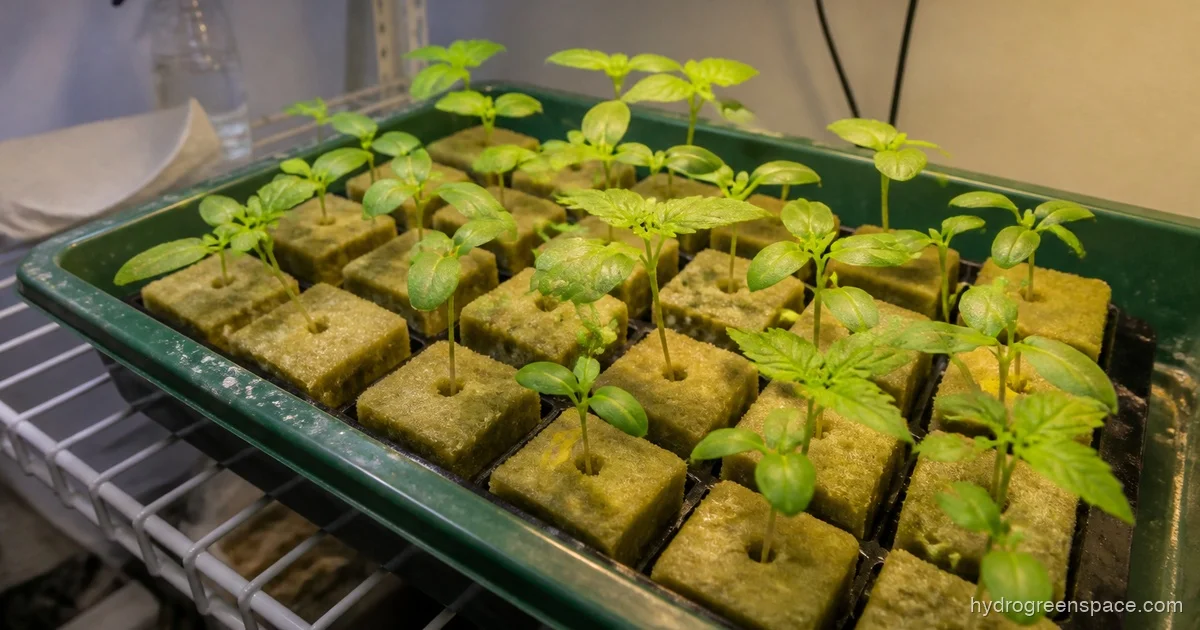
You checked your seed tray this morning and everything looked fine. You check again twelve hours later and half your seedlings are lying flat, their stems pinched thin right at the plug surface like someone crimped them with a pair of pliers. That’s damping off, and if you grow from seed in hydroponics, it’s going to find you eventually.
The good news: damping off prevention is straightforward once you understand what’s actually happening. The bad news: by the time you see a seedling topple, that plant is already gone. You cannot reverse it. What you can do is stop it from spreading and make sure it never starts again.
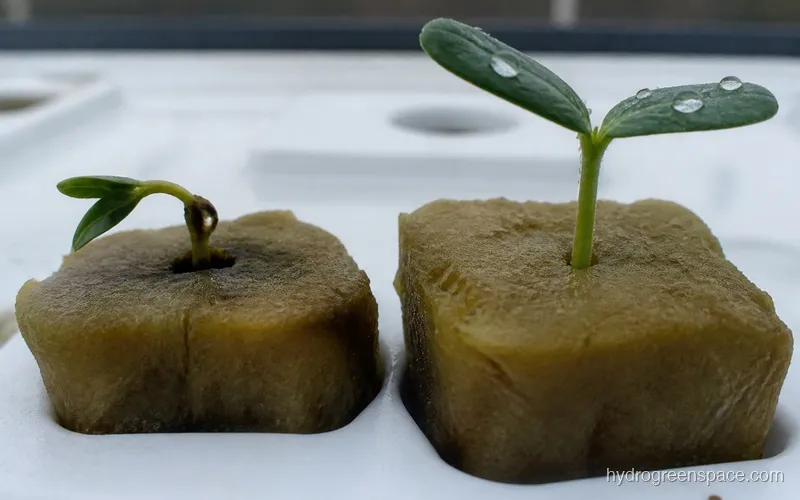
What Damping Off Actually Looks Like (and Why It Happens Before You Notice)
There are two forms, and most growers only know about the second one.
Pre-emergent damping off happens before your seeds sprout. The seed absorbs water, starts to germinate, and then the fungal pathogen (usually Pythium, Rhizoctonia, or Fusarium) attacks the embryo before it can push through the plug surface. Your plug just never germinates. Growers chalk this up to bad seeds or wrong temps when the real culprit is a saturated plug sitting in a tray with no airflow.
Post-emergent damping off is the one you actually see. The seedling sprouts, looks healthy for a day or two, and then collapses at the base. The stem isn’t broken. It’s rotted. The tissue at the soil line or plug surface turns brown, constricts to a thread, and loses structural integrity. The top of the plant is still green when it falls, which is what makes this so disorienting the first time.
Both forms share the same root cause: a pathogen got a foothold in wet, stagnant conditions before your seedling had enough of a root system to fight back.
Why Hydroponics Creates a Specific Risk
Most damping off guides are written for soil growers. Hydroponic seed starting has a different problem profile.
In soil, damping off pathogens move slowly through a dry-ish substrate. In hydroponics, you’re working with rockwool cubes, rapid rooters, peat pellets, or coco coir plugs. All of them hold water longer than soil. And Pythium, the most common culprit in recirculating hydroponic systems, reproduces with zoospores that swim freely in water. If one plug gets infected and your recirculating system touches all of them, the zoospores spread plant to plant in hours.
Pythium isn’t just a damping off pathogen, it’s the same organism that causes root rot in hydroponics. Same pathogen, different target tissue. In seedlings it attacks the stem base. In mature plants it attacks roots. If you’ve had root rot in your main system, those zoospores are already in your reservoir and any seedlings you transplant into that system are at immediate risk.
If you’re choosing between media types for germination, reading through Rapid Rooters vs rockwool cubes can help you weigh moisture retention and airflow trade-offs before you even start.
Common mistake: Growers squeeze their rockwool cubes to check moisture and wonder why their seedlings keep damping off. Rockwool stays wetter at the base than at the top, even after it looks fine. If it feels damp when you squeeze it, it’s still holding more moisture than your seedlings need.
The Real Causes in a Hydroponic Seed Tray
When a tray of seedlings damps off, it’s almost always a combination of these factors rather than one single cause.
Overwatered plugs. You want your seed starting media moist, not saturated. A rockwool cube should hold water like a wrung-out sponge. A rapid rooter should feel slightly damp but springy. If water pools at the bottom of your plug tray or the plugs feel heavy and cold, they’re too wet.
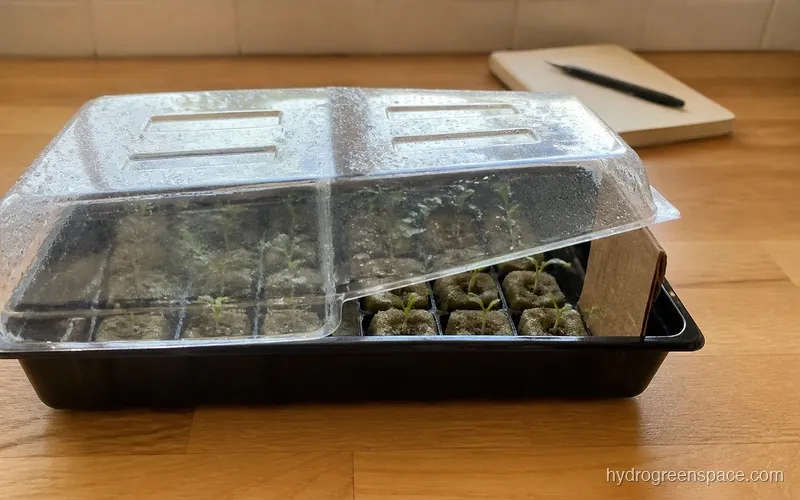
No air circulation under the dome. The humidity dome that came with your seed tray is useful for retaining moisture before germination. After germination, it becomes a problem if you leave it sealed. Warm, humid, stagnant air is exactly what Pythium and Rhizoctonia need. Most growers find out the hard way that leaving the dome fully sealed for even two days after sprout emergence is enough to trigger an outbreak.
Temps that are too low. Damping off pathogens are active at cooler temperatures, while your seedlings are most vulnerable when they haven’t had time to develop strong stems. If you’re germinating in a cold room or on a cool surface without a seedling heat mat, you’re running seed starting at a temperature that favors the pathogen over the plant. Aim for 68-75°F at the plug surface.
Overcrowding plugs. When plugs are packed too close together with no gaps between them, the space between plugs stays wet and still. Each plug essentially extends the wet zone of the one next to it. Give your plugs room.
Damping Off Prevention: What Actually Works
None of this requires expensive products. The core of damping off prevention is environmental.
Vent the dome on day one after germination. The moment you see the first sprout emerge, prop the dome slightly or use the vents if your tray has them. By day two, remove the dome entirely during your light cycle. You want air moving across the top of the plugs. A small oscillating fan on the lowest setting pointed at the tray does more for damping off prevention than any spray or treatment.
Water less, not more. This is where beginner growers consistently go wrong. Check plugs by feel and weight, not by schedule. A plug that’s lost significant weight since you last watered is ready. A plug that still feels heavy is not. Bottom-watering (adding water to the tray so plugs absorb from below) gives you more control and keeps the stem base dry, which is where damping off attacks.
Keep temps in range. If your germination area is below 65°F, add heat. A heat mat under the tray will both speed germination and shift conditions away from the damping off sweet spot.
Use Hydroguard or another beneficial bacteria product from day one. Bacillus amyloliquefaciens (the active strain in Hydroguard) colonizes the root zone and outcompetes Pythium for space and resources. It doesn’t cure an active infection, but started early it creates a microbial environment that’s hostile to pathogen establishment. Mix it at half the recommended rate in your first watering water.
Start with clean equipment every time. Rinse trays with a dilute hydrogen peroxide solution (1ml of 3% H2O2 per liter of water) between seed starts. Old trays with organic residue are where pathogen populations carry over from one crop to the next.
If you’re experimenting with alternative germination methods, some growers find that germinating seeds without rockwool in paper towels first reduces early-stage damping off risk because the seed has already developed a tap root before going into a plug.
Does Cinnamon Actually Work?
You’ll see this one everywhere: sprinkle ground cinnamon on the soil or plug surface to prevent damping off. The science behind it is that cinnamon has antifungal properties. The practical reality is mixed.
Cinnamon can suppress some surface fungal growth and won’t harm your seedlings at light dusting concentrations. But it’s not going to stop a Pythium infection that’s already in your plug or your recirculating water. Treat it as a minor supplemental tool if you want to try it, not as a primary prevention strategy. Airflow and moisture management will do more than cinnamon every time.
What to Do If You Have an Active Outbreak
The hardest thing to accept: you cannot save a seedling that has already damped off. The stem tissue is gone. Remove any affected seedlings immediately and do not compost them.
Here’s the recovery protocol:
- Remove all affected seedlings and dispose of them outside your growing area.
- Discard any plugs that were in contact with affected seedlings, even if they look healthy. Zoospores move in water. The neighboring plug almost certainly has early-stage infection.
- Drain and disinfect your tray with dilute hydrogen peroxide before adding new plugs.
- Check your main reservoir if you’re running a recirculating system. If zoospores are present, a partial reservoir change and a dose of Hydroguard is your best line of defense.
- Identify what went wrong. Look at your dome venting schedule, plug moisture levels, and room temperature. Fix the condition before starting your next round.
- Restart with new plugs under corrected conditions. Most growers who lose one tray to damping off never lose another, because they’ve figured out exactly what was wrong.
Choosing the Right Media Helps Too
Some media types are more forgiving than others when it comes to moisture management. Rapid Rooters dry out faster than rockwool and have a more porous structure that allows better airflow to the stem base. Peat pellets expand and can stay very wet if you over-soak them at the start. Coco coir has excellent drainage and air-to-water ratio, which is part of why seed starting in coco coir is gaining popularity among growers who’ve had repeated damping off issues in rockwool.
The right choice depends on your system and environment. If your grow room runs humid and warm, lean toward a media with faster drainage and better aeration. If you’re in a dry environment and struggle to keep moisture in your plugs long enough for germination, peat pellets or a well-prepped rockwool cube might serve you better. More on this in the comparison between peat pellet seed starting options if you want to dig into the trade-offs.
Once your seedlings are through germination and have a visible root emerging from the plug, you’re largely past the damping off window. At that point, the focus shifts to transplanting seedlings into your hydroponic system without shocking them and keeping conditions stable through the transition.
Damping off looks sudden, but it builds up over hours before the seedling collapses. Get through germination without losing a tray and the rest of the growth cycle becomes straightforward. For the full picture of seed starting from day one through transplant, the seed starting for hydroponics guide covers everything in one place.