
Best Lettuce Varieties for Hydroponics by System
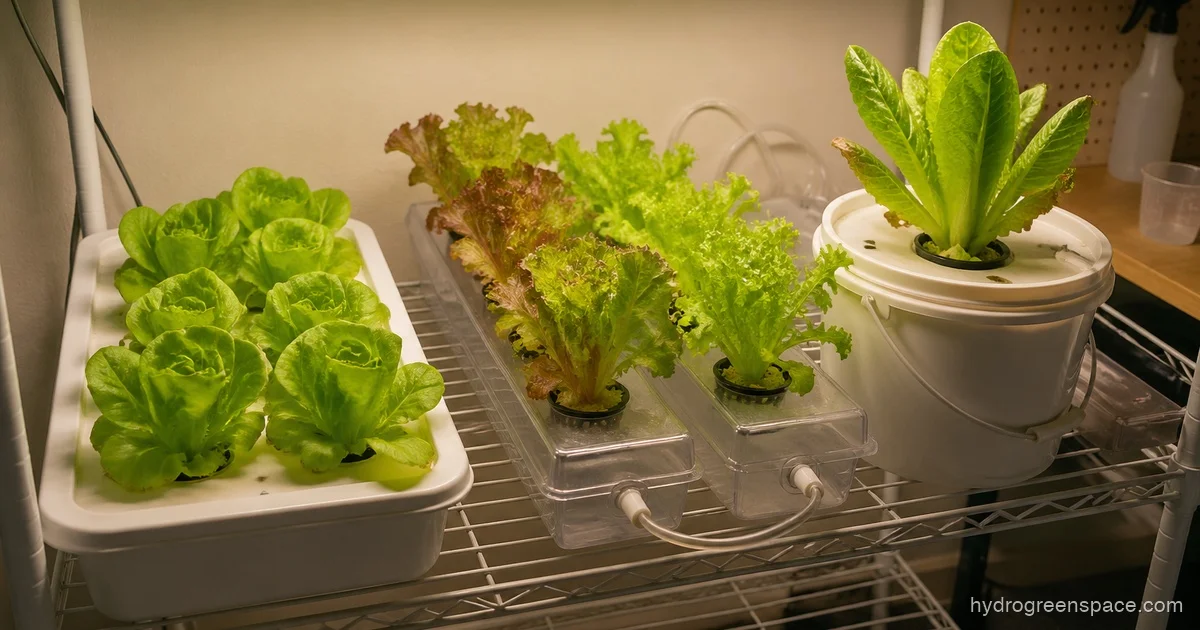
Pick the wrong lettuce variety and you’ll spend six weeks waiting on heads that never form, or watch your crop bolt in week three because the variety was bred for cool outdoor fields, not your grow room. The right variety in the right system changes everything.
Here’s a breakdown of the best lettuce for hydroponics, organized by type, with honest notes on grow time, tip burn resistance, and which system each variety actually thrives in.
Quick Comparison: Hydroponic Lettuce Varieties at a Glance
| Variety | Type | Days to Maturity | Difficulty | Best System |
|---|---|---|---|---|
| Black Seeded Simpson | Loose-leaf | 28–35 | Beginner | Kratky, NFT, DWC |
| Red Sails | Loose-leaf | 30–35 | Beginner | Any |
| Oakleaf | Loose-leaf | 30–40 | Beginner | Kratky, Raft |
| Buttercrunch | Butterhead | 55–65 | Beginner | DWC, Raft |
| Bibb | Butterhead | 50–60 | Beginner | Kratky, DWC |
| Little Gem | Romaine | 60–70 | Intermediate | NFT, DWC |
| Parris Island Cos | Romaine | 65–75 | Intermediate | NFT |
| Iceberg / Great Lakes | Crisphead | 80–90 | Advanced | DWC (with care) |
| Lollo Rossa | Specialty | 28–35 | Beginner | Any |
| Flashy Trout’s Back | Heirloom | 50–60 | Intermediate | Raft, DWC |
Loose-Leaf Varieties: Start Here
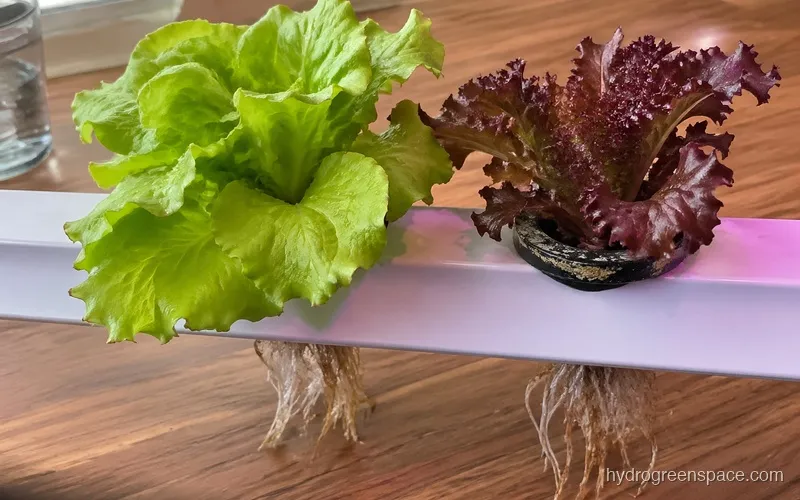
If you’re new to growing lettuce hydroponically, or you want the fastest possible harvests, loose-leaf varieties are the place to start. They mature in 28–40 days from transplant, tolerate imperfect conditions better than any other type, and support cut-and-come-again harvesting, meaning you can take outer leaves while the plant keeps producing from the center.
Black Seeded Simpson is the gold standard for beginners. It’s fast, vigorous, and works in virtually every hydroponic system: Kratky jars, NFT channels, DWC buckets, and raft systems. The mild, light green leaves are ready in under five weeks, and it handles slightly warmer temperatures without immediately bolting. If you’re building a first system and want something that will actually work, this is what I’d plant.
Red Sails adds color without adding complexity. The deep burgundy-red leaves are striking, it matures just as fast as Black Seeded Simpson, and it has decent bolting resistance compared to other red varieties. Use it alongside green varieties for visual variety in the same system.
Oakleaf (both green and red versions) has a more delicate texture and a slightly nuttier flavor. It’s slower to bolt than most loose-leaf types, which makes it a good choice if your grow space runs a little warm. It does particularly well in Kratky and raft setups where water temperatures stay consistent.
Tip: For cut-and-come-again harvesting, always cut outer leaves at the base of the stem, leaving the growing point (center crown) untouched. You can get 3–4 harvests from a single plant before flavor or texture starts to decline. See how to regrow hydroponic lettuce after cutting for the full method.
Butterhead and Bibb Varieties: The Beginner Gold Standard
Butterhead lettuce is probably the most forgiving heading type you can grow hydroponically. The loose, cupped heads form reliably in controlled environments, the texture is soft and almost buttery (hence the name), and the flavor is mild enough to appeal to people who don’t think they like lettuce.
Buttercrunch is the variety I recommend to anyone who asks what to grow in their first DWC or raft system. It forms compact, dense heads in 55–65 days, has above-average tip burn resistance compared to other butterheads, and produces reliably under LED grow lights at reasonable intensity. It’s not immune to tip burn, but you have to push it harder before it shows symptoms.
Bibb (sometimes sold as “Boston” or “Limestone”) is slightly faster than Buttercrunch and produces smaller, more delicate heads. It’s an excellent match for Kratky systems because the passive water delivery keeps moisture consistent, which is exactly what Bibb wants. The heads are a bit looser than Buttercrunch but the flavor is arguably better. For a deeper look at growing this type, see the full guide to butter lettuce hydroponics.
A Note on Tip Burn in Butterhead Varieties
Tip burn shows up as brown, papery edges on inner leaves. It’s not a disease or a pest problem. It’s a calcium transport issue caused by inadequate air movement or stagnant conditions around the growing tips. The inner leaves can’t pull enough calcium through transpiration, and the tissue dies.
To minimize tip burn in butterhead varieties:
- Keep a small fan running to create gentle air movement across the canopy
- Keep EC (electrical conductivity) in the 0.8–1.2 range (lower EC means more water uptake, which helps calcium move)
- Don’t let your reservoir temperature climb above 72°F (22°C)
Romaine Varieties: Worth the Wait
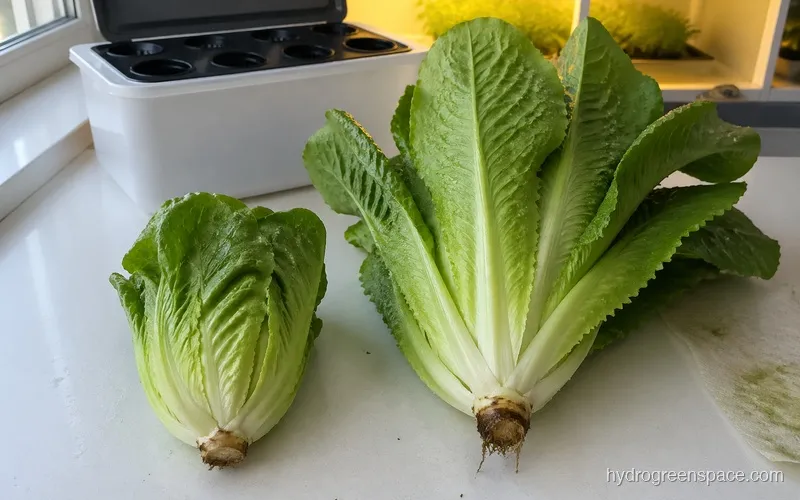
Romaine takes longer (60–75 days) and is less forgiving about inconsistent conditions than loose-leaf or butterhead types. But the payoff is real: crisp ribs, full heads with good density, and a flavor that holds up to dressings in a way that loose-leaf can’t match.
Little Gem is a miniature romaine that’s the smartest choice for home growers. It reaches 6–8 inches tall, fits more plants per channel or raft, and matures 10–15 days faster than full-size romaine varieties. It does very well in NFT and DWC systems where water and nutrients are delivered consistently. I’ve grown Little Gem in a 4-inch NFT channel without issues.
Parris Island Cos is the classic full-size romaine. It’s been a commercial favorite for decades because it performs consistently and has reasonable heat tolerance for a romaine. For home systems, it shines in NFT, where the constant thin film of nutrient solution keeps roots oxygenated and the plant never sits in standing water. For complete system and care details, see the romaine lettuce hydroponics guide.
Common mistake: Growers expect romaine to form tight heads under the same conditions that work for butterhead. It won’t. Romaine needs slightly cooler temperatures (60–70°F / 15–21°C) and good airflow to develop the inner white ribs. Too warm and you get loose, floppy outer leaves with no real head structure.
Crisphead and Iceberg Varieties: Honest Advice
Can you grow iceberg lettuce hydroponically? Yes. Should you, as a home grower? That depends on how patient you are.
Iceberg and other crisphead varieties like Great Lakes need 80–90 days from transplant to form a proper head. They require cooler temperatures than almost any other lettuce type (ideally 60–65°F / 15–18°C for the final two weeks before harvest), and they’re much more sensitive to both tip burn and bolting. If your grow space is in a basement or garage that stays cool year-round, they’re achievable. If you’re growing under lights in a warm room, expect loose, non-heading plants that taste fine but don’t look like the iceberg you’re imagining.
DWC gives you the best shot with crisphead varieties because the large reservoir volume helps buffer temperature swings. Chill your reservoir if you’re serious about forming tight heads. For a full breakdown of what it actually takes, see the iceberg lettuce hydroponics guide.
What I’d do: Unless you have a dedicated cool grow space, skip iceberg and grow a butterhead variety instead. Buttercrunch gets you most of the texture with a fraction of the difficulty and half the grow time.
Specialty and Heirloom Picks for Visual Variety
Once you’ve got the basics dialed in, specialty and heirloom varieties are where growing gets genuinely interesting. These aren’t harder to grow, but they give you color and texture you won’t find at any grocery store.
Lollo Rossa (and its green counterpart, Lollo Bionda) has deeply frilled, almost curly leaves with a rich burgundy color. It’s a fast grower, matures in 28–35 days, and works in any system. The visual impact in a raft system or vertical tower is striking. Flavor is slightly more bitter than Red Sails but still mild enough for everyday use.
Flashy Trout’s Back is an Austrian heirloom with pale green leaves speckled with deep red markings. It’s a romaine-type that takes 50–60 days but produces a genuinely beautiful plant. It does best in DWC or raft systems and has above-average heat tolerance for an heirloom variety.
Other specialty varieties worth trying: Speckled Amish Deer Tongue (loose-leaf, fast), Bronze Mignonette (butterhead with bronze tinge, compact), and Forellenschluss (another name for Trout’s Back, sold by different seed houses).
How to Choose a Variety by System Type
Variety selection and system selection aren’t independent decisions. Here’s a simple map:
Kratky (passive, no pump): Best for loose-leaf and Bibb varieties. The still, oxygen-depleting reservoir isn’t ideal for long-growing varieties that need consistent oxygen delivery. Black Seeded Simpson, Red Sails, Bibb, and Lollo Rossa all perform well. Avoid romaine and crisphead in Kratky unless you’re actively managing the air gap.
NFT (nutrient film technique): Excellent for loose-leaf and romaine. The constant thin film keeps roots oxygenated without oversaturation. Little Gem, Parris Island Cos, and Black Seeded Simpson are all strong choices. Avoid butterhead if your channels run warm; they’re more prone to tip burn in high-flow NFT systems.
DWC (deep water culture): The most versatile system for lettuce. Works well for butterhead, romaine, and specialty varieties. Buttercrunch and Bibb are particularly well-suited. If you’re trying iceberg, DWC is your best option. For a look at how nutrition factors in, see is hydroponic lettuce healthy.
Raft / RDWC: Commercial growers use raft systems almost exclusively for butterhead and loose-leaf production, and for good reason. Buttercrunch, Red Sails, and Lollo Rossa all thrive on raft. The calm water surface and consistent temperature distribution suit tip burn-sensitive varieties better than recirculating systems.
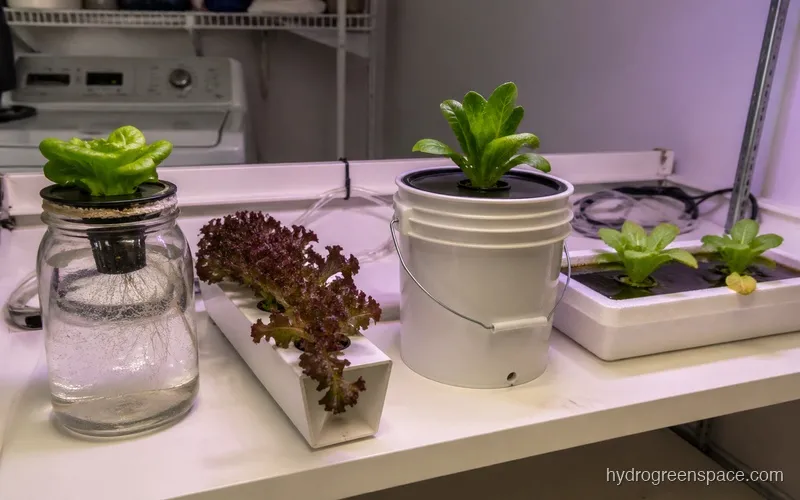
Once you know what system you’re running and how much time you want to invest, the variety choice practically makes itself. Start with a loose-leaf variety to build confidence and understand how your system behaves. Then add a butterhead, then a romaine. By the time you’ve run all three types through your system, you’ll have a clear picture of what your setup does best.
When you’re ready to narrow it down further, best lettuce for beginners in hydroponics walks through exactly which varieties to buy for a first grow, including where to source seeds and what to expect in weeks one through four. For the full scope of growing lettuce hydroponically beyond variety selection, the hydroponic lettuce guide covers system setup, nutrients, harvesting, and storage.