
Hydroponic Strawberry Diseases: Causes & Fixes
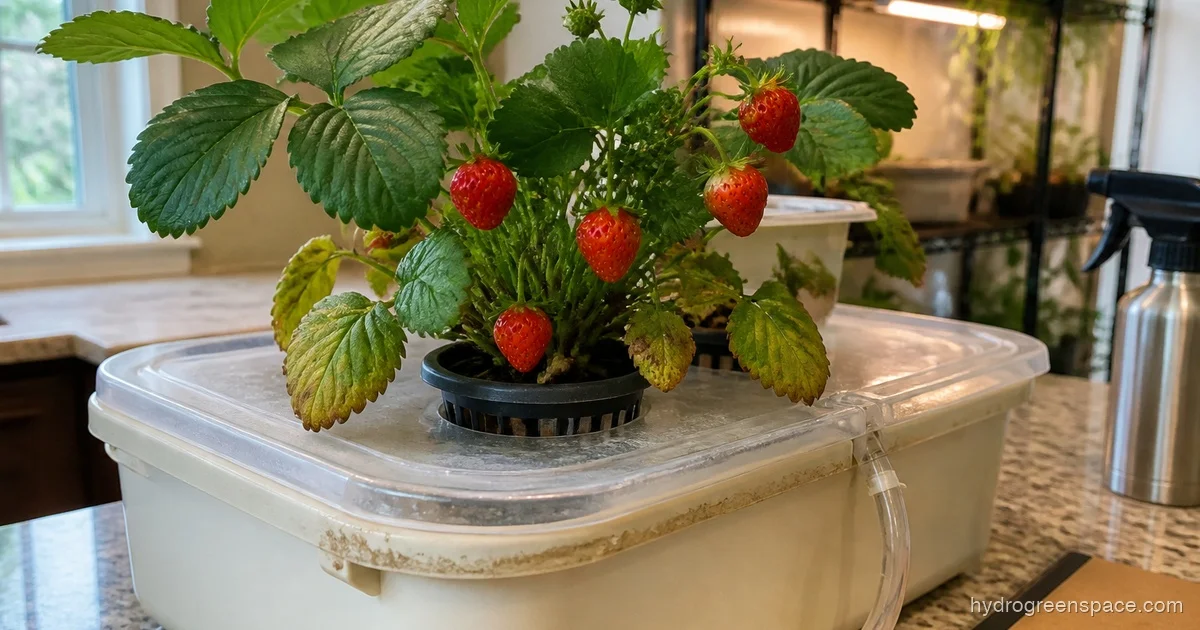
Soil growers deal with pests hiding in the dirt and fungi living in the compost. Switch to hydroponics and you eliminate a lot of that. But you trade one set of problems for another. Standing water, high humidity near dense canopies, and the absence of a natural soil microbiome create the exact conditions that certain diseases love. Knowing what to look for early is the difference between pulling one infected plant and losing a whole system.
This guide covers the most common hydroponic strawberry diseases, what causes them specifically in a recirculating or water-based setup, how to spot them before they spread, and what to do when you find them.
Why Hydroponic Strawberries Are Vulnerable in Their Own Way
Hydroponics removes soil-borne pathogens that travel through the ground, but it creates a shared water environment. One infected plant can contaminate the entire reservoir within 24–48 hours if you’re running a recirculating system like DWC or NFT. That’s a disease vector soil simply doesn’t have.
Add in the warm, humid microclimates that form around strawberry crowns in enclosed grow spaces, and you’ve got ideal conditions for both waterborne pathogens (like Pythium) and airborne fungi (like Botrytis). Understanding that distinction matters because the prevention and treatment strategies are different.
If you’re starting from bare-root transplants, disease pressure at the point of introduction is real. Check out starting from bare root strawberries for what to inspect before plants ever touch your system.
Root Rot: The Silent Killer
Root rot is the disease hydroponic growers fear most, and for good reason. It’s common, spreads fast in shared reservoirs, and by the time most growers notice it, the plant is already struggling.
What It Looks Like
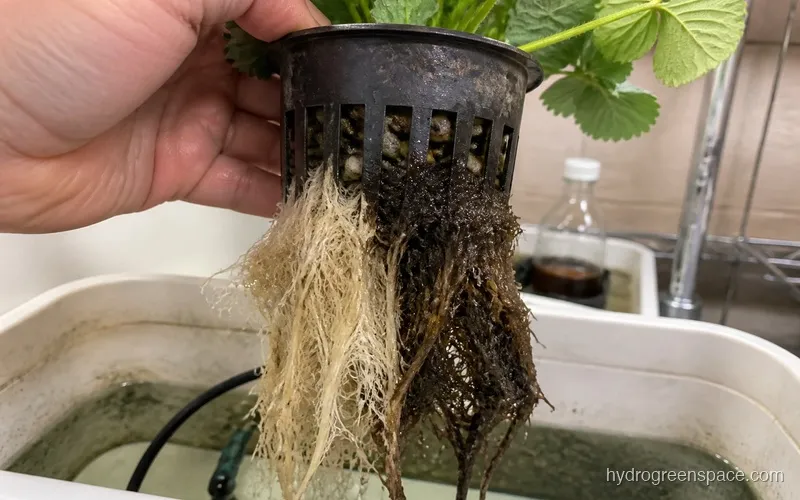
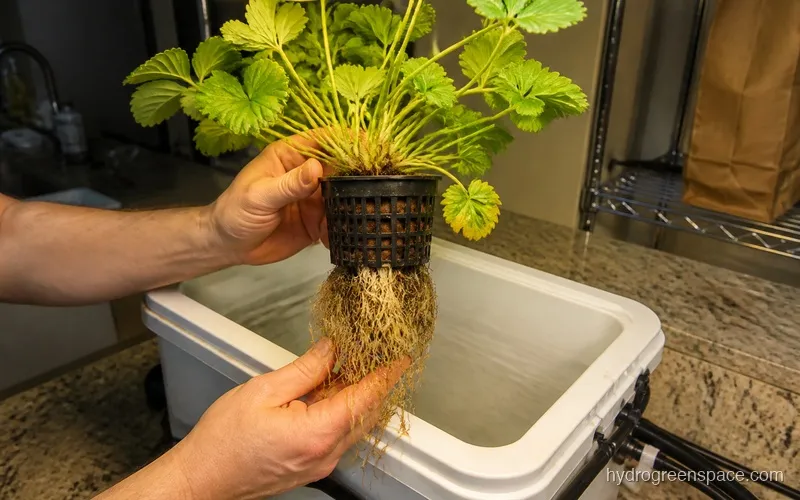
Healthy hydroponic strawberry roots are white or light tan with a fuzzy texture (those are root hairs). Infected roots turn brown or gray, feel slimy when you touch them, and often have a foul smell. Above the waterline, you’ll notice wilting even when the reservoir is full, yellowing leaves, and stunted new growth.
What Causes It in Hydroponics
Root rot in hydroponics is almost always caused by Pythium or Phytophthora, two water molds that thrive when:
- Water temperature exceeds 72°F (22°C)
- Dissolved oxygen levels drop
- The reservoir hasn’t been cleaned between grows
Pythium spreads through spores in the water. One infected root system releases spores that travel to every other plant in a recirculating system. NFT channels are particularly vulnerable because the film of water touching the roots is constant.
How to Treat and Prevent It
For minor root rot, trim the affected roots with sterilized scissors, lower your water temperature to 65–68°F, and increase aeration with an air stone. Beneficial bacteria products containing Bacillus subtilis or Trichoderma can help displace Pythium and recolonize healthy root zones. For severe cases, isolate the plant immediately.
Prevention is straightforward: keep your reservoir cool, run adequate air stones, and use a recirculating system designed for good drainage. The best hydroponic system for strawberries matters here because poor drainage systems trap standing water where Pythium breeds.
Warning: Don’t dose hydrogen peroxide directly into a reservoir where you’ve added beneficial bacteria. You’ll kill both the bad and the good organisms. Choose one approach.
Gray Mold (Botrytis): The Humidity Problem
Botrytis cinerea, commonly called gray mold, is the second most destructive disease for hydroponic strawberry growers. Unlike root rot, this one is airborne.
What It Looks Like
You’ll first notice water-soaked spots on flowers, developing fruit, or older leaves. Those spots expand quickly and develop the characteristic gray, dusty spore mass that gives the disease its name. Infected flowers often collapse entirely without setting fruit, which is how botrytis quietly destroys your yield before you even realize it.
On stems, look for brown lesions that girdle the tissue and cause dieback above the infection site.
What Causes It in Hydroponics
High relative humidity (above 85%) is the main trigger. Indoor grow spaces with dense strawberry canopies don’t get the airflow a field strawberry does. Water droplets that sit on leaves or fruit from overhead watering, condensation from temperature swings at night, or poor circulation inside a tent all create the wet surfaces where Botrytis spores germinate.
How to Fix It
Remove all affected material immediately and dispose of it outside your grow space. Don’t compost it. After removal, lower humidity to 60–70% and improve airflow with a circulation fan pointed across (not directly at) the canopy. Copper-based sprays can help as a preventive, but once you see the gray spore mass, you’re already in containment mode.
Powdery Mildew
Powdery mildew doesn’t look like it’s killing your plant at first. The white, powdery coating on leaves seems cosmetic. It’s not.
What It Looks Like
White or grayish powder on the upper surface of leaves, starting with older leaves and moving to newer growth. Affected leaves often curl upward at the edges. Unlike Botrytis, powdery mildew doesn’t need wet surfaces to spread. It actually thrives in low humidity (40–60%) with poor airflow, making it especially tricky in air-conditioned grow rooms.
Prevention and Treatment
Improving air circulation is the first move. A simple oscillating fan reduces the stagnant air layer on leaf surfaces where mildew spores establish. For treatment, diluted potassium bicarbonate sprays or neem oil work well at early stages.
Variety selection also matters. Some strawberry varieties are bred for disease resistance, and choosing the right genetics from the start is far easier than fighting mildew all season. See disease-resistant strawberry varieties for hydroponics for options worth growing.
Crown Rot: Fusarium and Phytophthora
Crown rot attacks the base of the strawberry plant where the stem meets the root system. It’s caused by either Fusarium oxysporum f. sp. fragariae or Phytophthora cactorum, and both are serious.
What It Looks Like
The plant wilts suddenly, even when roots look fine from a distance. Pull the plant and examine the crown: infected tissue will be dark brown or reddish-brown internally, dry and shrunken with Fusarium, or water-soaked and dark with Phytophthora crown rot. The leaves may show reddish discoloration before collapsing.
Why Hydroponics Changes the Risk Profile
Fusarium crown rot is often introduced through infected planting material. If you’re sourcing bare-root runners from untested suppliers, you may be introducing the pathogen from day one. Phytophthora, like Pythium, spreads through water and becomes a system-wide threat in recirculating setups.
Sterilizing hydroponic equipment between every crop cycle is non-negotiable. A 10% bleach solution or food-grade hydrogen peroxide soak removes residual spores from reservoirs, channels, and net pots.
Anthracnose: A Fruit and Crown Disease
Anthracnose, caused by Colletotrichum species, causes both fruit rot and crown collapse. It’s less common in home hydroponic setups but worth knowing.
What It Looks Like
On fruit: dark, sunken lesions with salmon-colored spore masses in wet conditions. On crowns: sudden plant collapse with brown to black internal discoloration that looks similar to Phytophthora crown rot.
Anthracnose is typically introduced through infected transplants or splashing water carrying spores from infected tissue. Drip and NFT systems with poor splash control are higher risk.
Prevention
Source certified disease-free transplants. Remove any fruit with early lesions before spores spread. Avoid overhead watering that splashes water from plant to plant.
Leaf Spot (Mycosphaerella fragariae)
Strawberry leaf spot is a fungal disease that primarily affects leaves and causes cosmetic damage rather than plant death, but heavy infection drains the plant’s energy and reduces fruit production.
What It Looks Like
Small, circular spots with dark purple to reddish-purple borders and a lighter tan or gray center. On older leaves first, then spreading. You’ll often see it on plants that are stressed from other causes, such as nutrient imbalances in the solution.
Treatment
Remove heavily infected leaves. Improve airflow and reduce free moisture on leaf surfaces. Copper-based fungicides provide a preventive barrier when applied before disease pressure builds.
Prevention Checklist for Hydroponic Strawberry Growers
Most hydroponic strawberry diseases are preventable with consistent habits. Here’s what actually matters:
- Keep reservoir temps at 65–68°F. Above 72°F and you’re inviting Pythium.
- Run air stones in every reservoir. Dissolved oxygen suppresses water molds.
- Maintain relative humidity at 60–70%. Too low invites powdery mildew; too high feeds Botrytis.
- Use a circulation fan. Stagnant air is where fungal spores establish.
- Sterilize all equipment between crop cycles. Net pots, channels, reservoirs, everything.
- Inspect roots weekly. Catch discoloration early before it reaches the reservoir.
- Source certified clean transplants. Fusarium and anthracnose often enter through infected starts.
- Remove infected material immediately. Don’t let diseased tissue sit in your grow space.
- Add beneficial bacteria to your reservoir. Bacillus and Trichoderma species compete with Pythium and can suppress early-stage root disease. Learn more about using beneficial bacteria to protect hydroponic roots.
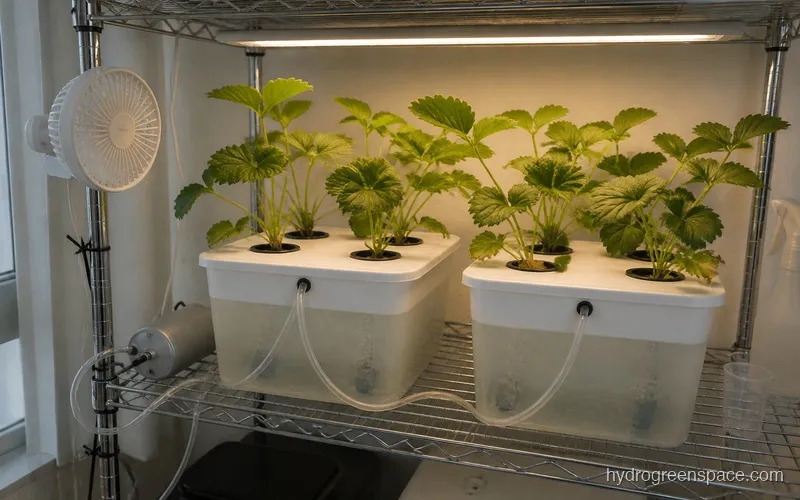
What I’d do: At the start of every new crop cycle, I do a full bleach soak on the reservoir and all plastic components, then let everything air dry before adding water. Takes 30 minutes and has saved me from carrying over disease pressure from the previous crop more than once.
Disease stress and nutrient problems often look similar in the early stages. If you’re seeing unexplained wilting or leaf discoloration and you’ve ruled out the diseases above, check whether your nutrient solution balance is the actual cause before reaching for a fungicide.
Once your system is clean and your prevention habits are locked in, the diseases covered here become manageable rather than catastrophic. The next step is dialing in your nutrient program, since a well-fed plant with strong roots resists disease pressure far better than one running on a depleted or imbalanced solution. If you’re still building out the rest of your grow, the complete guide to hydroponic strawberries covers system setup, variety selection, and every other variable that feeds into a healthy, high-yielding plant.