
How Long Do Hydroponic Strawberries Take to Fruit?
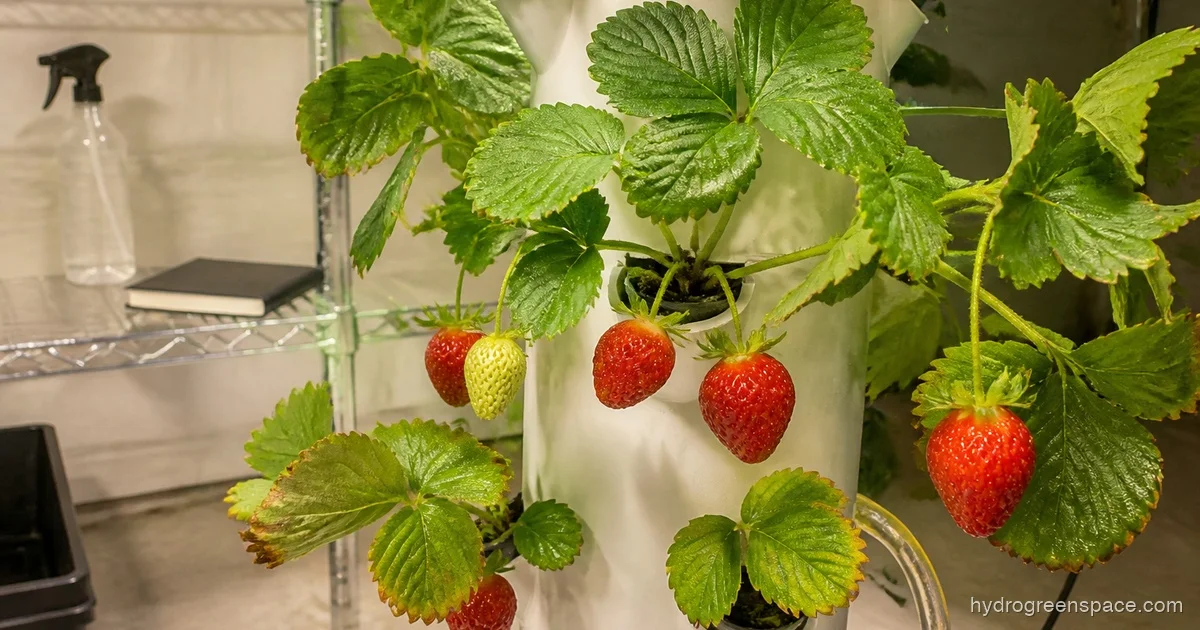
Most growers asking this question have just transplanted their first strawberry crowns and want to know when they’ll be eating fruit. The honest answer is 60–90 days from transplant, but that number means nothing without understanding what’s happening at each stage. Let me walk you through the full timeline so you’re not left guessing.
Why “Days to Maturity” Doesn’t Tell the Whole Story
Seed packets and nursery tags often list “60 days to maturity.” What that number skips is everything that happens before a plant is even ready to set fruit. For hydroponic strawberries, the clock doesn’t start at seed sowing or even transplant day. It starts when your plant has a healthy root system, enough leaf mass to support flowering, and the right environment to trigger that transition.
If you’re counting on 60 days from the day you drop seeds in a grow cube, you’ll be waiting a lot longer. Understanding how long hydroponic strawberries take requires knowing your starting point.
Your Starting Method Changes Everything
How you start your strawberries has a bigger impact on your total timeline than almost anything else.
Bare-Root Transplants (Fastest Path: 60–90 Days)
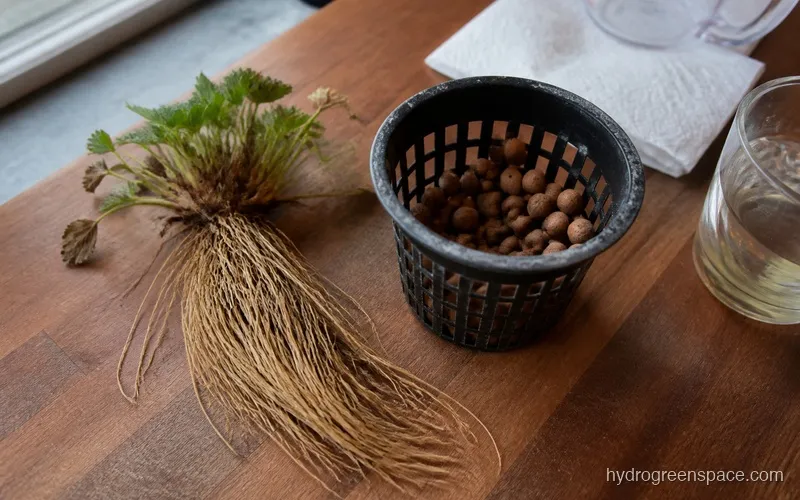
Bare-root crowns are dormant plants with an established root system, typically sold in bundles of 25 or more. When you source quality bare roots and get them into your system correctly, they establish quickly and move into vegetative growth within 1–2 weeks.
From a healthy transplant to first harvest runs 60–90 days for most day-neutral varieties. If your setup is dialed in (good light, correct pH, properly formulated nutrients), you’re on the shorter end of that range. If you’re still figuring things out, expect 90 days or a little beyond.
Learn how to handle the transition properly with bare-root strawberries because getting this step right compresses your timeline significantly.
Plugs and Starter Plants (Similar to Bare Root: 50–80 Days)
Plugs are young plants in a small growing medium, often sold through hydroponic suppliers. They’re already past the seedling phase, so they transplant easily and root into your system fast. Timeline is comparable to bare root, sometimes slightly faster because the plant hasn’t gone dormant.
Runners (Unpredictable: 60–120 Days)
Runners are the offshoots your existing strawberry plants send out. They’re free, which is appealing, but they vary widely in vigor. A runner from a healthy, productive plant can root in quickly and fruit within 60–70 days. A weak runner from an overstressed parent takes forever and sometimes never produces well. If you’re propagating from strawberry runners, be selective about which ones you root.
Seed (Not Worth It for Most Growers: 150–200+ Days)
Growing from seed is the slowest option by a wide margin. Seeds take 2–3 weeks to germinate, then spend another 4–6 weeks in the seedling phase before they’re even ready to transplant. Add the full post-transplant timeline on top of that and you’re looking at 5–6 months minimum to first fruit.
The bigger problem is that most strawberry seeds don’t come true from named varieties. The flavor and yield you get from seed-grown plants is a gamble. Unless you’re specifically breeding or have a project reason to start from seed, skip it and start with bare roots or plugs.
The Growth Stages (With Day Ranges)
Here’s the stage-by-stage breakdown for a bare-root or plug transplant in a well-maintained system:
Days 1–14: Root Establishment This is the quiet period. Your plant is putting energy into rebuilding its root mass in the new growing medium. You’ll see little visible top growth. Don’t panic. Keep your nutrient solution at a lower EC (around 0.8–1.2) during this period so you’re not pushing the plant hard while roots are still thin.
Days 14–30: Vegetative Stage Once roots are established, the plant accelerates. New leaves unfurl, the crown fills out, and you start to see real structure. This is when light and nutrition matter most. A plant that’s well-fed and getting 14–16 hours of light per day will move through the vegetative stage faster than one that’s struggling.
Days 30–45: First Flowers Appear For day-neutral varieties (the ones almost everyone grows in hydroponics), flowers can appear as early as 30 days after transplant. For a plant that got off to a slow start, it might take 45. The first flower truss is a good sign, but it’s also a decision point.
What I’d do: Remove the first flush of flowers on younger transplants. It feels wrong, but letting a small plant set fruit too early diverts energy away from crown and root development. A bigger, stronger plant in week 8 will outproduce one that was forced to fruit in week 4.
Days 45–60: Pollination and Fruit Set In an outdoor garden, bees handle pollination. Indoors, you need to do it yourself or run a fan strong enough to move pollen between flowers. Hand-pollinate with a small paintbrush or an electric toothbrush held near the open flower. Poor pollination produces misshapen, small fruit. If you’re seeing lumpy or partially developed strawberries, this is why. More detail on getting this right is in the pollinating hydroponic strawberries guide.
Days 60–75: Fruit Development After successful pollination, strawberries take roughly 4 weeks to go from tiny green nub to ripe red fruit. This surprises a lot of growers who expect things to move faster in hydroponics. The development stage is fairly fixed biologically, and you can’t rush it significantly with better nutrients or more light.
Days 75–90: First Harvest At around 75–90 days from transplant, you should be picking your first berries. Color is the main indicator: a fully red berry that releases with a gentle twist. Don’t pull; twist and tip.
Day-Neutral vs. June-Bearing vs. Everbearing
Variety selection has a bigger impact on your experience than most growers realize. The three types behave very differently in hydroponics.
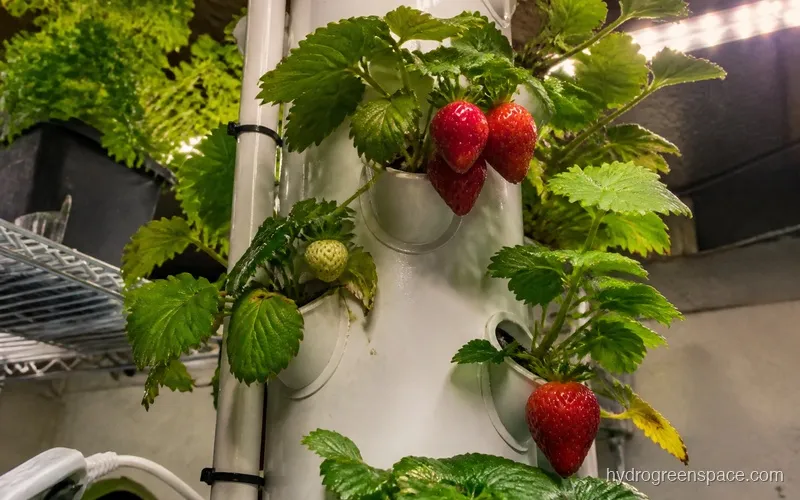
Day-neutral varieties (Albion, Seascape, Monterey, Portola) are what almost every hydroponic grower should use. They produce fruit continuously regardless of day length, which means year-round fruiting indoors under grow lights. They’re also the fastest to first harvest and keep producing through multiple cycles.
June-bearing varieties (Chandler, Jewel, Earliglow) set one large crop per year triggered by short days and cold temperatures. Indoors under consistent lighting, they’re often confused and unreliable. Fruiting is erratic and the yield per cycle is poor compared to what the variety can do outdoors. Avoid these for hydroponic growing.
Everbearing varieties (Quinalt, Fort Laramie) sit between day-neutral and June-bearing. They produce two to three flushes per year. Better than June-bearing indoors, but still not as reliable or consistent as a proper day-neutral variety.
If you’re picking a variety for the first time, the best strawberry varieties for hydroponics breakdown goes much deeper on what’s available and what performs.
What Slows Down Your Timeline
If you’re past day 90 and still waiting on fruit, something in the environment is putting the brakes on. Common culprits:
Light deficiency is the most frequent issue. Strawberries need 12–16 hours of quality light per day. A dim LED or weak T5 that’s fine for lettuce won’t push a strawberry through its fruiting phase efficiently.
Wrong EC range trips up a lot of beginners. During vegetative growth you can run lower (0.8–1.4 EC). Once the plant is setting fruit, bump it to 1.4–2.0. Running too low during fruiting means the plant doesn’t have the nutrition to fill berries quickly. A properly balanced hydroponic strawberry nutrient solution makes a noticeable difference in berry size and development speed.
Temperature matters more than most people think. Strawberries do best between 65–77°F (18–25°C). Below 60°F, development slows significantly. Above 80°F, plants stress and fruit quality drops even if the calendar says it’s time to harvest.
Pollination failure means flowers drop without setting fruit, adding weeks to your timeline while you wait for the next flush.
Common mistake: Blaming slow fruit development on nutrients when the real issue is pollination. If your flowers are opening and dropping without setting, check your air circulation and pollinate by hand before adjusting your nutrient solution.
How Long Do Hydroponic Strawberry Plants Keep Producing?
A well-maintained day-neutral plant in a hydroponic system can produce continuously for 12–18 months. After the first harvest window, production becomes cyclical, with a flush of fruit every 4–6 weeks depending on conditions.
Most growers plan to replace plants at the 12–14 month mark. Older plants develop disease pressure and their root systems become inefficient. Rotating in new transplants on a staggered schedule means you always have plants at different stages and never a complete production gap.
Knowing your expected hydroponic strawberry yield per plant helps you decide whether to scale up or refresh your growing cycle sooner.
What Affects Long-Term System Health
System choice matters for sustained production, not just the first harvest. Some systems handle strawberry roots better than others over a full 12–18 month cycle. NFT channels can get clogged as root mass grows. DWC buckets work well but need regular monitoring. If you’re planning a long-term setup, it’s worth reading through the best hydroponic system for strawberries comparison before committing.
Disease management is the other long-term variable. Powdery mildew, botrytis, and root issues are the most common problems in maturing strawberry systems. Catching them early is the difference between a minor setback and losing the whole crop. As your system ages, stay on top of any signs of trouble.
The 90-Day Benchmark Is Real (If You Set It Up Right)
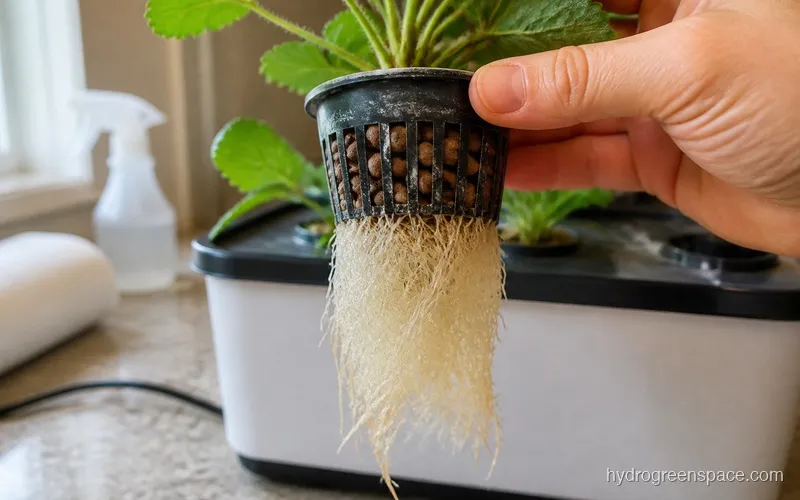
The 60–90 day timeline from transplant to first harvest is achievable. It’s not a best-case scenario dreamed up by seed company marketing. Growers hit it routinely when they start with quality bare-root or plug transplants, run day-neutral varieties, keep their light and nutrient schedules consistent, and pollinate their flowers.
What pushes growers past 90 days is usually a combination of small setup mistakes, not one catastrophic error. Work through the variables in the order they appear: establish your roots, build leaf mass, support flowering, pollinate every open flower, then be patient through the 4-week fruit development window.
Once you’ve completed one full cycle from transplant to harvest, everything after that is just maintenance and refinement. That second and third flush comes faster because you know exactly what you’re looking for.
If you haven’t set up your system yet or are still deciding on your growing approach, start with the complete hydroponic strawberries overview or the more detailed guide to growing hydroponic strawberries at home before your first transplant day.