
Best Hydroponic System for Strawberries (2026)
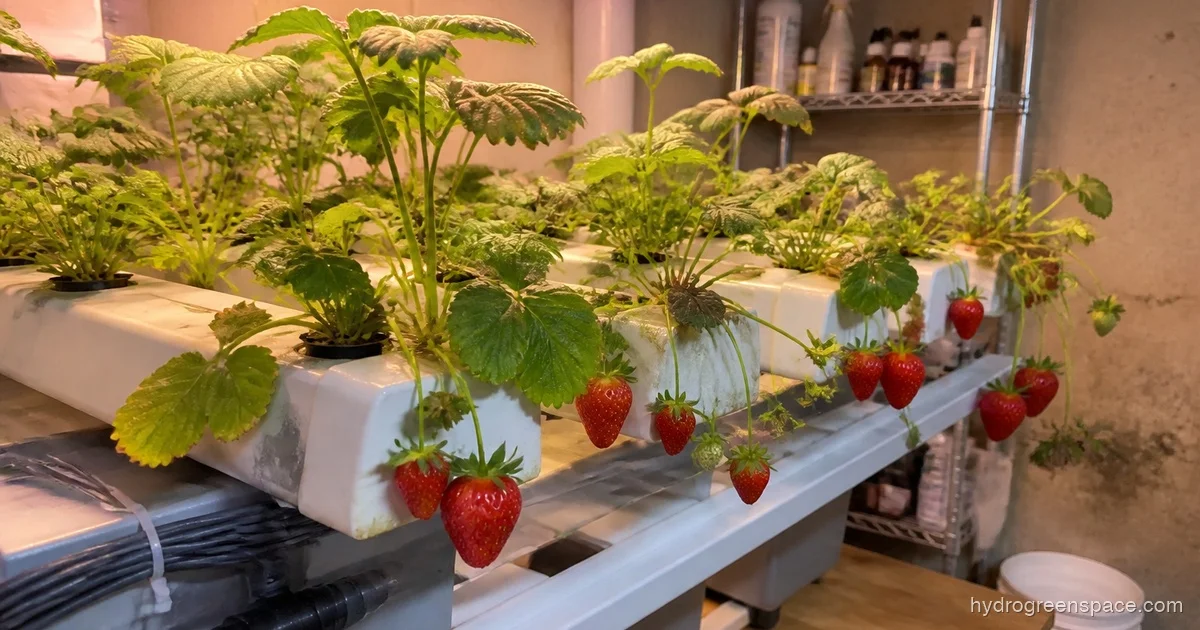
Strawberries are one of the trickiest crops to match to a system. Get the pairing wrong and you spend months nursing slow-draining roots or wondering why your fruit tastes like nothing. Get it right and you’re picking sweet, full-size berries off a compact setup that fits on a shelf.
This guide breaks down which hydroponic systems actually work for strawberries, which ones look good on paper but disappoint in practice, and which specific setups are worth buying if you’re ready to get started.
| System | Best For | Type | Budget |
|---|---|---|---|
| HIsource NFT Kit (64-Site) | Year-round production, 6–20 plants | NFT | $$ |
| EXO 16-Plant Tower | Space-constrained setups | Vertical Tower | $$ |
| Grow1 DWC 5-Gallon Kit | Small test runs, under 6 plants | DWC | $ |
Why System Choice Matters More for Strawberries Than Most Crops
Strawberries have a narrower tolerance than lettuce or herbs. Their roots want moisture but not saturation. They need strong light to produce fruit with real sweetness. And unlike leafy greens, they take 60 to 90 days from transplant to first harvest, so a bad system choice costs you months, not weeks.
Strawberries also need pollination. Indoors, there’s no wind or insects, so you’ll need to hand-pollinate each flower with a small paintbrush or electric toothbrush. If your fruit is setting but tiny and misshapen, that’s usually why. Read up on pollinating hydroponic strawberries before your first flowers open.
Day-neutral varieties like Albion and Seascape are the ones to grow hydroponically. They fruit continuously regardless of day length, which means you get harvests year-round instead of one seasonal flush. Most other variety types won’t produce well indoors.
NFT: The Best All-Around System for Strawberries
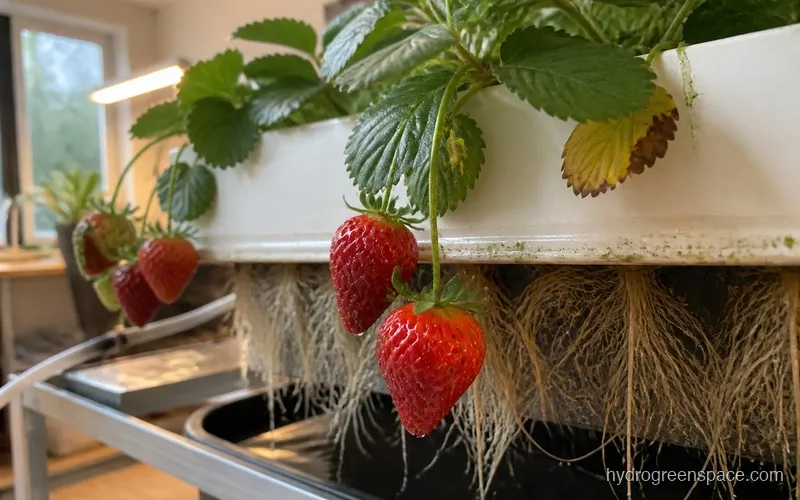
Nutrient film technique is the system I’d recommend to most home growers starting with strawberries. Here’s why it works so well: a thin film of nutrient solution flows continuously through grow channels, keeping roots moist but never flooded. Strawberries love that balance.
The key detail that separates successful NFT strawberry setups from frustrating ones: channel shape. Flat-bottom gutters (often called grow gutters or grow channels) outperform round PVC pipes significantly. In round pipes, water pools unevenly and roots sit in standing water in the bottom curve. That leads to root rot fast. Flat-bottom channels keep the flow shallow and even, which is exactly what you need.
Watch Out
For a ready-to-run NFT system, the HIsource 64-site kit is a strong starting point, using purpose-built flat-bottom gutter channels with covers included rather than round PVC. For a complete overview of how this compares to other system types, different types of hydroponic systems walks through each one in detail.
HIsource NFT Hydroponics Growing System Kit (64-Site)
Purpose-built flat-bottom gutter channels with covers and pump included, not adapted from round PVC pipe.
Best for: strawberries, herbs, leafy greens
Check price on AmazonFlow rate matters too. Strawberries do well with slow nutrient flow, around 1-2 liters per minute per channel. Running flow too fast oxygenates fine but leaches nutrients before the roots can absorb them efficiently. Set your pump timer to run continuously if you’re using a small system, or cycle 15 on / 15 off for larger setups once the plants are established.
DWC: Workable, But Not Ideal
Deep water culture can grow strawberries, but it’s not the best match. The issue is root oxygenation. Strawberry roots are sensitive to sitting in stagnant water, and DWC requires a well-maintained air stone setup running 24/7 to keep dissolved oxygen high enough that roots don’t suffocate. If your air pump fails overnight, you can lose plants within hours.
That said, DWC is inexpensive and simple to build. A basic 5-gallon bucket DWC setup costs under $30 in parts and can grow two to four plants. If you’re experimenting with hydroponic DWC strawberries on a budget and you’re willing to check your system daily, it works.
Grow1 Deep Water Culture 5 Gallon Complete Kit
Complete single-bucket DWC kit with air pump, air stone, and clay pebbles included. Ready to plant out of the box.
Best for: small test runs, 2-4 strawberry plants
Check price on AmazonThe bigger limitation with DWC is scale. You can’t really build a productive strawberry wall or tower with individual buckets. It’s fine for a small test run before you commit to a larger system.
Keep pH tightly between 5.8 and 6.2. Strawberries are less forgiving about pH drift than lettuce. If your fruit is coming out sour, pH drift and insufficient light are the two most common culprits, not nutrient brand or variety choice.
Ebb and Flow: Great for Experienced Growers
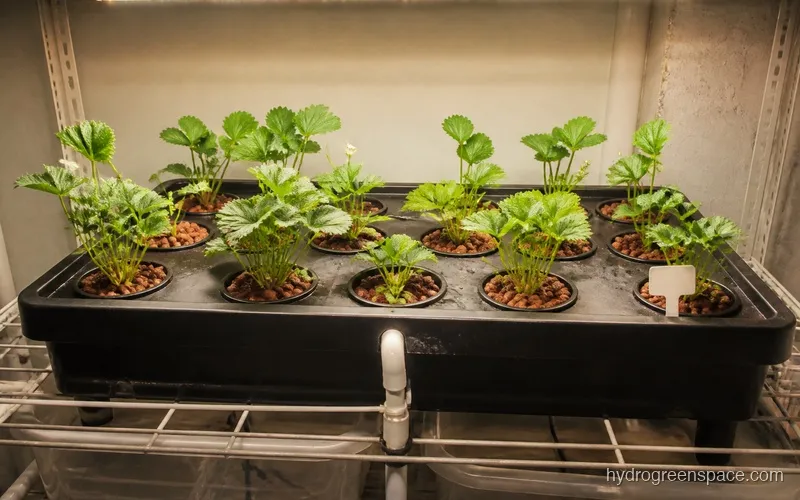
Ebb and flow (also called flood and drain) is the system of choice for growers who want precise control. Nutrient solution floods the tray on a timer, roots drink and drain completely, then the cycle repeats.
Strawberries do particularly well in ebb and flow when grown on hydroton (expanded clay pebbles). The clay holds just enough moisture between flood cycles while draining fully, which matches what strawberry roots want. Seascape varieties grown on hydroton in ebb-and-flow setups consistently produce well for experienced growers. For more detail on media choices, growing medium for hydroponic systems covers the tradeoffs between hydroton, rockwool, and other options.
→Check price on PowerGrow Clay Pebbles (LECA)Reusable expanded clay pebbles; rinse and re-use season after season.The downside: ebb and flow requires more setup and a solid understanding of timing. You need to dial in flood duration and frequency based on your plant size, ambient temperature, and how fast your medium dries. Get it wrong and plants either dry out between cycles or sit in wet medium too long. That’s manageable if you’ve run a hydroponic system before, but it’s a harder learning curve for a first system.
For a commercial-grade ebb and flow tray setup, Active Aqua and Botanicare both make complete tray and reservoir systems in the $150-300 range that work well for strawberries at a hobby scale.
Vertical Tower Systems: Space-Efficient and Beginner-Friendly
Strawberry hydroponic towers are genuinely useful for home growers with limited space. A tower holds 16 to 40 plants in the footprint of a single bucket, which is hard to beat if you’re working with a spare corner or a grow tent.
The way they work: a pump pushes nutrient solution up through a central column or tube, it trickles over the roots in each pocket or port, and drains back into the reservoir at the base. It’s a drip-style delivery, which means roots stay moist but not saturated.
The Exo 16-Plant Vertical Hydroponic Tower is one of the more well-designed consumer options. The port geometry is well-sized for strawberry crowns (which are wider than herb or lettuce plugs), and the 4-gallon reservoir is manageable for a home setup.
EXO 16-Plant Vertical Hydroponic Garden Tower System
16-site aeroponic tower with ports sized for strawberry crowns, expandable to 28 plants, with pump and timer included.
Best for: space-constrained setups, 16-28 strawberry plants
Check price on AmazonIf you want a hands-on look at how this system performs, the Exo 16-Plant Vertical Hydroponic Garden Tower review covers it in detail.
One thing to plan for with towers: uneven light distribution. The plants at the top of the tower get more direct light than the ones at the bottom. Rotate the tower 180 degrees every 5-7 days to keep growth balanced, or position your grow light slightly below center height so lower plants aren’t cut off.
For DIY-minded growers, a vertical PVC tower is a cheaper path to the same footprint. The vertical PVC hydroponic system guide covers how to build one from scratch for under $50.
Side-by-Side Comparison
| System | Difficulty | Root Oxygenation | Space Use | Best For |
|---|---|---|---|---|
| NFT (flat-bottom channel) | Beginner-Intermediate | Excellent | Moderate | Year-round production, 6-20 plants |
| DWC (bucket) | Beginner | Good with strong air pump | Low | Small test runs, under 6 plants |
| Ebb and Flow | Intermediate-Advanced | Excellent | Moderate-High | Experienced growers, precise control |
| Vertical Tower | Beginner | Good | Very low footprint | Space-constrained setups, 16-40 plants |
Budget Tiers
Under $50 (DIY): A 5-gallon DWC bucket or a homemade vertical PVC tower. Parts from a hardware store, a small air pump or submersible pump, and basic nutrients. Good for learning, limited production. The DIY hydroponic garden tower using PVC pipes guide walks through a complete build.
$100-200 (Mid-range kit): A purpose-built NFT channel kit (4-8 plant capacity) or a vertical tower like the Exo system. These come with pumps, tubing, and net pots included. Best starting point for most home growers who want real production.
$300+ (Premium): Multi-channel NFT gutter systems, full ebb-and-flow tray setups with commercial-grade reservoirs, or an indoor hydroponic system with grow lights bundled. At this tier you’re set up for serious year-round yield from day-neutral varieties.
Getting Started
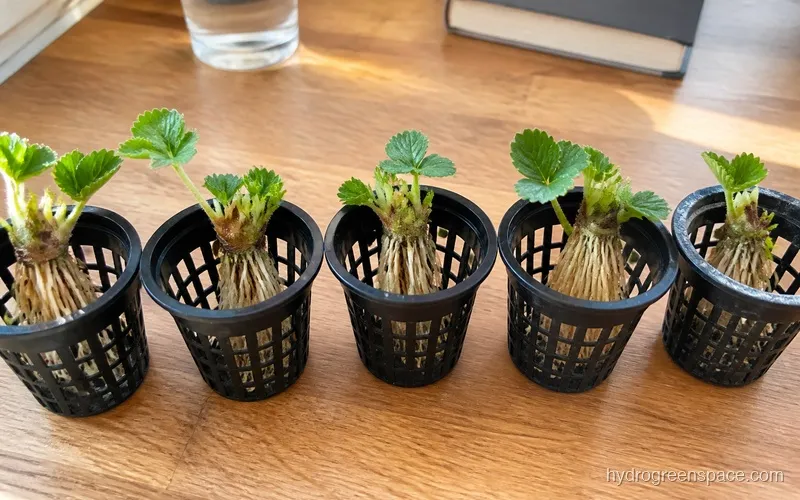
Start with bare-root transplants rather than seeds if you want to see fruit this season. Seeds take an extra 4-6 weeks to establish, and bare-root crowns from a reputable nursery will root into your system faster. The guide to starting with bare-root strawberries hydroponically covers everything you need to do before dropping crowns into net pots.
Once your system is running and plants are established, your next variable to dial in is the nutrient solution. Strawberries need a different nutrient profile during flowering and fruiting than during vegetative growth, and getting that balance right is where you start seeing the difference between average and excellent harvests. That’s covered in depth in the hydroponic strawberry nutrient solution guide. For a full picture of everything involved in growing strawberries hydroponically, from variety selection through your first harvest, the complete hydroponic strawberries guide is worth working through before your first plant goes in.
→Check price on General Hydroponics MaxiGro + MaxiBloom BundleA two-stage dry nutrient kit covering vegetative growth and fruiting, works well for day-neutral strawberry varieties.