
Best Strawberry Varieties for Hydroponics (2026)
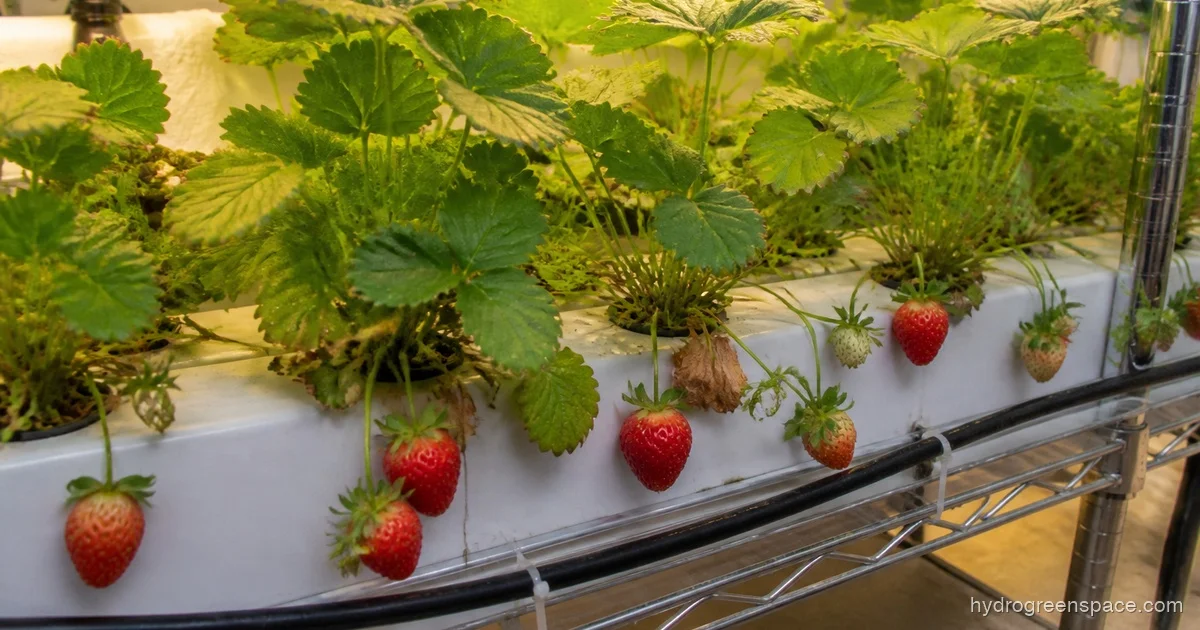
Walk into any garden center and you’ll find dozens of strawberry varieties. Walk into the hydroponics section and you’ll find… the same varieties, with zero guidance on which ones actually work indoors. Picking the wrong type is the fastest way to spend months tending plants that fruit once and then sit dormant.
Before we get into individual varieties, there’s a foundational decision that matters more than any cultivar name. Understanding strawberry types will save you a full growing season of frustration.
The Three Strawberry Types (Only One Works for Hydroponics)
Strawberries fall into three main categories based on how they trigger fruiting, and this distinction is everything when you’re growing indoors.
June-bearing varieties produce one large flush of fruit per year, triggered by the long days of early summer. They’re the classic pick-your-own field strawberry. Indoors under artificial light, they still behave as if it’s perpetually the right season to fruit once and rest. You’ll get one decent harvest and then spend months nursing dormant plants. Not worth it.
Everbearing varieties produce two flushes (spring and fall) with a midsummer gap. Better than June-bearing for indoor growers, but still tied to seasonal cues to some degree. They’re also often confused with day-neutral varieties, and the terms get thrown around interchangeably in seed catalogs. They’re not the same thing.
Day-neutral varieties are where indoor hydroponics actually makes sense. These plants set fruit continuously regardless of day length, as long as temperatures stay between roughly 35°F and 85°F (2°C to 29°C). They produce smaller individual fruits than June-bearing types, but they produce them constantly. Give them the right nutrient solution, consistent light, and stable temperatures, and they’ll fruit every few weeks without stopping.
If you’re new to growing strawberries hydroponically, read through how to grow hydroponic strawberries at home first. It covers system setup, lighting, and the basics before you ever choose a variety.
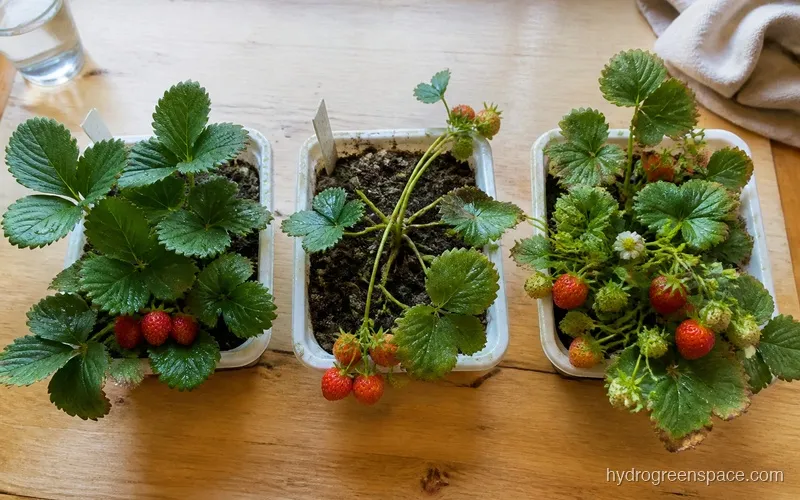
The Best Day-Neutral Varieties for Hydroponic Growing
These are the varieties that actually perform indoors. Each one has real tradeoffs worth understanding before you buy.
Albion
Albion is the workhorse. It’s the most widely grown day-neutral variety commercially, and for good reason. The fruits are large for a day-neutral (sometimes approaching June-bearing size), firm enough to handle without bruising, and consistent across flushes. Flavor is good (sweet with mild acidity) though not the most complex strawberry you’ll ever eat.
Where Albion really shines is disease resistance. It has strong resistance to Verticillium wilt, Phytophthora crown rot, and anthracnose crown rot. In a recirculating system where pathogens can spread through shared water, disease resistance isn’t a nice-to-have. It’s the difference between one sick plant and a wipeout.
Albion works well in NFT channels, DWC, and Kratky setups. It produces moderate runners, which you can root into new plants or remove to keep the mother plant focused on fruiting. For most hydroponic beginners, Albion is the right answer.
Seascape
Seascape is the other heavy hitter in day-neutral growing. It was developed at UC Davis alongside Albion and has a slightly more acidic, complex flavor profile. If you’ve tasted a Seascape next to an Albion, you’ll notice Seascape has a brighter, more tart finish, closer to a wild strawberry in flavor than the milder commercial types.
The tradeoff is heat tolerance. Seascape handles warmer temperatures better than Albion, making it a better choice if your grow space regularly hits the upper end of the comfortable range. It also tends to fruit slightly earlier in the season cycle, which matters if you’re starting plants in fall.
Yield per plant is comparable to Albion. Disease resistance is solid but not quite as comprehensive. Seascape is a great second variety to run alongside Albion if you want to test both and compare production in your specific setup.
San Andreas
San Andreas was bred as a direct competitor to Albion and in many taste comparisons wins on sweetness. The fruit has higher sugar content, firmer texture, and excellent shelf life for a day-neutral. Commercial growers like it because the berries hold up during packing; home hydroponic growers like it because the flavor is noticeably better out of the water.
The one real downside: San Andreas is more susceptible to Botrytis (gray mold) than Albion. In a humid indoor environment with limited airflow, this matters. Keep good air circulation around your plants and avoid wetting the foliage. If you manage the humidity, San Andreas fruit quality rewards the extra attention.
Mara des Bois
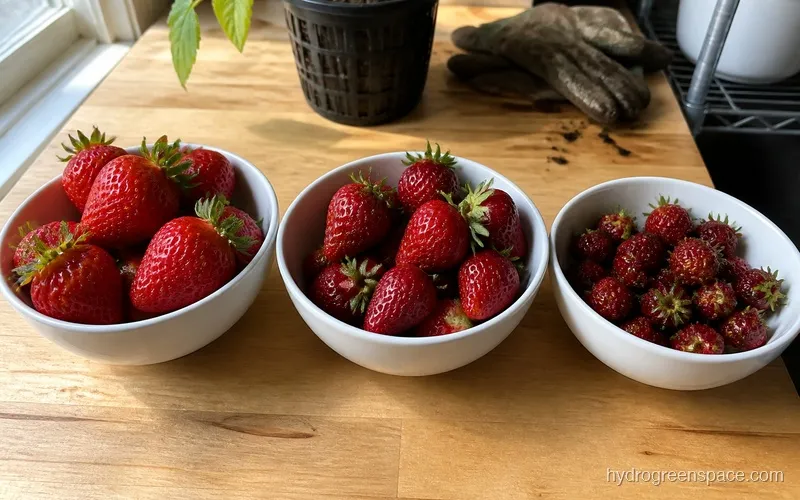
This is the one for growers who prioritize flavor above everything else. Mara des Bois is a French everbearing variety that tastes genuinely like wild Alpine strawberries: intensely perfumed, complex, almost floral. If you’ve eaten fraises des bois in France and wondered why supermarket strawberries taste like water by comparison, this is the closest you’ll get from a full-sized plant.
The yield tradeoff is real. Mara des Bois produces smaller, softer fruits at a lower volume than any of the American day-neutral varieties. It’s not a production variety. It’s a flavor variety. For a home grower who wants a dozen extraordinary berries to eat straight from the plant rather than a quart of decent ones, it’s worth every extra hour of care.
It performs best in NFT or deep water culture where you can dial in nutrients precisely. It’s also more sensitive to nutrient imbalances than Albion or Seascape, so use a hydroponic nutrient calculator to nail your EC and pH before running this one.
Matching Varieties to Your Hydroponic System
The variety you choose should match how you’re growing, not just how a berry tastes at the farmers market.
NFT (Nutrient Film Technique): All four varieties above work in NFT, but Albion and Seascape tend to thrive best here. The constant thin film of solution keeps roots oxygenated without waterlogging. NFT suits strawberries well because of their relatively compact root systems. If you want to understand system options more broadly, the types of hydroponic systems guide lays out the tradeoffs clearly.
DWC (Deep Water Culture): Albion and San Andreas handle DWC well. The key is keeping dissolved oxygen high, because strawberry roots do not tolerate stagnant water. Run a quality air stone and monitor pH closely because strawberries in DWC are sensitive to pH drift above 6.5.
Kratky (Passive DWC): Works best with smaller varieties in a controlled environment. Seascape adapts reasonably well to Kratky. Mara des Bois is the wrong choice here. It wants consistent aeration and responds badly to the stagnant lower zone that develops in passive systems.
Bucket/Dutch bucket: San Andreas works well here because its larger root mass suits the media-filled container format. Pair it with coco coir or perlite as your growing medium and you’ll get strong production.
What I’d do: Start with Albion regardless of system. It’s forgiving, disease-resistant, and productive. Once you’ve run a successful cycle and understand how your system behaves, layer in San Andreas for flavor comparison in the same setup. Add Mara des Bois only when you’re confident in your nutrient management.
The Runners vs. Crowns Decision
Whatever variety you choose, you’ll face a secondary decision: start from crowns (bare-root transplants) or runners propagated from mother plants.
Crowns are faster to establish and are how most home growers start. If you’re using bare-root plants, prepping bare-root strawberries for hydroponics covers the soaking, trimming, and transplanting process so you don’t lose plants in the first week.
Runners are how you scale once you have healthy mother plants. Day-neutral varieties produce fewer runners than June-bearing types (they’re directing energy toward fruiting instead), but they do produce some. Whether to root them into new plants or remove them to maintain mother plant yield is a real tradeoff, covered in detail in the strawberry runners guide.
Common mistake: Leaving too many runners on a young day-neutral plant. In the first four to six weeks after transplanting, remove all runners. Let the plant establish before you ask it to propagate itself. You’ll get better fruit set and a stronger root system.
One More Thing: Plan Around Real Yield Numbers
Once you’ve picked your variety and your system, the next question becomes how much fruit to actually expect. Hydroponic strawberry yield per plant breaks down realistic production numbers by variety and system type so you can plan your grow space around actual output rather than optimistic seed catalog claims.
The right variety won’t carry a bad system, but the right system with the wrong variety will underperform. Get both decisions right and day-neutral strawberries are one of the most rewarding crops you can grow hydroponically. For a full walkthrough of the complete grow from setup to harvest, the hydroponic strawberries guide covers system choice, nutrition, pollination, and yield expectations in one place.