
Hydroponic Strawberry Nutrient Solution: EC, pH & NPK
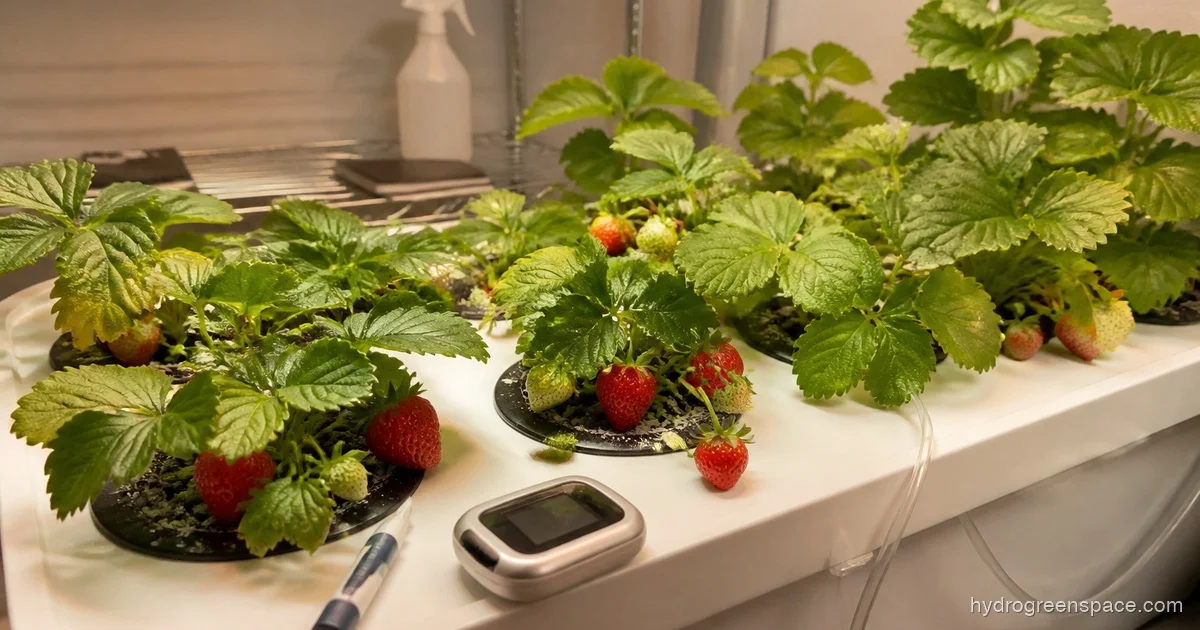
Getting your hydroponic strawberry nutrient solution dialed in is the single biggest lever you have over fruit quality. Sour berries, bland berries, cracked berries, tiny berries: almost all of it traces back to what’s in the reservoir and when you feed it. The plants themselves are forgiving if you give them what they need at the right stage.
This guide covers EC targets, pH range, NPK ratios by growth stage, a DIY formula with actual gram measurements, and what to do when something goes wrong. If you’re already growing, jump straight to the stage-by-stage table. If you’re starting fresh, read the whole thing.
What Makes Strawberry Nutrition Different From Other Crops
Strawberries are not heavy feeders. That’s the first thing most growers get wrong. Running them at the EC you’d use for tomatoes or peppers will push leafy growth and kill your fruit set. Strawberries want a lighter solution, kept very consistent, with a significant shift in potassium once flowering starts.
The other thing that separates strawberries: calcium matters more here than in most crops. Tip burn, misshapen fruit, and hollow berries are usually calcium uptake problems, and those problems usually come from either an EC that’s too high (blocking absorption) or a pH that’s drifted out of range.
For a full breakdown of how to think about feeding any hydroponic crop, how to feed hydroponic plants is a good foundation before diving into strawberry-specific numbers.
EC and pH Targets for Hydroponic Strawberries
pH: Keep it between 5.5 and 6.2. The sweet spot for strawberries is 5.8 to 6.0. Below 5.5, manganese and zinc uptake gets aggressive while calcium and magnesium absorption drops. Above 6.2, iron and phosphorus lock out.
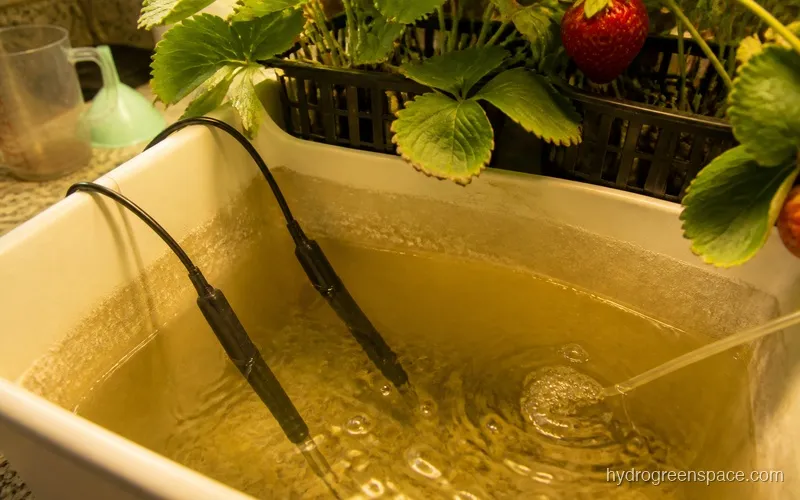
Check your pH levels in your hydroponic system at least once a day during active fruiting. Strawberries transpire heavily, and as water evaporates from the reservoir, the pH tends to drift up.
Tip: If your pH keeps climbing faster than normal, check your water source first. High-alkalinity tap water will fight you every time you top off the reservoir. Mixing with RO water (or switching entirely) is usually the easiest fix.
EC (electrical conductivity): Target ranges by stage:
| Growth Stage | EC Target (mS/cm) |
|---|---|
| Transplant / establishment | 0.8 – 1.0 |
| Vegetative / runner development | 1.2 – 1.6 |
| Flower initiation | 1.4 – 1.8 |
| Active fruiting | 1.6 – 2.0 |
| Late fruiting / finishing | 1.8 – 2.2 |
Keep EC at the lower end in hot weather. The hydroponic EC chart has target ranges for other crops if you’re running a mixed system.
NPK Ratios by Growth Stage
A standard “grow” formula designed for leafy greens is nitrogen-heavy. Strawberries need nitrogen early, but they need the ratio to shift toward potassium and phosphorus as soon as flowering begins.
Vegetative stage: Higher nitrogen relative to potassium. Something around 3-1-2 or 4-1-3 (N-P-K) works well. The plant is building canopy and root mass, so nitrogen drives that.
Flowering and early fruiting: Dial nitrogen back, bring potassium up. Aim for roughly 1-1-2 or 1-1-3. Potassium drives sugar transport and cell wall integrity.
Fruiting and ripening: Keep potassium high. Some growers push as high as 1-1-4 at peak fruiting.
What I’d do: If you’re using a single-part nutrient and can’t adjust the ratio, look for a bloom formula rather than a grow formula once you see the first flower buds forming. It won’t be perfect but it’s a much better match than staying on a grow formula through fruiting.
For the understanding NPK ratios breakdown in more detail, that page covers what each macronutrient actually does at the cellular level.
Stage-by-Stage Feeding Schedule
| Stage | Duration | EC | pH | N-P-K Ratio | Notes |
|---|---|---|---|---|---|
| Establishment | Weeks 1–2 | 0.8–1.0 | 5.8–6.0 | 3-1-2 | Light feed, new roots need time |
| Vegetative growth | Weeks 3–5 | 1.2–1.6 | 5.8–6.0 | 3-1-2 | Full feed, watch for tip burn |
| Flower initiation | Weeks 6–7 | 1.4–1.8 | 5.8–6.0 | 1-1-2 | Switch to bloom ratio |
| Active fruiting | Weeks 8–12 | 1.6–2.0 | 5.8–6.0 | 1-1-3 | High potassium, monitor calcium |
| Late fruiting | Weeks 13+ | 1.8–2.2 | 5.8–6.0 | 1-1-4 | Reduce top-off frequency |
If you haven’t chosen a variety yet, best strawberry varieties for hydroponics covers which ones perform best in each system type.
DIY Nutrient Solution: MasterBlend Formula for Strawberries
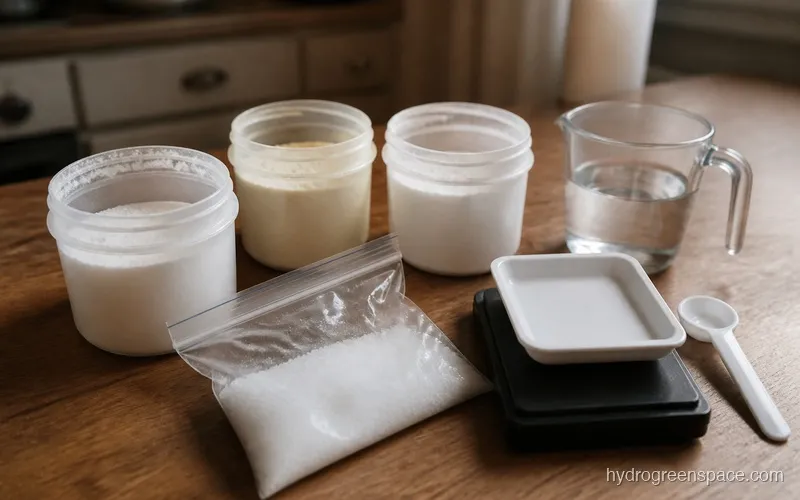
You don’t need a specialty strawberry nutrient product. MasterBlend 4-18-38 is the most common DIY base for hydroponic strawberries, paired with calcium nitrate and Epsom salt. Here are gram measurements for a 5-gallon reservoir:
Vegetative stage (per 5 gallons / ~19 liters):
- MasterBlend 4-18-38: 6g
- Calcium nitrate (15.5-0-0): 6g
- Magnesium sulfate (Epsom salt): 3g
Fruiting stage (per 5 gallons / ~19 liters):
- MasterBlend 4-18-38: 8g
- Calcium nitrate (15.5-0-0): 8g
- Magnesium sulfate (Epsom salt): 4g
Mix in order: calcium nitrate first, dissolve fully, then MasterBlend, then Epsom salt. Never add calcium nitrate and sulfate compounds to the same undiluted concentrate.
Check your EC after mixing. Most tap water in the US reads between 0.3 and 0.6 mS/cm before adding nutrients, so factor that in. If you’re working with hard water (above 0.4 mS/cm base EC), reduce MasterBlend slightly.
If you want to go deeper on DIY mixing, DIY hydroponic nutrients covers the principles, and mixing your own hydroponic nutrient solution at home goes through sourcing and mixing in detail.
Why Your Strawberries Taste Sour (and How to Fix It)
Sour or flavorless strawberries are almost always a potassium problem. Sugar development and transport in the fruit depends directly on potassium uptake during fruiting.
Four things cause poor potassium uptake:
- pH above 6.2 (potassium uptake drops sharply above this threshold)
- Too much calcium or magnesium (these compete with potassium for uptake)
- EC too high (osmotic stress slows everything, including potassium transport)
- Wrong NPK ratio (still on a nitrogen-heavy grow formula during fruiting)
The fix is usually straightforward: check pH first, adjust EC if needed, and switch to a bloom-ratio formula. Don’t add potassium sulfate or potassium silicate on top of a solution that’s already out of balance — doing so can easily push EC past 2.5 mS/cm, which stresses roots and makes sourness worse.
For a full picture of what else might be going wrong, the nutrient deficiency chart has a visual reference for diagnosing deficiencies by symptom.
When to Change or Flush the Reservoir
Most growers change their reservoir every 7–14 days. Change or flush when:
- EC has drifted more than 0.4 mS/cm from target in either direction
- pH becomes unstable (swinging more than 0.5 units per day)
- You see algae growth, root slime, or a sulfur smell
- You’re transitioning between growth stages and want a clean formula reset
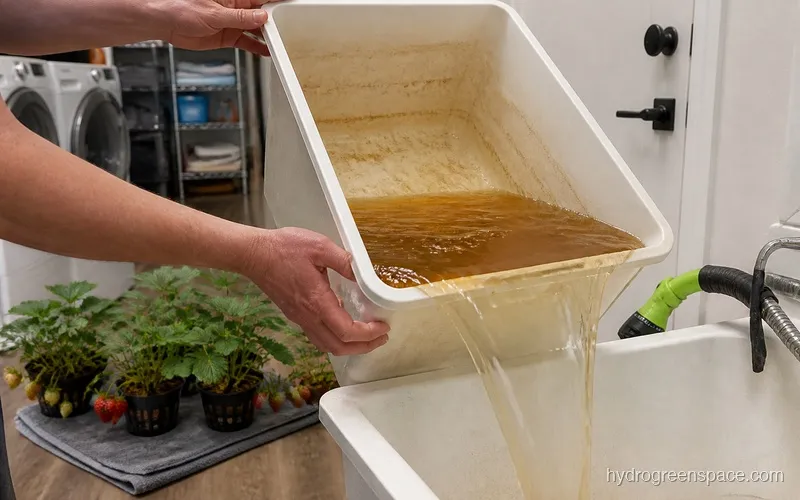
When you flush, rinse the reservoir walls, check for biofilm on return tubing, and inspect roots. Starting with a diluted solution (50% strength) for a day after a flush gives roots time to recover.
When to change hydroponic nutrients goes through the full decision framework including partial top-offs vs. full changes.
Hard Water vs. Soft Water and Your Strawberry Formula
If your tap water is above 200 ppm (roughly 0.4 mS/cm), your strawberry formula needs to adjust.
Hard water adjustments:
- Reduce calcium nitrate by 10–15%
- Skip Epsom salt entirely if your water is already high in magnesium
- Target the lower end of the EC range
Soft water / RO water adjustments:
- Use the full MasterBlend formula as written
- Add a Cal-Mag supplement at about 1–2 mL/gallon if you’re on pure RO
- EC starts from near-zero, so you have precise control
The hydroponic nutrient calculator can help you back-calculate how much your source water is contributing before you mix anything.
Putting It Together
Strawberry nutrition rewards consistency more than precision. You don’t need perfect numbers every single day. You need a solid baseline, a routine for checking EC and pH, and the judgment to know when the solution is drifting and why.
Start with the vegetative formula, watch how your plants respond, and make one change at a time. When fruit starts setting, shift to the bloom ratio and let potassium do its work. The flavor difference between a plant fed a grow formula and one fed a proper fruiting formula is significant enough that you’ll taste it in the first harvest.
If you want to see how nutrition intersects with overall system performance, hydroponic strawberry yield per plant covers what realistic yields look like and which variables (nutrition included) move the needle most. For an end-to-end walkthrough of the complete grow, the hydroponic strawberries guide brings system setup, variety choice, nutrition, and harvest expectations together in one place.