Best Lettuce for Beginner Hydroponics (Ranked)
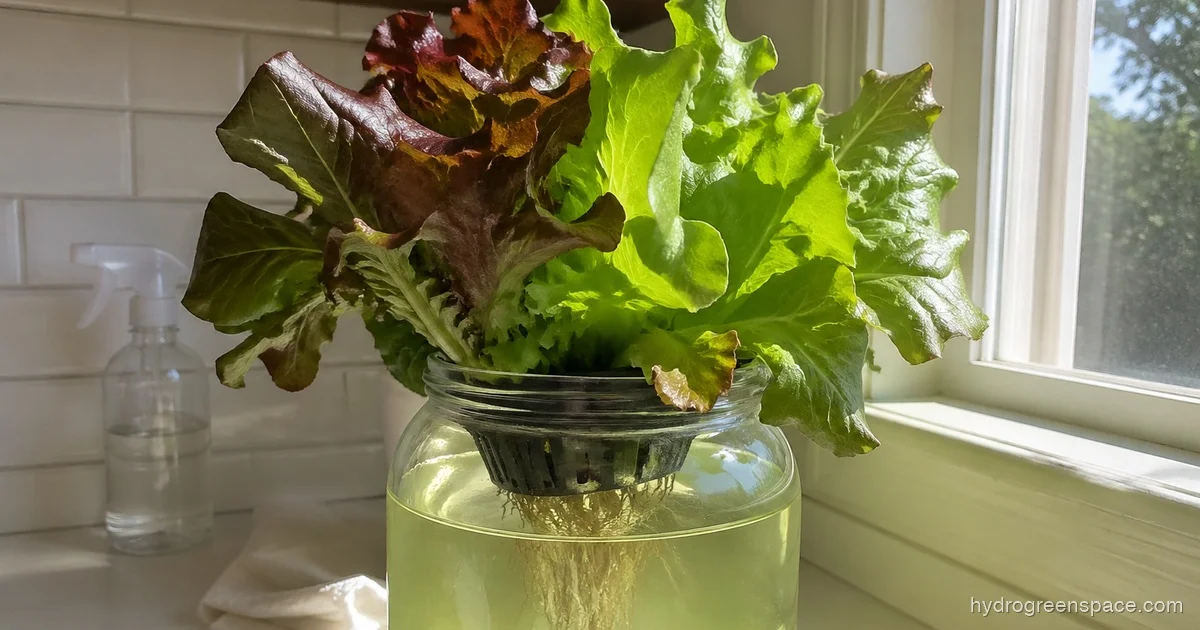
The most common mistake new hydroponic growers make isn’t with their nutrients or their light schedule. It’s picking the wrong lettuce variety for their setup. You set up your first Kratky jar or AeroGarden, drop in some iceberg seeds, wait five weeks, and wonder why you got four sad outer leaves and a bitter stem. The variety matters.
Lettuce is genuinely one of the easiest crops to grow hydroponically, but that’s only true for certain types. Pick a variety that’s built for beginners and you can be harvesting in under 30 days. Pick the wrong one and you’ll spend months managing bolting on a crop that was never going to reward the effort.
This guide ranks the best lettuce varieties for beginners by three criteria: days to harvest, bolting resistance, and how well they perform in the systems beginners actually own (Kratky jars, AeroGardens, basic DWC buckets). For a broader look at all the lettuce varieties that work well in hydroponics, that post covers the full spectrum.
How to Judge a Beginner-Friendly Lettuce Variety
Before the rankings, here’s the scoring framework. Three things determine whether a variety is actually beginner-friendly:
Days to harvest: The faster a variety matures, the faster you get feedback on whether your system is working. Loose-leaf types can be ready in 21–30 days. Head lettuces take 45–70+ days. That’s a long time to wait before you know something went wrong.
Bolting resistance: Bolting is when a plant shifts from leaf production to flowering. Once it bolts, the leaves turn bitter and the plant is done. New growers often run warm, inconsistent environments. A variety with low bolt resistance is punishing in that context. High bolt resistance gives you more room for error.
System flexibility: Some varieties are fine in still-water Kratky setups. Others need consistent water flow and oxygenation. If you’re running a basic setup, you want a variety that tolerates it.
Tier 1: Start Here (Easiest Lettuce for Hydroponics Beginners)
Loose-Leaf Red and Green Leaf
This is the definitive beginner variety. Red Sails, Black Seeded Simpson, Oak Leaf: any loose-leaf cultivar will give you fast results with minimal fuss. Days to first harvest: 21–28 days. Bolting resistance: moderate to high. System compatibility: every system, including Kratky jars with zero aeration.
The real advantage here is cut-and-come-again harvesting. You don’t wait for a full head to form. You snip outer leaves when they’re 3–4 inches long, the plant keeps growing, and you get three or four harvests from a single transplant. This is forgiving in a way that head-forming lettuces simply are not.
If your first batch runs warm or your nutrient solution drifts slightly off, loose-leaf varieties recover faster than any other type. And if a plant fails completely, you’ve only lost 3 weeks, not 6.
Oakleaf
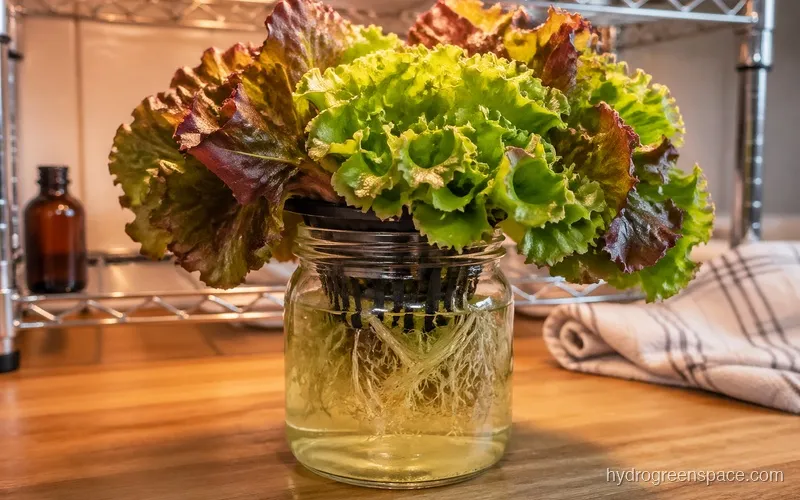
Oakleaf is a loose-leaf subtype that deserves its own mention because of its exceptional bolt resistance. If your grow space runs warm (above 72°F), oakleaf is more forgiving than standard green leaf. It has slightly more texture and a nuttier flavor too, which makes it feel more like a “real” harvest when you’re eating it. Days to harvest: 28–35 days.
Tier 2: Great Choices Once You’re Comfortable
Butterhead and Bibb (Buttercrunch)
Butterhead lettuces, including Bibb and Buttercrunch, sit one step above loose-leaf in complexity. They form soft, loosely folded heads rather than spreading outer leaves, which means they need a bit more time (35–45 days) and consistent nutrient delivery to develop properly.
Buttercrunch specifically is one of the most popular hydroponic varieties for good reason. It has above-average bolt resistance, a mild sweet flavor, and it performs well in DWC and NFT systems. It’s also compact enough for an AeroGarden pod.
The practical difference between Butterhead and loose-leaf from a beginner’s standpoint: Butterhead needs slightly higher nutrient tolerance and more consistent environmental conditions to form a proper head. If your EC drifts low for a week, you’ll get open, floppy growth instead of a tight head. That’s not a disaster, but it tells you something’s off. For growing butter lettuce in a hydroponic system, there’s a full walkthrough of what that environment looks like.
Common mistake: Harvesting butterhead too early. New growers see the outer leaves looking full and snip the whole plant at 3 weeks. At that stage, the head hasn’t fully formed yet. Let it go to 40–45 days for a proper butterhead structure.
Bibb Lettuce
Bibb is a compact butterhead type that’s particularly well-suited for smaller setups. It develops a small, tight cup shape and is one of the few lettuces that actually looks better harvested whole rather than as a cut-and-come-again. Days to maturity: 35–40 days. If you’re running an AeroGarden or a 5-gallon DWC, Bibb fits without overcrowding.
Tier 3: Rewarding, but More Demanding
Romaine
Romaine can absolutely be grown hydroponically as a beginner, but it takes longer and requires more headspace than loose-leaf types. Days to maturity: 50–70 days. It also has lower bolt resistance than butterhead or loose-leaf varieties, meaning it punishes warm, inconsistent environments more noticeably.
The upside is the yield. A full romaine head from a DWC system is genuinely impressive, and the flavor is better when grown hydroponically than in soil. If you want to get there, growing romaine hydroponically has the specifics on what the plant needs to develop properly.
The honest advice: don’t make romaine your first variety. Run a cycle of loose-leaf first. Once you’ve dialed in your pH, your EC, and your light schedule, romaine is a great next project.
Tier 4: Harder Than You Think
Iceberg
This gets listed in a lot of beginner roundups and I don’t understand why. Iceberg is one of the hardest lettuces to grow hydroponically, not one of the easiest. It takes 70–85 days to form a head. It requires cool temperatures (below 65°F consistently) to develop that tight, crisp structure. It has poor bolt resistance. And the head-formation process is sensitive to nutrient fluctuations.
Growing iceberg lettuce hydroponically is absolutely possible, but it requires a dialed-in system, good temperature control, and patience. If you’re in your first or second grow, skip it. The payoff is not proportional to the effort when you’re still learning your setup.
Which System Works Best for Beginner Lettuce Varieties?
The loose-leaf and butterhead varieties above are compatible with the three systems most beginners start with:
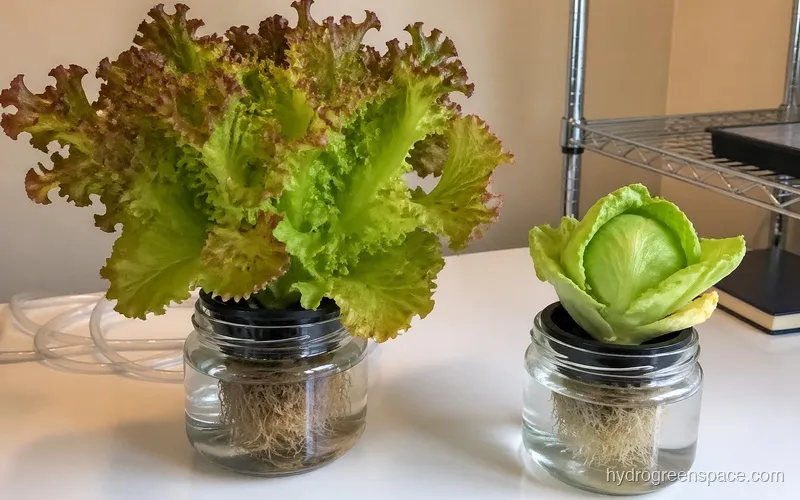
Kratky jar (passive DWC): Best for loose-leaf. No pump, no aeration, minimal maintenance. Black Seeded Simpson and Red Sails thrive in Kratky because they have low oxygen demand and fast growth cycles. Butterhead works, but head formation can be inconsistent in a fully passive setup.
AeroGarden: Well-suited for both loose-leaf and Bibb. The pod spacing is designed for compact varieties, and the built-in light schedule and nutrient reminders take a lot of variables off your plate as a new grower.
Basic DWC bucket: The most flexible option. All Tier 1 and Tier 2 varieties work well here. Once you add an air stone and a simple reservoir setup, you have enough oxygenation to support butterhead and even romaine.
For context on getting a system running from scratch, the beginner’s guide to hydroponics covers the full setup process.
What Happens When Your First Batch Fails
It will, at some point. Maybe pH goes out of range and you get tip burn. Maybe your Kratky jar runs dry before you notice. Maybe your seedlings damp off before they even reach the net pot.
Variety choice directly affects how quickly you recover. A loose-leaf variety that fails at week 2 costs you 2 weeks and some seeds. An iceberg that fails at week 7 costs you almost 2 months. This is the practical reason to start with fast-maturing varieties regardless of what you want to grow long-term.
When something goes wrong, the most useful thing you can do is identify the cause before starting over. Common beginner mistakes to avoid walks through the most frequent failure points so you can diagnose rather than just restart and repeat the same error.
The Quick-Start Recommendation
Grow two varieties side by side in your first setup: one loose-leaf (Black Seeded Simpson or Red Sails) and one butterhead (Buttercrunch). The loose-leaf will be ready to harvest in 3–4 weeks and will give you early feedback on whether your system is working. The butterhead will follow in 5–6 weeks and show you what a more developed lettuce structure looks like.
After one full cycle of each, you’ll have a real opinion about which one suits your space, your taste, and your routine. That’s more useful than anything a ranked list can tell you.
Once you’ve got your first successful harvest, the next question is when your hydroponic lettuce is ready to harvest and how to regrow it for a continuous supply so you’re never back to zero between cycles. For a complete overview of everything that goes into growing lettuce hydroponically, the hydroponic lettuce guide covers every stage from variety selection to harvest and storage.