
How to Regrow Hydroponic Lettuce (2 Methods That Work)
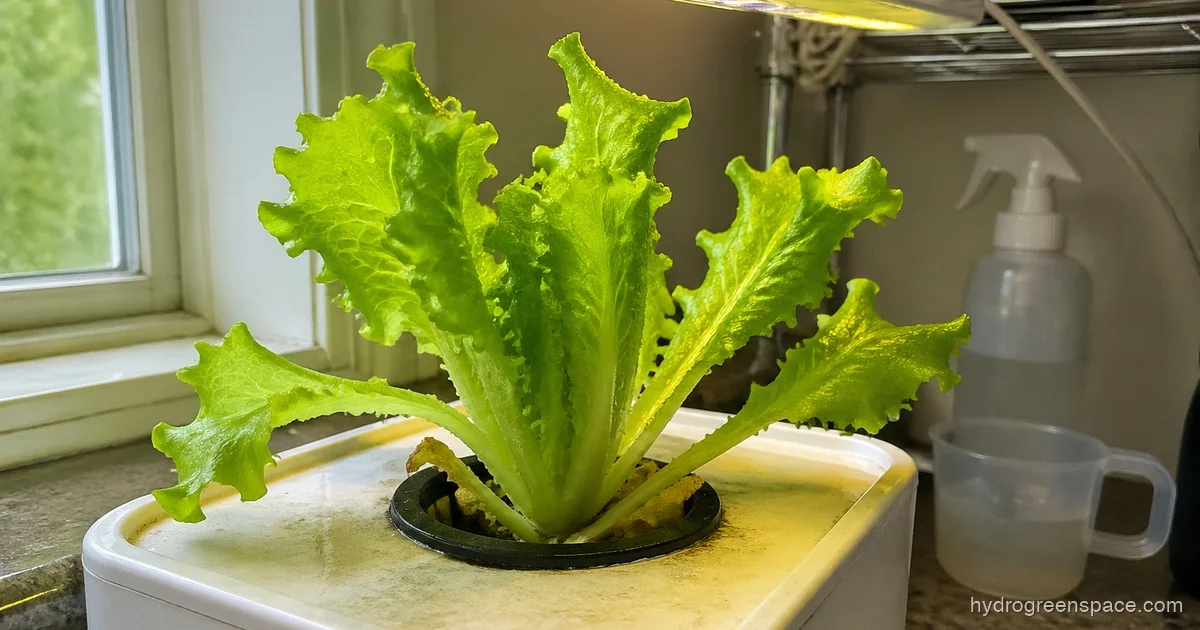
One of the most satisfying parts of growing lettuce hydroponically is that you don’t have to treat it like a one-and-done crop. Cut it right and the plant keeps producing. Cut it wrong (or wait too long) and you’re starting over from seed sooner than you planned.
There are two ways to regrow hydroponic lettuce, and they’re not interchangeable. The first keeps the plant alive in your system and has you harvesting outer leaves repeatedly. The second takes a spent stump and coaxes it back to life in fresh nutrient solution. Both work, but each has its own timeline, variety requirements, and failure modes worth knowing before you reach for the scissors.
Cut-and-Come-Again: The Method That Keeps Your System Running
Cut-and-come-again is exactly what it sounds like. Instead of pulling the whole plant, you harvest the outermost leaves and leave the center crown intact. The growing tip keeps pushing out new leaves from the middle while you’re already eating the outer ones.
This is the approach that makes continuous lettuce harvest possible in a well-run system. You’re never completely without lettuce and you’re never waiting on transplants to mature.
How to Do It Correctly
Start harvesting when the plant has at least 10–12 mature outer leaves. For most loose-leaf varieties, that’s somewhere around 4–5 weeks after transplant, though your system’s light intensity and nutrient solution strength will shift that window. When to harvest hydroponic lettuce covers those timing cues in more detail.
Take no more than a third of the plant’s leaf mass in a single harvest. Clip the outer leaves at their base, close to the stem but without nicking the growing tip. The center crown is your engine, so leave it completely untouched.
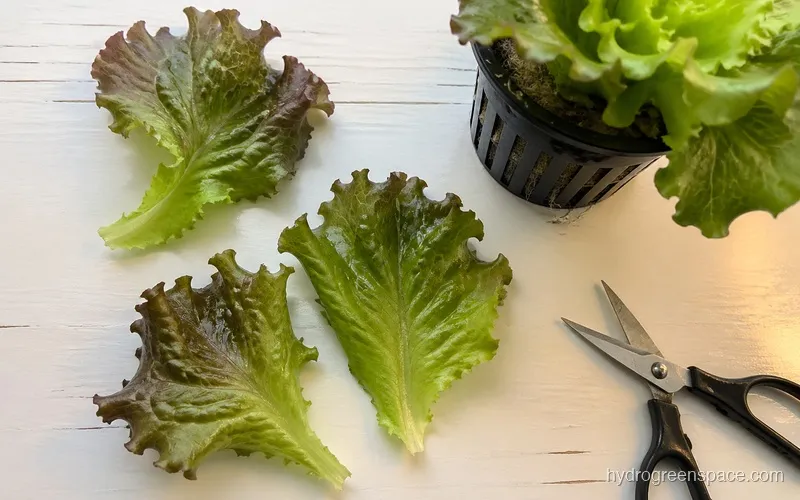
After harvesting, the plant needs 7–14 days to push out the next flush of leaves. That timeline stretches in cooler rooms or if your light is running at low intensity. In a dialed-in system with strong lighting (around 200–250 PPFD for lettuce) and temperatures around 68–72°F, you’ll be back for another harvest in closer to 7 days.
How Many Times Can You Harvest Hydroponic Lettuce This Way?
Realistically, 3–5 rounds of outer-leaf harvesting from a single plant before quality starts dropping. After that, the leaves tend to come in smaller, the plant often slows down noticeably, and the risk of bolting climbs. Some growers squeeze 6–7 rounds out of a particularly vigorous plant, but that’s the exception rather than the rule.
Which Varieties Work Best
Loose-leaf types are ideal for cut-and-come-again. Black Seeded Simpson, Red Sails, Oak Leaf, and Buttercrunch (on the loose side of butter heads) all respond well to repeated harvesting. They grow from a clear central rosette and push new growth reliably after each cut.
Heading varieties like Romaine and Iceberg are a harder sell. They want to form a tight head rather than keep producing outer leaves. You can harvest outer leaves once or twice, but the plant’s energy is really aimed toward that central head. For continuous harvesting, stick with the loose-leaf types.
Stump Regrowth: Regrowing Lettuce from the Base
The second method is what people usually mean when they search for regrowing lettuce from a stump. You’ve harvested a full head, you’re left with the rooted base, and you want to know if it can come back.
The answer is yes, but the expectations need to be right. Stump regrowth gives you one additional smaller harvest, not a full-sized plant. Think of it as a bonus round rather than a fresh crop.
Hydroponic Stump Regrowth Step by Step
- After cutting the head, leave 1–2 inches of the stem intact at the base, including any visible small leaves emerging from the center.
- If the roots are still healthy and white (or light tan), leave the plant in your system and keep the nutrient solution flowing normally.
- If the roots are brown, slimy, or the plant was already showing stress, don’t waste your time. Pull it, compost the stump, and replant.
- Within a week, you should see new leaves pushing from the crown. Within 2–3 weeks, you’ll have enough regrowth for a modest harvest.
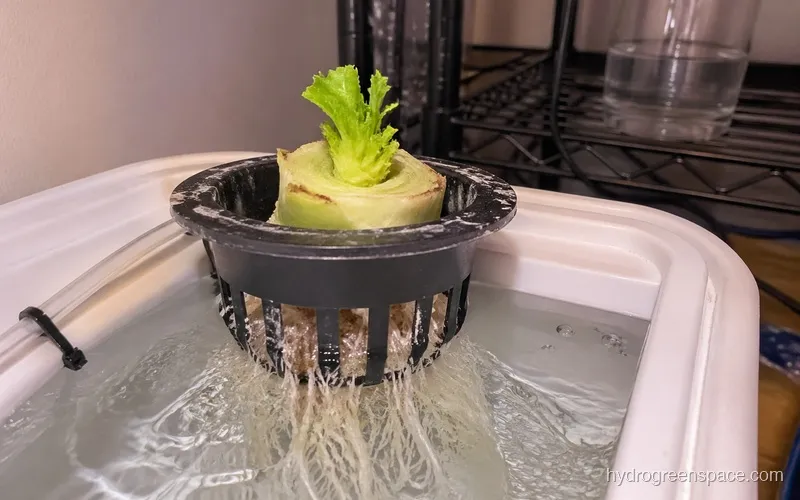
What I’d do: I keep stump regrowth going only in my Kratky jars, where I can drop in a new jar next to the regrowing stump without disrupting the rest of the system. DWC systems work too, but I don’t bother regrowing stumps in NFT channels since I’d rather run a fresh transplant through. A Kratky setup is genuinely the simplest way to regrow a lettuce stump.
Can You Regrow Store-Bought Hydroponic Lettuce?
Sometimes. It works best with lettuce sold with the roots still attached, like the kind in a plastic clamshell with a growing medium plug. Place the base in a shallow container of diluted nutrient solution (half-strength is fine) and put it near a window or under a grow light.
Don’t expect a full head. What you’ll get is enough new leaf growth for one more salad. It’s a fun experiment and a decent way to test the water before committing to a full system, but it’s not a substitute for growing from seed.
Nutrient Solution Replenishment Between Cycles
Whether you’re running cut-and-come-again or stump regrowth, nutrient management between harvest cycles matters.
After repeated harvesting, the plant is drawing heavily on nitrogen to push new leaf growth. Check your EC regularly, especially in the 2–3 days after a harvest. If your nutrient solution has been running for 2–3 weeks, top it up with fresh solution rather than just adding plain water. Lettuce optimally needs an EC between 0.8–1.6 mS/cm at most growth stages, with slightly higher EC (closer to 1.4–1.6) during peak production.
Refer to maintaining the right NPK ratio for leafy greens before your next cycle starts. Getting that balance right is what separates plants that keep producing clean, crisp leaves from ones that give you bitter, pale regrowth.
If you’re unsure how to stay on top of top-offs and full reservoir changes, how to feed hydroponic plants walks through the routine in practical terms.
Bolting: When Regrowth Stops Being Worth It
Bolting is the fastest way to end a lettuce plant’s productive life. When a plant bolts, it shifts from producing leaves to producing a flower stalk. The leaves turn bitter quickly, the growing tip elongates and toughens up, and no amount of cutting will reset it.
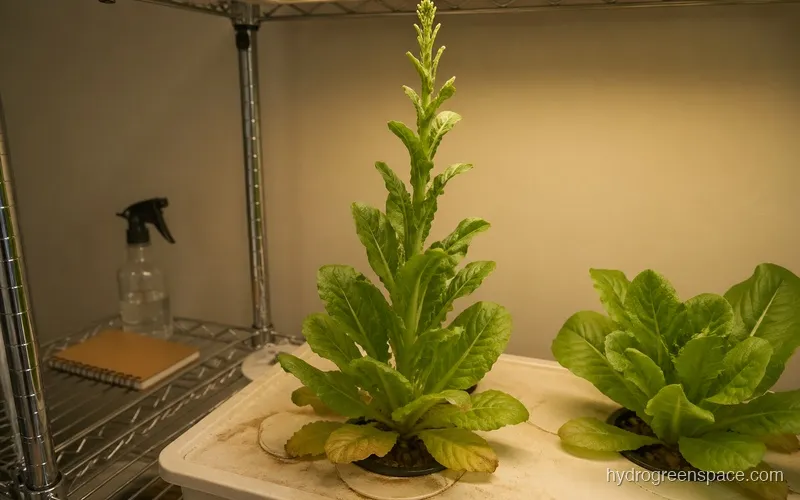
In hydroponics, bolting is almost always triggered by temperature or light duration rather than nutrient issues. Lettuce prefers 60–70°F. Once your growing space climbs consistently above 75°F, bolting risk rises sharply. Long photoperiods (18+ hours of light per day, maintained for weeks) can also push plants toward flowering.
Watch for these early signs:
- The center crown starts stretching vertically rather than staying compact and low
- New leaves emerging from the center are noticeably smaller and more pointed
- The plant develops a slightly bitter taste when you sample a leaf
- The main stem becomes visible and woody-looking
If you see these signs, harvest everything edible immediately. Don’t wait another week hoping it reverses. It won’t.
How Long Does Hydroponic Lettuce Take to Regrow?
After a cut-and-come-again harvest, expect 7–14 days before the next flush is ready to pick. Stump regrowth takes closer to 14–21 days to produce a harvestable amount of new leaves.
Both timelines assume good conditions: adequate light (14–16 hours per day for most varieties), temperatures in the 60–70°F range, and a properly maintained nutrient solution. Push those conditions in the right direction and you’ll trend toward the faster end. Let them slip and the plant slows down accordingly.
Once your current plants finish their productive life, succession planting is the move. Starting a new tray of seedlings every 2–3 weeks keeps your harvest continuous without relying entirely on regrowth. Pairing that with a DWC system designed for continuous production gives you the most consistent output.
If you want to make more of your harvest, how to store hydroponic lettuce will help you extend shelf life between cuts, and how long freshly cut lettuce stays good sets realistic expectations once it’s in the fridge. The effort you put into regrowing is worth more when nothing goes to waste on the back end.
Once you have regrowth dialed in, the natural next step is expanding what you grow alongside it — hydroponic herbs are a natural companion crop to lettuce and just as low-maintenance to keep running. For the full picture of what goes into a complete lettuce grow from seed to second harvest, the hydroponic lettuce guide is the place to start.