
Iceberg Lettuce Hydroponics: Grow a Real Head
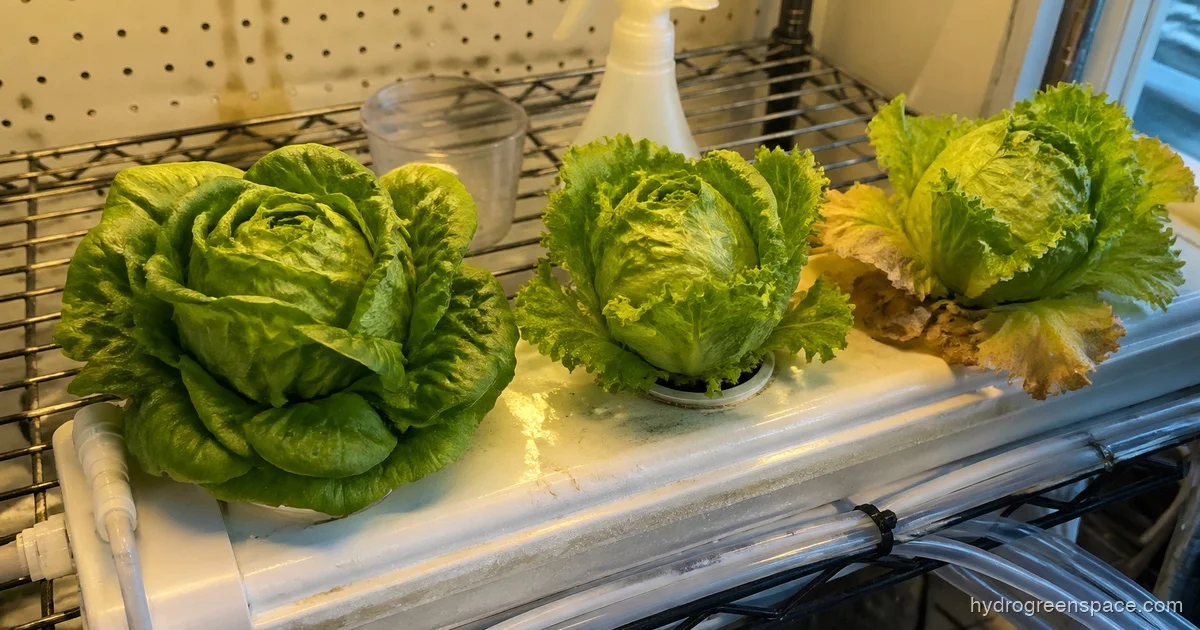
Iceberg lettuce is the one variety that trips up growers who’ve already had success with butterhead or loose-leaf. The plant will grow just fine in a hydroponic system, but without the right temperature, light, and spacing, you’ll end up with a big leafy rosette that never tightens into a head. That’s not a failure of hydroponics. It’s a failure of conditions.
If you understand what triggers head formation in Lactuca sativa var. capitata and set up your system accordingly, hydroponic iceberg is absolutely achievable at home. It just takes more intention than dropping romaine seeds into a Kratky jar and walking away.
Is Iceberg Harder to Grow Hydroponically Than Other Lettuce?
Yes, honestly.
Loose-leaf varieties like butterhead, red leaf, or oakleaf are forgiving. They don’t need to form a compact head to be “done.” You can harvest outer leaves continuously, and they tolerate a wider range of temperatures and light levels. Iceberg is different. It’s a crisphead variety, which means the whole point is that dense, tightly folded inner core. Getting there requires specific conditions that loose-leaf growers don’t have to think about.
The good news: once you understand what iceberg actually needs, the system choice matters less than you’d think. You can grow it in NFT, DWC, or even Kratky, each with real tradeoffs.
If you’re newer to hydroponics, it’s worth starting with a more forgiving variety before committing a full system cycle to iceberg. But if you’re ready for the challenge, here’s how to approach it.
The Head Formation Problem (And How to Solve It)
Iceberg heads form when the plant shifts from outward leaf growth to inward folding. That shift is triggered by a combination of three things: cool temperatures, adequate but not excessive light intensity, and enough space for the outer leaves to create the microclimate that pushes the inner leaves to curl inward.
Temperature is the biggest lever. Iceberg wants daytime temps in the 60-70°F (15-21°C) range. Above 75°F, the plant prioritizes leaf production and bolt-prevention over heading. In a warm indoor grow space, you’re already fighting an uphill battle. If your grow tent runs warm, iceberg is going to frustrate you. If you have a basement, garage, or climate-controlled space that naturally runs cool, you’re in a much better position.
Light intensity (DLI) matters more than photoperiod for heading. The daily light integral for lettuce sits around 12-17 mol/m²/day for most varieties, but iceberg specifically benefits from staying on the lower end of that range during the heading phase. Too much intensity drives vegetative growth and speeds up bolting. If you’re growing under LEDs, dial back the dimmer slightly once you see the plant starting to cup inward, typically around weeks 6-8.
Plant spacing is the most underestimated factor. Iceberg heads need room. Each plant should have at least 10-12 inches of space in every direction. Crowded plants compete for light, and the outer leaves can’t form the natural canopy that encourages the inner leaves to fold. In a home system, this usually means growing fewer plants than you think.
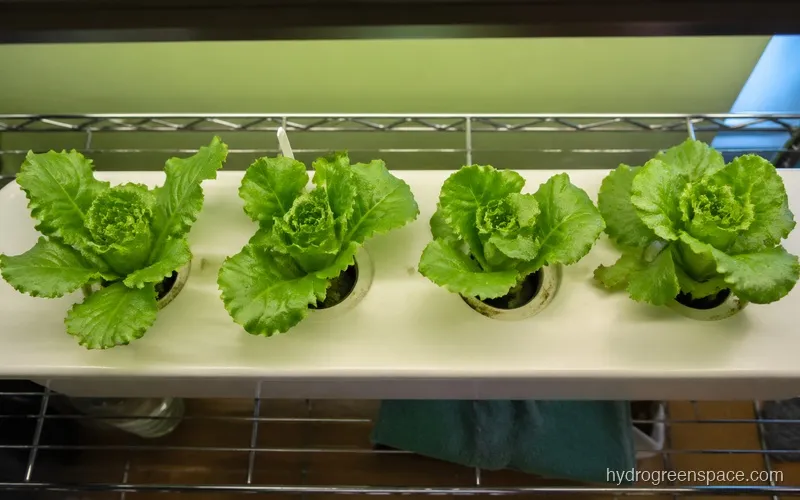
What I’d do: Grow iceberg in a space where you can keep temps at or below 68°F consistently. If your grow space fluctuates above 72°F regularly, switch to a heat-tolerant variety like romaine or butterhead. Iceberg at 75°F produces big plants that never head. You’ve spent 70+ days for a salad you could have grown in 35.
Which Hydroponic System Works Best for Iceberg?
All three main systems can work. Here’s how they actually compare for this specific crop.
NFT (Nutrient Film Technique)
NFT is the commercial standard for lettuce for a reason. A thin film of nutrient solution runs continuously over the roots, keeping them oxygenated while providing steady nutrition. For iceberg, a well-set-up NFT system delivers consistent results: the roots stay aerobic, nutrient uptake is predictable, and you can fit a reasonable number of plants in a channel layout.
The tradeoff: NFT requires a pump, timer, reservoir, and channels. If the pump fails or the film dries out, iceberg plants stress quickly. The root zone has almost no buffer. For longer-cycle crops like iceberg (55-90 days), that extended pump dependency is something to plan for.
DWC (Deep Water Culture)
DWC gives the roots a large, oxygenated reservoir to draw from. The buffer is much bigger than NFT, so if your pump runs a few hours late, the plant barely notices. For iceberg’s long cycle, that resilience is genuinely useful.
The downside is root zone temperature. In DWC, if your reservoir water gets above 68°F, you’re setting up conditions for root rot. Iceberg already wants cool temperatures for heading, so keeping both the air and the reservoir cool is a real environmental management challenge. A water chiller or a cool basement solves this, but it adds cost or requires the right space.
Kratky Method (Passive)
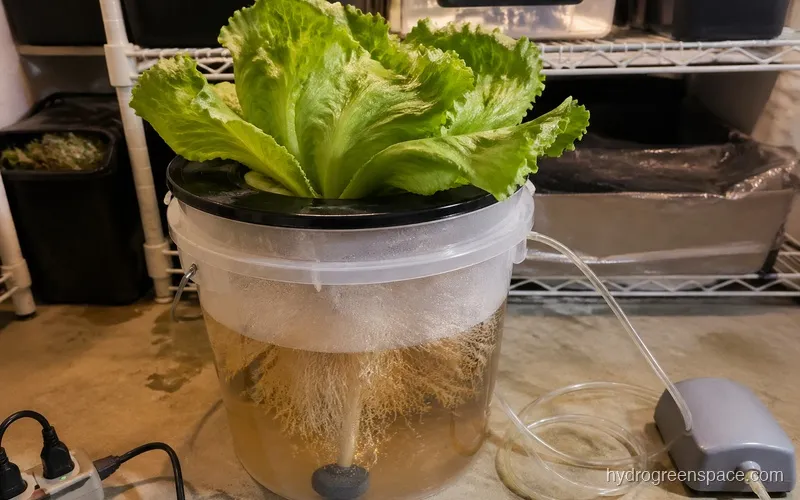
The Kratky method is a no-pump, passive approach where the plant sits above a static reservoir and draws down the nutrient solution as it grows. The air gap between the water surface and the net pot creates a natural oxygen zone for the roots.
Here’s the honest take on Kratky for iceberg: it works, but it’s the least forgiving of the three. Iceberg’s long growth cycle means you’re managing a large static reservoir for 70-80+ days. The nutrient concentration rises as water evaporates (or drops as the plant takes it up), and you need to top up with plain water while monitoring EC carefully. Done right, Kratky iceberg is achievable. Done carelessly, you’ll hit nutrient toxicity or root problems before the head forms.
If you want to try Kratky for iceberg, use at least a 5-gallon container per plant, start with a lower EC than you think you need, and plan on checking the reservoir every 3-4 days.
Nutrients for Hydroponic Iceberg Lettuce
Iceberg isn’t complicated nutritionally. It wants the same balanced leafy green profile as any other lettuce: higher nitrogen relative to phosphorus and potassium during vegetative growth, with a slight back-off on nitrogen once heading starts.
Target EC: 0.8-1.2 mS/cm. This is on the lower end compared to fruiting crops. Iceberg grown at EC 2.0+ will produce fast, lush growth that’s prone to tip burn and bolting, which is exactly what you don’t want for a heading variety.
Target pH: 5.5-6.5, with 5.8-6.2 being the sweet spot for nutrient availability. If your pH drifts above 6.5, you’ll start seeing iron and manganese lockout before anything else. Keep a bottle of pH down solution handy and check every 2-3 days, especially in smaller reservoirs where pH can swing quickly.
Calcium and magnesium matter more for iceberg than for loose-leaf varieties. Tip burn (the browning of inner leaf edges) is a calcium uptake problem, not a deficiency. It’s caused by poor air circulation and low transpiration in the innermost leaves as they’re forming the head. Keep a small fan running to promote airflow, and don’t let your calcium drop below 80-100 ppm.
Warning: Don’t be tempted to push EC higher to speed up growth. Iceberg grown at EC 1.6+ tends to produce bitter-tasting outer leaves, and the stress actually delays heading rather than accelerating it. Slow and steady wins here.
Realistic Timeline: 55-90 Days
Iceberg takes significantly longer than loose-leaf lettuce. Here’s a realistic breakdown:
- Germination to transplant: 10-14 days (in rockwool or rapid rooter plugs)
- Vegetative growth: 4-6 weeks (roots establishing, outer leaves developing)
- Heading phase: 3-4 weeks (inner leaves folding inward, head densifying)
- Harvest: Day 55-90 depending on conditions
Cool temps and proper light accelerate heading. Warm temps, too much light, or crowding extend it indefinitely, or prevent heading altogether.
You’ll know it’s ready when the head feels firm and dense when you press it gently from the sides. A loose head that gives under pressure needs more time. Harvest by cutting the whole head at the base, since iceberg doesn’t regrow the way loose-leaf varieties do, though you can salvage the root to regrow loose leaves if you want a second harvest.
Bolting Prevention
Bolting is the other major failure mode for iceberg, besides not heading. Once the plant sends up a central flower stalk, the leaves turn bitter and the head (if it formed) becomes inedible.
Bolting is triggered by:
- Temperatures consistently above 75°F
- Long photoperiods (more than 16 hours of light per day)
- Nutrient stress or root problems
Keep your light cycle at 14-16 hours and your temps cool. If you notice the center of the plant starting to elongate and push upward rather than fold inward, that’s an early bolt signal. Harvest immediately, even if the head isn’t fully formed. A partially-formed iceberg head is still usable.
After harvest, store it correctly to get the most out of your 55-90 day investment. Hydroponic iceberg stored properly lasts longer than store-bought, since it hasn’t been sitting in a cold chain for weeks before reaching you.
Ready to Grow
Iceberg isn’t the first hydroponic lettuce you should grow, but a firm, dense head you grew yourself in 70 days is worth the effort.
If you want to see how iceberg compares to other varieties for your space and setup, the full breakdown is in the lettuce varieties for hydroponics guide. For the broader picture of growing lettuce hydroponically, start with the hydroponic lettuce overview.