
Butter Lettuce Hydroponics: Grow It Fast Indoors
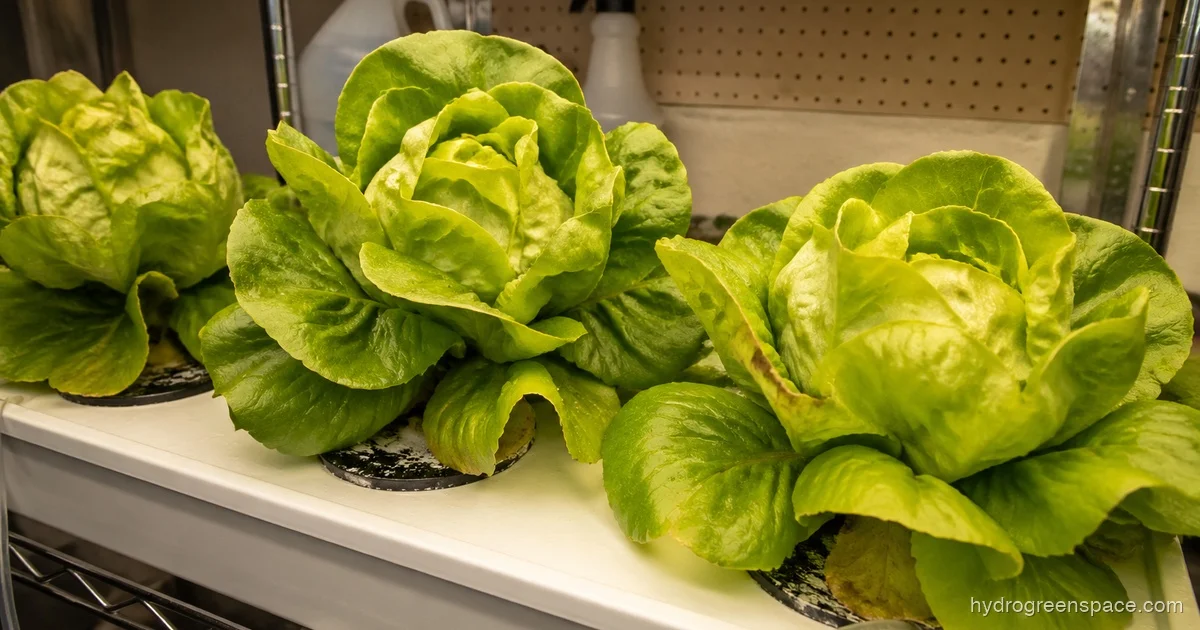
Butter lettuce is one of the fastest, most satisfying crops you can grow hydroponically. Seed to harvest in as few as 30 days, heads so tender they bruise in a paper bag, and a flavor that store-bought versions can’t touch. The catch is that two very preventable problems, bolting and tip burn, trip up a lot of first-time growers before they ever taste a leaf. This guide walks you through everything: system choice, nutrients, environment, and how to sidestep both of those problems so your first harvest looks like it came from a specialty farm.
Which Butter Lettuce Variety Should You Grow?
“Butter lettuce” is a common name for the butterhead family, and within that family there are meaningful differences worth knowing before you buy seeds.
Bibb lettuce is the compact, tightly cupped type you see at upscale grocers. It heads up quickly (25–30 days in a dialed-in system), tolerates slightly warmer temps than Boston, and is the variety most home growers mean when they say “butter lettuce.” It’s my first recommendation for DWC beginners.
Boston lettuce is a bit looser, with larger outer leaves and a bigger overall head. It takes 35–45 days and prefers cooler conditions, making it slightly more demanding indoors. Great quality, just less forgiving on temperature swings.
Salanova is a cut-and-come-again butterhead developed for commercial growers. Each head is actually many smaller rosettes packed together. It’s excellent for hydroponics because you can harvest individual leaves or the whole head. If you want repeated cuts from a single plant, this is the one.
For your first run, go with Bibb. It’s quick, compact, and gives you that classic butterhead texture with the least fuss. You can explore comparing all lettuce varieties for hydroponics once you have a few harvests under your belt.
The Best System for Butter Lettuce
Butter lettuce doesn’t ask for much from your system. It has a shallow root zone, low nutrient demands, and grows happily in still or flowing water.
Kratky Method
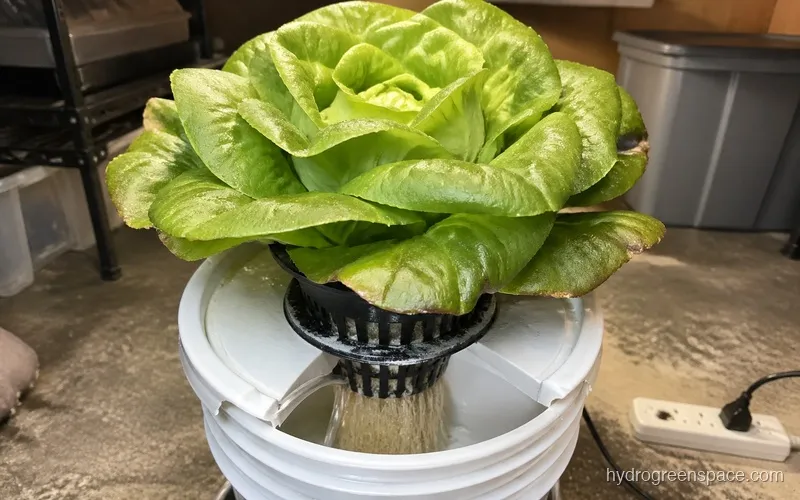
If you want zero moving parts, the Kratky method is a zero-pump option for a small butter lettuce crop. Fill a container, set your net pots, and let the roots chase the water level down as the plant drinks. One Kratky jar or 5-gallon bucket can carry a Bibb lettuce head to full size without a single pump, timer, or air stone. The downside: you can’t easily top off or adjust nutrients mid-grow without disturbing the air gap the roots need.
Deep Water Culture (DWC)
A DIY deep water culture setup works well for butter lettuce and gives you more control. An air pump keeps the solution oxygenated, roots stay healthier over longer grows, and you can top off and pH-adjust easily without cracking the lid. If you’re growing more than 4–6 heads at a time, DWC is the better call.
NFT Channels
NFT channels are among the most popular systems for lettuce in commercial greenhouses, and for good reason: a thin film of nutrient solution running continuously over bare roots keeps everything well-oxygenated with minimal water use. NFT works well for butterhead at home too, though the setup cost is higher than Kratky or DWC.
What I’d do: Start with a 5-gallon DWC bucket for your first 2–3 heads. It’s easier to manage than Kratky if you want to adjust nutrients mid-grow, and cheaper to start than NFT. Once you know what you’re doing, scale to a multi-site NFT channel.
Nutrient Solution: EC, pH, and NPK
Butter lettuce is a light feeder. That’s actually one of its strengths for beginners because overfeeding is one of the most common errors in hydroponics.
EC (electrical conductivity): Start seeds or transplants at 0.8–1.2 mS/cm. As the plant puts on size during weeks 2–3, you can bump to 1.4–1.6 mS/cm. Never go above 2.0 mS/cm with butterhead; it stresses the plant and can trigger bitterness. For context, the right NPK ratio for leafy greens favors nitrogen-forward formulas during vegetative growth, which all lettuce mixes deliver.
pH: Keep it between 5.5 and 6.5, with 6.0–6.2 as the sweet spot. Drifting above 6.8 locks out calcium and iron; drifting below 5.5 causes manganese toxicity. Check pH every 2–3 days, especially in small reservoirs where evaporation can shift it fast.
Temperature: Solution temperature matters as much as EC and pH. Keep reservoir water between 65–72°F (18–22°C). Above 75°F, dissolved oxygen drops and root rot risk climbs.
How Long Does Butter Lettuce Take to Grow Hydroponically?
Here’s the honest timeline:
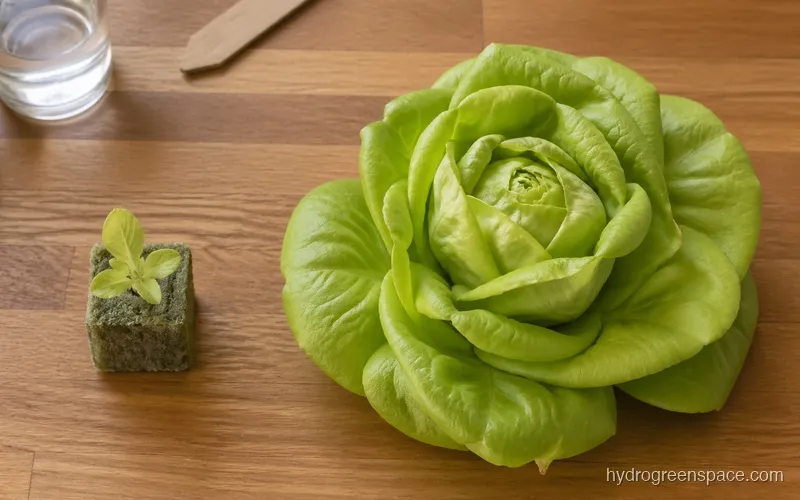
- Germination: 2–4 days in a damp rockwool cube or paper towel
- Seedling stage: Days 4–10, cotyledons open and first true leaves appear
- Vegetative growth: Days 10–25, the plant puts on size rapidly
- Heading / maturation: Days 25–35 for Bibb, 35–45 for Boston
Total seed-to-harvest: 30–45 days depending on variety, temperature, and light. Compared to romaine, which takes longer, butter lettuce heads up in as few as 30 days, making it one of the fastest heading crops you can grow at home.
Two Problems That Ruin Most First Crops
Tip Burn
Tip burn looks like brown, papery edges on the inner leaves of the forming head. Growers often assume it’s a pH problem or a calcium deficiency (and technically it is a calcium deficiency, but not the kind you fix by adding more calcium to the reservoir).
The real cause is poor internal calcium transport. As the lettuce head forms and the inner leaves tighten up, airflow to the center drops. Calcium moves through the plant via transpiration, and low-transpiration tissues (those inner cup leaves) can’t pull enough calcium even when the reservoir has plenty. The fix is airflow, not nutrients.
- Run a small oscillating fan so air moves across the canopy at all times
- Don’t crowd plants; butter lettuce heads need 6–8 inches of spacing
- Keeping lights at the right distance prevents tip burn and bolting; lights that are too close increase leaf surface temperature and worsen the transpiration imbalance
Warning: Adding calcium to your reservoir without fixing airflow will push your EC up and stress the plant further without solving the problem.
Bolting
Bolting is when the plant sends up a central flower stalk instead of forming a tight head. The leaves turn bitter overnight, the head opens up, and the crop is essentially lost for salad use.
Temperature is the main trigger. Butter lettuce bolts when temperatures stay above 75°F (24°C) consistently, especially during the dark period. Cool nights are what keep lettuce in the vegetative, leafy stage.
Light hours are the secondary trigger. Butterhead lettuce is a long-day plant, meaning extended light periods can initiate flowering. Keep your photoperiod at 14–16 hours max. Going to 18+ hours to push faster growth is a false economy; you’ll get faster growth right up until the plant bolts.
Variety selection helps too. Some Bibb varieties like ‘Buttercrunch’ and ‘Tom Thumb’ are bred with better bolt resistance than others. If you’re growing in a warm room (consistently above 70°F), choose a bolt-resistant cultivar from the start rather than fighting your environment.
Light Requirements
Butter lettuce doesn’t need high-intensity light. It’s actually one of the more shade-tolerant crops, which makes it excellent for modest grow light setups.
- LED panels: 200–400 µmol/m²/s PPFD is plenty. Running a high-powered light closer than 18 inches increases tip burn risk.
- Photoperiod: 14–16 hours on, 8–10 hours off. Consistent dark periods matter.
- Distance: Follow your light manufacturer’s recommendation for leafy greens, typically 18–24 inches for most LED panels.
Harvesting and What Comes After
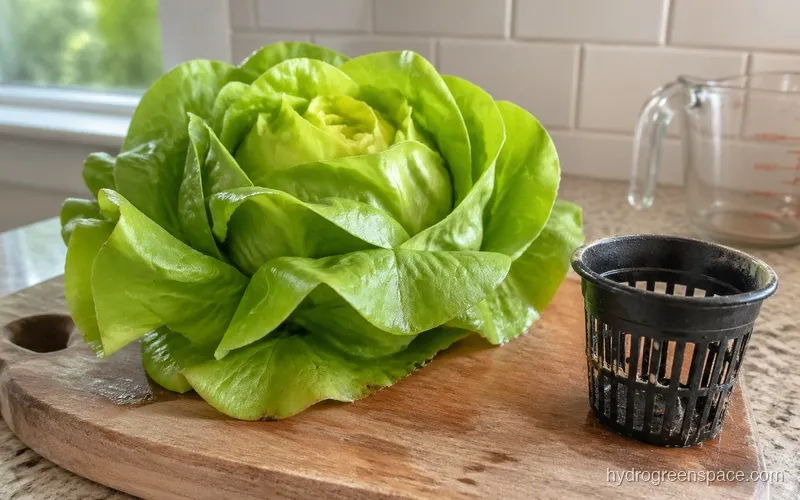
Bibb heads are ready when the center feels firm and the outer leaves have reached 6–8 inches. Don’t wait for a perfect grocery-store head; home-grown butterhead is often slightly looser and that’s fine. Knowing when to harvest your butter lettuce heads before they start to bolt is the most important timing call you’ll make.
After cutting, you have options. You can pull the whole plant, net pot and all, or cut the head an inch above the base and leave the roots intact. If you leave the base, new leaves will often sprout for a secondary harvest, though they’ll be smaller and looser than the original. For a full breakdown of that process, see regrowing butter lettuce after harvest.
Freshly cut butterhead lasts longer than store-bought because it hasn’t been cold-shocked in transit. Hydroponic lettuce lasts longer after harvest when you refrigerate it promptly with a damp paper towel in the bag. And if you’re wondering whether you need to wash your homegrown heads, the short answer is: a quick rinse is good practice even for soil-free crops.
One last thing: compared to iceberg, butter lettuce is far more forgiving in a home system. Iceberg takes longer, needs tighter temperature control, and is more prone to quality problems in small setups. If someone told you lettuce is hard to grow hydroponically, they were probably growing iceberg.
Pick up your seeds, set up your reservoir, and give yourself 30 days. Your first Bibb head is closer than it feels right now. When you’re ready for the full picture on growing and harvesting, our full hydroponic lettuce guide covers every stage from seed to table.