Wilting Plants in Hydroponics: Why It Happens and How to Fix It
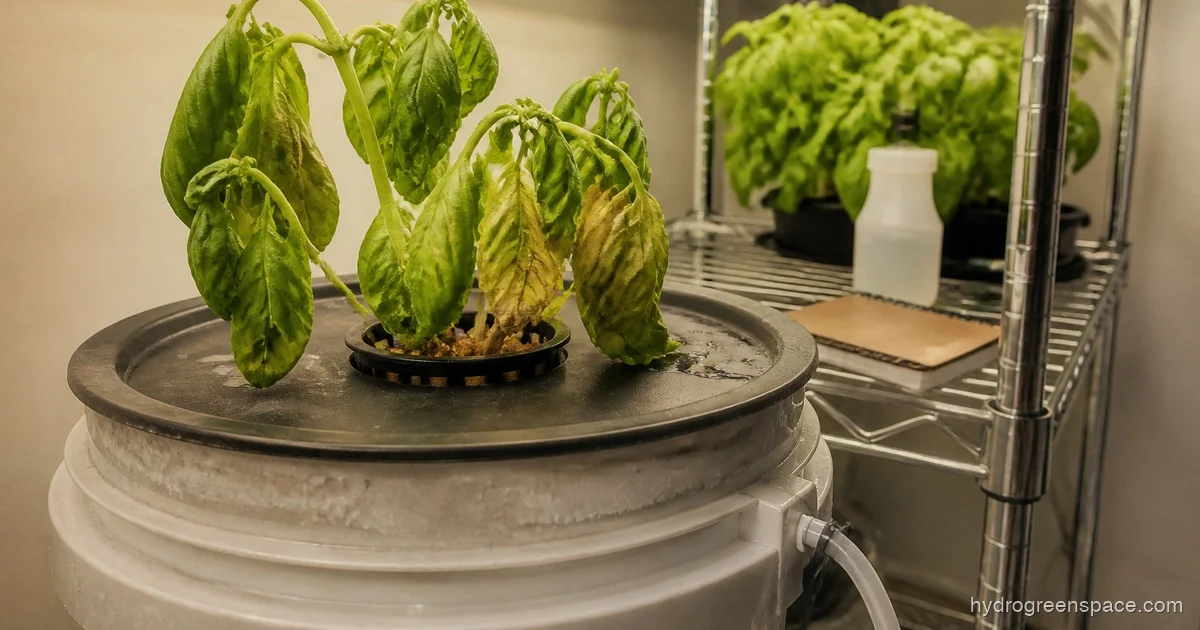
Wilting plants hydroponics: still wilting even though your reservoir is full and the pump is running. That’s the part that throws new growers off. In soil, wilting almost always means “not enough water.” In a hydroponic system, the plant has water right at its roots and it’s still drooping. That means you’re chasing a different problem entirely, and the diagnosis has to start differently.
Before you start pulling net pots or dumping nutrients, ask two questions. The answers will tell you which of these causes actually applies to your situation.
The Two Questions to Ask Before Checking Anything Else
Question 1: Did this happen suddenly or gradually?
Sudden wilting (plants fine yesterday, drooping today) points to something acute: pump failure, root damage, or a major pH crash. Gradual wilting that develops over several days usually means root rot, chronic oxygen depletion, or a nutrient lockout that’s been building quietly.
Question 2: What time of day does the wilting peak?
If your plants droop badly in the afternoon but perk back up by evening, that’s not a nutrient problem. That’s a heat and light stress response, and the fix is environmental. If they’re drooping in the morning before your lights even warm up, the issue is in the root zone.
These two questions narrow an eight-cause list down to two or three suspects before you’ve touched a thing. That’s where your diagnosis should start.
Why Are My Hydroponic Plants Wilting Even With Water?
The answer is almost always one of these eight causes. Work through them in order of likelihood.
Root Rot (Most Common)
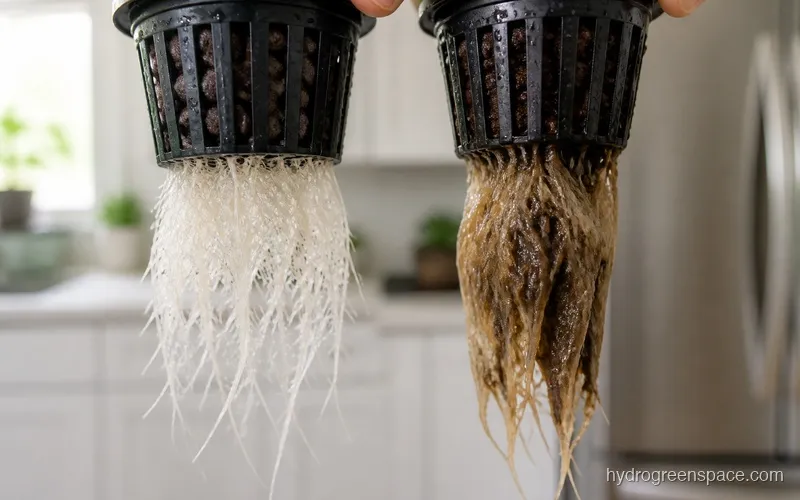
Root rot is the single most common reason hydroponic plants wilt, and it sneaks up on you. The roots aren’t pulling water efficiently because they’re dying from the outside in, colonized by Pythium or similar water molds. The plant wilts not because there’s no water, but because the damaged roots can’t transport it.
Pull a net pot and look at the roots. Healthy hydroponic roots are white or cream-colored, firm, and smell faintly earthy. Roots with rot turn brown or gray, go slimy, and smell like a swamp. If you’ve ever seen that, you know immediately.
Gradual wilting that started slowly and has been getting worse over a week or two is root rot until proven otherwise. The full diagnosis and treatment process is covered in detail in this guide to root rot in hydroponics.
Oxygen Deprivation and Pump Failure
Plant roots need oxygen to function. In a DWC setup, your air pump is doing the critical job of keeping the nutrient solution oxygenated. If that pump fails, clogs, or the air stone gets blocked, wilting in DWC hydroponics can happen within hours, especially in warm water.
Check your pump immediately if the wilting was sudden. Put your hand near the air stone. If you feel no bubbles, that’s your culprit. The fix is simple: clean or replace the air stone, check the tubing for kinks, replace the pump if it’s dead.
In NFT systems, the same principle applies differently. Drooping plants in an NFT system often means the film of nutrient solution is too thick, the channel has pooled water, or the pump that drives circulation has slowed down. NFT relies on thin-film oxygenation, so a slow pump drowns roots just as effectively as no pump at all.
What I’d do: If you wake up to wilted plants and can’t see anything obviously wrong, check the pump before anything else. It’s a two-minute check that rules out the most fixable cause immediately.
Water Temperature Too High
Warm water holds less dissolved oxygen, and it’s also where Pythium thrives. The ideal nutrient solution temperature sits between 65°F and 72°F (18°C to 22°C). Once you creep past 75°F (24°C), oxygen saturation drops sharply and root zone conditions deteriorate fast.
In summer, this is extremely common. The reservoir warms up during the day, oxygen drops, and you get wilting that looks like root problems but is actually a temperature problem causing secondary root problems. If you’re in a hot climate or running lights in a warm room, check reservoir temperature before assuming rot. More on managing this is covered at ideal reservoir temperature for hydroponics.
Nutrient Lockout from pH Drift
A pH that drifts outside the 5.5 to 6.5 range doesn’t just slow nutrient uptake; it can effectively lock the plant out of nutrients it’s surrounded by. The plant starves despite a full reservoir. Wilting from nutrient lockout tends to develop gradually and almost always shows up alongside other symptoms like yellowing leaves or a combination of brown spots and discoloration.
Check your pH daily. If it’s drifted outside your target range, bring it back slowly. Sudden pH correction can stress roots as much as the original drift. You can work through the adjustment process step by step with the hydroponic pH adjustment calculator.
If the wilting is accompanied by leaves that look pale or mottled, and your pH has been stable, check for nutrient lockout specifically, because sometimes the issue is a nutrient interaction rather than pH drift.
Heat and Light Stress (the Afternoon Wilt Pattern)
If your plants look fine in the morning and droop badly in the afternoon heat, this isn’t a root zone issue. It’s a transpiration rate problem. The plant is losing water through its leaves (stomatal regulation) faster than the roots can supply it, even in a healthy system.
This is especially common with large-leafed plants like tomatoes and basil in summer, or in grow tents where heat builds up under intense lighting. The fix: reduce canopy temperature, improve airflow, or shade the reservoir to keep water temps down.
Transplant Shock
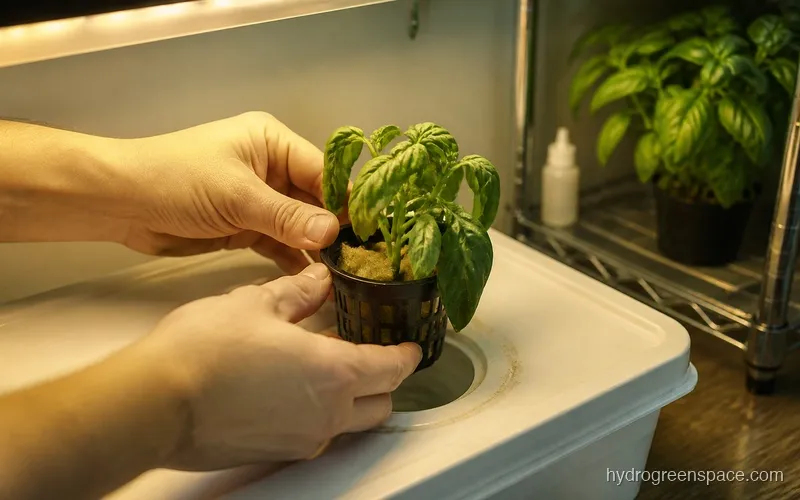
Hydroponic plant wilting after transplant is normal, and most growers panic unnecessarily. When you move a seedling from a germination cube into your system, the roots that were in moist media suddenly have to adapt to free-flowing nutrient solution. Stomatal regulation hasn’t caught up yet.
Expect 24 to 72 hours of drooping after transplanting seedlings to hydroponics. The fix is patience, not intervention. Keep the reservoir topped up, maintain good aeration, and don’t adjust nutrients during this window. If wilting persists past 72 hours or roots look damaged, then investigate further.
Pest Damage to the Root Zone
Root zone pests, mainly fungus gnats and root aphids, can cause wilting that looks exactly like root rot or oxygen problems. Fungus gnat larvae eat root tips, reducing the plant’s ability to absorb water. Root aphids cluster at the crown and interfere with vascular transport.
Check for adult fungus gnats flying around your system. Look at the surface of your growing media for tiny white larvae. Pull a net pot and inspect the roots for small insects clustered near the root crown. This is less common than root rot, but if you’ve ruled out everything else, check for pests. A full treatment guide is on the way at pest control for hydroponics.
Quick-Reference Fix Table
| Symptom Pattern | Most Likely Cause | First Check |
|---|---|---|
| Sudden wilt, pump running | Oxygen depletion or root damage | Check air stone, inspect roots |
| Gradual wilt, getting worse daily | Root rot | Root color, smell |
| Wilt peaks afternoon, recovers overnight | Heat/light stress | Canopy temp, reservoir temp |
| Wilt after transplanting (72h) | Transplant shock | Wait it out |
| Wilt with yellowing or spots | pH drift / nutrient lockout | pH meter reading |
| Wilt with visible insects | Pest damage | Root crown inspection |
| Wilt in warm room, summer | High water temperature | Reservoir thermometer |
How to Fix Wilting Hydroponic Plants: Start with the Root Zone
Whatever the cause turns out to be, the recovery process has one common thread: get the root zone back to healthy conditions first. Flush the reservoir, correct temperature, verify oxygen levels, and only then adjust nutrients or pH.
If you’re dealing with root rot, that recovery process is longer and more specific. The root rot guide covers the full hydrogen peroxide flush and prevention protocol. If you’re not sure whether your system setup is contributing to chronic problems, the hydroponic troubleshooting pillar runs through system-level issues across every major setup type.
The good news: wilting plants hydroponics problems are almost always fixable if you catch them early. Pull a net pot, look at the roots, check the pump, take a temperature reading. That 10-minute check will tell you more than any symptom list.