Pest Control for Hydroponics: Identify & Treat Fast
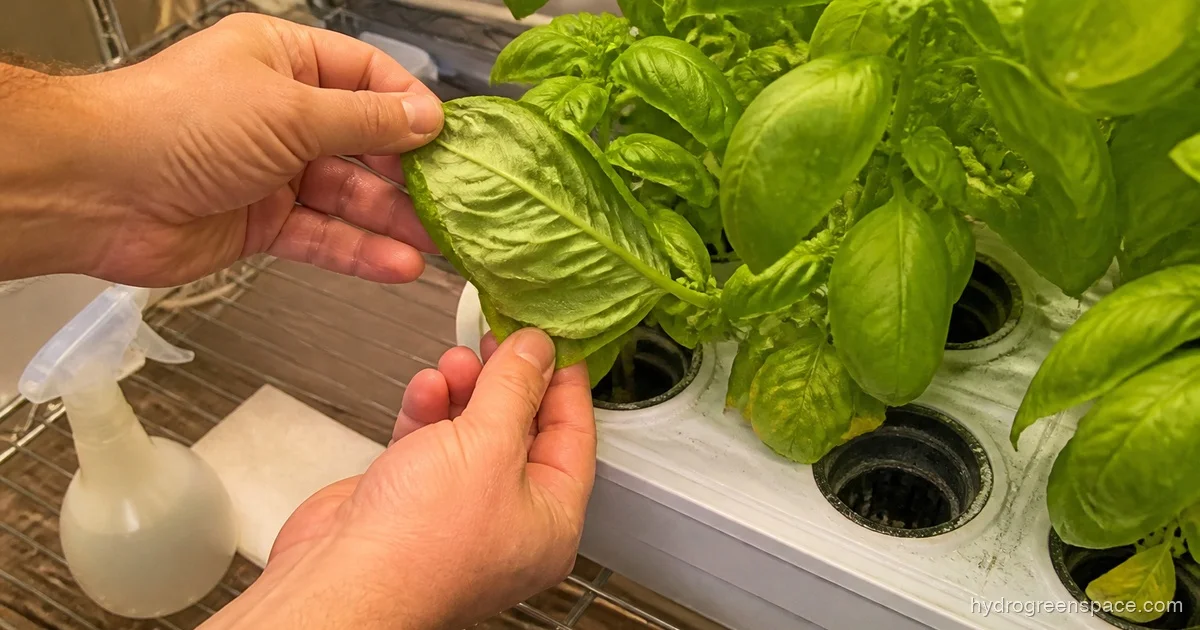
One of the biggest myths in hydroponics is that growing indoors in water means you’re free from pests. That’s not how it works. Pests hitch rides on new clones, on your clothing, through open windows, and on the tools you bring into your grow space. The difference between soil and hydro isn’t whether you’ll see pests. When they do show up in a recirculating system, they can spread faster and be harder to clear.
The good news is that hydroponic pest management follows a reliable pattern once you know what you’re looking for. This guide covers the five pests that hit hydroponic grows most often, how to tell them apart from nutrient problems, and which treatments are safe to use in a recirculating system versus which ones will destroy your reservoir chemistry if they end up in the water.
The Pest Most Growers Mistake for a Nutrient Problem
Before we get into specific pests, this is the mistake I see over and over: a grower notices yellowing leaves, checks their nutrient solution, adjusts the EC, adjusts the pH, and does this for two weeks while the plant gets worse. Then they look under a leaf and find spider mites.
Pest damage and nutrient deficiencies share a lot of visual overlap. Here’s a quick way to tell them apart:
Tip: Yellowing that starts at leaf edges or tips usually points to nutrient toxicity or burn. Yellowing that appears as scattered spots or a stippled, bronze pattern across the leaf surface (especially on older growth) is more likely pest feeding damage. Always check the undersides of leaves with a loupe or phone camera before adjusting your nutrient solution.
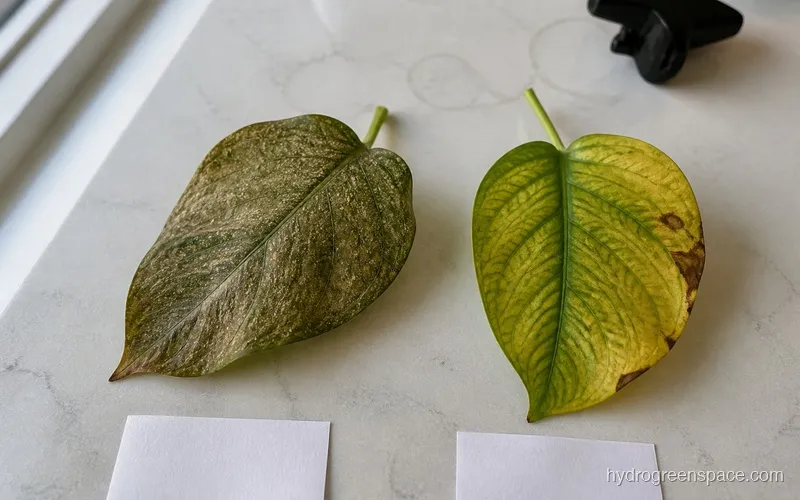
The other tell is where the damage appears first. Nutrient deficiencies follow predictable patterns based on whether the element is mobile or immobile in the plant. Pest damage doesn’t follow those patterns. It shows up wherever the insects are feeding, which is usually where it’s warm, humid, and hard to see.
Brown spots on leaves from spider mite feeding are often misread as calcium deficiency. Leaf curl caused by thrips or mite feeding gets blamed on environmental stress. And symptoms that look identical to nutrient lockout can simply be a plant under heavy aphid pressure draining its own reserves trying to fight the infestation.
The 5 Most Common Hydroponic Pests (and How to Identify Each)
Fungus Gnats
Fungus gnats are the most common pest in hydroponic setups, and they’re frustrating because most treatments only target the adults flying around, not the larvae doing the real damage.
Adult fungus gnats look like tiny mosquitoes, about 2–3mm long, hovering near your grow media and reservoir. They’re mostly a nuisance. The larvae are the problem. They live in your growing media, chew through fine root hairs, and create entry points for pythium and other pathogens. A heavy larval infestation can cause wilting and nutrient uptake problems that look exactly like root rot.
Fungus gnats thrive when the surface of your grow media stays consistently moist. They’re especially bad in flood-and-drain systems and media beds. Algae growing on the surface of your system creates the damp, organic-rich conditions they need. If you have algae, fungus gnats usually follow. You’ll also find them around mold on grow sponges, which signals the same moisture and organic matter combination.
Yellow sticky traps placed just above the canopy will catch adults and give you a population estimate. For larvae, the treatment that actually works is a biological drench: Bacillus thuringiensis var. israelensis (Bti) or Steinernema feltiae nematodes applied directly to your growing media. Both are reservoir-safe when used correctly.
Spider Mites
Spider mites are tiny (0.5mm), fast-moving, and almost impossible to see with the naked eye until the population is already large. By the time you spot the fine webbing on leaf undersides, you’re dealing with a mature infestation.
Look for a bronze or silver stippling across the upper leaf surface, which is where the mites pierce the cells to feed. Brown spots from this feeding are commonly misread as calcium or magnesium issues. Flip the leaf and look closely. Under a 10x loupe you’ll see them moving.
Spider mites explode in hot, dry conditions. If your grow room is running above 80°F with low humidity, you’re setting the table for them. They spread fast in recirculating systems because they can drop from a leaf into the canopy of the plant below.
Aphids
Aphids are soft-bodied, pear-shaped insects that cluster on new growth and the undersides of leaves. They come in green, black, white, and even orange depending on species. They’re slow-moving and easy to spot once you’re looking, but they reproduce fast: a single aphid can produce 80 offspring in a week without mating.
They feed by piercing the phloem and extracting plant sugars, which causes the curling, distortion, and general decline that looks like a stress response from overfeeding. The honeydew they excrete also encourages sooty mold growth on leaves and growing surfaces.
In recirculating systems, aphid frass and shed skins accumulate in the reservoir. That’s not an immediate disaster, but it does contribute to cloudy reservoir water over time.
Thrips
Thrips are thin, elongated insects, 1–2mm long, that rasp the surface of leaves rather than piercing them. The damage looks like silver or bronze streaking across the upper leaf surface, often with tiny dark specks (frass) nearby.
They’re harder to see than aphids. They move fast when disturbed and often hide in folded leaves or at the base of flower buds. Under a loupe, they look like tiny pale or dark slivers with fringed wings.
Like mites, thrips thrive in warm, dry conditions. Leaf curl triggered by thrips feeding is a common symptom growers miss because the curling looks like a watering or humidity problem.
Whiteflies
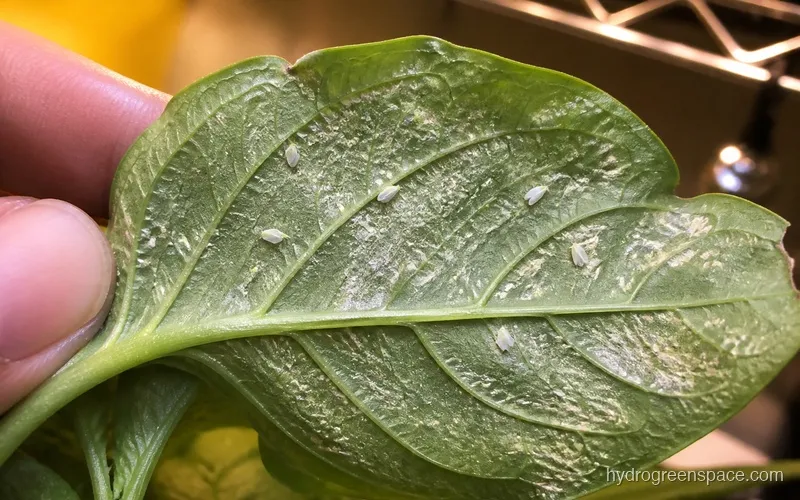
Whiteflies look like tiny white moths, about 1–2mm, that fly up in a cloud when you brush against an infested plant. They cluster on leaf undersides and feed similarly to aphids, piercing and draining plant fluids.
They’re most common in warm, humid grow rooms and in systems with dense canopies where airflow is limited. Like aphids, they excrete honeydew that leads to sooty mold. Their eggs are laid on leaf undersides in circular or spiral patterns.
How Pests Get Into Hydroponic Systems
Understanding the entry points is the first step in integrated pest management (IPM) for indoor grows.
New plant material is the most common vector. Unrooted cuttings from another grower, seedlings from a garden center, even tissue culture plants can carry eggs or larvae. A two-week quarantine in a separate space before introducing anything new to your main system is basic hygiene, and skipping quarantine is one of the most common beginner mistakes growers make when expanding their setup.
Your own clothes and tools bring in pests from outside. If you’ve been in a garden, greenhouse, or plant nursery, change before going into your grow space. Wipe down tools with 70% isopropyl before bringing them in.
Open windows and unsealed grow spaces let in winged adults. Whiteflies and fungus gnats can fly surprising distances.
Recirculated air in HVAC systems can carry mite eggs and thrips between connected spaces.
Reservoir-Safe Treatments vs. Foliar-Only Treatments
This is the piece that matters most in a hydroponic system specifically.
In a soil grow, you spray a pesticide and it stays on the plant or breaks down in the medium. In a recirculating hydroponic system, any spray that runs off the leaves or gets applied near the reservoir can end up in your nutrient solution. Some treatments do nothing in the water. Others disrupt pH, kill beneficial bacteria, or create residues that are genuinely toxic to roots.
Reservoir-safe (can be used as drench or spray in active systems):
- Bacillus thuringiensis var. israelensis (Bti): specifically for fungus gnat larvae, won’t harm roots or reservoir biology
- Steinernema feltiae nematodes: applied to grow media, effective against fungus gnat larvae and thrips pupae
- Insecticidal soap: safe in low concentrations as a foliar spray; can enter the reservoir without catastrophic effects, but avoid overdoing it
- Beauveria bassiana: a fungal bioinsecticide effective against thrips, whiteflies, and aphids; relatively reservoir-safe
Foliar-only (keep out of the reservoir):
- Neem oil: excellent as a preventive foliar spray, but it should never go into your reservoir. It coats roots, disrupts oxygen uptake, and can cause more damage than the pest you’re treating. Apply it as a foliar spray during lights-off, let it dry fully, and protect the reservoir from runoff.
- Pyrethrin sprays: effective knockdown for aphids, thrips, and whiteflies, but pyrethrins are toxic to beneficial bacteria and can affect root zone biology if they enter the water.
- Spinosad: effective against thrips and fungus gnats, but toxic to beneficial insects and can be hard on reservoir microbes at higher concentrations.
A note on pH: pest treatments like neem oil, insecticidal soap, and even some biological sprays can throw off your pH when they make contact with the nutrient solution. After any treatment, check and correct your pH before the next watering cycle.
Preventing Pests Before They Start
The best time to deal with pests is before they show up. In a hydroponic system, prevention is easier than in soil because you have more control over the environment.
Control temperature and humidity. Spider mites and thrips thrive above 80°F and below 40% humidity. Keep your grow room between 68-75°F with 50-60% relative humidity during vegetative growth. This alone eliminates the conditions that drive most infestations.
Keep surfaces clean. Dead leaves, root debris, and standing water are feeding and breeding grounds. Remove decaying plant matter immediately. Algae buildup creates organic matter that attracts fungus gnats, so clean it as soon as it appears.
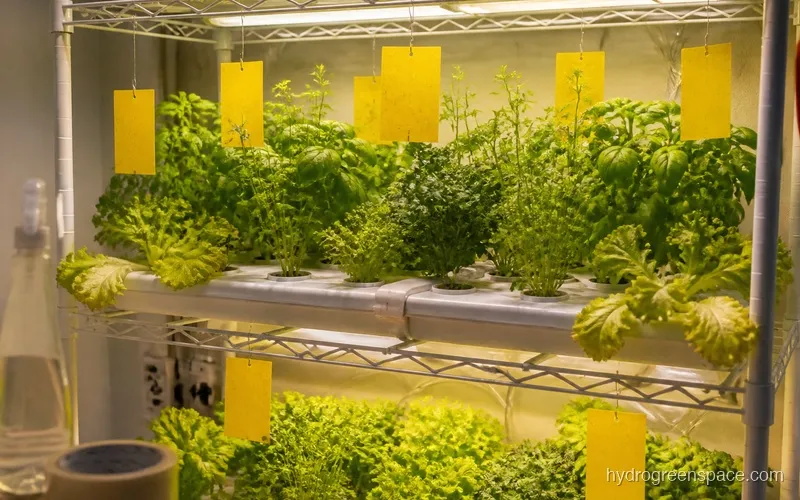
Use yellow and blue sticky traps. Yellow traps catch fungus gnats, whiteflies, and aphids. Blue traps catch thrips. Place them just above canopy height and check them weekly. A sudden jump in trap counts is your early warning system before visible plant damage starts.
Introduce beneficial insects. In a larger grow space, predatory insects like Amblyseius cucumeris (for thrips and mites) or Aphidius ervi (for aphids) can keep pest populations below damaging levels without any chemical intervention. This is the foundation of integrated pest management. Beneficial bacteria in the root zone work the same way at the microbial level, competing with harmful organisms before they establish.
Maintain your reservoir health. A clean, well-oxygenated reservoir supports the kind of root health that resists pest pressure. Cloudy reservoir water is an early sign that something is off, so address it before pests get a foothold.
When to Escalate Treatment
For most infestations, start with the least aggressive option that’s effective: sticky traps, beneficial insects, insecticidal soap. If the population is increasing despite treatment, step up.
Here’s how I approach it in my own grows:
- Week 1 of detection: sticky traps for monitoring, insecticidal soap foliar spray, remove heavily infested leaves
- Week 2 if population is holding: add a biological (Bti for gnats, nematodes for larvae, Beauveria bassiana for flying pests)
- Week 3 if still escalating: pyrethrin or spinosad foliar spray (protect reservoir during application), consider whether a full system flush and reset is more practical than continuing to treat
One thing worth knowing: root rot from pythium and root damage from fungus gnat larvae look almost identical in the early stages. Both cause wilting, stunted growth, and brown, slimy roots. If you’re treating for pests and not seeing improvement, pull a plant and inspect the roots directly before assuming the treatment isn’t working.
If your plant is still under stress after clearing the pests, check whether improper feeding is weakening it further. Stressed plants under nutrient imbalance recover slower from pest pressure and are more vulnerable to re-infestation.
Keeping a Clean System Between Grows
The most overlooked part of pest control in hydroponics is what happens between grows. Pests overwinter in growing media, lay eggs in reservoir seams and net cup crevices, and pupate in root debris left behind after harvest.
After each grow, break down the system completely, rinse with 3% hydrogen peroxide solution, and let everything dry before reassembling. This kills eggs and larvae that would otherwise survive to the next cycle. Forward-thinking growers who plan their hydroponic maintenance around full system teardowns between crops rarely have persistent pest problems.
The growers who fight the same infestation cycle after cycle are usually the ones who just top up the reservoir and drop in new seedlings without cleaning between runs. Don’t be that grower.
Once you’ve got your pest identification and treatment protocol dialed in, the next layer is cleaning and sterilizing your equipment between grows. That’s what breaks the cycle permanently rather than just managing what’s already there.
Pests are one part of a broader system health picture. The hydroponic troubleshooting guide covers the full range of problems that affect home grows, including the environmental and nutrient conditions that make plants more vulnerable to infestation in the first place.