
Nutrient Lockout in Hydroponics: Causes, Fix & Recovery
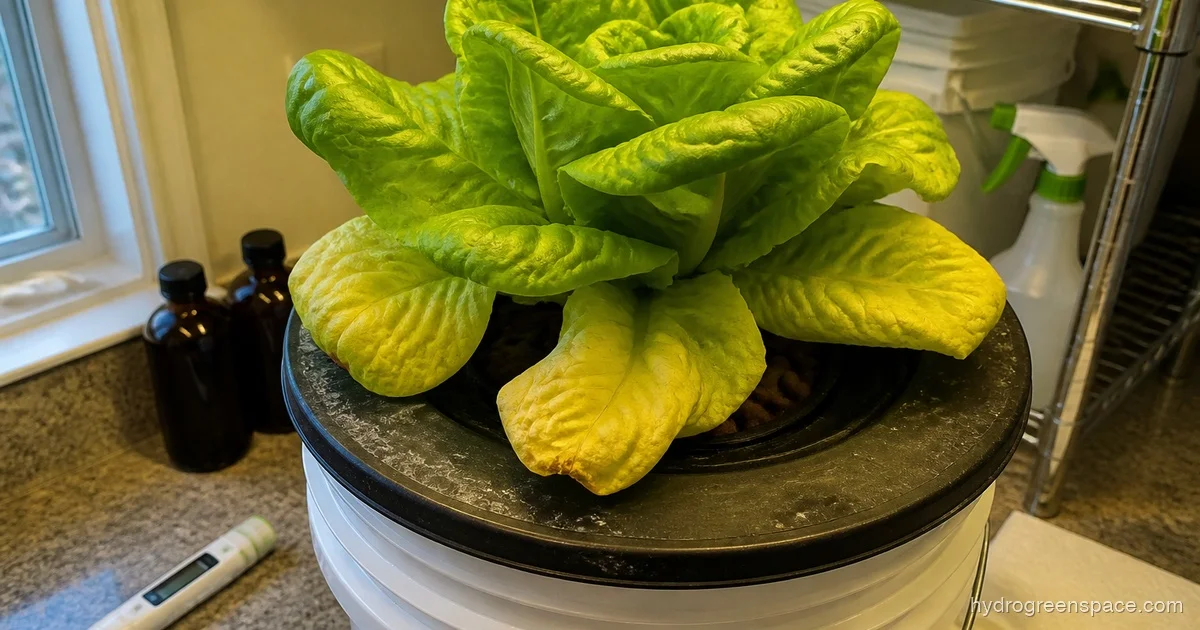
Your plants look deficient, so you add more nutrients. A few days later, they look worse. You add more nutrients. They keep declining. This is the nutrient lockout spiral, and it is probably the most common way a healthy hydroponic grow falls apart.
Nutrient lockout in hydroponics doesn’t mean your solution is missing nutrients. It means your plants physically can’t absorb what’s already there. The fix is rarely adding more. It’s usually a flush, a pH correction, or both.
Why Lockout and Deficiency Look Identical (and How to Tell Them Apart)
Both conditions produce the same symptoms: yellowing leaves, stunted growth, pale new growth, browning leaf edges. The difference is in the cause, and getting the cause right is everything.
With a true nutrient deficiency, your reservoir is actually short on a specific element. The plants are hungry. With nutrient lockout, the reservoir has plenty of nutrients but the root zone pH has gone out of the absorption window, so ions precipitate or bind to other ions and the roots can’t take them in.
The diagnostic test is simple. Pull your EC and pH readings. If EC is normal or high and your plants still look deficient, you almost certainly have lockout. If EC is genuinely low (below 0.8 for seedlings, below 1.2 for most veg crops), a real deficiency is more likely. A normal EC with symptoms is the clearest lockout signal.
The second check is pH. If it’s below 5.0 or above 7.0, lockout is almost guaranteed. Most hydroponic crops absorb nutrients best between 5.5 and 6.5, with 5.8 to 6.2 being the tightest ideal window.
Common mistake: Growers who see yellowing immediately reach for their nutrient bottle. If pH is the problem, adding nutrients raises EC further, makes pH correction harder, and can push the system into nutrient burn territory. Test pH and EC first, every time.
What Causes Nutrient Lockout in Hydroponics
pH Out of Range
This is the cause in the majority of cases. Every nutrient has its own pH absorption window. When pH drifts too far in either direction, specific nutrients become chemically unavailable even though they’re dissolved in the water. This is called pH-induced precipitation.
Iron, manganese, and zinc lock out most severely in alkaline conditions (above 7.0). Calcium and magnesium become limited in acidic conditions (below 5.5). Phosphorus locks out at both extremes. pH-related lockout often presents as a mix of multiple apparent deficiencies at once, which is another clue it’s not a true single-nutrient shortage.
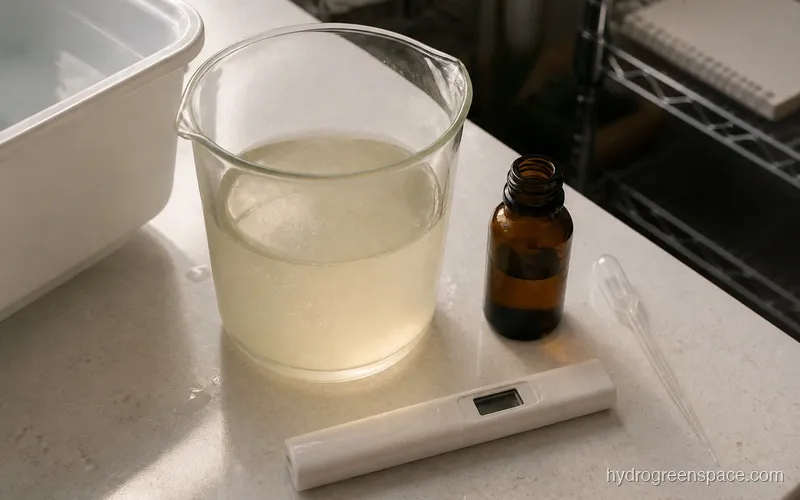
Here is a simplified version of how pH affects the main nutrients:
| Nutrient | Lockout Risk Below | Lockout Risk Above |
|---|---|---|
| Nitrogen | None | 7.5 |
| Phosphorus | 5.0 | 7.0 |
| Potassium | None | 7.0 |
| Calcium | 5.5 | None |
| Magnesium | 5.5 | None |
| Iron | None | 6.5 |
| Manganese | None | 6.5 |
| Zinc | None | 6.5 |
| Boron | 5.0 | 6.5 |
If you’re seeing symptoms that look like multiple deficiencies at once, this table explains why. You’re not missing five things: your pH is wrong and it’s blocking multiple pathways simultaneously. For a more complete look at individual deficiency patterns, the nutrient deficiency chart breaks them down by visual symptom.
Salt Buildup
When water evaporates from your reservoir, nutrients don’t evaporate with it. Dissolved salts accumulate over time, pushing EC higher and creating cation exchange antagonism (where excess concentrations of one ion, say excess potassium, physically block uptake of another like calcium or magnesium). This is common in systems where the reservoir isn’t changed frequently enough or where hard tap water is used regularly.
If you’re seeing persistent magnesium symptoms even though your mix contains plenty of magnesium, high potassium or calcium levels may be the culprit. The EC chart for hydroponics can help you understand target ranges by crop and growth stage. Part of the solution is knowing when to change hydroponic nutrients, because top-offs mask the buildup problem.
Incompatible Nutrient Mixing or Overfeeding
Adding nutrients directly to the reservoir without diluting them first can cause localized precipitation: two concentrated ions hit each other before mixing into the full volume of water and bind permanently. You can’t un-crash a nutrient. This is also how growers end up with white cloudy reservoirs and wondering why nothing is working.
Overfeeding is the other side of this. An EC that’s too high stresses roots through osmotic pressure, and stressed roots absorb less, not more. If you’ve been pushing EC hard trying to accelerate growth, that can work against you. Understanding how to feed hydroponic plants (rates, timing, and dilution order) prevents most of these issues from starting.
How to Flush a Hydroponic System to Fix Lockout
Flushing is not just dumping in clean water. Done wrong, it stresses roots further. The goal is to clear accumulated salts, restore root zone pH, and let the plant reset before reintroducing nutrients at proper concentration.
DWC (Deep Water Culture)
- Drain the reservoir completely.
- Rinse the reservoir walls and any tubing with fresh, pH-neutral water (pH 6.0–6.5, no nutrients, low EC tap water is fine).
- Refill with fresh water at correct pH. Run it for 30–60 minutes with the air pump active.
- Drain again, then refill with a fresh nutrient solution at half-strength, properly pH’d.
Don’t skip the half-strength restart. After a flush, the root system is already stressed, and hitting it with full EC immediately can cause more shock.
NFT (Nutrient Film Technique)
NFT systems run a thin film of solution continuously, so full reservoir drains aren’t always practical. Instead:
- Drain the reservoir and flush the channels by running pH-neutral plain water through the pump for 20–30 minutes.
- Drain completely. NFT channels don’t hold much volume, so this is quick.
- Refill and restart with fresh solution at half-strength.
Tip: In NFT, watch for residue buildup in the channels themselves. If the film channel surfaces look crusty or white, wipe them down during the flush. Salt deposits in the channel can re-dissolve into fresh solution and reintroduce the problem.
Kratky (Passive / No Pump)
Kratky systems are a bit more work since there’s no pump to recirculate anything:
- Carefully lift the lid/net pot and drain the container.
- Rinse the container with clean water, then refill with pH-neutral water (no nutrients) and replace the lid for 24 hours.
- Drain, then refill with fresh half-strength nutrient solution at the correct pH.
Because Kratky has no active oxygenation, the roots are more sensitive to prolonged stress. Keep the flush period short (24 hours max) before reintroducing nutrients.
Recovery Timeline: What to Expect After a Flush
This is where most growers get impatient. You flush, you fix the pH, you add fresh nutrients, and the sick leaves look exactly the same 24 hours later. That’s normal.
Older, already-damaged leaves usually don’t recover fully. They may green up slightly but they won’t return to healthy-looking. What you’re watching for is new growth: the growth coming out at the top of the plant after the flush. If new leaves are green and well-formed, your fix worked.
Most plants show visible improvement in new growth within 3–5 days of a proper flush and pH correction. By day 7, the difference is usually clear. If you’re not seeing any improvement in new growth by day 7–10, the problem is either still present (pH is drifting back, salt buildup wasn’t cleared properly) or there’s a root zone issue like root rot that’s preventing uptake regardless of solution quality.
Preventing Lockout From Coming Back
Once you’ve flushed and recovered, the job is keeping the system stable. Lockout is also one of the most common traps covered in common beginner mistakes in hydroponics, because the instinct to add more nutrients when plants look hungry is so hard to override. A few prevention habits make the biggest difference:
Check pH daily, or at minimum every other day. This is not optional in an active grow. pH drifts naturally as plants feed, water evaporates, and microbial activity changes the solution chemistry. Catching a 0.3–0.5 pH drift is a five-second correction. Catching a 1.5 pH swing means a flush. The pH fluctuation problems guide explains why pH swings happen and how to reduce them.
Set a reservoir change schedule. Top-offs mask salt accumulation. Even if levels look fine, the dissolved salt profile in your reservoir shifts over time as plants selectively uptake certain ions. Changing the full reservoir on a schedule (typically every 7–14 days depending on system size and plant load) prevents salt buildup from becoming a lockout trigger.
Use the right water. High-alkalinity tap water can buffer pH upward and contribute mineral buildup faster than RO or filtered water. If you’re fighting constant pH creep and lockout issues, your water quality may be the root cause. Understanding water quality for hydroponics can point you in the right direction.
For help getting to the right pH quickly, the hydroponic pH adjustment calculator will tell you how much pH up or down to add based on your reservoir volume and current reading.
Once you’ve stabilized your nutrient solution and pH, the next thing worth understanding is micronutrients in hydroponics. Many of the subtler lockout symptoms involve iron, manganese, and zinc, which need tighter pH management than the macronutrients do.
Nutrient lockout fits into a broader pattern of uptake and pH problems. The hydroponic troubleshooting guide covers all of them together, which helps when you’re seeing symptoms that don’t fit neatly into a single category.