
AeroGarden Sprout Review: Is It Worth Buying?
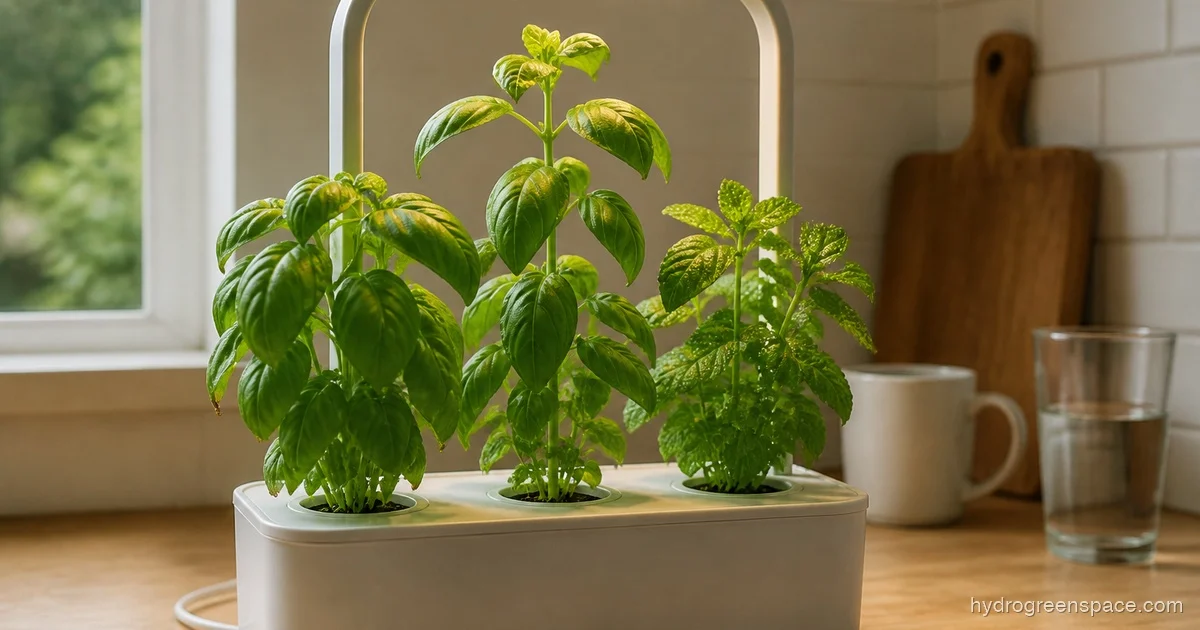
The AeroGarden Sprout is one of the most purchased countertop herb gardens on Amazon, and it’s also one of the most returned. Not because it doesn’t work (it works fine). The problem is that people buy it expecting a full herb garden and get a small, 3-pod system that will run out of seeds in six weeks and remind you to add nutrients on a light schedule you’ll eventually start ignoring. Here’s the honest review you need before you decide if the Sprout is right for you or if you should spend a bit more and skip straight to the Harvest.
AeroGarden Sprout
3-pod countertop hydroponic garden with 10W LED grow light. Compact, quiet, and beginner-friendly. Includes a seed pod kit and nutrient solution.
Best for: Beginners, small kitchens, gift buyers, casual herb use
Check price on AmazonWhat You Actually Get With the Sprout
The AeroGarden Sprout is a complete hydroponic indoor garden kit. You get the unit itself (the water reservoir, the LED grow arm, and the control panel), a 3-pod seed kit (usually gourmet herbs: basil, Thai basil, and Dill, or a variation), a bottle of liquid nutrient solution, and a small grow deck with dome covers for germination.
The LED light is 10 watts and sits on an adjustable arm that raises to a maximum of 10 inches above the grow deck. That number matters more than it sounds, and we’ll come back to it.
Setup takes about 15 minutes. Fill the reservoir to the fill line, drop in the seed pods, snap on the domes, plug it in, set the date, and the Sprout runs on a 15 hours on / 9 hours off light cycle automatically. No soil, no drainage holes, no mess.
The Sprout does not have WiFi. There’s no app, no Alexa integration, no remote monitoring. You track watering and nutrient additions manually using the on-unit reminder light. If you’re used to smart home devices, this feels dated. But for a beginner who just wants herbs on a countertop, it’s one less app to install and one fewer thing to troubleshoot.
Germination: What to Expect (and What Can Go Wrong)
AeroGarden advertises a germination guarantee, and most pods do sprout within 7 to 14 days. In practice, across dozens of user reports, roughly 1 to 2 pods in a batch will lag or fail entirely. If you start with 3 pods and one doesn’t sprout, you’re down to 2 plants before you’ve harvested anything.
The most common cause isn’t defective seeds; it’s user error. Pods need the dome covers on for the first week to hold humidity. If you remove them too early because you’re curious, germination drops. The other culprit is water temperature. The Sprout’s reservoir sits at room temperature, and if your kitchen runs warm (above 75°F / 24°C), germination can stall.
If you’re new to hydroponics and want to understand why germination fails and how to troubleshoot it systematically, the guide on common beginner mistakes in hydroponics covers the full list of reasons sprouts stall in the early stage.
How Well Does It Actually Grow?
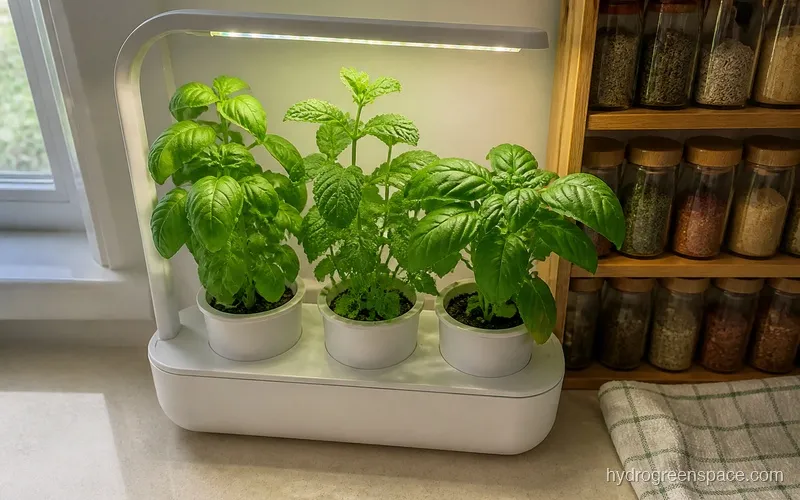
Fast. That’s the honest answer. Basil that takes 8 weeks in soil from seed is producing harvestable leaves in 3 to 4 weeks with the Sprout. The 15-hour light cycle combined with a nutrient solution that feeds directly to the roots is a fundamentally more efficient growing environment than a pot on a windowsill.
The challenge is the 10-inch light height limit. Basil, mint, and parsley are well-matched to the Sprout’s compact form. They stay relatively short and bushy, especially if you’re harvesting weekly. But if you try to grow dill or sweet basil varieties that want to bolt, they’ll hit the light arm and start leaning before you get the yield you’re expecting. At 10 inches, there’s no room to grow anything that naturally reaches 18 to 24 inches.
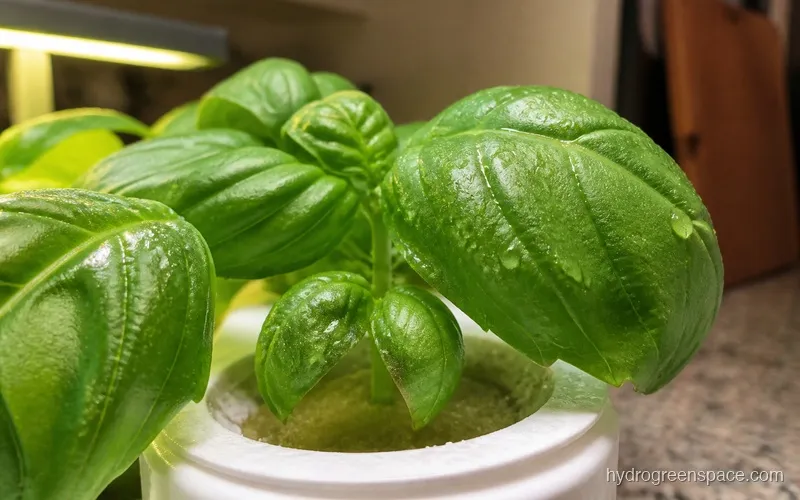
The practical question worth asking: is a 3-pod Sprout sufficient for daily cooking? If you cook Italian food three times a week and use fresh basil regularly, no. You’ll harvest enough for garnishes and occasional handfuls, but you won’t be replacing grocery store herbs entirely. If you want an herb garden that genuinely offsets what you’d buy at the store, you need at least 6 pods (the Harvest) or you need two Sprouts running in rotation.
For occasional use (a sprig of mint for cocktails, basil for a Sunday sauce, parsley for finishing) the Sprout is genuinely useful.
The Real Cost of the AeroGarden Sprout
The $79.95 purchase price isn’t where the costs end. The included seed kit lasts roughly 6 to 10 weeks depending on how aggressively you harvest. Replacement AeroGarden seed pod kits run $14–$25 for a 3-pod set, depending on variety.
→Check price on AeroGarden Herb Seed Pod KitIf you replace pods every 8 weeks, that’s $75–$150 per year in seed kits alone, on top of the nutrient solution ($10–$12 for a 3-oz bottle that lasts approximately 6 months).
Compare that to a bunch of fresh basil at the grocery store for $2. You need roughly 40 bunches over a year to break even on the hardware cost. That math doesn’t favor the Sprout as a cost-savings device.
What it does favor: convenience, the experience of growing your own food, and the fact that you can snip exactly as much as you need without watching half a grocery store bunch go soft in your fridge.
The smarter move after your first pod kit runs out: buy generic seed pod kits from third-party sellers on Amazon (they run $8–$12 for 6-pod sets), or build your own using plain grow sponges and seeds from any garden supplier. The Sprout’s pod holes are standard size. You’re not locked into AeroGarden’s branded pods, which is a common misconception that makes people think ongoing costs are higher than they are. If you want to explore the best seed options for your system, this guide to the best seeds for hydroponic gardens covers what germinates well in compact pod systems like this.
AeroGarden Sprout vs Harvest: Which One Should You Actually Buy?
This is the question most buyers ask after they already own the Sprout. Let me save you the regret.
Buy the Sprout if:
- You’re a complete beginner who wants the lowest-friction entry into hydroponics
- You have a very small counter and literally cannot fit a larger unit
- This is a gift and you’re not sure if the recipient will actually use it
- You plan to grow only herbs and have modest needs (occasional garnishes, not daily cooking)
- Budget is genuinely tight and you want under $80
Buy the Harvest (6 pods) instead if:
- You cook with fresh herbs regularly and want a genuine supply
- You want to grow salad greens or small vegetables alongside herbs
- You’re even slightly serious about this as a growing hobby
- You want WiFi control and the AeroGarden app (the Harvest has it, the Sprout doesn’t)
The Harvest costs roughly $20–$40 more depending on when you buy it. Almost everyone who starts on the Sprout wishes within 3 months they’d bought the Harvest. The 3-pod limit is the Sprout’s defining constraint, and you feel it more over time, not less.
If you want a broader comparison of beginner-friendly systems before committing to any AeroGarden model, choosing your first hydroponic system walks through how to match a system to your goals and space.
Nutrients: How Often, How Much
The Sprout’s control panel has a nutrient reminder light that comes on every 2 weeks. Add 4ml of the included liquid nutrient solution (or any AeroGarden-compatible plant food) directly to the water reservoir when the light comes on. That’s it.
Don’t over-add nutrients trying to accelerate growth. The reservoir is small (about 1 liter), and adding extra solution creates a concentration imbalance that causes leaf edge burn and slows root development. Stick to the 4ml every 2 weeks.
→Check price on AeroGarden Liquid NutrientsIf you’re curious about nutrient ratios and want to understand why EC and pH matter even in a simple system like this, the hydroponic nutrient calculator explains what those numbers mean for your plant’s growth stage.
You’ll also top off the reservoir with plain water between nutrient additions as the level drops from evaporation and plant uptake. Check the water level once or twice a week. The Sprout will alert you with a blinking light when it gets low, but staying ahead of it is better than waiting for the reminder.
For a deeper look at why root health matters in any hydroponic setup, understanding root rot in hydroponic systems is worthwhile reading even if you’re starting small.
What Grows Well in the AeroGarden Sprout
Compact, fast-growing herbs are the Sprout’s sweet spot:
- Basil (all varieties): this is where the Sprout genuinely shines. Fast germination, heavy yields relative to plant size, harvests well for months
- Mint: vigorous grower, but it will crowd out neighboring pods if you let it run
- Chives: slower but low-maintenance, good for long-term harvesting
- Parsley: takes 3 to 4 weeks to establish, then produces steadily
- Thyme and oregano: slower growth but ideal for the Sprout’s height limitations
What doesn’t work as well: dill (bolts and exceeds 10 inches fast), cherry tomatoes (need more pods and more light), any pepper variety (too slow for a pod system this size), and lettuce (technically works but you get a single handful every 10 days from 3 pods, so not worth it).
Common Problems and Fixes
Only 2 of 3 pods sprouted. This is normal for a first run. Replace the non-sprouting pod with a fresh seed (you can reuse the sponge with new seeds), or use a third-party blank sponge. Don’t buy a new pod kit just because one failed.
Algae growing on the pods or reservoir. This happens when light hits the water directly. Cover exposed water surface areas with the deck tightly and use the pod hole covers for any empty slots. Algae itself doesn’t kill plants, but it competes for nutrients. Rinse the reservoir when you do a full refresh (every 4 weeks).
Plants are leggy and reaching toward the light. The arm is probably set too low for the current growth stage. Raise it so the light is 1 to 2 inches above the tallest plant tip. Check every few days during active growth phases.
Basil leaves turning yellow. Most likely a nitrogen issue from an overdue nutrient addition, or the plant is rootbound and stressed. If you’ve been growing for more than 12 weeks without a full reservoir refresh, do a complete water change and add fresh nutrients. If you’re seeing unusual white fuzz on the grow sponges rather than roots, the guide on mold on hydroponic sponges covers the diagnosis and fix.
The Verdict
The AeroGarden Sprout does what it promises: it grows herbs on a countertop with no soil, no mess, and no prior experience required. It won’t replace your grocery store herb habit, and you’ll feel the 3-pod ceiling faster than you expect. But it is a real hydroponic system that teaches you nutrient timing, light cycles, and germination through actual hands-on experience.
If you grow through a full pod cycle and find yourself harvesting weekly and already thinking about what else you could grow, that’s the moment to step up. The best hydroponic system for beginners guide covers what to look at when you’re ready to scale beyond the Sprout, whether that’s the Harvest, a larger AeroGarden, or a different system entirely. Most people who outgrow the Sprout don’t give up growing. They upgrade.