Best Seeds for Indoor Hydroponic Gardens (Ranked)
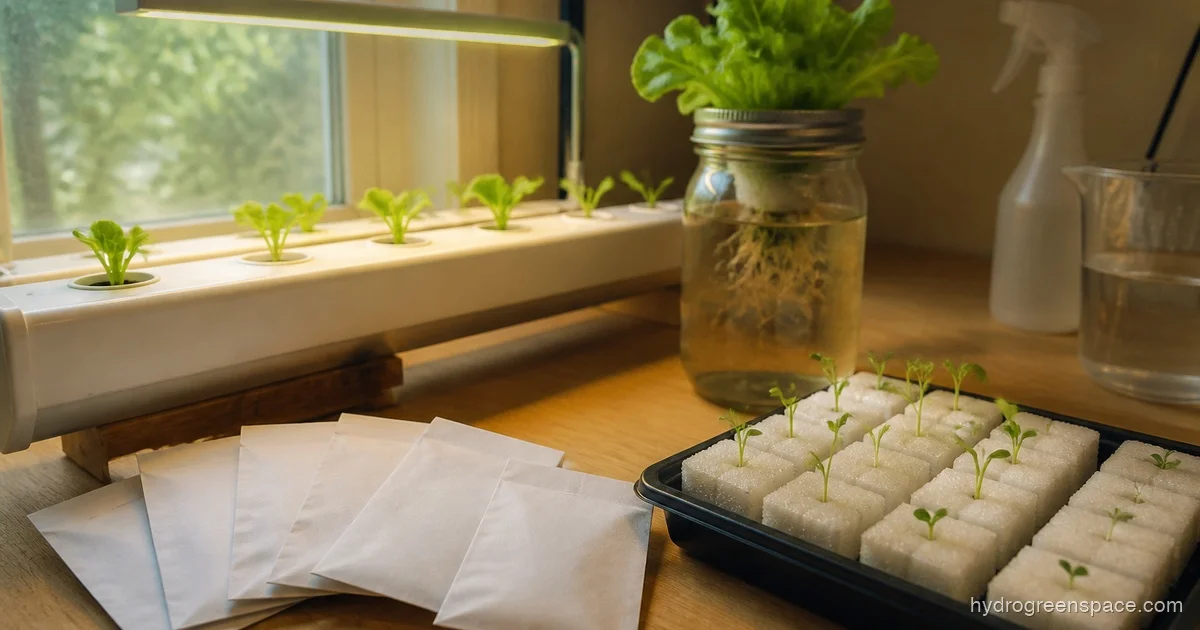
The single most common question from new growers: “Where do I buy hydroponic seeds?” The short answer is that you already have access to them. Any seed packet from your local garden center or online supplier works in a hydroponic system. There is no such thing as a “hydroponic seed.” The plant does not know what medium its roots are sitting in. What matters is picking varieties that match your indoor light levels, your system type, and how much space you actually have.
You Do Not Need Special Seeds
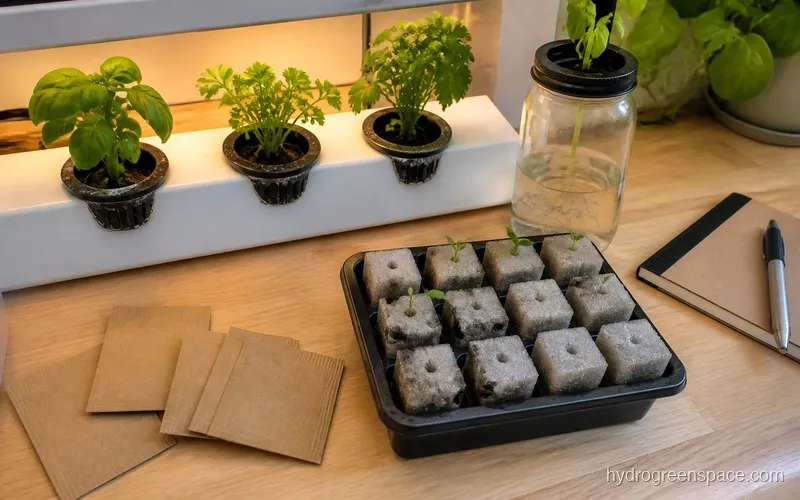
This is worth saying clearly because entire product lines are marketed as “hydroponic seeds” at a premium. They are regular seeds with a marketing layer on top. Open-pollinated heirloom varieties, F1 hybrids, whatever you grow outdoors: all of them can go into a hydroponic system. The only real difference is germination medium. Instead of direct-sowing into soil, you are starting seeds in rockwool cubes, coco coir plugs, or another inert starter. If you want to learn the full process, starting seeds in rockwool gives you the step-by-step detail. And if you prefer skipping rockwool entirely, there are solid alternatives for germinating without it that work just as well.
What actually determines success indoors is variety selection. A big beefsteak tomato that needs 12 hours of intense direct sun and six feet of vertical space is not a bad plant. It is just the wrong plant for a 4-bulb LED setup in a spare bedroom. Compact, fast-maturing varieties make the difference between a system that produces food week after week and one that produces frustration.
The Master Comparison Table
Before going category by category, here is a quick reference. Days to harvest are approximate from transplant (not from seed).
| Crop | Days to Harvest | Light Requirement | Best System | Compact Variety |
|---|---|---|---|---|
| Butterhead lettuce | 30–45 | Low–medium | Kratky, NFT, DWC | Tom Thumb, Buttercrunch |
| Romaine lettuce | 35–50 | Low–medium | NFT, DWC | Little Gem, Paris Island Cos |
| Spinach | 30–40 | Low–medium | Kratky, NFT | Space Spinach, Baby Leaf |
| Arugula | 25–35 | Low | Kratky, NFT | Astro, Runway |
| Basil | 30–45 | Medium–high | DWC, ebb-and-flow | Genovese, Eleonora |
| Cilantro | 30–40 | Medium | NFT, Kratky | Calypso, Confetti |
| Chives | 30–45 | Low–medium | Kratky | Common chives |
| Bush beans | 50–60 | High | DWC, ebb-and-flow | Provider, Contender |
| Cherry tomatoes | 55–70 | High | DWC, ebb-and-flow | Tiny Tim, Tumbling Tom |
| Peppers (sweet) | 60–80 | High | DWC, ebb-and-flow | Lunchbox, Miniature Bell |
| Kale | 40–60 | Medium | DWC, NFT | Dwarf Blue Curled, Vates |
| Swiss chard | 35–50 | Medium | DWC, NFT | Bright Lights, Fordhook |
| Radish | 22–28 | Low–medium | Kratky, NFT | Cherry Belle, Easter Egg |
Leafy Greens: Start Here
If you are new to indoor hydroponics, leafy greens are not just the easiest category. They are the reason most home systems stay running. Fast germination rates, short days to maturity, tolerance for lower light, and forgiving nutrient requirements make them the backbone of any productive indoor setup.
Lettuce
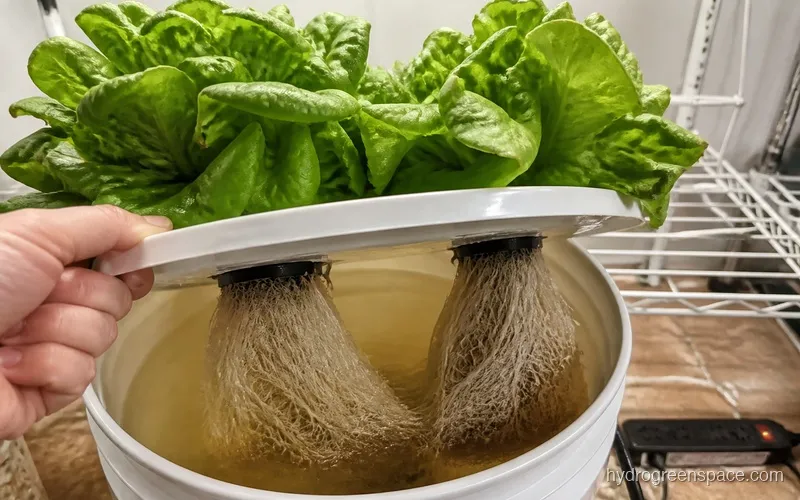
Lettuce is the closest thing to a guaranteed win in indoor hydroponics. Butterhead types like Buttercrunch and Tom Thumb stay compact, mature in 30 to 45 days from transplant, and are happy under a basic LED panel running 14 to 16 hours. Romaine varieties hold slightly better if you like crunch (Little Gem is a personal favorite because it fits neatly into a net pot and forms a tight head without sprawling). For a deeper breakdown of which varieties perform best in different systems, the guide on best lettuce varieties for hydroponics covers germination rates, variety-to-system matching, and harvest timing in full detail.
One thing beginners often overlook: lettuce bolts (goes to seed) fast under high heat or intense light. Keep your reservoir below 70°F and your light intensity moderate. If you are running a system with grow lights, dial back the intensity or raise the fixture rather than cutting photoperiod.
Spinach, Arugula, and Other Cut-and-Come-Again Greens
Spinach and arugula are both excellent for low-light setups (a basement or a north-facing spare room where tomatoes would stall out). They tolerate shorter photoperiods than lettuce and respond well to cut-and-come-again harvesting, which means one planting can give you three or four rounds of leaves before the plant is done.
Arugula in particular has a germination rate close to 95 percent in ideal conditions. Sow into rockwool or coco coir plugs at 70°F and you will see sprouts in 2 to 4 days. For a passive setup, arugula in a Kratky jar is almost embarrassingly easy.
What I’d do: If you are building your first indoor system and want to see results fast, plant a mix of butterhead lettuce and arugula. You will have harvestable leaves within five weeks and actual proof that your system works before you invest in anything more complicated.
Herbs: High Value, Compact Footprint
Herbs make sense in any indoor system for one simple reason: the value-per-square-foot is much higher than vegetables. A healthy basil plant in a DWC bucket produces more usable food per week than a head of lettuce, gram for gram, when you account for market price.
Basil
Basil is the most-grown hydroponic herb, and for good reason. Genovese basil matures in 30 to 45 days from transplant, thrives in DWC or ebb-and-flow systems, and produces continuously as long as you pinch flowers before they open. It needs more light than lettuce. Aim for a full-spectrum LED running 16 hours at moderate intensity, positioned 12 to 18 inches above the canopy.
The caveat: basil is temperature-sensitive. Below 65°F and it sulks; below 55°F and it will show chilling damage within 48 hours. If you are running a basement grow setup, you may need to heat your reservoir or move basil to a warmer room.
Cilantro and Chives
Cilantro is a fast cropper (30 to 40 days) but it bolts quickly in warm conditions, making it a better choice for a cool room than a hot one. The variety Calypso was bred for slow bolting and outperforms generic cilantro seed in most indoor setups by two to three extra weeks of productive harvest. Confetti is another good option with finer leaves.
Chives are the most patient herb in the bunch. They grow slowly, need minimal light, and will sit in a Kratky jar for months without complaint. They are not a heavy producer but make a great filler for unused net pot sites.
Tip: With herbs that bolt (cilantro, dill, arugula), harvest by cutting the entire upper third of the plant rather than plucking individual leaves. This slows the bolt cycle noticeably.
Fruiting Plants: More Investment, More Reward
Fruiting crops require more light, more nutrients, and more vertical space than leafy greens, but they are absolutely doable in a well-built indoor setup. The key is choosing compact, determinate varieties that were bred for container or small-space growing.
Cherry Tomatoes
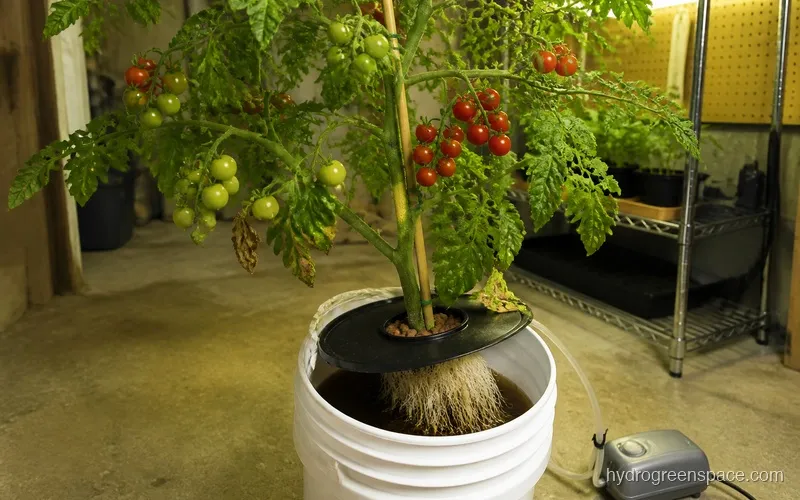
This is the one fruiting crop I recommend to intermediate growers before anything else. Cherry tomato varieties like Tiny Tim and Tumbling Tom were developed specifically for container growing, reaching 12 to 18 inches tall compared to the 5-foot sprawl of a standard indeterminate tomato. They produce prolifically under a good LED at 18 hours, and a single DWC plant can yield a pound of fruit per week at peak production.
What a cherry tomato will not forgive: inconsistent nutrient EC, dry net pots during germination, or low light. If your grow space cannot sustain at least 400 PPFD at canopy level for 16 to 18 hours, stick to greens and herbs until you upgrade your lighting.
Peppers
Growing peppers hydroponically is a longer game than tomatoes (60 to 80 days to first harvest from transplant, with a slow ramp-up period). But once a pepper plant in DWC hits its stride, it produces steadily for months without replanting. Sweet Lunchbox peppers and miniature bell varieties stay compact and produce well under indoor lighting. Hot varieties like jalapeño and cayenne are also reliable, though capsaicin production increases with light stress, so you will get hotter peppers under higher intensity.
Warning: Do not start peppers from seed if you want quick results. Buy established transplants or start seeds 8 to 10 weeks before you want them producing. From seed to first pepper is a 4 to 5 month commitment indoors.
Open-Pollinated vs Hybrid Seeds: Which to Buy
For most home growers, F1 hybrid seeds are worth the extra cost. They were bred for uniformity, disease resistance, and yield, which matters more indoors where you have limited canopy space and want predictable results. Hybrid lettuce varieties like Buttercrunch and Little Gem are consistent from seedling to harvest in a way that heirloom varieties often are not.
Open-pollinated and heirloom varieties are fine if you want to save seed or prioritize flavor over yield. Many experienced growers prefer heirloom tomatoes for flavor complexity. The practical downside is more variability in germination rate and days to maturity, which is annoying when you are trying to stagger harvests.
The one place heirlooms shine in hydroponics: herbs. Heirloom basil varieties like Napoletano and Lettuce Leaf have exceptional flavor and grow well in DWC. If flavor is the goal, heirlooms are worth trying.
How to Match Seeds to Your System
Your system type should influence variety selection as much as the crop itself. Here is a quick framework:
Kratky (passive, no pump): Best for low-demand crops. Lettuce, arugula, spinach, chives, radish. The static reservoir limits how much oxygen reaches roots, which is fine for leafy greens but will choke fruiting plants at full production.
NFT (nutrient film technique): Excellent for lettuce and herbs. The thin film of nutrient solution keeps roots moist and oxygenated, which suits fast-growing leafy crops. Basil and cilantro also thrive in NFT channels.
DWC (deep water culture): The most versatile system for home growers. All leafy greens, herbs, and fruiting crops work well. If you are building a DWC system for the first time, start with lettuce to learn the system before moving to tomatoes or peppers.
Ebb-and-flow: Good for fruiting crops and large-root plants. The flood-and-drain cycle suits tomatoes and peppers well. Also works for herbs, though the larger system footprint is overkill for just growing basil. Your choice of growing medium matters more in ebb-and-flow than in any other system type.
For a full picture of what you can actually grow indoors with hydroponics, the complete list of hydroponic vegetables covers over 30 crops with notes on difficulty and system compatibility.
Setting Up for Your First Seed Start
The most common mistake beginners make is not the seed selection. It is the environment during germination. Seeds germinate in a narrow temperature range (65 to 75°F for most crops) and need consistent moisture without being waterlogged. A humidity dome over your rockwool cubes, a seedling heat mat set to 70°F, and low-intensity light for the first few days is the complete setup.
Once the seedling shows its second set of true leaves (not the seed leaves), it is ready to transplant into your system. Transplanting too early is a common beginner mistake that leads to root damage and stalled growth. Wait until the roots are visibly emerging from the bottom of the starter cube.
If you want the full walkthrough for getting started, indoor hydroponics for beginners covers system selection, environment setup, and your first seed-to-harvest cycle in plain language.
Pick your crop category, match it to your system, and buy compact varieties bred for container growing. If you are still deciding where in your home to set up, the indoor hydroponic growing guide covers every indoor environment from countertop to basement so you can match your seed selection to your actual setup. Once you have one cycle running, the full list of what seeds thrive across every setup (including less common crops worth adding once you have the basics dialed in) is covered in the complete hydroponic seed guide.