Best Hydroponic System for Apartments (2026 Guide)
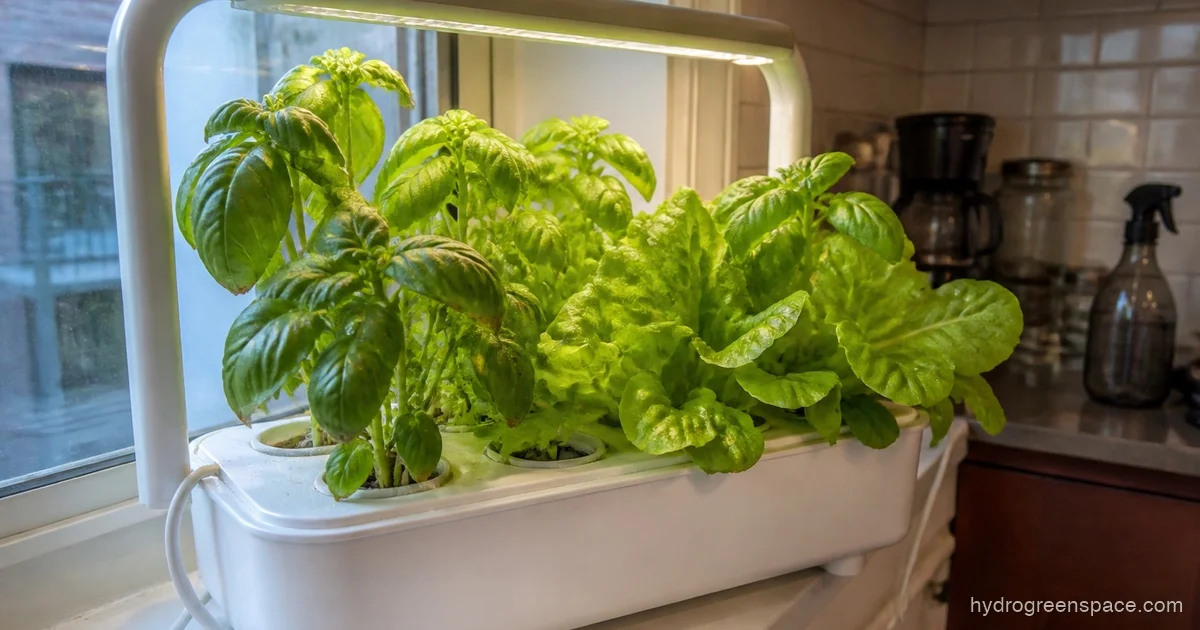
Growing food in an apartment sounds like the kind of thing that would get you a call from your landlord. Water on the floor, a mystery smell, fans humming at midnight. Those are real concerns worth taking seriously before you buy anything.
The good news: there are systems genuinely built for small, shared living spaces. The difference between one that works for apartments and one that doesn’t comes down to four things: footprint, noise level, humidity output, and how well it contains water. Get those four right and you can grow fresh herbs, lettuce, and even small fruiting plants in a studio or one-bedroom without any drama.
This guide covers the best options by space type, with honest notes on which scenarios each one fits.
| System | Best For | Type | Budget |
|---|---|---|---|
| AeroGarden Sprout | Studios, first-time growers | Countertop pod | $ |
| AeroGarden Harvest 360 | Small kitchens, herbs + lettuce | Countertop pod | $$ |
| iDOO 12-Pod | Herb-focused, more capacity | Countertop pod | $$ |
| Tower Garden FLEX | One-bedroom with a corner | Vertical tower | $$$ |
| Rise Gardens Family Garden | Open wall or dining room corner | Multi-level shelf | $$$$ |
What Apartment Living Actually Demands from a Hydroponic System
Before jumping to product picks, it helps to know what you’re actually optimizing for. A basement grower has a completely different set of constraints than someone in a 600-square-foot apartment on the third floor.
Footprint and Counter Space
The single biggest limiter in most apartments is horizontal space. A standard NFT or DWC system needs a table or shelf at minimum, and the reservoir adds bulk below. Countertop pod systems win here because everything sits in one self-contained unit, often smaller than a coffee maker. Vertical tower gardens reclaim floor space by growing upward, but they need a floor area that won’t get hit with splash or drip.
Think in terms of square footage you can permanently dedicate. If the answer is “less than 2 square feet,” you’re looking at a countertop pod garden or a small wall-mounted herb panel. If you have a spare corner or a balcony, towers open up.
Noise
Air pumps and water pumps make noise. In a quiet apartment bedroom at 2am, a cheap air stone bubbling in a reservoir is not subtle. The hum travels through countertops and walls.
The quietest systems by design are those without separate air pumps. Kratky-style passive systems have zero moving parts. AeroGarden-style pod gardens run a small submersible pump that sits in water, which dampens most of the sound. Tower gardens run a pump that cycles on and off, and the on cycle is audible.
If you’re in a studio where the kitchen and bedroom are the same room, passive or near-passive systems are the right call. If you have a dedicated corner in a separate space, most standard systems are fine at normal hours.
Smell: When Hydroponics Gets Noticed
Healthy hydroponic systems don’t smell bad. The concern most apartment growers have is the earthy, slightly wet smell that comes from a nutrient solution that hasn’t been changed recently, or from root issues. Keep your reservoir clean and your water changed on schedule (every 1 to 2 weeks for most systems) and there’s no noticeable odor.
What can smell is growing media that stays too wet, algae growth on an uncovered reservoir, or plants like basil and mint that just have a strong natural scent. None of these are problems that would trigger an odor clause in a lease, and none of them travel through walls.
If your landlord has a general “no growing operations” clause, a countertop pod garden looks and functions more like a kitchen appliance than a growing setup. That’s a practical distinction worth making.
Humidity and Your Walls
A single small hydroponic system in a ventilated apartment adds almost no meaningful humidity. The problem shows up when you’re running multiple large systems in a small room with poor airflow, or if you’re doing deep water culture in an uncovered reservoir.
For most apartment growers running one system, this is not a real issue. But if you’re concerned, a countertop system with a lid over the reservoir and plants growing through net pot holes will contain most of the moisture naturally.
System Types: Which One Fits Your Space
Countertop Pod Gardens (Best for Studios and Small Kitchens)
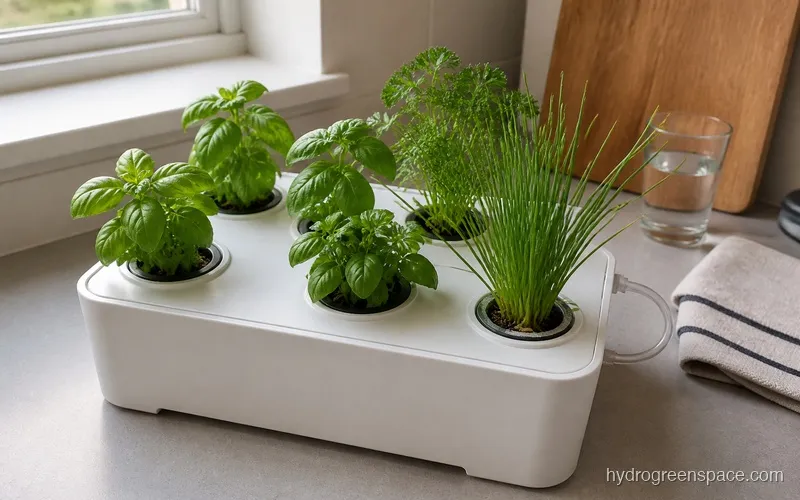
These are the AeroGarden and similar systems. A built-in LED grow light on an arm sits over a reservoir with 3, 6, or 12 pod holes. Everything is contained in one unit. You add water, add nutrients, drop in seed pods, and the system handles the rest with a timer.
They’re genuinely apartment-friendly. Small footprint (most are under 1 square foot), very quiet, no water drip risk, and the grow light is integrated so there’s no separate fixture to hang. The tradeoff is scale: a 6-pod system grows 6 plants, which is great for herbs and enough lettuce for a salad now and then but not for a serious harvest.
If you’ve looked at anything in the indoor hydroponic system with lights category and wanted something with zero setup overhead, this is it.
AeroGarden Sprout
A 3-pod countertop system with a 10-watt LED grow light on an adjustable arm. The smallest AeroGarden footprint, designed for a kitchen windowsill or counter corner. Best for herbs and small greens.
Best for: Studio apartments and first-time growers
Check price on AmazonIf you want more growing capacity without giving up much counter space, the step up to a 6-pod model is worth it. The light is stronger, you can run a mix of herbs and a couple of lettuce heads simultaneously, and the app reminders take the guesswork out of nutrient top-ups.
AeroGarden Harvest 360
A 6-pod system with a 20-watt full-spectrum LED that rotates 360 degrees to distribute light evenly across all pods. Quiet submersible pump, app-connected reminders for water and nutrients.
Best for: Small kitchens that want herbs and lettuce year-round
Check price on AmazonVertical Tower Gardens (Best for One-Bedroom Apartments With a Corner)
Tower gardens grow plants in pockets stacked vertically on a central column, with a pump cycling water from a base reservoir up to the top, where it trickles down through each pocket. You get 20 to 40 plants in roughly the same floor space as a floor lamp.
The real advantage is density. If you want to grow enough lettuce to actually eat regularly, or want to run herbs, greens, and small fruiting plants simultaneously, a tower gives you that without needing table space.
The tradeoff: towers need a pump, the pump is audible, and there’s a slight splash risk at the base if the catch reservoir isn’t properly positioned. You also need a grow light if you don’t have a very bright window or south-facing balcony. A basic LED panel on a stand next to the tower adds bulk but also adds real growing power.
For a full breakdown of tower-specific options, see best vertical hydroponic system.
Tower Garden FLEX
A 20-site vertical aeroponic tower with a UV-resistant food-safe column and a 5-gallon base reservoir. Grows leafy greens, herbs, strawberries, and small fruiting plants. Available with or without grow light.
Best for: One-bedroom apartments with a dedicated corner or balcony
Check price on AmazonIf you want a more structured setup with built-in lighting on every level rather than a single panel beside the tower, the Rise Gardens approach is different enough to consider separately. It takes up more floor space but the multi-shelf design means you’re not competing for light across dozens of pockets on a single column.
Rise Gardens Family Garden
A freestanding multi-level hydroponic garden with 36 plant sites across three shelves. Integrated LED lighting on each shelf, app-guided growing, and a sealed drip-catch design. Quiet pump runs on a timer.
Best for: Apartments with an open wall or dining room corner
Check price on AmazonKratky Passive Systems (Best for Extremely Quiet Setups)
Kratky is not a product, it’s a method. You grow plants in net pots over a nutrient solution in any sealed container. As the plant drinks the water, an air gap forms above the solution, and the roots grow down into the water while the upper roots breathe the air gap. No pump. No electricity. No noise.
The limitations are real. You’re limited to leafy greens and herbs (lettuce, spinach, basil, cilantro grow great; tomatoes and peppers are not practical). You need to top up nutrients periodically. And you either buy a grow light or accept that window light is usually not enough for fast growth.
But for a grower in a studio who wants zero equipment noise and maximum simplicity, Kratky is worth understanding. The indoor hydroponic garden for beginners guide covers this method in depth if you want to start there.
Wall-Mounted Herb Panels (Best for Renters Who Don’t Want to Drill)
Freestanding wall-mounted-style herb panels (the kind that sit on a shelf or counter but display vertically like a picture frame) have gotten more capable in the last couple of years. They’re not true wall-mounted in most cases since that would require drilling but they take up almost no counter depth while fitting multiple grow sites.
These work best for herbs only. Light penetration drops off quickly in a vertical panel format, so anything that needs strong light (fruiting plants, large leafy greens) won’t thrive. For a kitchen countertop herb collection, they’re elegant and very rental-friendly.
iDOO Hydroponics Growing System
A 12-pod countertop system with a height-adjustable LED grow light arm and a quiet submersible pump. Full-spectrum light covers all 12 pods evenly. Auto timer built in, no programming needed.
Best for: Herb-focused apartment growers who want more capacity than a 6-pod
Check price on Amazon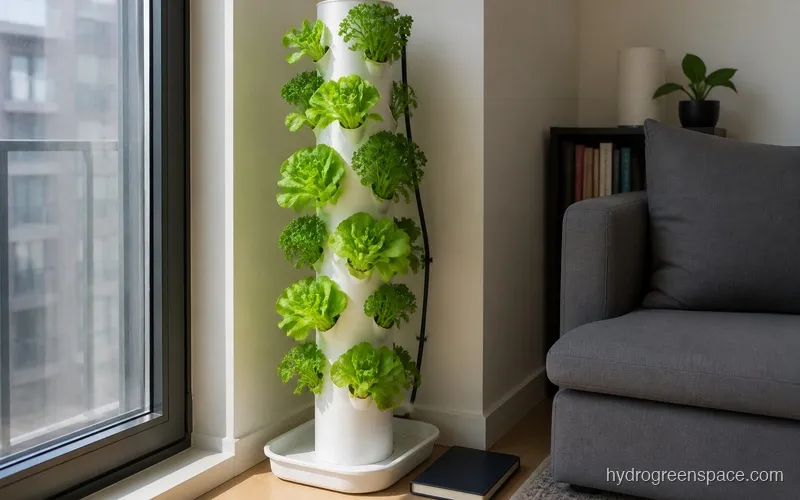
The Lease and Landlord Question
This comes up constantly in forums: “Will my landlord care about my hydroponic setup?”
The honest answer is that it depends on the scale and what it looks like. A countertop pod garden is indistinguishable from a kitchen appliance to most landlords. A tower garden in the living room is clearly a growing system but doesn’t damage anything, doesn’t create humidity issues at small scale, and isn’t typically covered by lease restrictions.
Problems arise from: water overflow (use systems with sealed reservoirs and catch trays), odor from unhealthy plants (keep your solution fresh), and anything that looks like it could lead to water damage (no open-top reservoirs near walls or carpet). The are indoor hydroponic gardens worth it article covers the cost-benefit case if you’re still on the fence about investing.
If your lease has a clause about “no growing operations” or “no modifications,” a single countertop system almost certainly doesn’t trigger it. If you’re planning a tower or multi-system setup, that’s worth a conversation with your landlord first.
Watch Out
Budget Breakpoints for Apartment Systems
Apartment hydroponic setups don’t need to be expensive. Here’s a rough guide to what you get at different price ranges:
| Budget | What it gets you |
|---|---|
| Under $100 | Small 6-pod countertop system (AeroGarden-style), herbs and small greens only |
| $100 to $200 | Larger 12-pod system or a starter vertical tower, LED light included |
| $200 to $500 | Full tower garden with light, capable of sustained salad greens harvest |
| $500+ | Multi-level systems, smart monitoring, serious fruiting plant capacity |
For a detailed look at what’s available at each price point, check best hydroponic system under $100, under $200, and under $500.
What You Can Actually Grow in an Apartment System
The plants that thrive in apartment hydroponic setups are, in descending order of reliability:
- Herbs (basil, mint, cilantro, parsley, chives): fast-growing, low-light tolerant, high value per plant
- Lettuce and leafy greens (butterhead, romaine, spinach, arugula): the bread and butter of apartment systems
- Small fruiting plants (cherry tomatoes, peppers, small cucumbers): possible in a tower or multi-site system with strong light, but requires more attention
- Microgreens: not hydroponics technically, but worth mentioning; they’re the fastest return and no pump required
If you’re choosing a system specifically to grow tomatoes or peppers, plan for more light than you think you need. A 20-watt pod garden LED will not fruit a tomato plant. You need 40+ watts of actual LED output at the canopy and a system with enough root space for larger plants.
Choosing Based on Your Specific Apartment Situation
If you’ve read this far, you probably have a clearer picture already. Here’s how to shortcut the decision:
- Studio apartment, kitchen-only space: Countertop pod garden (6 or 12 pod). That’s it.
- One-bedroom with a dedicated corner: Vertical tower garden with a grow light stand.
- One-bedroom with a spare closet: Look into closet hydroponics for a more capable setup than any open-room system.
- Apartment with an outdoor balcony: The options expand significantly. Natural light changes the whole calculation. Balcony hydroponics covers what’s possible with sun exposure.
- Renter who wants zero landlord risk: Countertop pod garden or passive Kratky jars. No equipment that a landlord could object to.
The thing that holds most apartment growers back isn’t space or noise or landlord rules. It’s waiting for the “perfect” setup before starting. A six-pod countertop system growing fresh basil and lettuce is genuinely useful and costs less than a few months of grocery herbs. If you want to go deeper on how these systems hold up over time before committing, choosing your first hydroponic system walks through the decision in more detail.
Start with something that fits your current space. You can always scale up once you know what you actually want to grow. If you want to see how these apartment-friendly options fit into the wider beginner landscape before buying, the best hydroponic systems for beginners covers all the entry-level formats with clear recommendations for different situations.