Best Complete Hydroponic Starter Kit for Beginners
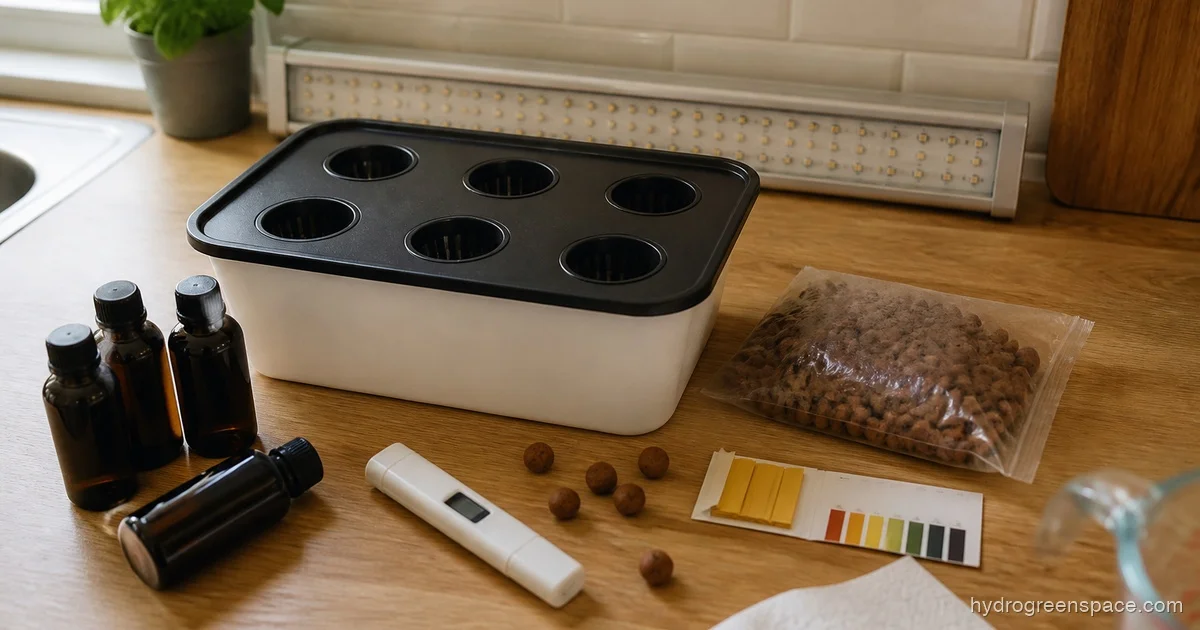
Most “starter kits” on Amazon include the reservoir, the pods, and maybe a grow light. What they don’t tell you is that you still need nutrients, a pH meter, and a way to top off the water before a single seed sprouts. That gap between what the box promises and what you actually need to grow is where beginners lose confidence. This article closes that gap.
If you want the short answer: the AeroGarden Harvest Elite is the best complete hydroponic starter kit for most beginners. It comes with nutrients, seed pods, and a full-spectrum LED, and it works the first time you plug it in. But whether that’s the right kit for your situation depends on how much space you have, how many plants you want to grow, and how serious you’re getting.
Quick-Pick Comparison
| System | Best For | Type | Budget |
|---|---|---|---|
| AeroGarden Harvest Elite 6-Pod | Herbs, greens, compact veg | Pod system | $100–$200 |
| AeroGarden Harvest (6-pod) | First-time growers, small kitchens | Pod system | Under $100 |
| LYKO 12-Pod Hydroponics System | Growers ready for more control | Pod system | Over $200 |
| LetPot LPH-Max 21-Pod Smart Garden | High-volume herb and greens growing | Smart pod system | $150–$200 |
What “Complete” Actually Means (Before You Buy Anything)
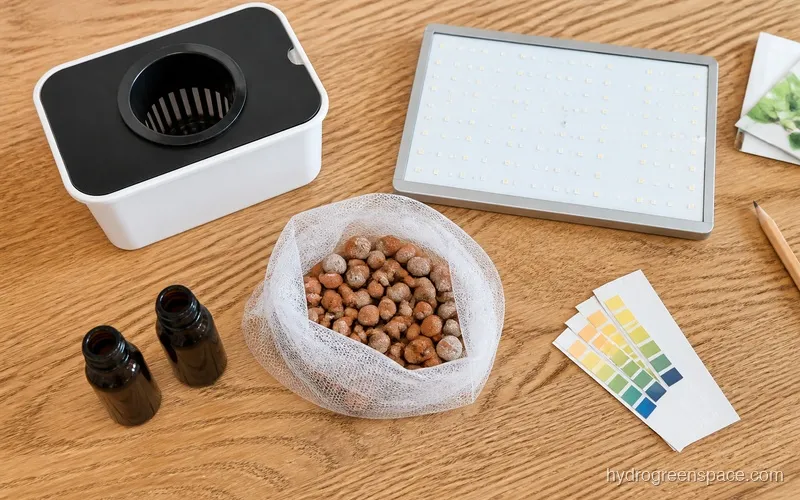
The word “complete” is doing a lot of work on product listings. Before you compare kits, here’s what a genuinely complete hydroponic starter kit should include:
- Growing system: reservoir, lid with pod holes, water pump or passive wicking
- LED grow light: ideally full-spectrum with an adjustable arm or fixed panel
- Grow media: rockwool cubes, clay pebbles, or sponge plugs
- Nutrients: at minimum a basic 2- or 3-part formula for leafy greens and herbs
- Seeds or seed pods: not always included, but a big plus if they are
- pH test kit or meter: this is the one most kits skip, and it matters immediately
- Instructions: an actual setup guide, not just a diagram
A kit missing nutrients forces you to go buy a $15 bottle before you can even start. A kit missing a pH kit means you’ll either get lucky or watch your first crop underperform and not know why. Keep this checklist in mind as you look at any kit, including the ones below. The Apera PH20 is a reliable digital pH pen at around $20 that covers this gap for most beginners. You can cross-reference the full hydroponic equipment checklist for anything beyond the basics.
The Best Hydroponic Starter Kits by Price Tier
There’s no single best kit for everyone. Apartment growers, home chefs, and serious beginners have different needs. Here’s one strong pick per tier.
Under $100: AeroGarden Harvest (6-pod)
The AeroGarden Harvest is the easiest entry point into hydroponics. Six pods, a 10-watt LED, pre-seeded pods with nutrients included, and a water level indicator so you never guess when to top off. Setup takes under 10 minutes.
The tradeoff: the Harvest maxes out at 6 plants and 12 inches of grow height. Herbs and compact lettuces do well. Anything that gets tall (tomatoes, even large basil) will outgrow it. But for someone testing hydroponics for the first time in a small kitchen, it’s the right size.
For a deeper look at what’s available at this price point, the best hydroponic systems under $100 covers the full field.
$100–$200: AeroGarden Harvest Elite 6-Pod
The Harvest Elite is where the AeroGarden line gets genuinely useful for everyday growing. Six pods, a 20-watt LED, includes a nutrient kit and seed pods, and has an automatic reminder system for feeding and water refills. The arm extends to 12 inches above the pods.
At around $130–$150, it’s the sweet spot between capability and cost. Most beginners who start on a basic model end up upgrading to something in this range within six months. Starting here skips that cycle.
AeroGarden Harvest Elite 6-Pod (Stainless Steel)
A polished all-in-one pod system with a 20W full-spectrum LED, automatic light and feed reminders, and everything included to grow herbs or greens right out of the box.
Best for: Herbs, leafy greens, and compact plants for everyday kitchen use
Check price on AmazonNo pH meter included. Budget $15–$20 for the Apera PH20 alongside this.
Tip: If you’re primarily growing herbs to use in cooking, the 6-pod capacity is enough to keep basil, mint, parsley, thyme, and dill running at the same time with some to spare.
Over $200: LYKO 12-Pod Hydroponics Growing System
For growers ready to step beyond pod systems, the LYKO system represents a meaningful jump in capability. It handles up to 12 pods, includes a more powerful LED panel, and gives you more control over nutrient management. The reservoir is larger, which means longer intervals between top-offs.
This tier is also where you start seeing systems compatible with the full nutrient lines used by experienced growers, rather than proprietary capsules. That matters when you want to experiment with different formulas or grow fruiting plants.
LYKO 12-Pod Hydroponics Growing System
A 12-pod system with a full-spectrum LED panel, larger reservoir, and compatibility with standard nutrient lines, giving you more growing room and more control than entry-level pod kits.
Best for: Growers ready for more plants, more control, and less-proprietary nutrients
Check price on AmazonLarger footprint than AeroGarden systems. Measure your counter space before ordering.
For more options in this tier, see complete setups under $500.
Full Comparison at a Glance
| Kit | Pods | Light | Nutrients Included | pH Kit | Price Range |
|---|---|---|---|---|---|
| AeroGarden Harvest (6-pod) | 6 | 10W LED | Yes | No | Under $100 |
| AeroGarden Harvest Elite 6-Pod | 6 | 20W LED | Yes | No | $100–$200 |
| LYKO Hydroponics System | 12 | Full-spectrum panel | Yes | No | $150–$300 |
| iDOO Hydroponic Garden | 12 | 23W LED | Yes | No | $80–$120 |
| LetPot LPH-Max 21-Pod | 21 | 25W LED | Yes | No | $150–$200 |
A few patterns worth noting: almost no kit at any price includes a pH meter or test kit. That’s a $10–$20 add-on you should plan for regardless of which kit you buy. Nutrients are included more reliably above $80. Pod count and light wattage scale pretty consistently with price.
What to Look for When Choosing
Pod Count and Grow Space
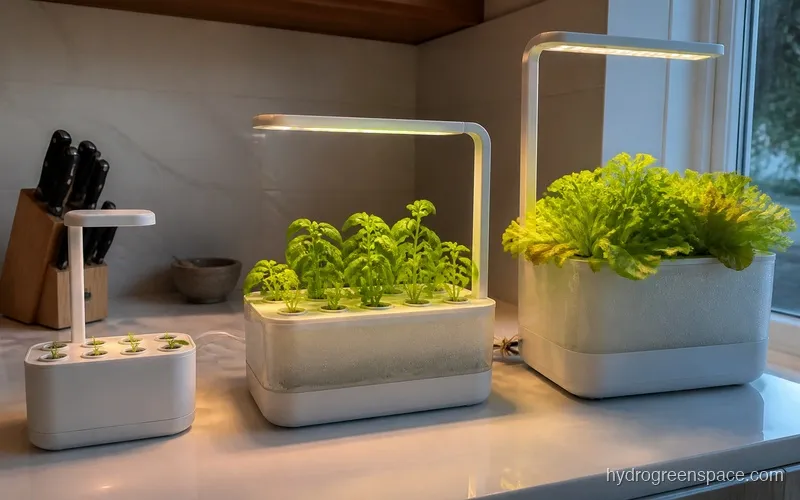
Six pods fills a small shelf. Twenty pods needs a dedicated counter or grow area. Be honest about how much counter space you actually have and how much you’ll realistically harvest. A 9-pod system you actually use beats a 20-pod system that crowds your kitchen.
Light Quality and Coverage
Wattage is a rough proxy for grow area and light intensity, but not a perfect one. Full-spectrum LEDs covering the red and blue wavelengths matter more than raw wattage. Look for lights with at least some red spectrum coverage if you ever plan to grow fruiting plants, even compact ones. If the kit spec just says “LED” without spectrum information, it’s probably fine for herbs and greens but won’t push flowers or fruit.
Nutrients: Included vs. Proprietary
Some kits include proprietary nutrient pods (AeroGarden does this). That works well out of the box but locks you into buying their refills. Other kits include a general-purpose liquid nutrient that you can eventually swap for any compatible formula. If you expect to be growing for more than a year, proprietary systems cost more over time. Understanding how hydroponic nutrients actually work helps you evaluate this tradeoff early.
Ease of Setup
Every kit claims easy setup. The real differentiator is how forgiving the system is when something goes wrong. Pod systems (AeroGarden, iDOO, LetPot) are almost foolproof because the nutrient delivery and light cycles are automated. DWC and NFT systems give you more control but require you to manage pH, nutrient concentration, and water temp actively. For a first system, automation is worth more than flexibility.
The Upgrade Path (What Happens When You Outgrow It)
Starter kits are stepping stones. The question isn’t just which kit is best now, it’s what happens in 6–12 months when you want to grow more.
Pod systems don’t scale. When you outgrow a 6-pod model, the upgrade is a completely new system, not an expansion. That’s fine if you know it going in. If you think you’ll eventually want to grow tomatoes, peppers, or cucumbers, start with a kit that uses standard net cups and a generic nutrient line rather than a proprietary pod setup. That puts you one step closer to a full DWC or NFT system without starting over.
Best Plants to Start With
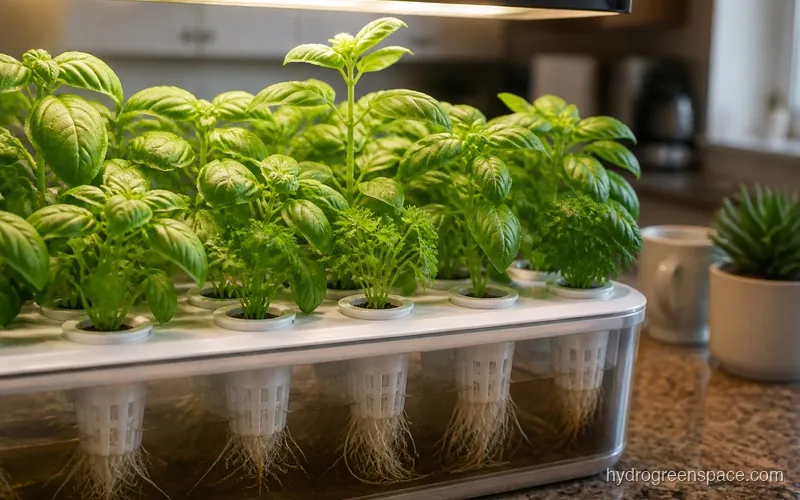
Herbs are the easiest and most rewarding first crops. Basil, mint, cilantro, and parsley all grow quickly, look good in the system, and actually get used in the kitchen. Most beginners who start with herbs stick with hydroponics. Those who start with tomatoes often quit after the first failed grow.
Leafy greens are the second tier. Lettuce, spinach, kale, and arugula take a bit longer than fast herbs but are still forgiving. They’re also the most cost-effective crops to grow hydroponically since store-bought greens are expensive and short-lived.
Mini tomatoes (Sweet 100, Tiny Tim) are possible in most starter kits but need the highest light intensity and the most nutrient management of anything on this list. If growing tomatoes is the goal, check the best hydroponic systems for vegetables before buying a pod kit that may not support them. See also the best seeds to start hydroponically for a full breakdown by difficulty.
FAQ
Is a hydroponic starter kit actually worth it?
For most people, yes. The real cost of starting hydroponics looks intimidating when you price it out as individual components. A bundled kit is almost always cheaper than buying the same parts separately, and you avoid the compatibility issues that come with mixing systems. The bigger question is whether you’ll actually use it, and that comes down to growing something you want to eat.
Does a complete kit include everything?
Not quite. pH testing supplies are almost never included, even in premium kits. Budget $15–$20 for a digital pH pen or a drop test kit. A reliable option is the Apera PH20, which pairs well with any kit on this list. Some kits also don’t include seeds, just seed pod housings. Check the spec sheet carefully rather than assuming from the marketing copy.
Can I grow tomatoes in a starter kit?
Compact varieties in a large-capacity system, yes. Cherry or mini tomato cultivars can work in a 9–12 pod system with strong light. Full-size tomatoes need a dedicated system, not a countertop kit. Most beginners are better served starting with herbs or lettuce and learning the fundamentals before moving to fruiting plants.
What’s the easiest hydroponic system to use?
Pod-style systems (AeroGarden, iDOO, LetPot) are the easiest because they automate light cycles and nutrient reminders. DWC is the easiest non-automated system for experienced growers who want more control. The beginner’s guide to hydroponics walks through the differences if you’re still deciding.
What’s the difference between a starter kit and a full system?
A starter kit is designed to remove barriers to entry: pods are pre-configured, nutrients are included, lights run on a timer. A full system gives you control over every variable (reservoir size, nutrient formula, light spectrum, grow medium) but requires you to manage those variables. Most growers start with a kit and graduate to a custom system once they understand what they’re managing.
Pick a kit, plug it in, grow something. The first successful herb harvest is what turns “trying hydroponics” into a habit. If you want to compare starter kits against other beginner-ready formats like DWC or NFT before committing, the best hydroponic systems for beginners covers all of them in one place. And if you’re still deciding whether the investment makes sense for you, indoor hydroponic gardens are worth it for most home growers but the answer depends on how you plan to use it.