How to Choose Your First Hydroponic System for Beginners
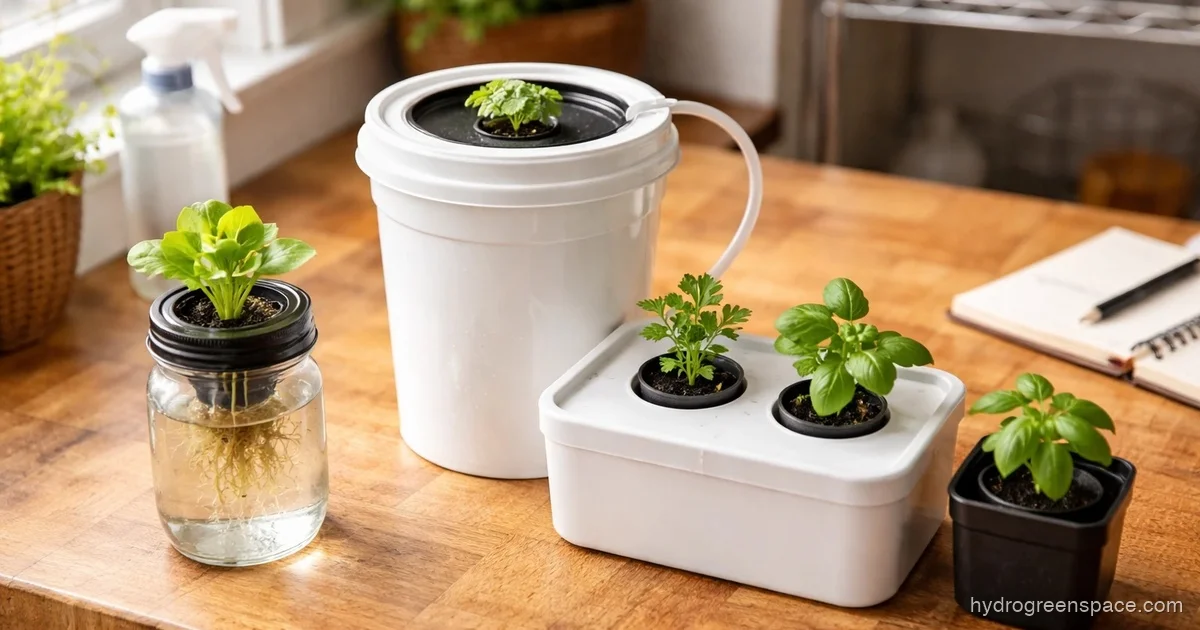
The hardest part of getting into hydroponics isn’t growing anything. It’s deciding which system to start with. You read one article and it recommends DWC. The next one says Kratky is easier. A third tells you to try NFT. An hour later you’ve got seventeen tabs open and you haven’t bought a single thing.
The right system depends entirely on your situation. Your budget, your space, your schedule, and what you actually want to grow will point you toward one clear answer. This guide walks you through those decisions and ends with a specific recommendation for your profile, not a fence-sitting list of “it depends.”
If you want to understand the underlying mechanics before going further, how hydroponics works is worth a quick read first. But if you’re ready to pick a system, keep going.
Stop Trying to Pick the “Best” System
There is no universally best hydroponic system for beginners. That framing is the reason so many people get stuck. What you’re actually looking for is the best system for your specific starting point.
Before you compare any systems, answer these four questions:
- Budget: Are you spending under $50, $50-$150, or more than $150 on your first setup?
- Space: Do you have a windowsill, a small shelf, a closet, or a dedicated grow space?
- Time: Can you check your plants daily, or are you realistically more of a once-every-few-days grower?
- Plant goal: Do you want leafy greens (lettuce, herbs, spinach) or fruiting plants (tomatoes, peppers, cucumbers)?
Your answers to these questions will do more than any pros/cons table to point you toward the right starting system.
If You Have Under $50 and Want to Start This Week: Kratky
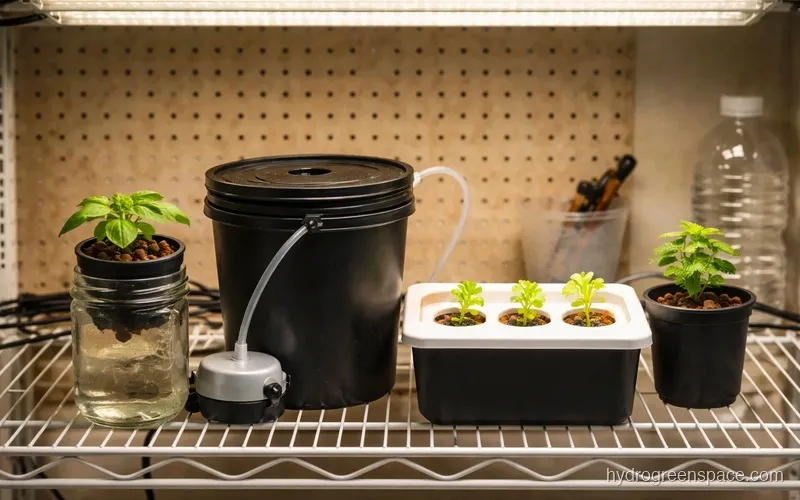
The Kratky method is a passive hydroponic system with no pump, no air stone, no electricity, and no moving parts. You fill a container with nutrient solution, set net pots in the lid, and let the plants drink. As the water level drops, an air gap forms above the roots so they get oxygen. That’s it.
For a $10-$20 investment (a storage tote, some net cups, and a bottle of nutrients), you can be growing lettuce, basil, or spinach within a week. The Kratky setup process is about as beginner-friendly as hydroponics gets.
The tradeoff is that Kratky is slow to course-correct. If your pH drifts or your nutrient mix is off, you won’t know until your plants show symptoms. You also can’t grow thirsty fruiting plants well in a passive system. Tomatoes and peppers drink faster than the Kratky reservoir refills naturally, and you’ll spend your time topping up water constantly.
Pro Tip
Start with a 5-gallon tote, four net pots, and a basic two-part nutrient solution. Grow a head of buttercrunch lettuce. You’ll go from setup to first harvest in about 35-45 days, and you’ll understand nutrients, pH, and root health before you spend a dollar more.
If your budget is under $50 and you want leafy greens, Kratky is your answer. Full stop.
If You Have $50-$150 and Want to Grow More: DWC Bucket
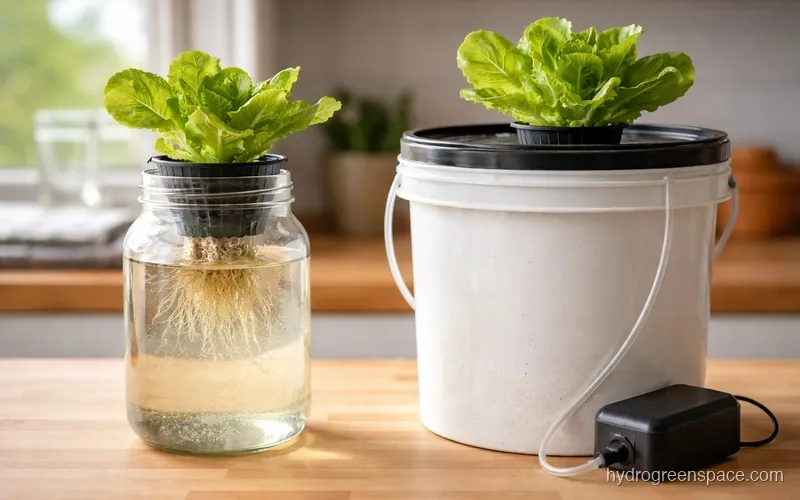
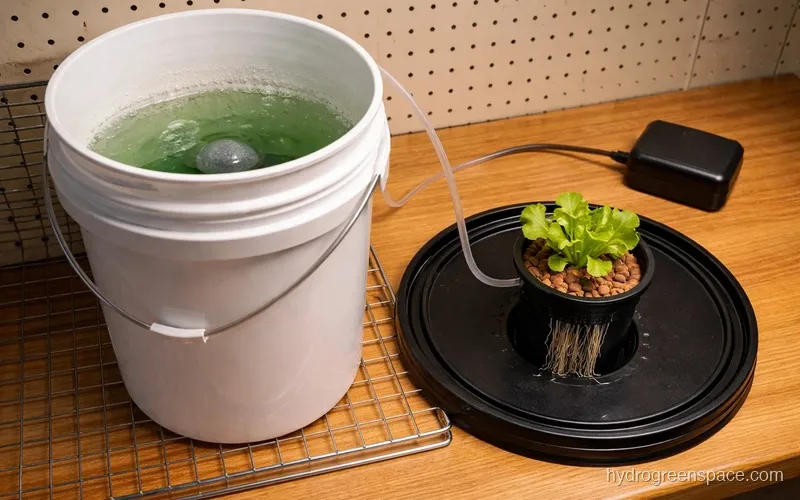
Deep Water Culture (DWC) is the next step up and the system most home growers graduate to from Kratky. Your plant sits in a net pot above a reservoir, its roots suspended in aerated nutrient solution. An air pump runs constantly to oxygenate the water, which is what keeps the roots healthy and drives fast growth.
A single 5-gallon bucket DWC system runs $30-$60 depending on what you already own. It handles leafy greens easily, and it can also support a single tomato or pepper plant if you size the bucket right (5 gallons minimum, 10 gallons is better for fruiting plants).
The learning curve over Kratky is real but not steep. You need to check your reservoir pH and nutrient levels every few days. Roots are more exposed, so root rot is a risk if your air pump fails or your water temperature creeps above 68 degrees F. But those are solvable problems with a $10 thermometer and a decent pump.
DWC is also where you start to see the speed advantage hydroponics is famous for. Lettuce that takes 60 days in soil can finish in 35-40 days in a well-run DWC bucket.
Watch Out
Beginners buy an underpowered air pump. You want at least 1 watt of pump power per gallon of water. A 5-gallon bucket needs a pump rated for at least 5 gallons, ideally more.
For a full cost breakdown of getting started, how much it costs to start hydroponics covers what to expect at each budget level.
If Space Is Your Main Constraint: Kratky Jar or Compact DWC
A common question from apartment growers is whether you need a lot of space to get started. You don’t. A single mason jar or 1-quart container on a windowsill or under a small LED grow light is a legitimate growing setup.
Kratky in small containers (32 oz mason jars are popular) works well for a single herb or a loose-leaf lettuce variety. You’re not going to feed your household this way, but you’ll grow fresh basil for cooking and understand the system before scaling.
For slightly more space, a 4-site compact DWC unit fits on a 2x2 shelf and can produce enough lettuce and herbs for regular salads. This is roughly the setup in building an indoor hydroponic garden, and it’s a good bridge between “experimenting” and “actually producing food.”
Avoid NFT channels and ebb-and-flow systems in tight spaces. Both require more horizontal footprint and more infrastructure than a small-space grower needs at the start.
If You’re Busy and Can’t Check Plants Daily: Kratky or Larger Reservoirs
The one area where passive systems like Kratky genuinely win over active systems is forgiveness. If you miss a day or two, your Kratky lettuce doesn’t care. There’s no pump to fail, no timer to malfunction.
If you want an active system but know you won’t be checking it daily, the answer is a larger reservoir. A 10-gallon reservoir running 4-6 plants can go 3-4 days between checks once it’s stabilized. A 5-gallon running one plant needs attention every 2-3 days.
Don’t let anyone convince you that hydroponics is maintenance-free. It isn’t. But you can engineer your setup to match your actual schedule by choosing the right system and reservoir size upfront.
When NOT to Start with DWC or Kratky
Both of these systems are excellent starting points for leafy greens and herbs. Neither is the right call if your first goal is tomatoes or peppers.
Tomatoes and peppers are heavy feeders with large root systems and high water demands. A beginner running fruiting plants in a small DWC bucket is going to fight nutrient deficiencies, root crowding, and pH swings all at once, while also trying to learn the basics. That’s a recipe for a failed first crop.
If you’re set on growing tomatoes first, look at an ebb-and-flow system or a larger drip system and start with a single plant. These systems handle larger plants better and give you more control over nutrient delivery. But I’d still recommend running one crop of leafy greens first, just to calibrate your eye before introducing a more demanding plant.
The different types of hydroponic systems breaks down what each system is actually suited for if you want to dig deeper before committing.
Your System by Profile
Here’s the decision collapsed into four clear starting points:
Profile 1: “I want to try this cheaply and quickly” Start with Kratky in a 5-gallon tote. Grow lettuce or basil. Budget: under $30.
Profile 2: “I want a real setup I can grow into” Start with a single 5-gallon DWC bucket. Grow lettuce first, then experiment. Budget: $50-$80.
Profile 3: “I have a windowsill and want fresh herbs” Start with Kratky in mason jars under a small LED clip light. Budget: $20-$40.
Profile 4: “I want to grow tomatoes or peppers” Run one crop of DWC lettuce first. Then move to a larger drip or ebb-and-flow setup for fruiting plants. Budget: $100-$150+ for the fruiting setup.
If you want to skip straight to a curated recommendation with product specifics, best hydroponic system for beginners has that.
One More Thing Before You Buy
The biggest mistake first-time growers make isn’t choosing the wrong system. It’s buying a system and skipping the fundamentals: understanding pH, mixing nutrients correctly, and knowing what healthy roots look like. The hydroponic equipment checklist will make sure you have the basics before you plant anything, and common beginner mistakes in hydroponics is worth reading before your first grow, not after.
Once your first crop is in the ground, the first 30 days of hydroponics walks you through exactly what to watch for week by week. That’s where the real learning starts, and by the time you hit your first harvest, you’ll already know which system you want to run next. For a complete overview of everything a new grower needs before their first plant goes in the water, the beginner guide to hydroponics ties it all together.