Why Hydroponics Is Bad: Real Problems, Honest Fixes
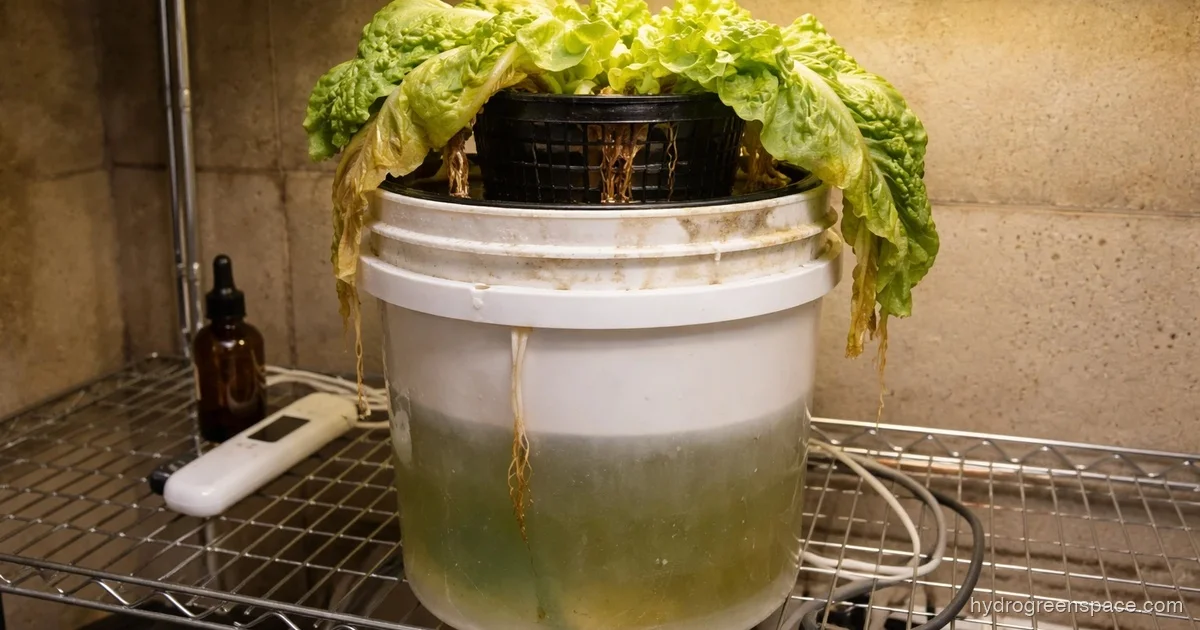
Hydroponics kills crops fast. It costs more than expected. And if you’ve never done it before, the learning curve will punish you. Anyone who tells you otherwise is selling something.
That said, most of the reasons people think hydroponics is bad are either overblown, misapplied, or solvable with a few good habits. The complaints you see on Reddit (“power outage wiped my whole system,” “everything tastes flat,” “once one plant got sick, they all did”) are real. But they’re also specific, and specific problems have specific fixes.
This article takes each major objection seriously, explains when it’s a real dealbreaker and when it isn’t, and gives you a framework at the end to decide whether to start or stop.
The Startup Cost Is Real, and It’s Easy to Underestimate
Hydroponics is not cheap to get into. A basic deep water culture setup (a bucket, air pump, air stone, net pots, nutrients, pH meter, and grow light) will run you $150 to $300 before you’ve grown a single leaf. A proper multi-site system with a dedicated grow tent, ballast, and environmental controls can easily hit $600 to $1,000 or more.
Compare that to a bag of potting mix and some seeds, and yes, the gap is significant.
The cost complaint gets worse because many beginners buy cheap equipment first. A $12 pH meter from an unknown brand will give you drifting readings within a few weeks, and when your plants start yellowing or stalling, you won’t know if it’s a deficiency or a bad reading. You end up buying a real pH meter anyway, plus replacement nutrients after overcorrecting. The $150 setup quietly becomes $350.
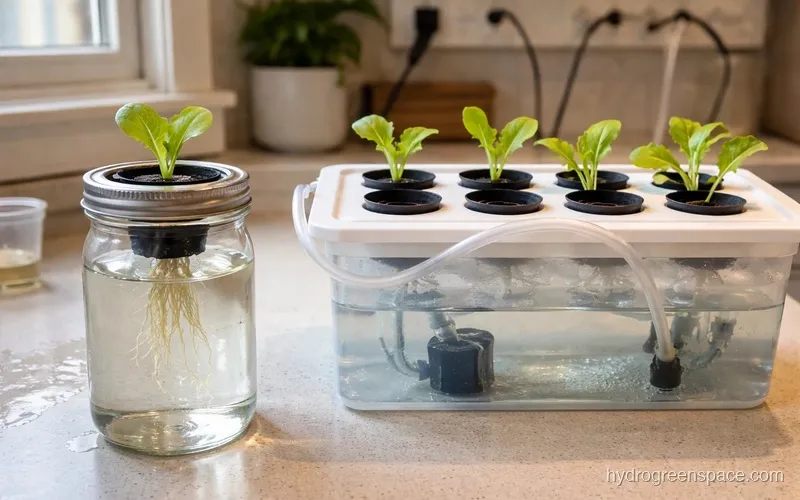
What to do about it: Budget honestly from the start. A reliable pH and EC meter alone should be $40 to $80. For a first system, the Kratky method is the genuine low-cost entry point: no pump, no timer, no electricity for the reservoir. You can grow herbs and lettuce in repurposed jars for under $30. It’s a real system, not a toy.
For anyone considering a larger grow, check what different types of hydroponic systems actually cost to build and operate before committing. NFT and aeroponic systems look cool but have more failure points than a beginner needs.
Power Dependency Is the Biggest Real Risk
“Power outages killed my whole system overnight” is not an exaggeration. In a recirculating system (DWC, NFT, ebb and flow) the roots have little to no buffer if the pump stops. DWC roots are submerged in water. If the air pump goes out, oxygen levels drop fast, and root rot sets in within hours in warm weather. NFT channels run dry in minutes with no pump.
This is probably the most legitimate concern on the entire list, especially for growers in areas with unstable power or frequent outages.
Watch Out
A single overnight pump failure during summer, when reservoir temperatures climb quickly, can wipe a full crop of mature plants before morning. This has happened to experienced growers, not just beginners.
What to do about it: Battery backup UPS units (the same ones used for home routers and computers) can power a small air pump for several hours during an outage. For anything larger, a generator with automatic transfer is worth the investment if you’re growing year-round. The Kratky method avoids this problem entirely by removing the pump from the equation.
This concern genuinely does apply less to hobbyists growing herbs in a small passive setup. It matters most for growers running large active systems in warm climates.
Disease Spreads Faster in Shared Nutrient Solutions
When your recirculating reservoir gets infected (pythium, fusarium, downy mildew in the solution), every plant drawing from that reservoir is exposed at once. Soil acts as a buffer. Each pot is somewhat isolated. A shared nutrient solution is not.
This is where “once one plant got sick, they all got sick” comes from. It’s accurate.
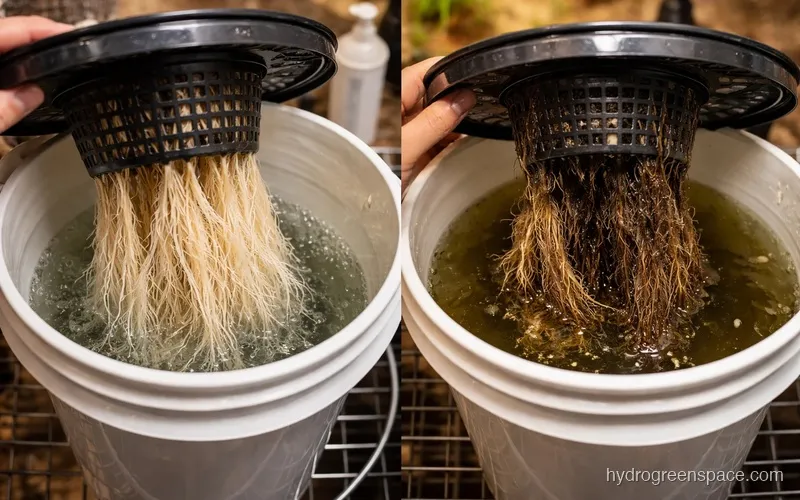
Root rot (pythium) in particular spreads aggressively in recirculating systems. By the time you see slime on the roots of one plant, the pathogen is already in the water column feeding every other plant in the system.
What to do about it: Prevention beats treatment. Keep reservoir temperatures below 68°F (20°C). Warm water holds less oxygen and creates ideal conditions for pythium. Use beneficial bacteria like Hydroguard regularly, not just after a problem appears. If you notice a sick plant, isolate it immediately and don’t delay draining and disinfecting the reservoir.
The Learning Curve Is Steep, and That’s an Honest Problem for Beginners
“Takes too much monitoring, I just want to plant and walk away” is a fair description of what many beginners expect versus what hydroponics actually requires.
Soil has enormous buffering capacity. You can forget to water for a week and most plants recover. You can ignore pH for a season and the soil’s natural chemistry corrects to some degree. Hydroponics has almost none of that. If your pH drifts above 7.0, iron and manganese become unavailable even if your nutrient solution contains them. You’ll see deficiency symptoms and add more nutrients, making the problem worse, not better.
pH monitoring is not optional. EC (electrical conductivity) monitoring is not optional. Water temperature management is not optional. These aren’t advanced skills, but they are skills you have to actually develop, and there is a genuine ramp-up period.
Pro Tip
Spend two weeks growing lettuce in a single Kratky jar before touching any recirculating system. You’ll learn what healthy roots look like, how fast a plant can drink down a reservoir, and what pH drift actually looks like in practice. That baseline makes everything else easier to troubleshoot.
If you want a comparison of how much more forgiving soil growing is for true beginners, the hydroponics vs soil breakdown covers it without sugarcoating either side.
The Flavor and Nutrition Debate Is More Complicated Than It Looks
“The water tastes flat” and “produce tastes bland compared to my garden” show up constantly, and they’re not completely wrong. But they’re also not the full story.
Flavor in fruits and vegetables is driven by a combination of genetics (variety), growing conditions (light intensity, temperature swings, ripening time), and mineral profile of the root zone. Hydroponic produce that tastes bland usually got there through commercial shortcuts: fast growth with excessive nitrogen, harvest before full maturity, or cold storage that degrades volatile flavor compounds. Those are grower decisions, not inherent flaws in hydroponics.
On the nutrition question, the nutrient content of hydroponically grown food is comparable to conventionally grown food and often better than produce that spent a week in cold chain logistics. The mineral profile of the plant reflects the mineral profile of the solution you feed it. If your solution is well-formulated, your produce will be nutritionally sound.
The organic certification question is real if that matters to you. Most hydroponic operations use synthetic nutrient salts and cannot be certified organic under USDA rules (though this is actively debated). If you want to grow closer to organic principles, DIY nutrients from compost are possible, but they require more careful management than bottled solutions.
Pro Tip
For maximum flavor in hydroponic lettuce, try a “stress period” in the final week: reduce nutrients to plain water, slightly drop temperature, and extend the light cycle. This mimics what a cool fall night does to outdoor lettuce and concentrates the sugars noticeably.
Limited Plant Selection Is a Real Constraint
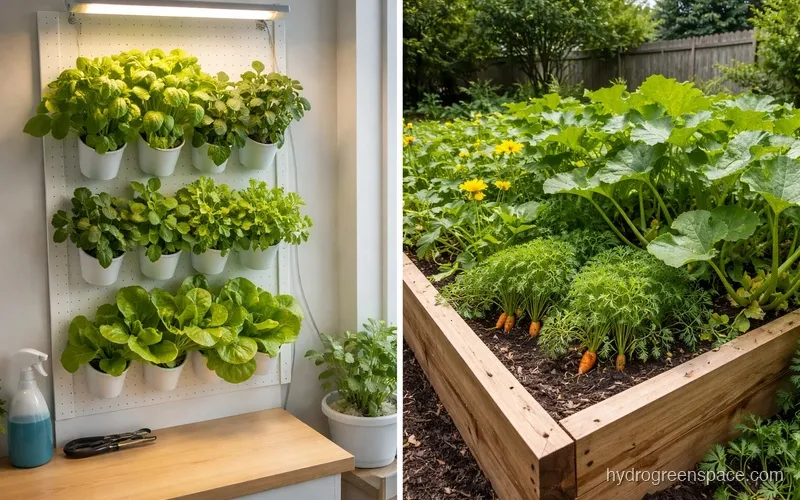
Hydroponics excels at fast-growing leafy greens, herbs, and smaller fruiting plants like peppers and cherry tomatoes. It is genuinely awkward for large root vegetables (carrots, potatoes), sprawling vines that need significant support, and plants with long growth cycles that tie up your reservoir for months.
If you want to grow a diverse kitchen garden that includes beets, squash, sweet potatoes, and melons, hydroponics is not the best use of your space or money.
Who Should Not Start Hydroponics Right Now
The disadvantages of hydroponics add up to a clear “not yet” for some growers:
- You live somewhere with frequent power outages and no backup power option
- You want a low-maintenance system where you check in every few days, not daily
- Your primary goal is growing root vegetables or large sprawling crops
- Your budget is genuinely under $100 and you’re not willing to invest more
These aren’t failures of willpower. They’re honest incompatibilities. There’s no shame in deciding that soil raised beds or container gardening make more sense for your situation right now.
Who Should Push Past These Concerns
The real problems with hydroponics are solvable for anyone who approaches the system deliberately:
- The startup cost is real but manageable if you start small and scale up after your first successful grow
- Power dependency is addressable with a UPS backup for small systems
- Disease spread is preventable with reservoir temperature control and beneficial bacteria
- The learning curve flattens quickly after your first full crop cycle
The reasons hydroponics matters go beyond home convenience. Faster growth cycles, water efficiency, and the ability to grow in spaces where soil gardening is impossible are real advantages. Those advantages don’t disappear because of the problems listed here. For the full picture of what the method actually is and what it can do well, what is hydroponics covers the complete scope.
If you’re on the fence, start with the simplest system possible. Kratky lettuce in a mason jar. One grow light. One plant. Give it 30 days. If you enjoyed dialing it in, you’ll know whether the investment in a larger system makes sense. If you found the monitoring tedious and the result underwhelming, you’ll have found that out for $25 instead of $500.