Rapid Rooter vs Rockwool: Which Should You Use?
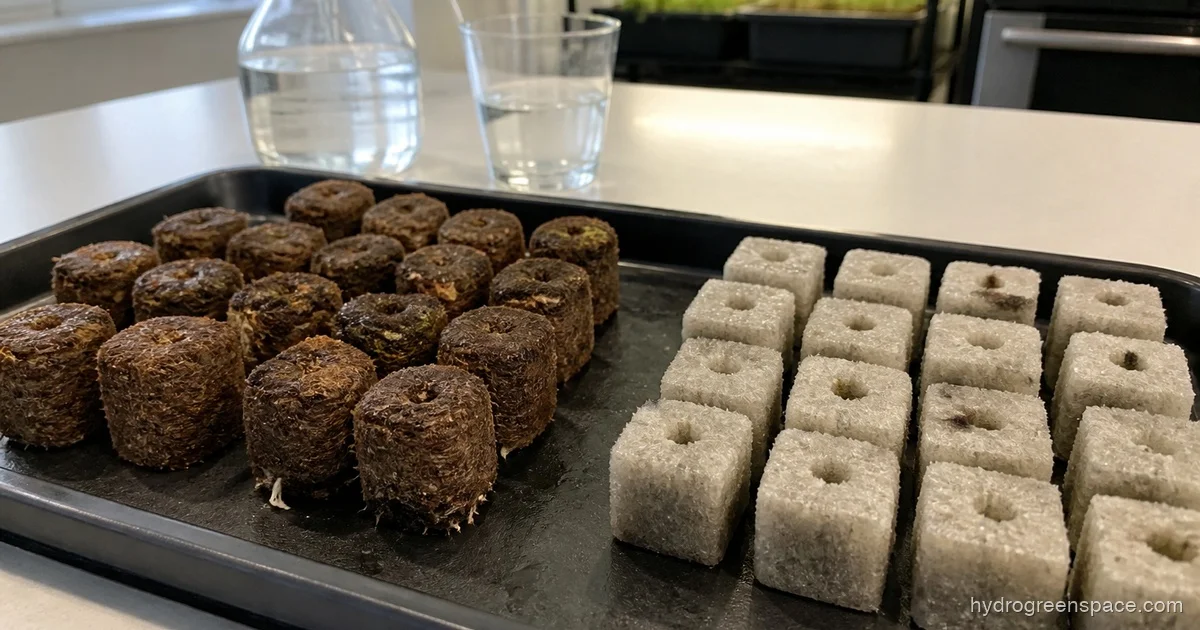
Two starter plugs dominate every hydroponic seed-starting conversation, and growers argue about them constantly. Having used both across lettuce, basil, tomatoes, and clones, the honest answer is that neither one is better overall, but one is almost certainly better for where you are right now, and I want to give you that answer in plain terms.
What You’re Actually Comparing
Before getting into specifics, it helps to understand what each medium is doing. Both rapid rooter plugs and rockwool cubes serve the same purpose: give a germinating seed or fresh cutting a stable home to develop roots before moving into a hydroponic system. They just go about it differently.
Rapid Rooters are made from composted organic material bound together with a plant-derived polymer. They hold moisture well, have a naturally spongy texture that roots love, and come pre-moistened from the bag. They’re also biodegradable, which matters to growers who care about what ends up in their waste bin.
Rockwool (also called stone wool or mineral wool) is spun from volcanic rock and limestone. It’s pH-neutral when properly prepared, holds an excellent air-to-water ratio once you dial it in, and has been the professional horticulture standard for decades. It does not biodegrade, and disposal is a legitimate concern worth thinking about.
Neither is synthetic vs. natural in a meaningful growing sense. Both work. The question is which one fits your situation.
The Biggest Practical Difference
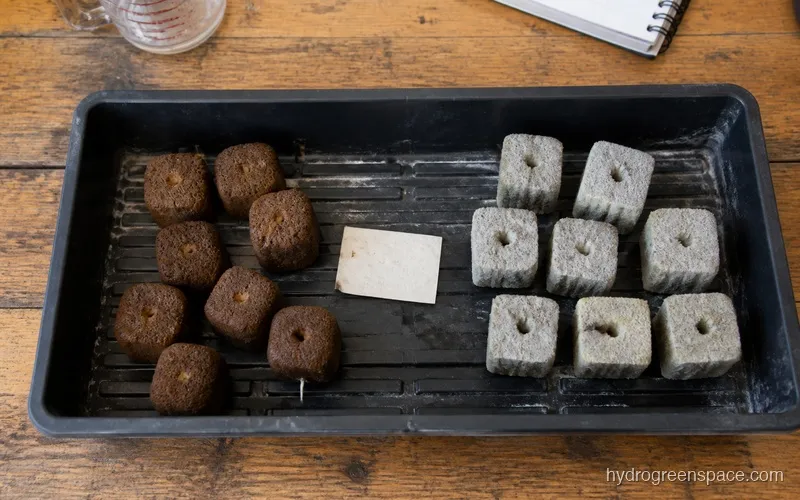
Here’s the thing that trips up most beginners: Rapid Rooters dry out faster than rockwool.
Rockwool holds moisture more consistently because the fibrous mineral structure retains water even as surface evaporation happens. Rapid Rooters, being organic and more porous, can dry at the surface while still holding moisture deeper in, and that drying pattern is unforgiving for cuttings. I’ve seen growers lose an entire tray of clones overnight because the plugs dried out during a warm evening in the grow tent.
If you’re running a propagation setup and you’re not checking on it twice a day, rockwool gives you more margin for error. If you’re attentive and checking regularly, Rapid Rooters can be easier to manage overall because they require less upfront prep.
pH Prep: Rockwool Has a Learning Curve
This is the step that frustrates new growers with rockwool, and rightfully so.
Fresh rockwool has a naturally high pH, usually around 7.5 to 8.0. Seeds and cuttings need to root in a pH range of 5.5 to 6.5 for most hydroponic plants. If you don’t prep rockwool before use, you can damage germination rates and stunt early root development, and if it’s your first grow, you might not even realize the pH prep was the problem.
The prep process involves soaking your cubes in pH-adjusted water (5.5 to 6.0) for at least an hour, ideally overnight. It’s not difficult, but it adds a step and requires a pH meter or drops. If you don’t have a pH meter yet, rockwool is going to cause headaches.
Rapid Rooters skip this entirely. They’re ready to use out of the bag with no pH adjustment needed. That’s a meaningful advantage for beginners who are already juggling a lot of new information. If you’re setting up your first system, understanding nutrient solution basics before adding pH calibration to the list is a reasonable way to pace yourself.
Pro Tip
Which Is Better for Seeds?
For straight seed germination, Rapid Rooters win for most home growers. Here’s why.
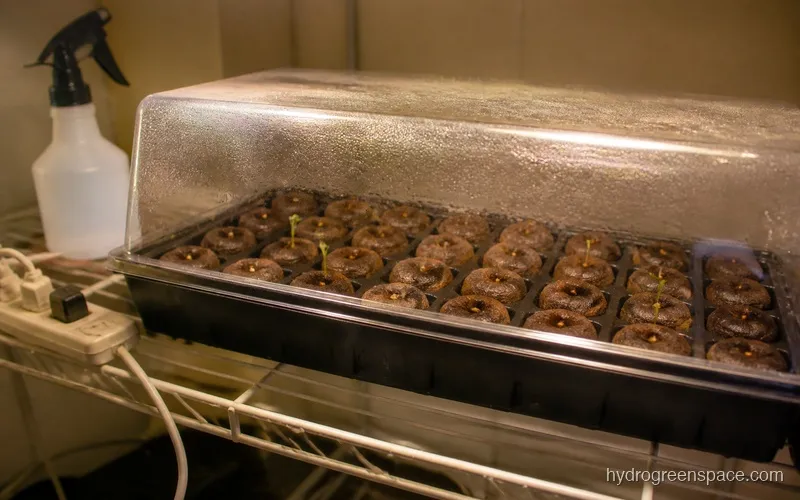
Seeds don’t need a perfectly calibrated pH environment at the moment of germination the way established plants do. They need moisture, warmth, and a medium that holds together without crushing the emerging root. Rapid Rooters nail all three without any prep work. You push the seed in, keep the plug moist, cover with a dome, and check back in a few days.
Rockwool works well for seed starting too, once you’ve done the pH prep. Commercial growers often prefer it because the air-to-water ratio is more predictable and consistent across large trays. For a home grower with a 20-plug tray, the preparation overhead isn’t worth the consistency benefit you’d get at scale.
If you want to explore seed starting beyond both of these, there are solid alternatives to rockwool worth knowing about, including peat pellets, oasis cubes, and coco plugs.
Which Is Better for Clones?
For clones, the answer is more nuanced, and it depends on your attention level and your grow environment.
Rapid Rooters for clones: Great if you’re checking your clone station twice daily, have a good humidity dome, and are growing in a stable environment (not a warm, drafty garage). The organic structure creates a rooting environment that cuttings respond well to, and the plug transfers cleanly into net pots without falling apart. Many home growers have great success here.
Rockwool for clones: The better choice if you can’t monitor closely or if you’re running in a warmer grow space. The moisture retention is more stable, the cubes hold their shape through multiple waterings without degrading, and the consistent air-to-water ratio supports root development reliably. Professional propagators overwhelmingly use rockwool for cloning because it’s predictable at scale.
For a deeper look at propagation strategy and when to clone versus seed-start, I’ve put together a full breakdown of cloning and propagation techniques that’s worth reading before you set up your first clone station.
System Compatibility: DWC, Kratky, and Ebb and Flow
This is where the comparison gets practical fast. The system you’re building matters.
DWC (Deep Water Culture): Both work. Rapid Rooters hold together fine in net pots with clay pebbles around them (a common concern is that they’ll fall apart, but if you transplant carefully and don’t squeeze them, they stay intact). Rockwool’s rigid structure is slightly easier to handle if you’re transplanting into a net pot for the first time. If you’re setting up a DWC system for vegetables or herbs, either medium works as a starter plug.
Kratky: Either works, but Rapid Rooters have an edge here. Kratky systems are passive and low-interference, which suits the Rapid Rooter’s organic composition. You’re not running pumps or flood cycles, so the medium doesn’t need to handle repeated saturation stress. The Kratky method is also a popular starting point for beginners, and Rapid Rooters require less prep, a natural fit.
Ebb and Flow: Rockwool performs better in flood-and-drain systems. The repeated saturation and drainage cycles can break down Rapid Rooters over time, while rockwool handles that cycle indefinitely without structural degradation. For any system with regular flood cycles, rockwool is the more durable choice.
The Environmental Angle
Rapid Rooters are biodegradable and can be composted after use. If you care about what’s going into landfill from your grow room, that’s a real difference.
Rockwool is a mineral fiber that doesn’t break down. It needs to go into general waste (not compost, not recycling), and because fibers can become airborne during cutting or handling, some growers wear a mask when working with it. It’s not toxic in any meaningful sense for normal home use, but it’s not environmentally neutral either. If you’re already looking at growing media comparisons and sustainability matters to you, Rapid Rooters and coco plugs are worth prioritizing.
The Real Decision Tree
Stop asking which is better overall. Here’s the one-question filter:
Are you pH-prepared and monitoring daily?
-
No to either: Start with Rapid Rooters. They skip the pH prep step, come ready to use, and are forgiving for seeds. Once you’ve run a successful grow and have your pH meter dialed in, you can try rockwool for clones and see if the precision appeals to you.
-
Yes to both: Try rockwool. It rewards attention, delivers consistent results once prepared correctly, and is the right medium for ebb and flow systems and high-volume propagation.
When to Use Each One
| Situation | Choose |
|---|---|
| First grow, germinating seeds | Rapid Rooter |
| Cloning in a warm or dry environment | Rockwool |
| DWC or Kratky system | Either (Rapid Rooter easier) |
| Ebb and flow or flood/drain system | Rockwool |
| No pH meter yet | Rapid Rooter |
| Experienced, monitoring closely | Either |
| Want biodegradable option | Rapid Rooter |
| High-volume propagation | Rockwool |
If you’re learning how to use rockwool effectively, the preparation process is more involved than most tutorials admit, but it’s genuinely worth learning. If you want to understand the full range of propagation medium options before committing, the best growing medium comparison covers everything from coco coir to perlite to oasis cubes in one place.
Once your seedlings have rooted out and you’re ready to move them into your system, the next challenge is transplanting without shocking them, and that transition is where a lot of home growers lose plants that started perfectly healthy.
If you’re just getting started and want to understand the full seed-to-system process, the seed starting for hydroponics guide covers everything from germination through transplant.
Pick the one that fits your setup today. You can always switch. The goal is to get something rooting so you can start growing.