
Fungus Gnats in Hydroponics: Causes & Fast Fixes
You switched to hydroponics partly to avoid the soil problems (pests, pathogens, mess). Then tiny flies started hovering around your reservoir and you told yourself they must have come from somewhere else. They didn’t. Fungus gnats in hydroponics are a real and common problem, and the growers who dismiss them early are the ones who end up with damaged root zones and mysteriously slow plants weeks later.
The good news: once you understand what these insects are actually feeding on in a soilless system, getting rid of them is straightforward. Here’s what you need to know.
Why Fungus Gnats Show Up in a Hydroponic System
The “no soil = no gnats” logic makes sense until you understand what fungus gnats actually need. They’re not after dirt. They’re after moisture, organic matter, and algae. Hydroponic systems, especially those with exposed reservoirs, net pots with grow media, and any surface where light hits nutrient-rich water, offer exactly that.
Algae growth in your system is one of the biggest hidden attractants. A thin green film on the inside of a reservoir lid or around the base of your net cups gives female gnats an ideal egg-laying surface. Biofilm on tubing and grow media like hydroton or rockwool adds to it. Adults are weak fliers, so once they’re in your grow space, they don’t need much encouragement to stay and breed.
DWC and Kratky systems are especially prone because the reservoir sits for long periods without disturbance. NFT and ebb-and-flow systems see them less often, but any wet, algae-prone surface is a potential habitat.
The Life Cycle Gap That Trips Up Most Growers
This is where most one-time treatments fail. The fungus gnat life cycle runs about 17 days from egg to adult: egg (4-6 days), larva (10-14 days across four instars), pupa (4-6 days), adult (7-10 days). Adults are visible and annoying, but adults don’t damage your plants. Larvae do.
Fungus gnat larvae are tiny, translucent, and live in and around your growing medium and root zone. They feed on algae, biofilm, and organic debris, but when populations are high and food is scarce, they will chew root hairs. In a hydroponic system, root damage from larvae creates entry points for pathogens, which is how a mild gnat problem turns into a root rot in hydroponics situation you weren’t expecting.
If you treat adults only, you’ll see the flies disappear for a few days, then return. The larvae you didn’t kill are still in your media, pupating and emerging. You need to break the cycle at the larval stage, not just the adult stage.
How to Get Rid of Fungus Gnats in Hydroponics
Step 1: Confirm You Have Fungus Gnats (Not Shore Flies)
Before you treat, make sure you’re dealing with fungus gnats and not shore flies, which look similar and appear in the same environments. Fungus gnats are slender with long legs and a Y-shaped wing vein you can see under magnification. Shore flies are stockier, dark, and have shorter legs. Treatment overlaps, but BTI (more on that below) specifically targets fungus gnat larvae, not shore flies.
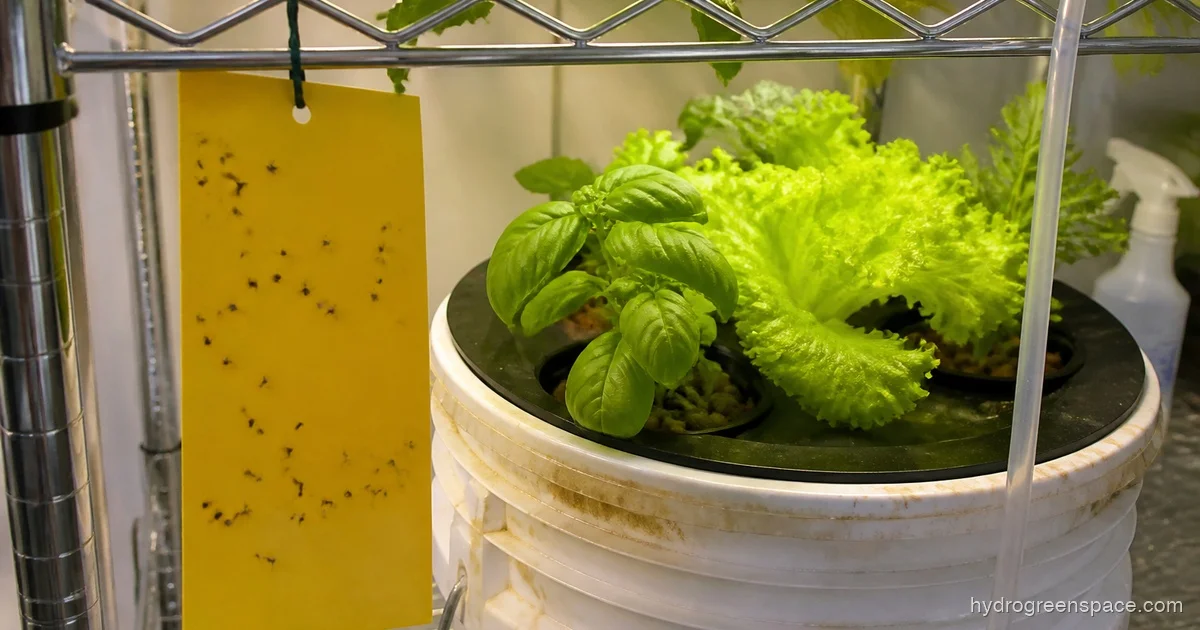
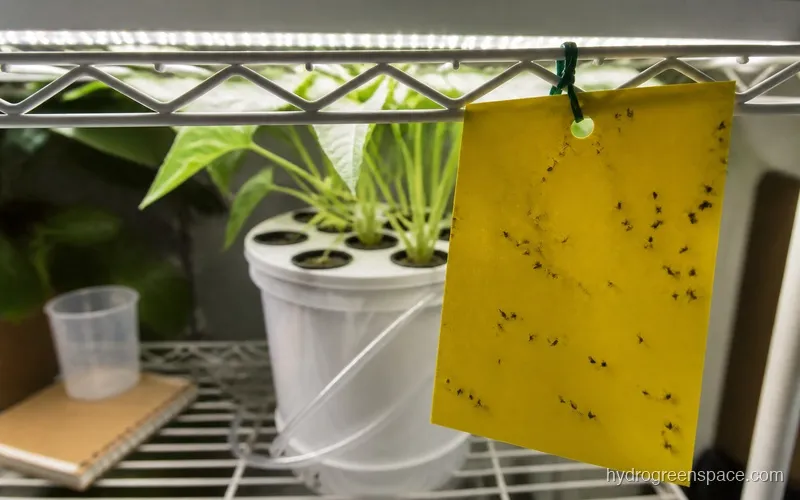
Yellow sticky traps hung just above plant height will catch adults of both types. Stick one near your reservoir lid and one near any grow media surface. Count the catches over 48 hours to understand how heavy your infestation is.
Step 2: Treat the Root Zone and Reservoir with BTI
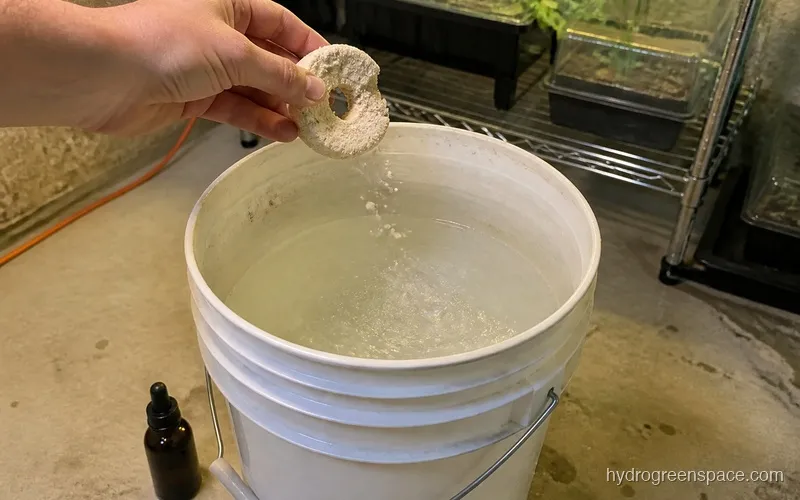
Bacillus thuringiensis israelensis (BTI) is the most effective tool you have for killing fungus gnat larvae in a hydroponic system. It’s a naturally occurring soil bacterium that produces proteins toxic to gnat larvae when ingested, while being completely safe for plants, beneficial microbes, fish, and humans. Mosquito Dunks are the easiest to find retail form. Gnatrol is the commercial liquid version.
For a hydroponic reservoir, crumble a quarter of a Mosquito Dunk into a gallon of water, let it soak for 30 minutes, then add that water to your reservoir. Repeat every 5-7 days for at least three weeks. You’re targeting multiple generations, so consistency matters more than concentration. BTI won’t harm your nutrient solution or pH significantly, but check your pH after adding any new substance.
This is the treatment to lead with over hydrogen peroxide because BTI is specifically lethal to larvae, persists in the water longer, and doesn’t stress roots the way H2O2 can at higher concentrations.
Step 3: Hydrogen Peroxide Reservoir Flush (Optional Boost)
Hydrogen peroxide (H2O2) is useful as a supplementary treatment, especially if you’re also dealing with cloudy reservoir water or biofilm. It kills larvae on contact and oxygenates the root zone at the same time.
Use 3% H2O2 at 1 teaspoon per gallon of reservoir water. Add it to a reservoir change (not on top of an active nutrient solution you plan to leave for days), and let it circulate for a couple of hours before refilling with fresh nutrients. Higher concentrations will damage root hairs, and going above 1:1,000 dilution is unnecessary.
Warning: Don’t mix BTI and H2O2 in the same reservoir application. H2O2 will kill the living bacteria in BTI before they have a chance to work. Use H2O2 for a reservoir flush, then reintroduce BTI in the next fill.
Step 4: Physical Controls for Adults
While you’re breaking the larval cycle, yellow sticky traps slow adult reproduction by catching females before they lay eggs. Hang them at plant canopy height, not ceiling height. Replace when they’re full rather than waiting for a fixed schedule.
If you have good air movement in your grow space already, a small fan directed across the canopy makes it harder for adults to land and lay eggs. Fungus gnats are poor fliers. They don’t need to be killed by the fan, just discouraged.
Fungus Gnat Prevention in a Hydroponic System
Getting rid of an active infestation is step one. Not having the next one is what actually saves your grows.
Control light exposure on your reservoir. Algae grows where light hits nutrient-rich water. Black reservoir lids, light-blocking tape over any gaps, and dark tubing all reduce algae habitat. If your system has a lot of exposed grow media around net pots, cover any gaps with aluminum foil or a neoprene insert.
Run a clean reservoir change schedule. Stagnant water between changes gives biofilm time to establish. Changing your reservoir every 7-10 days in active grow, and wiping down the inside walls every other change, removes the biofilm layer gnats lay eggs in. It takes five minutes and makes a real difference.
Quarantine new plants. If you’re moving plants in from soil or bringing in cuttings, fungus gnat eggs can hitchhike on roots or wet media. A brief hydrogen peroxide root rinse (same 1 tsp per gallon ratio, 5 minutes, then plain water rinse) before introducing new plants to your system is worth the extra step.
Keep grow media dry at the top surface. In systems where the top of the media is exposed, letting it dry slightly between watering cycles removes the moist surface that gnats prefer for egg-laying. This is easy to control in ebb-and-flow. In drip systems, reduce top drip frequency if possible without stressing the plant.
For growers who also run seed starts or propagation trays, mold problems in hydroponics and fungus gnats often appear together because the conditions that favor one favor the other. Treat both at the source: airflow, light control, and clean media.
When Gnats Cause Bigger Problems
A light gnat population in a healthy system is mostly a nuisance. What makes them genuinely dangerous is the cascade: larvae chew root hairs, small wounds appear in the root zone, and those wounds are entry points for Pythium and other water molds. By the time you notice wilting despite healthy water or see unexplained slow growth, the root system is already compromised.
The plants most at risk are seedlings and young transplants with underdeveloped root masses. A mature plant can lose some root hairs and keep growing. A two-week seedling can be set back significantly from even mild larval feeding.
If you’ve treated for gnats but your plants still look off, a full reservoir change plus a root inspection is the right next move. Healthy hydroponic roots are white or slightly tan. Brown, slimy, or mushy roots mean the larvae opened the door for something else.
For a broader look at root zone issues and how they connect to gnat damage, the hydroponic troubleshooting guide covers the full diagnostic process. And if your roots are already showing signs of rot after a gnat infestation, root rot in hydroponics is the next thing to read.