
Algae Growth in Hydroponics: Causes and How to Fix It
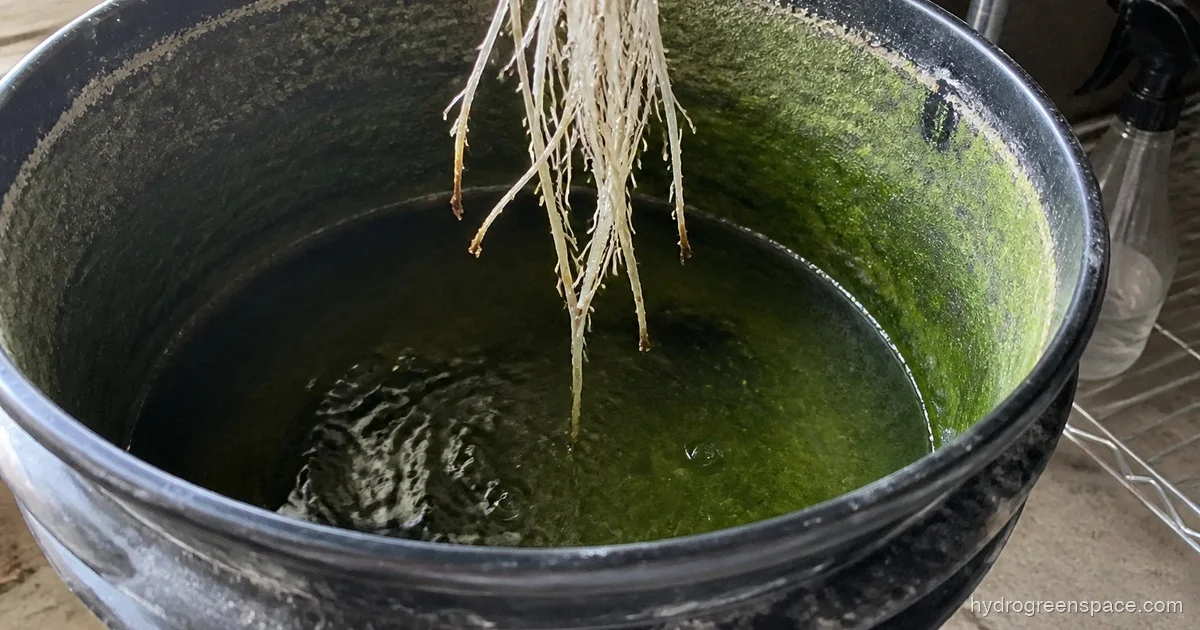
Your reservoir water turned green seemingly overnight. The roots look slimy, there’s a film on the inside of your container, and you’re not sure if your plants are still okay. Algae growth in hydroponics is one of the most common problems home growers run into, and it almost always means the same thing: light is getting into your nutrient solution. Here’s exactly why it happens and how to get rid of it for good.
What Causes Algae in a Hydroponic System
Algae needs three things to thrive: light, water, and nutrients. A hydroponic reservoir provides all three in abundance. The moment light hits your nutrient solution, even a tiny amount filtering through a translucent lid or around a net cup, you’ve created perfect conditions for algae to take hold.
The most common culprits:
- Translucent or clear containers. A white bucket lets in a surprising amount of indirect light. Clear buckets are the worst offenders.
- Uncovered net cup openings. In DWC systems, the space around your net pots is often left open to the air and light.
- Grow light proximity. Powerful LEDs and T5s scatter light in all directions. Any reflective surface nearby can bounce light toward your reservoir lid seams.
- Warm water temperatures. Algae thrives in the same 65-80°F range your plants prefer, but water above 72°F is especially hospitable. Cooler water (62-68°F) slows algae growth significantly.
Different types of algae show up in different systems. Green algae is by far the most common and what most growers see first. Brown algae (diatoms) tends to appear in systems with lower light levels and higher silica in the water. Red algae is rare in home systems but shows up in saltwater setups. For our purposes, green algae is the one you’re fighting.
Why Algae Is Actually a Problem (Not Just Ugly)
A lot of growers wonder if a little algae is really a big deal. The honest answer: a small amount on the walls of your reservoir is not going to kill your plants tomorrow. But it will cause problems if you ignore it.
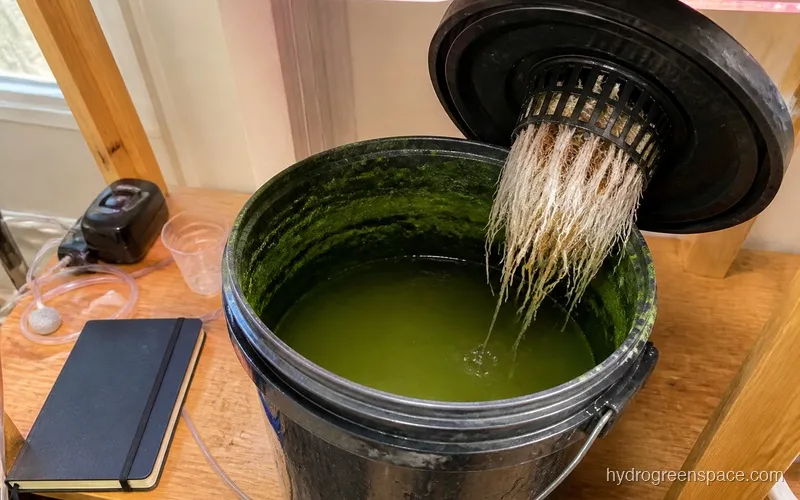
Dissolved oxygen depletion. Algae consumes oxygen at night (it only produces oxygen during photosynthesis in light). In a sealed reservoir, nighttime oxygen depletion can stress roots and create conditions that look a lot like root rot.
Nutrient solution contamination. Algae competes with your plants for nutrients, particularly nitrogen and phosphorus. In a heavily infested system, plants can show nutrient deficiency symptoms even when your solution is correctly formulated.
pH instability. Algae photosynthesizing during the day pulls CO2 from the water, which causes pH to swing upward. At night, respiration pushes it back down. These swings are subtle at first but compound quickly. If you’re constantly fighting pH and can’t figure out why, keeping pH in the right range starts with eliminating algae from the equation.
Fungus gnats. Algae is a primary food source for fungus gnat larvae. If you have algae coating your growing medium surface or your sponge plugs, you’re building a buffet for fungus gnats. The two problems accelerate each other.
Clogged emitters and air stones. Algae films build up on tubing, air stones, and drip emitters. If your air stone is coated in biofilm, it’s not moving as much oxygen as you think it is.
How to Prevent Algae Before It Starts
Prevention is the real payoff here. Treating an active algae outbreak takes time and disrupts your plants. Preventing it takes about five minutes of extra thought when you’re setting up.
Block All Light From Your Reservoir
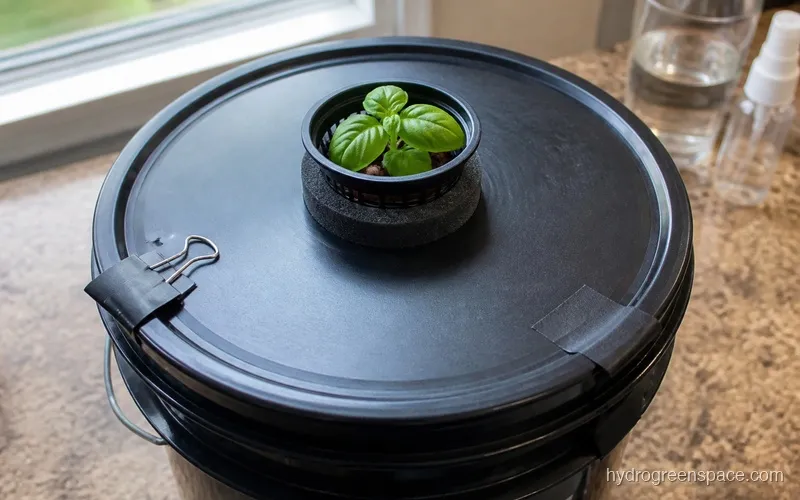
This is the single most effective thing you can do. Use black containers or paint your existing ones. Black reservoirs absorb light instead of transmitting it. If you’re using a lid, tape any gaps around net cup openings with black electrical tape or foam inserts cut to fit snugly around each pot.
Tip: If you want to test for light leaks, put your reservoir in place with the lid on, shut off all your grow lights, and go back in after 10-15 minutes when your eyes have fully adjusted to the dark. Any pinhole of light will be obvious. Seal every one of them.
Keep Water Temperatures in Check
Cooling your reservoir to 65-68°F does two things: it holds more dissolved oxygen (cold water holds more gas than warm water) and it makes the environment less hospitable to algae. If your reservoir is running hot, a DIY water chiller can drop temperatures by 10°F or more without a massive investment.
Cover Growing Medium Surfaces
The top of your growing medium, whether that’s rockwool, clay pebbles, or grow sponges, should be covered to block light where roots first emerge. A sheet of Mylar, a fitted lid, or even strips of black plastic work. When you’re using rockwool, the exposed top surface is a common entry point for algae, especially under strong overhead lights.
How to Get Rid of Algae in Your Hydroponic Reservoir
If you already have algae, you have two options: treat in place or do a full system clean. In most cases, I’d lean toward a full clean if the infestation is moderate or severe.
Hydrogen Peroxide Treatment
Hydrogen peroxide (H2O2) is the most widely used algae treatment in hydroponics, and for good reason. It kills algae without leaving harmful residue, because it breaks down quickly into water and oxygen.
Use food-grade 3% hydrogen peroxide at a rate of about 3 ml per gallon of reservoir water. Add it directly to your reservoir with plants in place. The fizzing you’ll see is it breaking down organic matter, including algae cells.
Repeat treatments every 3-5 days as needed. Avoid overdoing it, as high concentrations can stress roots.
Grapefruit Seed Extract (GSE)
Grapefruit seed extract is a natural antimicrobial that some growers use as an alternative to H2O2. It’s effective at lower concentrations and is gentler on beneficial microbial life if you’re running an organic or bioponics system. Use about 10-15 drops per gallon. It won’t work as fast as hydrogen peroxide, but it’s a solid option for ongoing maintenance.
UVC Sterilizer
A UVC sterilizer inline with your reservoir pump kills algae, bacteria, and pathogens as water passes through the UV light chamber. It’s the most hands-off solution and the most effective for ongoing prevention. They run $30-80 for a quality inline unit. If you’ve had repeated algae problems in the same system, a UVC sterilizer is worth the investment.
Full System Flush Procedure
For a heavy infestation, treat the system this way:
- Remove plants and set them aside in a temporary bucket of fresh nutrient solution.
- Drain the reservoir completely.
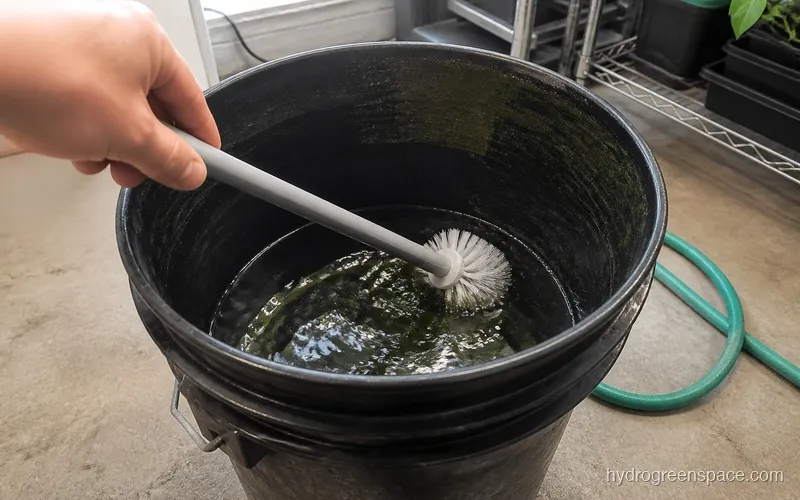
- Scrub all surfaces with a soft brush and a 3% hydrogen peroxide solution or a diluted bleach solution (1 part bleach to 9 parts water).
- Rinse everything thoroughly with plain water, at least twice.
- Let the system air dry for 20-30 minutes.
- Refill with fresh nutrient solution and return plants.
- Fix the light leak before restarting.
What I’d do: I’d do the full clean rather than treating in place whenever the algae has gotten into the root zone. Treating in place is fine for early-stage, surface-level growth, but once algae is coating roots and tubing, a clean slate is worth the extra hour of work.
How to Keep Algae From Coming Back
Algae recurrence is almost always a light leak you missed or a new one that opened up (lids warp, tape peels, net cup covers shift). After any treatment, do another light check before declaring victory.
A few habits that help:
- Top off with cool water. Adding warm tap water raises reservoir temperature and adds a surge of dissolved nutrients, which fuels algae. Use water at or below your current reservoir temperature.
- Clean equipment between cycles. Drain and rinse your reservoir, pump, and tubing at the end of every grow cycle. Algae biofilm left behind seeds the next cycle quickly.
- Check your sponge plugs. If you’re seeing green at the surface of a grow sponge, read up on mold on hydroponic sponges too, because both issues often show up together and have overlapping causes.
- Keep nutrient solution fresh. Stale, old nutrient solution with elevated dissolved organic matter gives algae more to feed on. Change your reservoir every 7-14 days, not just top it off.
If you’ve cleared the algae and your water is still looking cloudy or off, that’s worth investigating separately as cloudy reservoir water can have a few other causes beyond algae.
After clearing algae, the next thing to watch is root health. Oxygen-depleted water from an algae outbreak is one of the fastest paths to root rot in your system.
Algae is one piece of a larger troubleshooting picture. The hydroponic troubleshooting guide covers the full range of system problems, from root zone issues to water quality and pest pressure, with clear steps for working through each one.