Slow Plant Growth in Hydroponics: How to Fix It Fast
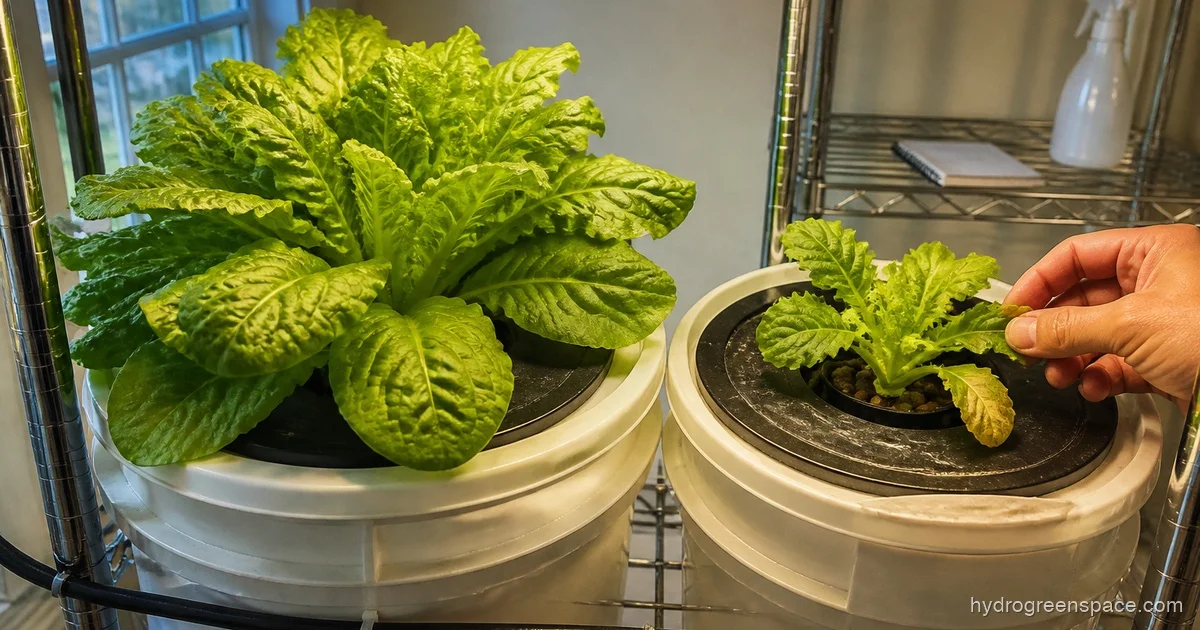
Your hydroponic plants are alive, they’re just not doing much. No yellowing, no obvious rot, no dramatic symptoms. They’re simply… slow. This is one of the more frustrating problems in hydroponics because the usual “check your pH” answer is only part of the story. Slow plant growth in hydroponics almost always has a cause you can track down and fix. You just need to check the right things in the right order.
Here’s a systematic way to work through it.
Start With Light: The Most Underestimated Factor
Light drives photosynthesis, and photosynthesis drives growth. If your plants aren’t getting enough of it, nothing else you do will matter.
The problem is that grow light manufacturers have been notoriously optimistic about coverage areas and output. A 200W LED marketed for a 3x3 tent might produce adequate light in the center and very little at the edges. Plants under the fringe will grow at a fraction of the rate of plants directly beneath the bulb.
Check two things: intensity and duration. Intensity is measured in PPFD (micromoles per square meter per second). Leafy greens want roughly 200-400 µmol/m²/s; tomatoes and peppers in full vegetative stage want 400-600+. Duration matters equally. Most vegetables want 14-18 hours of light during the vegetative stage. Running a 12-hour photoperiod works fine for flowering plants but will slow down your lettuce or basil noticeably.
Tip: If you don’t have a PAR meter, a cheap light meter app on your phone (using lux) can at least tell you whether you have a dramatic drop-off at your plant canopy. Convert lux to PPFD with a rough factor of 0.017 for white LED. Not perfect, but useful for spotting dead zones.
If your light looks adequate, raise it slightly and see if growth picks up. Over-proximity can actually stress plants and slow growth too.
pH: Still the Most Common Culprit
Most growers know to check pH, but not everyone understands why it matters for growth rate specifically. When pH drifts out of the optimal 5.5-6.5 range, your plant can’t absorb certain nutrients even when they’re dissolved in the water at the right concentration. Calcium and magnesium become unavailable above 6.5. Iron, manganese, and zinc get locked out below 5.5. The plant starves in a full nutrient solution.
Stunted growth without obvious deficiency symptoms often means a mild, chronic pH problem. The plant isn’t deficient enough to show spots or curling, it’s just perpetually undernourished. Test your reservoir pH every day for a week if you haven’t been tracking it. If it swings more than half a point daily, you have a drift problem.
Learning how to adjust pH in hydroponics properly (not just splashing pH down and calling it done) is worth doing before you touch anything else in your system.
EC and Nutrients: Too Little, Too Much, or Wrong Ratio
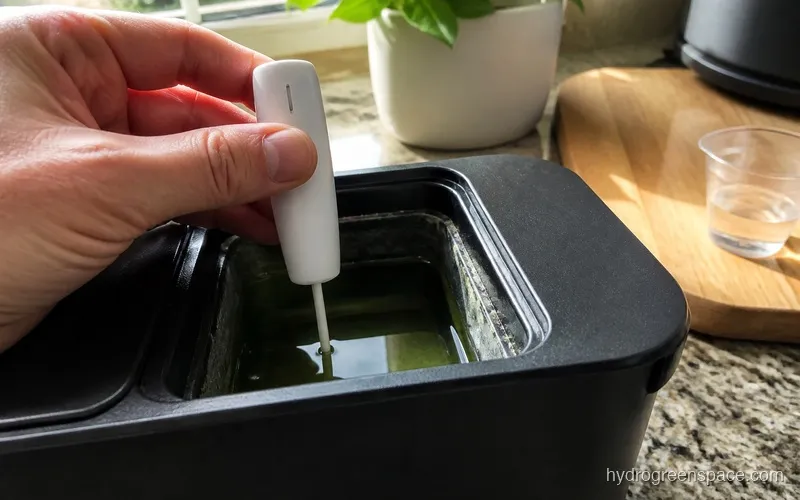
Electrical conductivity (EC) measures the concentration of dissolved minerals in your solution. Plants growing slowly with no other obvious symptoms are frequently running at too-low EC for their growth stage.
Here’s what catches growers out: seedlings and early transplants do best at low EC (0.8-1.2 mS/cm), but once they’re in full vegetative growth, they need 1.8-2.5 mS/cm or higher depending on the crop. If you set your EC at “seedling strength” and never increased it as the plant developed, you’ve been underfeeding it for weeks.
The opposite problem, nutrient burn from excessive EC, is also real. But most growers running slow growth are more likely to be underfeeding than overfeeding.
Equally important: the ratio of nutrients matters, not just the total concentration. Using a base nutrient designed for flowering when your plant is in a leafy vegetative state gives it too much phosphorus and potassium relative to nitrogen. Growth slows, leaves get dark and waxy, and new growth comes in small.
Check your EC with a calibrated meter, compare it to the recommended range for your crop and growth stage, and adjust if you’re running low. A hydroponic nutrient calculator can help you dial in the right concentration without guessing.
Dissolved Oxygen: The Root Cause Nobody Checks
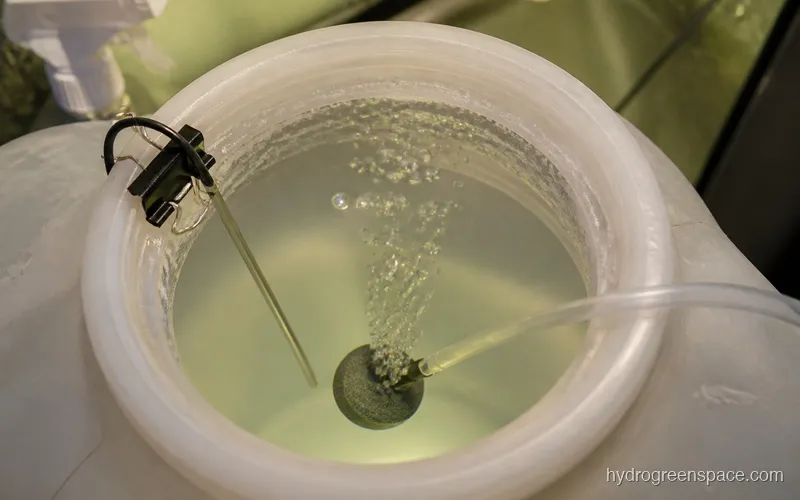
Your plant’s roots need oxygen to absorb nutrients efficiently. When dissolved oxygen (DO) in the reservoir drops below about 6 mg/L, root respiration slows, nutrient uptake suffers, and growth stalls. The plant isn’t deficient and the pH is fine. It’s just suffocating at the roots.
DO drops for two reasons: warm water holds less oxygen than cool water, and a pump or air stone that’s too small for your reservoir volume.
Water at 72°F (22°C) holds around 9 mg/L of DO at saturation. At 80°F (27°C), that drops to around 7.5 mg/L, and by the time roots and bacteria consume their share, you’re borderline deficient. At 85°F+, you’re in root-stress territory regardless of how much you’re aerating.
Common mistake: Running one small air stone in a 20-gallon DWC reservoir and wondering why growth is sluggish. A general rule is 1 watt of air pump output per gallon of water, with multiple stones rather than one large one. More surface agitation means more gas exchange at the water surface, which matters as much as the air stone itself.
If you can’t cool your reservoir, at minimum upgrade your aeration. Root rot in hydroponics is often the downstream result of chronically low DO, and slow growth is the early warning.
Water Temperature and Root Zone Temperature
Water temperature and air temperature are not the same thing, and the root zone is what matters most.
Most vegetable crops want reservoir water between 65-72°F (18-22°C). Below 60°F, nutrient uptake slows dramatically, and some plants (basil especially) will sulk for days after a cold-water reservoir top-up. Above 75°F, you’re inviting pathogen problems and losing DO as noted above.
Air temperature affects canopy growth, but root zone temperature drives nutrient absorption. This distinction trips up growers who keep a warm grow tent without insulating or managing their reservoir. A 75°F grow room with a dark plastic reservoir sitting on a heat-conducting surface can easily run reservoir temps at 78-82°F without the grower knowing.
Measure your actual reservoir water temperature, not your ambient air. If it’s above 72°F, move the reservoir off direct contact with warm surfaces, wrap it in foam insulation, or consider a water chiller for warm-climate grows.
Growth Stage Mismatch
Plants grow at dramatically different rates depending on their life stage, and your expectations might simply be wrong.
A seedling transplanted into a hydroponic system goes through a 5-10 day establishment period where it’s primarily building root mass, not top growth. The stem looks frozen. Nothing appears to be happening. This is normal. The plant is investing energy below the waterline.
Similarly, a plant transitioning from vegetative to pre-flowering slows top growth while it redirects energy to flower site development. If you’re comparing your tomato plant’s current growth rate to the explosive phase it had at week 4, you’re comparing different life stages.
Know where your plant is in its lifecycle before concluding something is wrong. Fast vegetative growth eventually plateaus in any system.
When You’ve Checked Everything and Plants Are Still Slow
If you’ve worked through light, pH, EC, dissolved oxygen, and temperature, and growth is still slower than it should be, look at three less obvious factors:
Root bound or restricted: In net pots or media-filled containers, roots eventually run out of room. A plant that’s root-bound puts less energy into top growth. If your root mass is visibly dense and circling, the plant has outgrown its container.
Algae competing for nutrients: Green water or algae growth in your reservoir consumes oxygen and competes with plant roots for dissolved minerals. It also signals your reservoir is getting too much light. Cover all light entry points and replace your solution.
Hidden nutrient lockout: Even with correct pH, certain nutrient antagonisms cause one element to block another. Excessive calcium supplementation, for example, blocks magnesium uptake even at normal EC levels. If growth is slow and you’ve been adding CalMag aggressively, back off and do a full reservoir flush with fresh solution at correct ratios.
The Right Diagnostic Order
Random troubleshooting wastes time. Work through this sequence:
- Light: intensity and photoperiod (hours per day)
- pH: test the reservoir, target 5.5-6.5, check for drift over 24 hours
- EC: is it appropriate for the growth stage? Most vegetative plants need 1.8-2.5 mS/cm
- Dissolved oxygen: is your aeration adequate? Is your water temperature below 72°F?
- Water temperature: measure the reservoir directly, not the room
- Growth stage: is the “slow period” actually normal for this stage?
- Secondary issues: root binding, algae, nutrient antagonisms
Most cases resolve at steps 2 or 3. If you’re still stuck after step 5, a systematic look at common plant care mistakes can catch things the standard nutrient checklist misses.
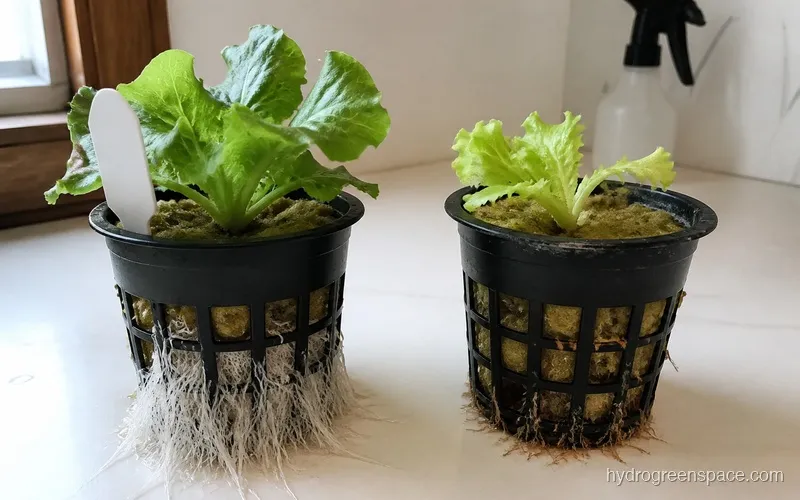
Start from the top of that list, fix what’s wrong, give the plant 5-7 days to respond, and then move to the next. Plants respond slowly to corrections, so resist the urge to adjust multiple variables at once or you’ll lose track of what actually worked.
Once you’ve stabilized growth, the next thing worth dialing in is your light schedule. Getting your grow light schedule right can add meaningful speed to vegetative growth without touching anything in your reservoir.
Slow growth is often the first symptom that something in the system needs attention. If you’re working through multiple possible causes, the hydroponic troubleshooting guide covers all of them in one place, organized by symptom and ordered by likelihood.