Why Are Hydroponics Important? The Real Reasons
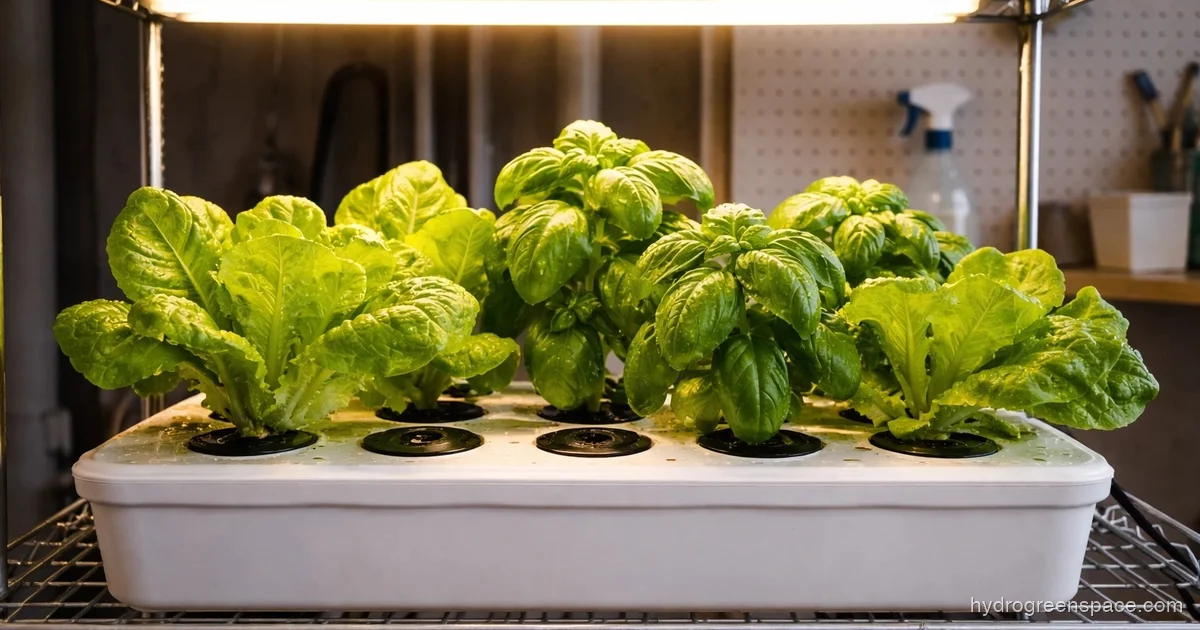
Soil has been growing food for ten thousand years, and it will keep doing it. But soil has limits: it degrades, it gets depleted, it requires specific climates, and it uses water at a scale we’re starting to feel. Hydroponics sidesteps all of that. And the reason it matters isn’t just for massive vertical farms or food scientists. It matters right now, for anyone who wants to grow food reliably and efficiently at home.
If you’ve ever wondered why so many people are making the shift away from traditional dirt gardening, here’s the honest answer. If you’re new to the concept entirely, what is hydroponics covers the basics first.
Growing Without Soil Isn’t a Gimmick. It’s a Different Operating System
The core idea behind hydroponics vs. growing in soil is simple: instead of letting roots search through dirt for nutrients, you deliver exactly what the plant needs, dissolved in water, directly to the root zone. The plant doesn’t have to work as hard. That energy goes straight into growth.
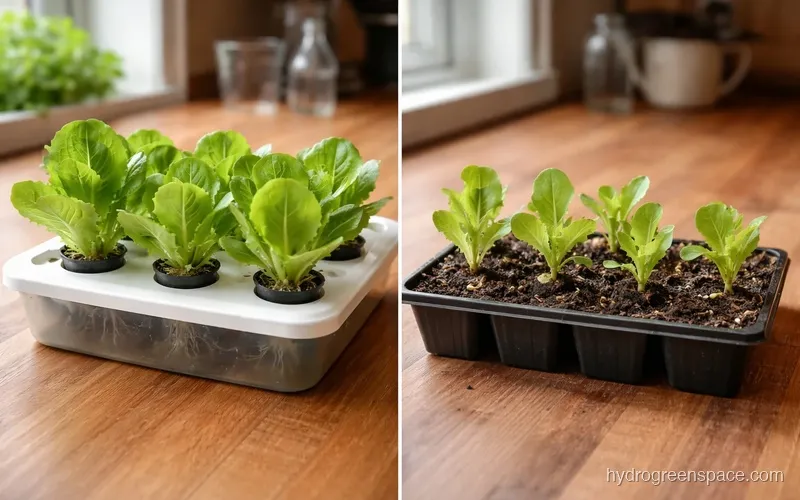
The result is plants that grow 30–50% faster than their soil-grown counterparts, in many cases with higher yields. Lettuce that takes 60–70 days in a garden bed can be ready to harvest in 30–35 days in a well-run hydroponic system. That’s not marketing copy. It’s what happens when a plant has constant access to nutrients and doesn’t burn calories mining for them.
This speed advantage compounds over time. You get more harvests per year from the same space. If you’re growing for your household, that adds up quickly.
Water Conservation Is the Benefit Most People Underestimate
The standard claim is that hydroponics uses up to 90% less water than conventional soil farming. That number sounds impossible until you understand where soil-grown water actually goes: evaporation from the soil surface, runoff, and deep percolation past the root zone. Most of the water you pour into a pot or garden bed never reaches a plant.
In a closed hydroponic system, the water that isn’t absorbed by roots stays in the reservoir and gets recirculated. You top it off, you don’t replace it. A bucket DWC setup for a few heads of lettuce might use 5–6 liters over its entire grow cycle. The same lettuce in a garden bed? Easily 20–30 liters or more depending on climate.
For anyone growing indoors or in a dry region, this isn’t just an environmental talking point. It’s a practical reality that keeps utility costs low and makes growing possible where it otherwise wouldn’t be.
Year-Round Crop Production Changes What “Seasonal” Means
One of the biggest importance-of-hydroponics arguments is year-round growing, and it’s completely valid. Once you move plants indoors under a controlled environment, seasons become irrelevant. You control temperature, light cycles, humidity, and nutrient availability. Basil doesn’t know it’s January. Lettuce doesn’t care that your backyard is under six inches of snow.
This matters most in two scenarios. First, for home growers who want fresh herbs and greens regardless of season. A simple Kratky method setup on a windowsill or under a grow light handles this without much investment. Second, for food security at scale: communities in extreme climates (Arctic regions, deserts, dense urban centers) can use controlled environment agriculture to produce food that would otherwise need to travel thousands of miles.
The ability to decouple food production from geography and season is genuinely significant. A shipping container farm in northern Canada running hydroponics year-round isn’t science fiction. It’s operating right now.
The Environmental Case, Without the Greenwashing
Hydroponics often gets bundled into sustainability marketing in ways that aren’t fully honest. So let’s be precise about what the environmental benefits actually are and aren’t.
What’s genuinely better:
- No agricultural runoff. In soil farming, excess fertilizer leaches into groundwater and contributes to algal blooms and dead zones. In a recirculating hydroponic system, nutrients stay in the loop.
- Reduced pesticide use. Because plants grow in a controlled environment without soil (where most soil-borne pathogens and pests originate), many hydroponic setups run with minimal or zero pesticides.
- Land efficiency. You can produce the same volume of food in a fraction of the footprint, especially with vertical stacking.
What’s more complicated:
- Energy use. Indoor lighting is a real cost, both financially and environmentally. LED technology has made this far more efficient than it was 10 years ago, but it’s still energy input that outdoor farming doesn’t require.
- Setup materials. Reservoirs, grow media, tubing, and plastic net pots all have a manufacturing footprint.
The honest position is that hydroponics is better for water, land, and chemical use, but it trades those gains for higher energy consumption indoors. Whether that trade-off works in your favor depends heavily on your energy source and what you’re growing.
For a deeper look, check out why hydroponics is good for the environment once that guide is live (it covers the carbon math in more detail).
Common mistake: Assuming hydroponics is automatically “more sustainable” without accounting for your electricity source. If your grid runs on coal, the energy use flips the calculus. Solar-powered indoor growing is a different story entirely.
Food Security: Why This Matters Beyond Your Kitchen
The importance of hydroponics in agriculture isn’t theoretical. Global food systems are under pressure from soil degradation (roughly a third of the world’s topsoil has been lost in the last 150 years), freshwater scarcity, and the compounding effects of climate change on growing seasons and arable land.
Hydroponics doesn’t replace field farming. Nothing is going to replace field farming at the scale needed to feed billions of people. But it fills gaps that conventional agriculture structurally can’t. Urban areas can produce leafy greens and herbs locally instead of shipping them across continents. Regions with poor soil quality (think sandy deserts or rocky highlands) become viable growing areas. Food deserts in cities become addressable problems rather than permanent features.
The same controlled environment agriculture principles used in commercial vertical farms are accessible to community gardens, school programs, and small-scale urban operations that don’t have land or soil to work with.
What This Means for You as a Home Grower
All of these global benefits map to real, tangible advantages for someone growing food at home. You don’t need to care about food security policy to benefit from faster growth cycles. You don’t need to care about agricultural runoff to appreciate that your herbs aren’t full of pesticide residue.
Here’s what growing hydroponically actually gives you at the household level:
- Control. You know exactly what’s going into your nutrient solution. There are no unknown soil amendments, no mystery pH. If something goes wrong, you can diagnose it. Check out common mistakes new growers make before your first grow, because most problems are predictable and preventable.
- Speed. Faster harvests mean more food from the same time investment. Those shorter cycles compound quickly across a full year of growing.
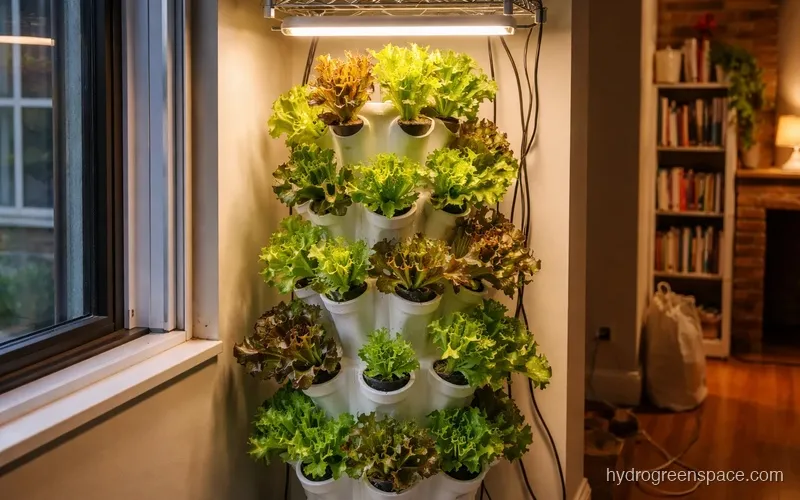
- Space efficiency. No yard required. A spare shelf, a corner of a basement, a windowsill. Setting up a system in your basement is more accessible than most people assume.
- Year-round production. Fresh basil in February isn’t a luxury. It’s just a matter of having a working setup.
What I’d do: If you’re on the fence about whether hydroponics is worth the initial learning curve, start with a passive Kratky system for lettuce or herbs. No pumps, no timers, minimal cost. It will prove the concept in 3–4 weeks and give you a real baseline for what hydroponics actually delivers before you invest in anything more complex.
Is Hydroponic Food Actually Healthier?
This comes up often, and the honest answer is: it depends on what you’re measuring. Hydroponically grown produce isn’t automatically more nutritious than soil-grown. In some studies, hydroponically grown tomatoes show lower levels of certain phytonutrients; in others, they show higher mineral content due to precise nutrient delivery.
What you can say with confidence is that hydroponic food is typically fresher when it reaches you (especially if you’re growing it yourself), which has a real impact on nutrient retention. Vitamins degrade quickly after harvest. A lettuce cut from your system 10 minutes ago is nutritionally different from one that spent 5 days in a truck and 3 more days in a grocery store display.
The nutrient content of your crop will also depend heavily on what you put in your reservoir. If you want to go deep on this, making nutrients from compost at home is one approach that bridges organic nutrition principles with soilless growing.
The Systems That Make All of This Practical
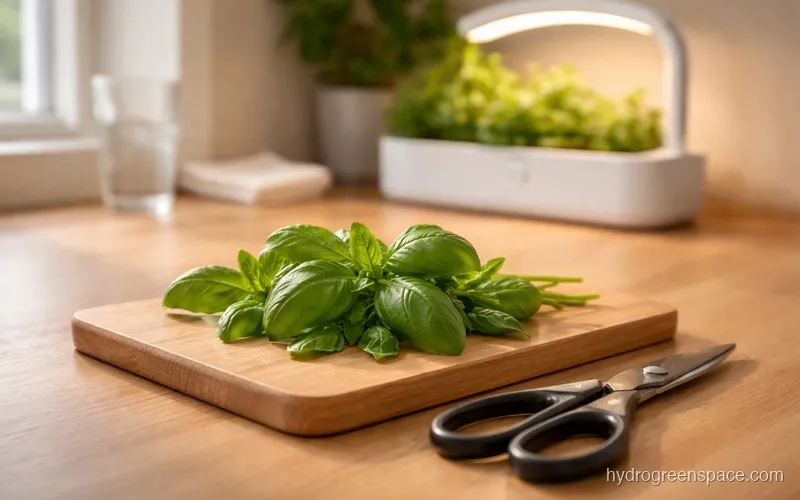
Understanding why hydroponics matters is one thing. Getting into the specifics of different types of hydroponic systems is where the real decisions get made. Deep water culture, NFT, ebb and flow, aeroponics: each one has a different trade-off profile for water use, maintenance, cost, and crop type. For most home growers starting out, the best indoor systems for vegetables come down to three or four well-tested setups that balance simplicity with real performance.
You don’t need to master all of them. You need to find the one that fits your space, your time, and what you actually want to grow.
The case for hydroponics isn’t that it’s perfect or that it replaces everything that came before it. It’s that it solves specific problems (water scarcity, growing season limitations, space constraints, input control) in ways that soil simply can’t match. Whether you’re thinking about it from an environmental angle, a food security angle, or just a “I want fresh tomatoes in December” angle, the reasons stack up fast.
Pick a crop you actually eat. Build or buy the simplest system that can grow it. You’ll understand the importance of hydroponics a lot better after your first harvest than you ever will from reading about it.