
MUFGA Hydroponics Instructions: Complete Setup Guide
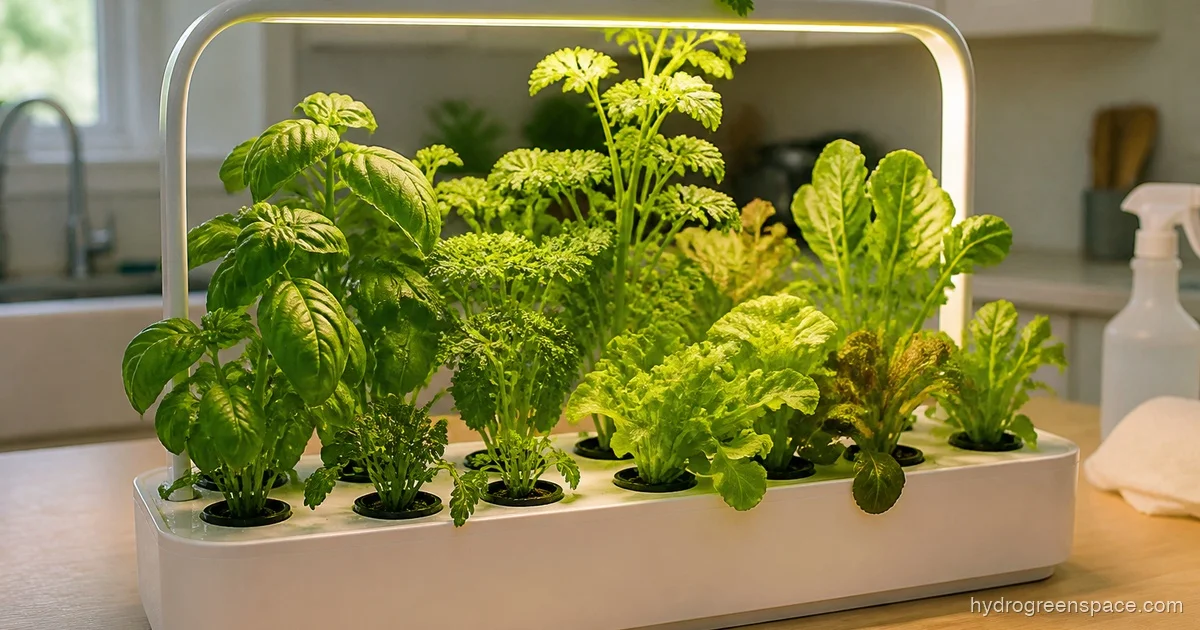
The MUFGA hydroponic growing system comes with an instruction sheet that covers the basics: fill the reservoir, add nutrients, plug it in. What it does not cover is the pod sticker you are about to peel off and throw away (which you should not), the difference between topping off the water and actually changing it, or why your plants are stretching sideways toward the window two weeks in. This is the guide the box should have included.
MUFGA Indoor Hydroponic Garden
A pod-based countertop hydroponic system with adjustable LED grow light, automatic pump cycle, and two-part solid nutrient system. Available in 4-pod, 8-pod, 12-pod, and 18-pod configurations.
Best for: Beginners who want a complete herb and leafy green setup with minimal day-to-day management
Check price on AmazonWhat MUFGA Gets Right Before You Even Start
Most countertop hydroponic systems at this price make you hunt down your own nutrient solution and figure out dosing from scratch. MUFGA includes a two-part solid nutrient kit (Part A and Part B) sized for the 6.5-liter reservoir. Both parts dissolve cleanly, and the ratio is already calculated for the system. That removes the most confusing part of the setup for a first-time grower.
The pump is also pre-set to run on a 30-minute-on, 30-minute-off cycle with no configuration needed. The light timer runs 16 hours on and 8 hours off automatically once you set it at first startup. For a system in the $60 to $100 range depending on pod count, that level of automation is worth naming.
All four pod configurations (the 4-pod, 8-pod, 12-pod, and 18-pod) operate identically. The reservoir capacity, timer settings, and nutrient approach are the same across the lineup. The only thing that changes is how many plants you can run at once.
Setting Up the MUFGA System the Right Way
Fill the Reservoir First, Then Add Nutrients
Fill to the Max line before you add anything else. The reservoir holds 6.5 liters when full, and adding nutrients to an empty or partially filled tank concentrates them temporarily against any sponges that are already in the pods. This is not catastrophic, but it can slow early germination.
Once the water is at the Max line, add Part A, stir until dissolved, then add Part B, and stir again. Do not mix Part A and Part B directly together before adding them to water. The solid particles need to disperse in water first, or they can form compounds that do not dissolve properly. This is not in the MUFGA instruction sheet, but it is a standard practice with A&B nutrient systems.
Tip: Use water that has sat out for a few hours if your tap water is heavily chlorinated. Chlorine dissipates at room temperature and can slow root development in the first two weeks.
The Pod Stickers Are Not Packaging
This is the most commonly missed detail in the entire setup. MUFGA includes round opaque stickers that go over each pod hole in the deck. Most new users peel them off and toss them, assuming they are protective film.
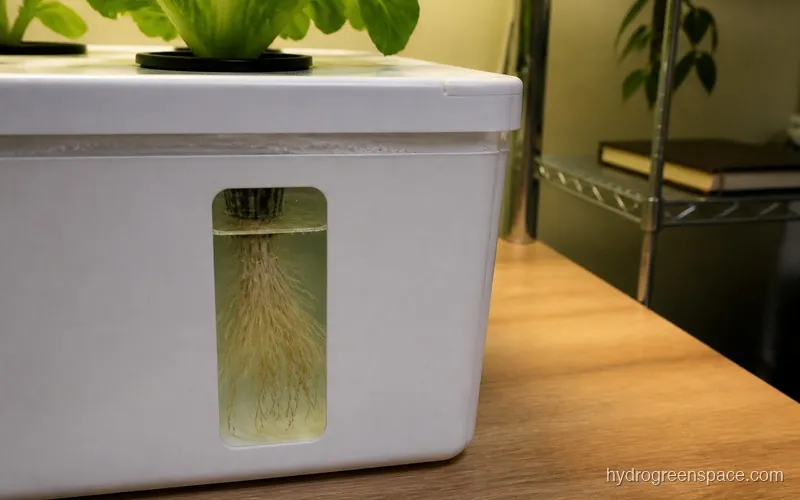
They are functional. Light entering the reservoir through the pod holes promotes algae growth in the nutrient solution. Algae does not immediately kill your plants, but it competes for nutrients and oxygen, and it makes reservoir cleaning significantly messier. The stickers block that light pathway. Press them firmly over each filled pod hole, and use the solid caps provided for any empty pod slots.
If you did not do this on your first fill and you are already seeing green tint developing in the water, that is algae growth in your hydroponic reservoir. A full water change, a thorough reservoir rinse, and installing the stickers before you refill will reset it.
Setting the Light Timer
When you first plug in the MUFGA, the unit will prompt you to set the current time. Do this accurately, because the system uses it to calculate the 16/8 light cycle. Set the current time, and the system handles the rest.
The light arm adjusts from 5.3 inches to 17.7 inches above the reservoir top. For germination, lower the arm to its minimum height to keep warmth and light concentrated over the sponges. Once seedlings are established at 1 to 2 inches tall, raise the arm so the light is about 2 to 3 inches above the highest leaf tip, and keep adjusting upward as plants grow. Plants that are stretching and leaning are almost always too far from the light.
Common mistake: Leaving the light at the lowest setting once plants are 4 to 6 inches tall. At that point you are practically pressing the light against the canopy, which bleaches the top leaves and blocks light from reaching lower growth.
The Water and Nutrients Guide: What Actually Matters
Topping Off Versus Changing the Water
These are two different things and the MUFGA instructions treat them as interchangeable. They are not.
Topping off means adding plain water to bring the reservoir back to the Max line as water evaporates or gets absorbed by plants. Do this as often as needed, typically every two to four days during active growth.
Changing the water means emptying the reservoir completely, rinsing it, and starting fresh with clean water and a full nutrient mix. Do this every two to four weeks. If you only top off without doing full changes, nutrient salts accumulate in the reservoir over time. The concentration climbs, and eventually plants start showing tip burn and slow growth even though the water level looks fine.
The rule of thumb: top off with plain water between refills. Change completely on a two-to-four-week schedule. Mark the date on a piece of tape on the reservoir so you do not lose track.
For a more complete look at nutrient management in pod systems, the guide on how to feed hydroponic plants covers EC, pH, and what nutrient deficiencies actually look like before they get serious.
Should You Use Third-Party Nutrients in the MUFGA?
Yes, once the included packets run out. The MUFGA A&B solid nutrients are a single-use starter kit. For ongoing grows, any standard hydroponic nutrient formula that comes in two parts or more will work in this system.
→Check MUFGA Hydroponic Nutrient Plant Food (A+B Refill) on AmazonThe official A+B refill sized for the MUFGA reservoir. The simplest swap when the included starter packets run out.If you prefer a liquid formula for more precise dosing, General Hydroponics FloraSeries is a reliable two-part option that works well in any pod system at half strength.
→Check General Hydroponics FloraSeries on AmazonA reliable two-part liquid formula that works well in any pod system at half-strength dosing.If you switch to a liquid formula, start at half the recommended dose. The MUFGA reservoir is 6.5 liters and the plants are small (at least initially), so full-strength nutrient concentration is usually more than they need and can cause nutrient burn at the leaf tips. For more on choosing nutrients for a beginner setup, the breakdown of best hydroponic nutrients for vegetables covers both A&B liquid options and simpler all-in-ones.
How the Pump Works and When to Check It
The water circulation pump sits inside the reservoir and runs on the built-in 30-on, 30-off cycle. You will hear it kick on every half hour. It creates water movement that oxygenates the nutrient solution and keeps it circulating to the roots.
Two things to check when you first set up: make sure the pump inlet is not obstructed by the reservoir wall, and confirm the water level is high enough for the pump to function properly. The Min line on the reservoir is the lowest safe operating level. Below the Min line, the pump can run dry, which shortens its lifespan and reduces circulation to the roots.
If the pump sounds like it is straining or making unusual noise, check the water level first. Nine times out of ten it is just running low and needs a top-off.
What I’d do: Every time you top off the water, glance at the pump to confirm it is circulating properly. Two seconds of checking now prevents a problem you would not notice for a week.
What to Grow in the MUFGA System
Best Crops for All Pod Counts
Herbs are the most reliable choice for any pod count:
- Basil (all varieties): fast germination, heavy yield, tolerates the 16-hour light cycle without bolting prematurely
- Mint: vigorous grower; in a 12 or 18-pod system, give it two pods of space because it spreads laterally
- Chives: slower but low-maintenance, steady production for months
- Parsley: takes 3 to 4 weeks to establish before you see any real growth, then produces reliably
- Cilantro: bolt-prone in hot rooms, but performs well when temperatures stay below 72°F
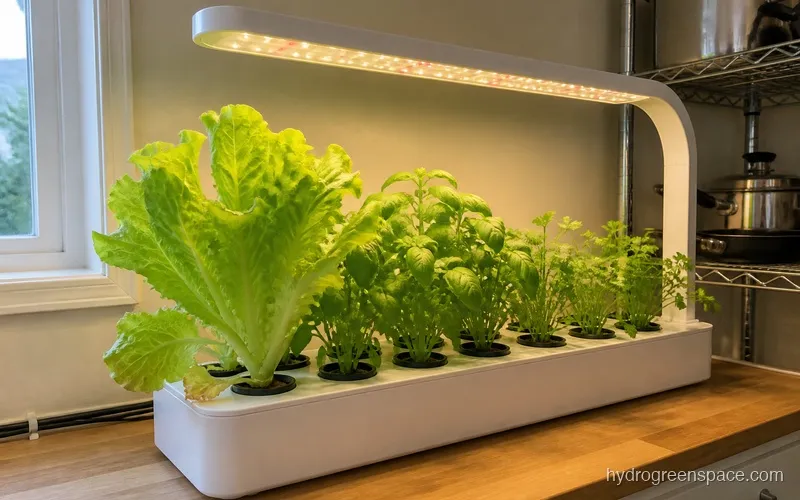
Leafy greens are the best first crop if you want visible progress quickly. Lettuce and spinach germinate within a week and are ready for their first outer-leaf harvest in three to four weeks. If you have never grown anything hydroponically before, start with lettuce in four of your pods and herbs in the rest.
What Does Not Work Well
Cherry tomatoes and pepper varieties are theoretically possible in a large pod system, but the 17.7-inch maximum light height runs out before the plant does. You will be fighting the ceiling by week six. Fruiting plants also need more root space than a small pod sponge provides for long-term production. Stick to herbs and leafy greens.
MUFGA vs Similar Systems: Honest Comparison
The MUFGA sits in a competitive bracket alongside the CRZDEAL indoor hydroponic garden and the Lyko hydroponics growing system. All three are pod systems in roughly the same price range with similar light timers and pump setups.
Where MUFGA has a specific edge: the included A&B solid nutrient kit and the wider range of pod counts. The 18-pod model is genuinely useful if you want a mix of herbs and greens running simultaneously rather than six or eight pods of the same thing. The Growee hydroponics system and Hydropickers grow box target slightly different use cases (Growee leans toward app control, Hydropickers toward enclosed growing), but if you want a straightforward, no-app countertop setup with room to scale the pod count, MUFGA is a reasonable choice.
The comparison that matters most for most buyers: MUFGA 18-pod versus AeroGarden Harvest Elite. The AeroGarden Sprout has name recognition and a companion app, but the MUFGA covers more pods at a lower price and ships with nutrients that are sized appropriately for the reservoir.
Troubleshooting the Common Problems
Pods not sprouting by day 10. Check that the dome covers are seated correctly over each pod. If any are sitting at an angle, press them flush. Check that the pump is running and water is at the Max line. If a pod has not sprouted by day 14, replace the grow sponge and reseed rather than waiting.
→Check PACETAP 50-Pack Grow Sponges on AmazonCompatible replacement sponges for the MUFGA system. Keep a pack on hand so a failed pod does not stall the whole grow.Yellowing leaves in weeks 3 to 4. This almost always means nutrients were not replaced after the initial fill, or the water change schedule has slipped. Do a full reservoir flush, add fresh A&B nutrients, and check that the pump is circulating properly. If yellowing continues after a water change, you may be dealing with a pH issue. The ideal range for most herbs in a pod system is 5.5 to 6.5.
→Check Apera PH20 pH Tester Kit on AmazonA reliable entry-level pH meter with automatic calibration, accurate enough for a countertop pod system without overspending.Water turning green. Algae in the reservoir, caused by light exposure. Check that all pod stickers are in place, that empty pod holes have solid caps, and that the reservoir is not positioned in direct sunlight. A full clean and refill resolves it. The detailed guide on algae in hydroponic reservoirs covers prevention if it keeps recurring.
Leggy plants reaching sideways. The light arm is too high for the current growth stage, or the unit is positioned near a window that is competing with the grow light. Lower the arm until it is 2 to 3 inches above the canopy, and move the unit away from direct window light.
For a full rundown of what trips up first-time growers beyond equipment-specific issues, common beginner mistakes in hydroponics is worth reading before your second grow cycle.
→Check MUFGA Hydroponic Garden price on AmazonWho Should Buy the MUFGA System
The MUFGA is a good fit if you want a pod system with a larger capacity than a 3-pod or 6-pod countertop unit and do not want to pay AeroGarden’s premium for app connectivity you probably will not use. The 12-pod and 18-pod configurations are where it genuinely stands apart in this price range.
It is not the right choice if you want app reminders, a companion growing app, or a system with a branded seed pod ecosystem. The MUFGA works well, but you are managing the nutrient schedule yourself.
If this will be your first hydroponic grow, the setup is straightforward enough to handle the first time through. Get the pod stickers right, do full water changes on a schedule, and keep the light height adjusted as your plants grow. Those three habits account for the majority of problems people run into with this system.
Once you have a harvest or two running smoothly, the guide to the best hydroponic system for beginners is worth reading if you start thinking about what comes next.