
Hydroponic pH Fluctuation: Why It Swings and How to Fix It
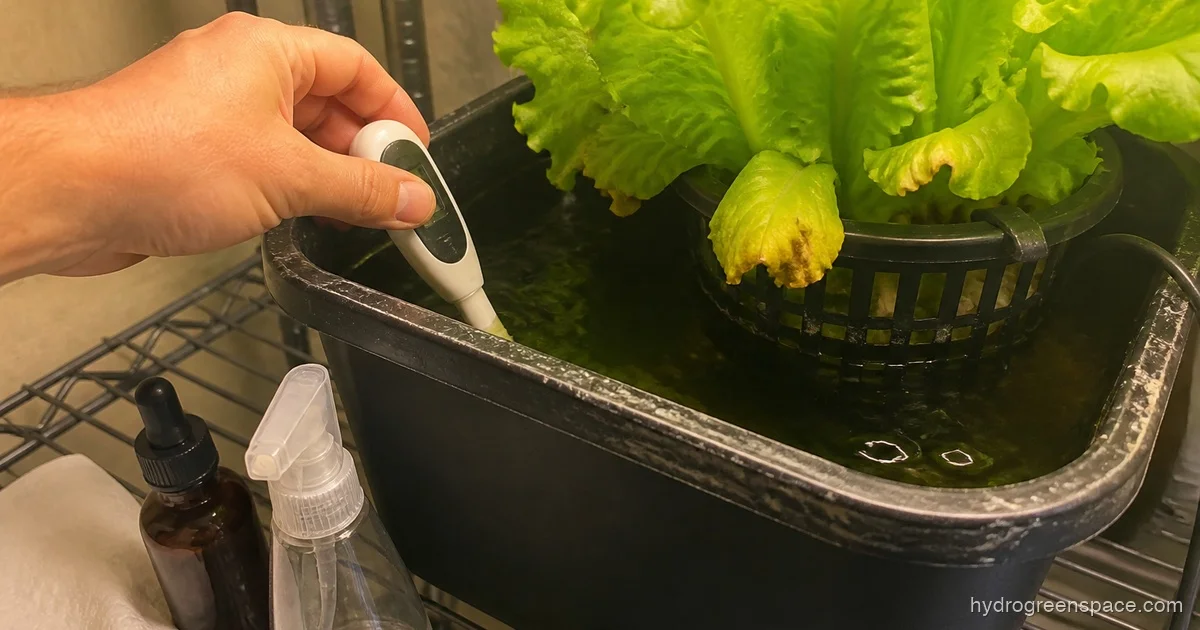
Your pH reads 5.8 in the morning. By evening it’s 6.4. You add pH Down, check again the next day, and it’s at 5.3. So you add pH Up. Two hours later, it’s at 6.1. Sound familiar? This cycle isn’t just frustrating, it’s one of the most common beginner mistakes in hydroponics, and the fix isn’t “check pH more often.” It’s understanding why your pH is moving in the first place.
Hydroponic pH fluctuation problems fall into two distinct categories: pH creeping up and pH crashing down. Each has different causes, and the wrong fix makes both worse. Before you reach for the bottle, figure out which direction your pH is drifting.
Is Your pH Going Up or Down? Start Here
The direction your pH moves tells you almost everything about the cause. Treating both as the same problem leads to weeks of chasing your tail.
Why pH Keeps Rising in Hydroponics
If your pH keeps climbing (especially during the day) the most likely culprits are plant nutrient uptake and algae.
When plants absorb nitrate (NO₃⁻), they release hydroxide ions (OH⁻) into the solution. Hydroxide ions are alkaline, so the more nitrogen your plants are pulling in, the higher your pH drifts. Fast-growing crops like lettuce or basil can push DWC reservoir pH from 5.8 to 6.5 in 24 hours during peak growth. This is actually a sign your plants are doing well, but it still needs managing.
Algae photosynthesis is the other big one. During daylight hours, algae consume CO₂ from the water. CO₂ dissolved in water forms carbonic acid, so as algae pull it out, acidity drops and pH rises. At night, the same algae respire, release CO₂, and your pH drops again. If your reservoir is exposed to light, algae blooms can send your pH on a daily rollercoaster with swings of 1.0 or more across a 12-hour cycle.
Why pH Keeps Dropping in Hydroponics
A falling pH points to acidic inputs, not alkaline ones.
CO₂ from air pump aeration dissolves into water and forms carbonic acid directly. The more you aerate, the more CO₂ gets absorbed, and the more acidic your reservoir gets. This is especially common in DWC systems with large air stones running constantly.
Microbial activity is another cause. Beneficial bacteria in a well-established system produce organic acids as byproducts. Root rot takes this further: pathogenic bacteria and fungi release acids aggressively, often dropping pH by 0.5 to 1.0 within hours. If your pH is crashing overnight and your roots look brown or slimy, treat the root problem, not just the pH.
Plants absorbing ammonium-based nitrogen (NH₄⁺) instead of nitrate also drives pH down, because ammonium uptake releases hydrogen ions (H⁺). If your nutrient formula leans heavily on ammonium sources, that cation/anion uptake imbalance can produce a persistent downward drift.
The Overcompensation Loop (And How to Stop It)
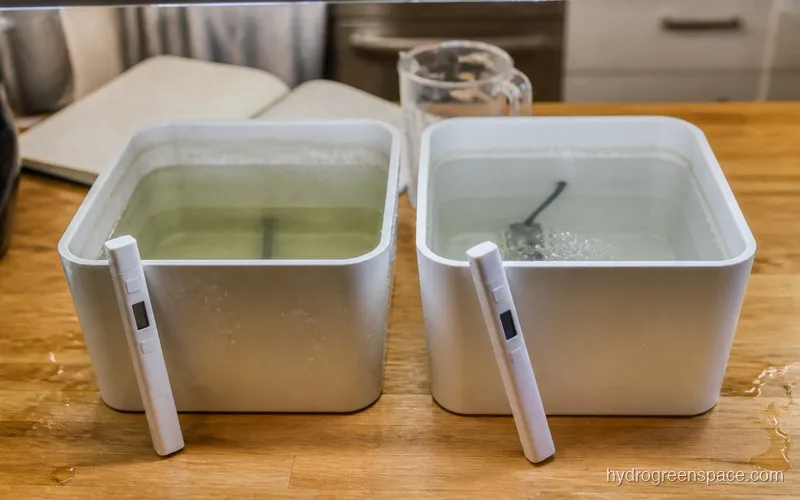
Here’s the trap that catches almost every beginner: you notice your pH is off, so you correct it. Two hours later it’s off again, so you correct it again. Each correction adds more pH Up or pH Down to the reservoir. Those chemicals are concentrated acids and bases, and dumping them in repeatedly creates wild swings that get harder to manage over time.
Common mistake: Correcting pH every few hours. If your pH drifts 0.2 to 0.3 points in a day, that’s normal. Let it ride within the safe window (5.5 to 6.5 for most crops, 5.8 to 6.2 for optimal). Only correct when it sits outside that window for more than a check or two.
The fix for the loop is to address the cause, not to dose more frequently. Use the pH adjustment calculator to calculate the right dose before adding anything, add it to moving water (never to a still reservoir), wait 15 minutes, then check. One careful correction beats five frantic ones.
RO Water and pH: No Buffer, No Stability
Reverse osmosis water has almost no mineral content, which means it also has almost no buffering capacity. Buffer capacity is what allows a solution to absorb pH shifts without changing. Water with some calcium and magnesium naturally resists pH swings. RO water has neither, so every small input (plant uptake, CO₂, bacteria) moves the needle immediately.
If you’re using RO water and struggling with pH instability, you have two options: add a small amount of calcium-magnesium supplement to increase buffering before mixing nutrients, or switch to a pH-stable nutrient formula designed specifically for low-EC source water. Starting with zero buffer and expecting a stable reservoir is setting yourself up for failure.
For a deeper look at how source water affects system stability, the guide on water quality for hydroponics covers mineral content, EC baselines, and how to prepare different water types before adding nutrients.
System-Specific Differences Worth Knowing
Not all hydroponic systems behave the same, and pH drift patterns vary based on system design.
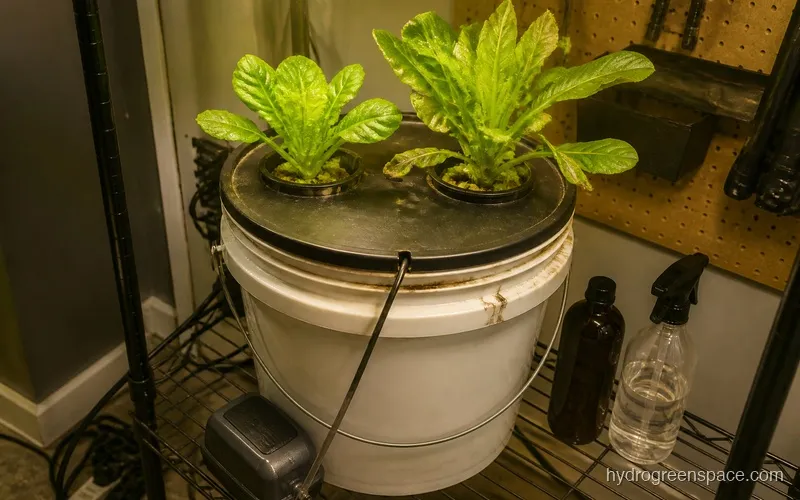
DWC (Deep Water Culture): The large reservoir volume absorbs pH swings better than small systems, but constant aeration increases CO₂ absorption and can drive pH down over time. Cover your reservoir to block light (algae prevention) and reduce gas exchange.
Kratky: No aeration means less CO₂ uptake, which actually makes Kratky more pH-stable than DWC in many cases. The tradeoff is that problems build undetected since you aren’t topping off frequently. Check pH every time you top off, which should be at least every few days during active growth.
NFT (Nutrient Film Technique): The thin film of solution exposed to air creates high CO₂ contact. pH tends to drift down in NFT more than other systems. The small solution volume also means pH changes faster and with less warning. Daily checks are non-negotiable in NFT.
How Often Should You Check pH?
Daily at minimum. Twice daily during fast growth periods or when you’ve recently changed nutrients. A $15 digital pH meter pays for itself within the first week you use it (test strips aren’t accurate enough to catch early drift).
If you’re seeing wild swings (more than 0.5 points in a 12-hour window), something is actively wrong. A stable, healthy system drifts 0.2 to 0.3 points in a day, which falls within the optimal range anyway. Swings larger than that point to algae, root problems, CO₂ buildup, or RO water without buffer.
Tip: Check pH at the same time each day. Morning readings after the lights have been off give you a baseline. Evening readings after a full light cycle show you how much the plants and system moved it. Comparing the two over time reveals patterns quickly.
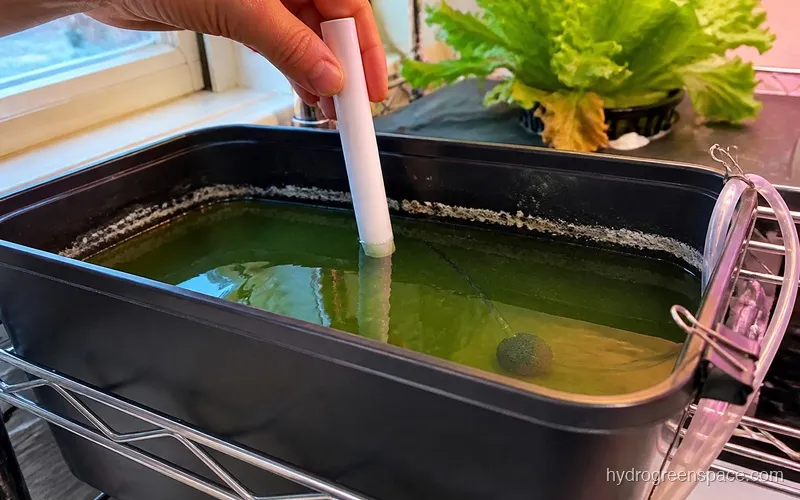
Can low pH kill your plants? Yes. Below 5.5, calcium and magnesium become chemically unavailable, causing nutrient lockout regardless of how much is in the solution. You’ll see brown spots from calcium deficiency and yellowing leaves from locked-out magnesium while the nutrient solution looks perfectly healthy. If your pH stays above 6.8, iron and manganese lock out instead, producing similar symptoms in different leaf positions.
pH Stabilization: What Actually Works
Once you know the cause, the fix is usually straightforward.
Increase reservoir volume. More solution means more buffering. A 5-gallon DWC bucket swings faster than a 20-gallon reservoir under the same plant load. If you’re running small systems, this is often the single biggest lever for stability.
Cover your reservoir. Light exposure causes algae. Algae causes dramatic daily pH cycles. A simple lid made from a foam board or a painted bucket eliminates the problem at its source.
Do partial water changes. Replacing 20 to 30% of your reservoir with fresh nutrient solution every 5 to 7 days dilutes acid or base buildup, resets nutrient ratios, and reduces the opportunity for microbial drift. Many growers skip this step and wonder why their reservoir becomes harder to manage over time.
Don’t overcorrect. One measured dose, then wait. The way you feed your plants also affects pH stability, so adding nutrients to a running system in small, frequent doses is more stable than large weekly dumps that spike concentration and drive pH shifts.
Check aeration in DWC. If your pH keeps drifting down and you’ve ruled out root problems, try reducing air pump intensity slightly. Enough aeration to oxygenate roots without constant CO₂ supersaturation is the target.
Prevention Checklist
Before your next grow, run through this:
- Reservoir covered to block all light
- pH meter calibrated with fresh buffer solution
- Source water tested (know your starting pH and EC)
- If using RO water, calcium-magnesium baseline added before nutrients
- Reservoir size matched to plant count (minimum 1 to 2 gallons per plant in DWC)
- Partial water change scheduled every 5 to 7 days
- pH checked daily, logged so you can spot trends
If you’re still seeing instability after covering these basics, the issue is usually the nutrient formula or the source water quality. The complete guides on how to adjust pH in hydroponics and pH in hydroponics cover both in detail, including how to choose a nutrient formula that holds stable across different water types.
pH drift is one of those problems that looks complicated until you understand the mechanism behind it. Once you know whether you’re fighting rising or falling pH and why, the solution is almost always simple. The growers who struggle longest are the ones correcting symptoms instead of causes. Understand the direction first, identify the source, fix that, and your pH stops being something you fight every day.
pH instability rarely shows up alone. The hydroponic troubleshooting guide covers it alongside the other problems that tend to follow from it, like nutrient lockout, cloudy water, and slow growth, so you can work through them in context.