Nutrient Burn in Hydroponics: Causes, Fixes & Prevention
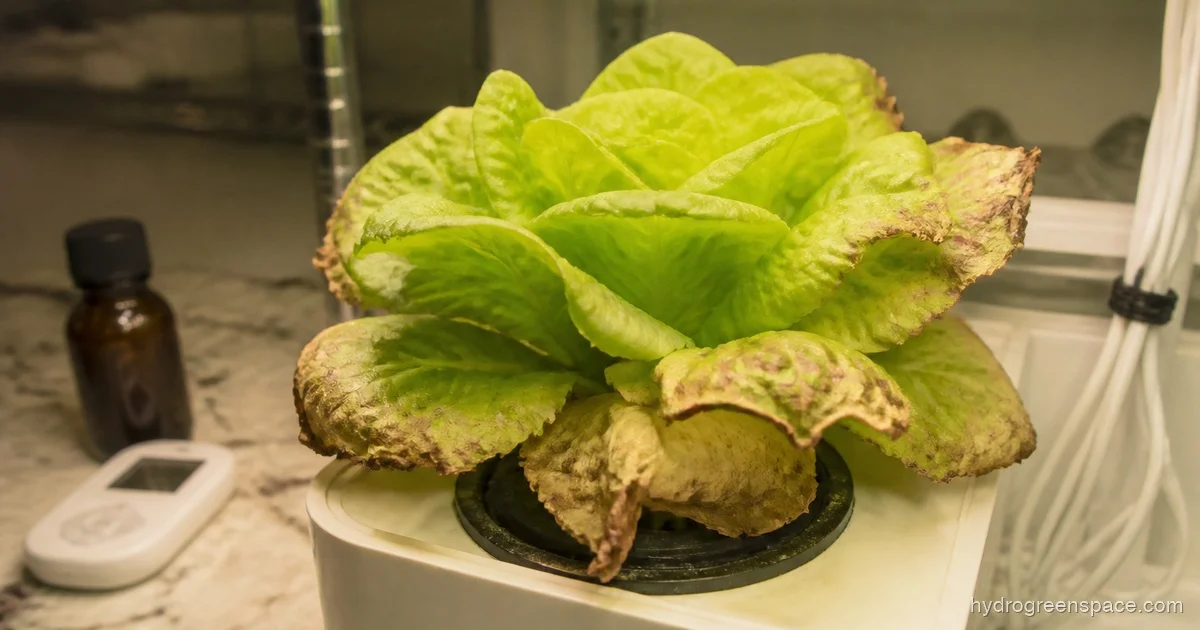
Brown tips on your lettuce or basil usually mean one of two things: your nutrient concentration is too high, or your pH is off and roots can’t absorb what’s already there. Both look almost identical at first glance, but the fix for one makes the other worse. Getting the diagnosis right before you do anything is the whole game.
This guide walks you through exactly what nutrient burn looks like in hydroponics, how to tell it apart from nutrient lockout, and what to do about it depending on whether you’re running a reservoir-based system like DWC or Kratky versus a recirculating setup like NFT or drip.
What Nutrient Burn Actually Looks Like
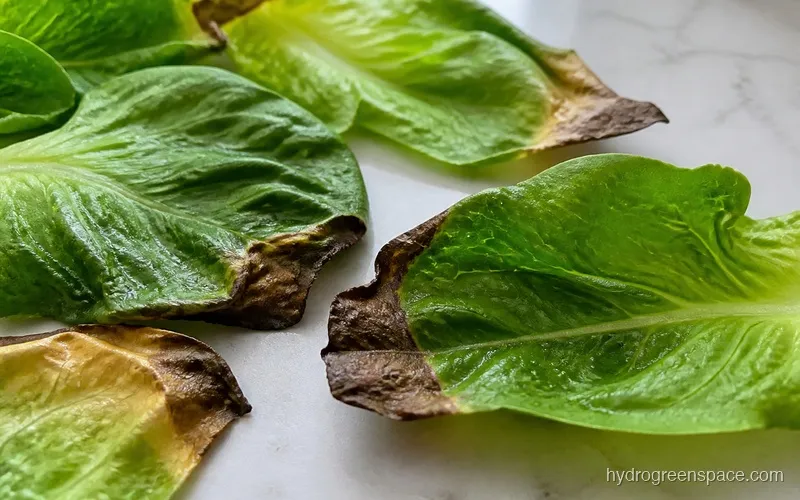
Nutrient burn in hydroponics almost always starts at the leaf tips. You’ll notice the very tips going yellowish, then turning crispy brown. The damage is typically symmetric, with both sides of the plant and multiple leaves at the same level showing the same pattern.
In leafy greens like lettuce and spinach, the affected tips stay attached to the leaf but feel papery when you touch them. In basil, the browning tends to curl inward slightly before it crisps. Tomatoes and peppers often show the burn on older, lower leaves first before it works its way up.
A few things that make nutrient burn easy to misread:
- The rest of the leaf looks completely healthy (dark green, firm)
- New growth at the top is still coming in normal
- Roots (if you can see them) are white or light tan, not brown
That last point is important. If the roots look dark or slimy, you’re dealing with something else entirely, possibly root rot in your hydroponic system in addition to whatever is happening with the leaves.
Nutrient Burn vs. Nutrient Lockout: The Diagnosis That Matters
Nutrient burn and nutrient lockout produce near-identical leaf symptoms but come from opposite problems:
| Nutrient Burn | Nutrient Lockout | |
|---|---|---|
| Cause | Too much dissolved nutrients (high EC/PPM) | pH out of range (roots can’t absorb nutrients) |
| EC reading | Above optimal for plant stage | Normal or low |
| pH | Usually fine | Outside 5.5–6.5 range |
| Fix | Dilute or flush the reservoir | Correct pH first |
| What makes it worse | Adding more nutrients | Flushing without fixing pH |
Check your EC (electrical conductivity) and pH before touching anything. If EC is high and pH is in range, you have nutrient burn. If EC looks normal but pH has drifted, you have lockout, and flushing without correcting pH will just make the plant more stressed.
If you’re unsure what your pH should be or how to correct it, the hydroponic pH adjustment calculator gives you exact amounts to add based on your reservoir volume. For lockout specifically, keep an eye on pH fluctuation problems that can keep coming back after you think you’ve fixed it.
EC and PPM Thresholds That Actually Matter
Here are working ranges for the vegetables and herbs that home growers actually run in hydroponics:
| Plant | Seedling / Early Veg | Full Veg | Fruiting / Mature |
|---|---|---|---|
| Lettuce | 0.8–1.2 EC (560–840 PPM) | 1.2–1.6 EC (840–1120 PPM) | Not applicable |
| Basil | 1.0–1.6 EC (700–1120 PPM) | 1.6–2.0 EC (1120–1400 PPM) | Not applicable |
| Tomatoes | 1.5–2.0 EC (1050–1400 PPM) | 2.0–3.5 EC (1400–2450 PPM) | 3.0–5.0 EC (2100–3500 PPM) |
| Peppers | 1.5–2.0 EC (1050–1400 PPM) | 2.0–3.5 EC (1400–2450 PPM) | 3.0–4.5 EC (2100–3150 PPM) |
| Herbs (general) | 0.8–1.4 EC (560–980 PPM) | 1.4–1.8 EC (980–1260 PPM) | Not applicable |
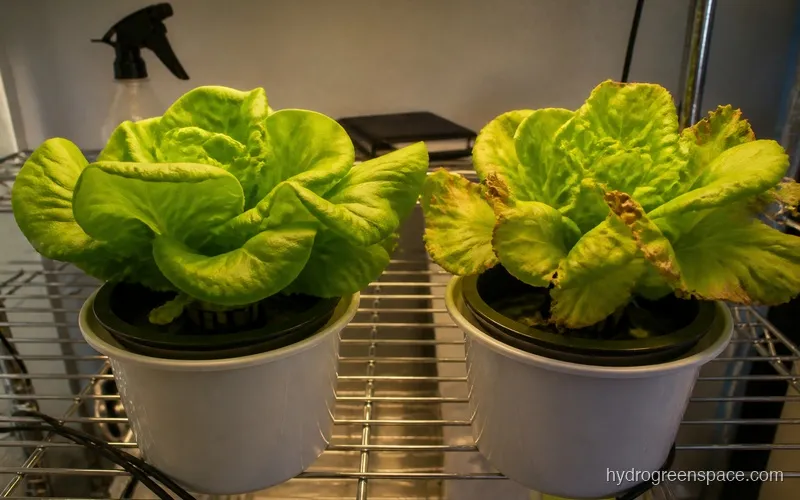
The most common mistake is running all plants at the same concentration. Lettuce is sensitive and will show burn symptoms at EC levels that a tomato plant would barely notice. If you’re mixing lettuce and tomatoes in the same system, you have to compromise toward the lower end, or separate them.
For AeroGarden users specifically: the built-in pods are small and the reservoir is compact, which means concentration spikes happen faster. Stick to the low end of each range and measure every two to three days. For a calculated starting point based on your system and plants, the hydroponic nutrient calculator can help you dial in the mix before you start.
How to Fix Nutrient Burn in Hydroponics
Once you’ve confirmed it’s actually burn (high EC, normal pH), the fix depends on your system type.
DWC and Kratky Systems
These are reservoir-based systems with no continuous circulation. The fix is a straight reservoir flush and refill.
- Drain the reservoir completely
- Rinse the reservoir with plain, pH-adjusted water (no nutrients, just bring it to 5.8–6.2)
- Refill with fresh nutrient solution at 50–75% of your normal concentration
- Recheck EC and pH after 24 hours, then again at 48 hours
For Kratky specifically, don’t let the roots dry out during the drain. Work quickly, or keep a small amount of plain water in the container while you’re cleaning.
NFT and Drip Systems
Recirculating systems are trickier because the nutrient solution runs through channels or drip lines continuously.
- Mix a large batch of plain, pH-adjusted water (fill the reservoir without nutrients)
- Run the system for 15–30 minutes to push the concentrated solution out of the lines and channels
- Drain and repeat once
- Refill with fresh nutrient solution at reduced concentration
The reason for the two-flush approach in recirculating systems is that concentrated solution sits in the lines and channels, and a single reservoir swap doesn’t fully clear it.
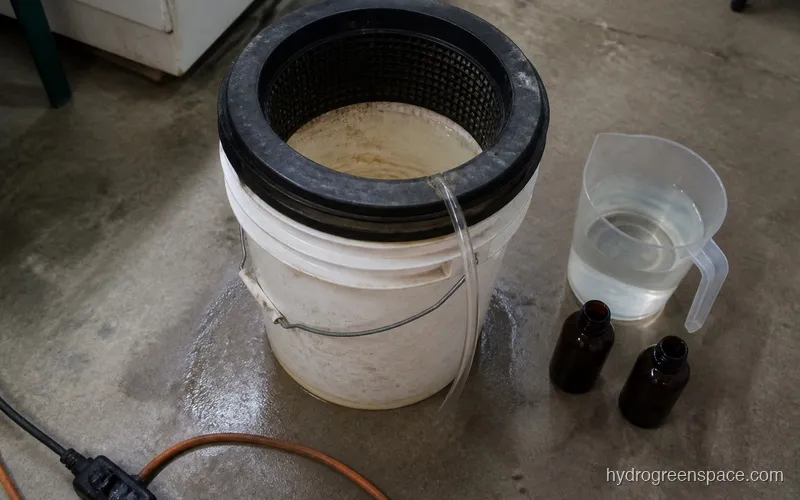
What I’d do: After flushing, I run at 60% of target EC for the first five to seven days. Plants recover faster when they’re not immediately pushed back to full concentration. Once new growth comes in clean (no burned tips on leaves that emerged after the flush), I bring the solution back up to normal gradually over the next reservoir change.
After the flush, watch for a full nutrient solution change cycle before declaring the problem solved. When it’s time to do that, knowing when to change your hydroponic nutrient solution prevents the problem from repeating.
Will the Burned Leaves Recover?
Short answer: no. Tissue that has turned brown and crisped is gone. You can cut those leaves off if the aesthetics bother you. It won’t hurt the plant, and it removes one visible stressor from the picture.
What you’re actually watching for is the new growth that emerges after the flush. If the next set of leaves comes in clean (full green, no tip damage), the plant is recovering. If new leaves still show burn symptoms, your nutrient concentration is still too high or there’s a pH problem you haven’t fully fixed.
Most leafy greens recover within 7–10 days of a proper flush. Fruiting plants like tomatoes take longer because they have more biomass to push nutrients through, but they’re also more tolerant of the stress.
Preventing Nutrient Burn Before It Starts
The most reliable way to prevent burn is to build up concentration gradually rather than starting at full strength.
A practical approach:
- Week 1: Mix at 50% of label recommendation (or 50% of your target EC)
- Week 2: Move to 75%
- Week 3 onward: Full concentration once you can see the plant is handling it well
Check EC and pH every two to three days, not weekly. Reservoir volume drops as plants drink, which raises concentration even if you haven’t added anything. In hot weather or under high-output grow lights, this can push EC above the safe threshold faster than you’d expect.
Also pay attention to your water quality. Hard tap water already carries some dissolved solids before you add any nutrients. If your tap water reads 0.4 EC (280 PPM), that’s headroom you have to account for in your nutrient calculations. Using a baseline reading from your water source and referencing an EC chart by plant type will keep you from accidentally overshooting.
One thing growers don’t talk about enough: if you’re also dealing with algae growth in your system, it can complicate your nutrient readings. Algae consume nutrients and oxygen, and a system with significant algae bloom will show EC swings that don’t reflect what your plants are actually getting. Deal with the algae first, then recalibrate.
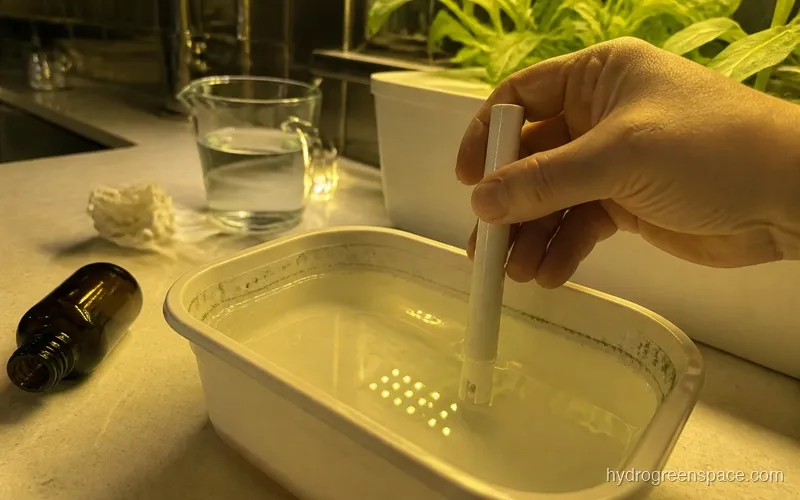
Tip: If you notice tip burn happening repeatedly even at what seems like a reasonable EC, cross-reference with a nutrient deficiency chart to make sure what you’re seeing is actually burn and not a calcium deficiency, which can look similar on fast-growing crops like lettuce.
The One Mistake That Starts Most Burn Problems
It’s following nutrient label recommendations too literally. Nutrient bottles are written for the maximum absorption rate of a healthy, large plant at peak growth. For lettuce seedlings, herbs in small net pots, or anything in a compact desktop system, those directions are too aggressive.
Start at half the recommended dose. Measure. Adjust. The right feeding schedule for your system makes more difference than the specific brand of nutrients you’re using, and it keeps problems like nutrient burn from showing up in the first place.
If you’re seeing other stress symptoms alongside the burned tips, like leaves curling under or older leaves yellowing before newer ones, those are separate problems worth diagnosing on their own. Leaves curling down in your hydroponic system and yellowing leaves both have their own causes that can overlap with nutrient issues.
Once you’ve got your concentration dialed in and your reservoir routine solid, most growers never see nutrient burn again. It’s a problem that shows up when something in the setup changes: a new nutrient line, a hotter grow space, a longer gap between reservoir checks. Stay consistent with your measurements and it stays away.
Nutrient burn is one of several concentration-related problems covered in the hydroponic troubleshooting guide, which walks through the full range of nutrient, water, and environmental issues home growers run into.