Best Hydroponic System Under $500 (2026 Picks)
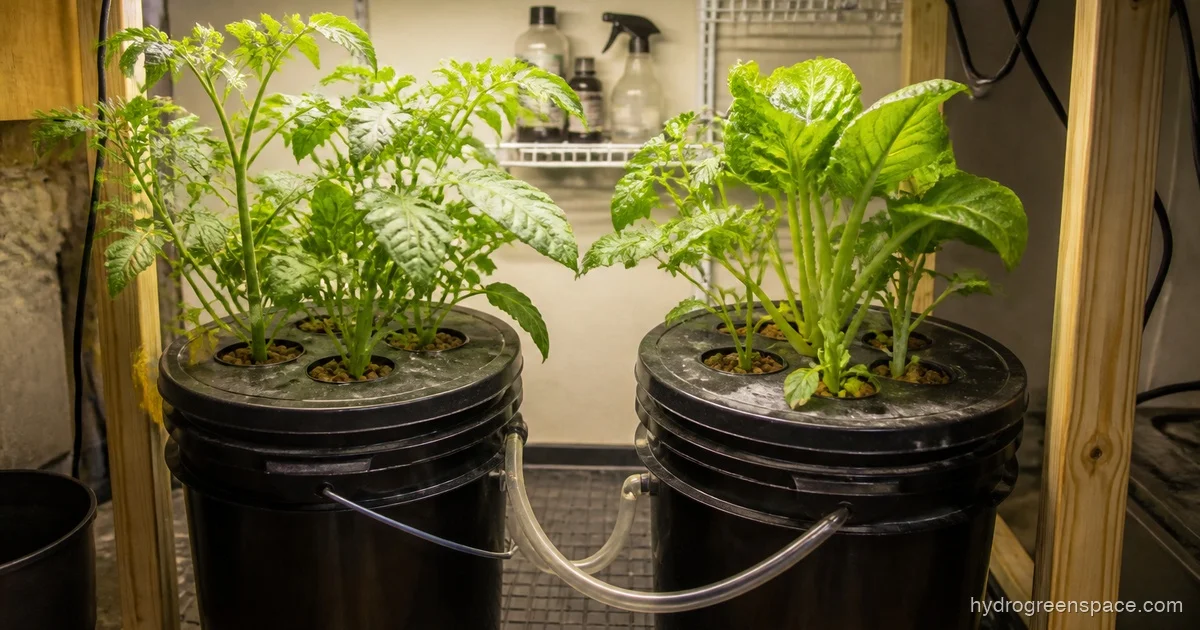
At $100, you’re growing basil on a countertop. At $200, you can grow cherry tomatoes. But somewhere in the $200 to $500 range, something shifts. The systems stop feeling like kitchen appliances and start feeling like actual growing infrastructure. You get real reservoir capacity, proper lighting, enough plant sites to run a meaningful harvest, and in some cases, the beginnings of automation. This is where hydroponic growing gets genuinely interesting.
This guide is for growers who’ve already started, whether on a pod garden, a single DWC bucket, or a basic NFT kit, and are ready for something that can actually produce. Not just a bigger version of what you have, but a system that can grow full-size vegetables, handle multiple plant types at once, and keep running reliably across multiple cycles.
If you’re still deciding whether to start at all, how to choose your first hydroponic system covers the basics before you spend anything. If you already know you want to spend under $200, the best hydroponic systems under $200 breaks down that tier in detail.
What Changes Between $200 and $500
The gap between a $100 pod system and a $400 grow tent bundle is not incremental. It’s structural. Here’s what you actually get at each price step:
$200 to $300: This is where DWC setups with multiple buckets and adequate grow lights become accessible. You’re not limited to countertop pod gardens. A multi-bucket DWC kit plus a decent LED puts you in position to grow 4 to 8 full-size plants. The plants you can grow change significantly: not just herbs and compact greens, but peppers, cucumbers, and larger tomato varieties.
$300 to $400: Automated nutrient dosing enters the picture. Systems like the Growee controller can dose nutrients and pH automatically based on real-time measurements, which removes the most labor-intensive part of running a hydroponic garden. You’re also entering grow tent bundle territory: all-in-one packages that include the tent, light, fans, carbon filter, and timer. These bundles are matched components, which matters more than most people realize when you’re starting out.
$400 to $500: Full grow tent bundles with quality LEDs in the 200 to 300 watt range, ebb and flow systems that can run 12 or more plants simultaneously, and automated controllers capable of managing multiple garden zones. At this ceiling, the limiting factor on what you grow is mostly your own experience, not the equipment.
$200 to $300 Range: Real DWC on a Budget
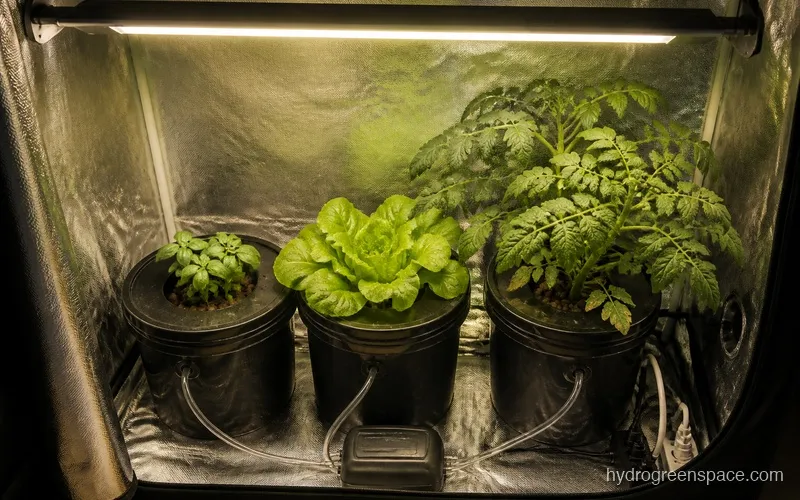
The most useful thing you can do with $200 to $300 is put plants into a proper deep water culture (DWC) setup with a real grow light. Pod systems at this price are more capable than the entry-level versions, but if yield per plant and the ability to grow serious vegetables is the goal, DWC is the better direction.
The setup involves more decisions than a pod system. You’re choosing a bucket count, a reservoir size, an air pump capacity, and a light separately. That’s not a reason to avoid it. It’s the reason the ceiling on what you can grow is so much higher.
Understanding the differences between DWC, NFT, and ebb and flow is worth reading before you buy at this tier. Each system type has different labor requirements, plant site capacity, and failure modes. DWC is forgiving on the root side. Knowing this in advance changes which kit you’ll actually be happy with six months in.
Vivosun 4-Site DWC Hydroponic Kit
The Vivosun 4-site DWC kit runs around $80 to $100 for the reservoir system itself, leaving room in a $200 to $300 budget for a quality LED. Four 5-gallon sites give each plant genuine root space, the recirculating design keeps dissolved oxygen levels consistent across all buckets, and the included air pump is sized appropriately for the reservoir volume.
Pair this with a 100-watt LED in the $80 to $120 range and you have a capable vegetable growing setup under $250 total. That combination can run cherry tomatoes, full-size peppers, compact cucumbers, and leafy greens across a complete indoor cycle.
Vivosun 4-Site Recirculating Deep Water Culture Kit
Four-bucket recirculating DWC system with 5-gallon sites, air pump, air stones, net pots, and all fittings included. Each plant gets a full 5-gallon root zone. Recirculating design keeps dissolved oxygen consistent across all buckets. Grow light sold separately.
Best for: Growing 4 vegetables year-round with real root space (tomatoes, peppers, cucumbers)
Check price on AmazonOne thing to know: DWC at this level requires active monitoring. You’ll check EC (electrical conductivity for nutrient concentration), pH every few days, and top off the reservoir as plants drink. It’s not plug-and-play, but the hydroponic equipment checklist covers exactly what tools you need and none of them are expensive.
What I’d do: Budget $250 total for this tier. $90 on the Vivosun 4-site kit, $100 on a Vivosun or Mars Hydro 100W LED, and the rest on a starter nutrient kit and pH testing supplies. You’ll have a complete vegetable system for under $250 and room to scale it.
$300 to $400 Range: Automation and Better Bundles
This price bracket is where the growing experience starts to feel less like constant maintenance and more like actual gardening. The two best options here are a grow tent starter bundle (tent, light, fans, all pre-matched) or a DWC system paired with automated nutrient dosing via a controller like the Growee.
Growee Automated Nutrient Dosing System
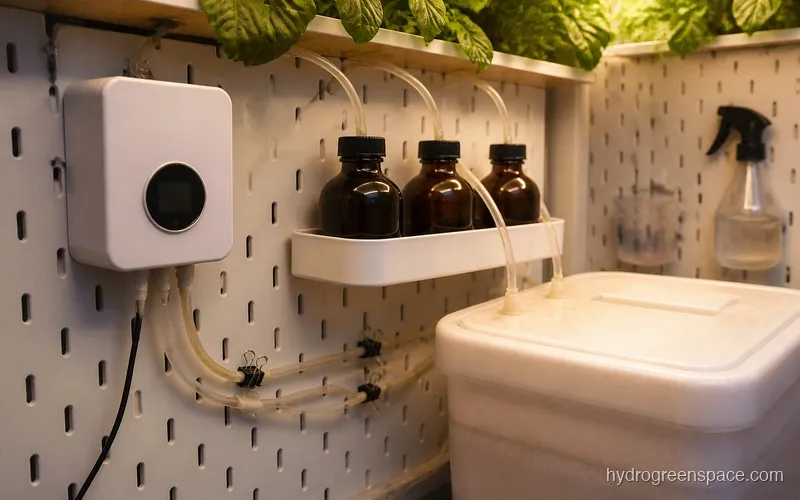
The Growee controller is one of the more interesting pieces of hydroponic technology available to home growers right now. It sits inline with your reservoir, monitors EC and pH in real time, and doses nutrients and pH adjustment solutions automatically. You set your target ranges and it handles the rest.
If you’ve ever come home to a reservoir that drifted out of pH range overnight and lost a crop to it, you understand what this solves. The Growee works with any reservoir-based system: DWC, ebb and flow, NFT. It’s the upgrade that changes how much time you spend managing a garden rather than growing in it. The full Growee review goes deeper on setup, accuracy, and what it does well in practice.
Growee Automated Hydroponic Controller
Automated nutrient dosing and pH control system for any reservoir-based hydroponic setup. Monitors EC and pH in real time, doses automatically to maintain your target ranges, and connects to an app for remote monitoring. Compatible with DWC, NFT, and ebb and flow systems.
Best for: Growers who want to remove manual nutrient dosing from their routine and prevent pH drift
Check price on AmazonThe Growee runs around $200 to $270, which means you’re pairing it with an existing or modest system. That’s actually the right approach: get a solid base DWC kit in the $80 to $100 range, add the Growee, and you have a system that’s both productive and largely self-maintaining. That combination sits comfortably in the $300 to $400 range total.
Mars Hydro 2x2 Grow Tent Starter Kit
For growers who want everything matched and ready to run, grow tent bundles in the $300 to $400 range are one of the smartest purchases in this tier. The Mars Hydro 2x2 starter kit includes the tent (2x2 feet, 4 feet tall), a TS600 LED (about 100 watts actual draw), an inline fan with carbon filter, and ducting. You supply the hydroponic system inside and your nutrients.
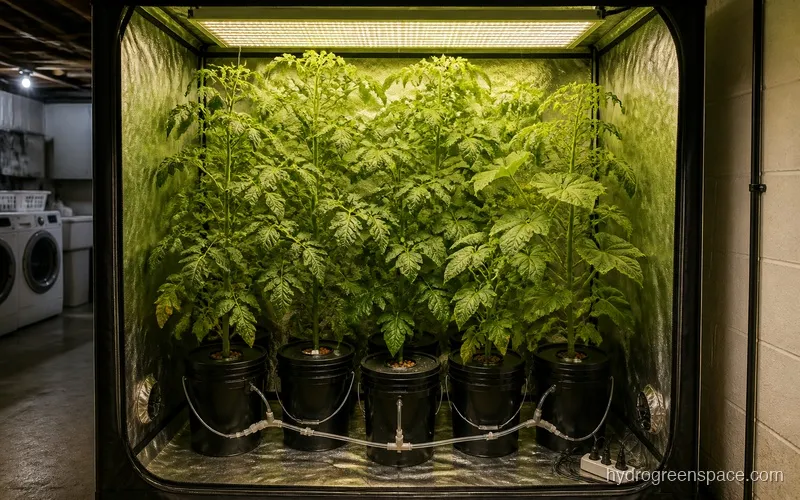
A 2x2 tent is genuinely productive. That footprint supports 4 to 6 full-size plants in a DWC or NFT system, gives you complete light and environment control, and the carbon filter eliminates odors. All of those things matter more than most first-time growers expect. The tent reflects and concentrates light from the LED, so yield per watt is significantly higher than running the same light in open air.
Mars Hydro 2x2 Grow Tent Kit
Complete 2x2 tent starter bundle with a TS600 LED, inline fan, carbon filter, ducting, and timer. The tent, light, and ventilation components are pre-matched and sized for the space. Add a DWC or NFT system inside and you have a full controlled-environment grow for 4 to 6 plants.
Best for: Growers who want a complete, controlled environment setup with all components matched
Check price on AmazonThe light included in base tent bundles is adequate for leafy greens and herbs. If you’re growing tomatoes or other fruiting crops, budget an extra $50 to $100 for an upgraded LED at some point. That’s not a knock on the bundle, it’s just physics: fruiting plants need more light intensity than vegetative crops, and the starter light is sized conservatively.
$400 to $500 Range: Where Serious Growing Starts
At the top of this budget range, you can build a genuinely capable indoor growing system. The best options here are grow tent bundles with upgraded lighting, full ebb and flow systems that support 12 or more plant sites, and multi-system DWC setups with automation.
Vivosun 3x3 Grow Tent Kit with LED
A 3x3 tent (9 square feet of canopy) is the first size where you start producing meaningfully. With a quality 200 to 240 watt LED, that footprint can run 6 to 9 plants through a full cycle. The Vivosun 3x3 bundles in this price range include a better LED than the 2x2 entry bundles, with inline fan, carbon filter, and ducting all included and matched to the tent size.
Inside the tent you’ll want a hydroponic system that takes advantage of the space. A 6-site DWC recirculating setup or an NFT channel kit fills a 3x3 tent properly. At this scale you’re looking at real production: multiple pounds of tomatoes per cycle, consistent herb harvests, or enough leafy greens to cover a household’s needs without a gap between crops.
Vivosun 3x3 Grow Tent Complete Kit
3x3 grow tent bundle with a 200W+ LED, inline fan with carbon filter, ducting, and timer. Enough canopy space to run 6 to 9 plants in a DWC or NFT system inside. The LED in this bundle is sized for fruiting crops, not just greens. Hydroponic system sold separately.
Best for: Growers ready to produce at scale: multiple plant sites, real yield, full environmental control
Check price on AmazonThis is my best-overall pick in this range. Here’s the honest reason: the 3x3 tent with a proper LED is the first setup where yield becomes genuinely meaningful. You’re not growing a handful of herbs for the kitchen, you’re producing food. The controlled environment means you’re growing year-round regardless of season. And the full bundle ensures the components actually work together.
General Hydroponics Ebb and Flow System
Ebb and flow (also called flood and drain) is one of the most scalable system types available to home growers. The tray floods with nutrient solution on a timer, then drains back into the reservoir. Plants sit in net pots on the tray. You can run 12, 20, or more plants on a single tray depending on what you’re growing.
The General Hydroponics ebb and flow kit runs around $200 to $250 for the tray, reservoir, and fittings. Add a quality LED and you’re in the $400 to $500 range total. The system scales cleanly: same reservoir, same pump, just a larger tray if you want more plant sites.
General Hydroponics Ebb and Flow Kit
Flood and drain system with a 3x3 foot tray, reservoir, submersible pump, and fittings. Compatible with any growing medium: hydroton, perlite, or rockwool. Runs 12 to 24 plants per cycle depending on plant size. Timer controls flood intervals automatically. Grow light sold separately.
Best for: Growers who want to run many plants simultaneously and need a scalable, flexible system type
Check price on AmazonEbb and flow is more forgiving than NFT on the technical side. If the pump fails mid-cycle, plants in a flood and drain setup don’t die within hours the way they might in an NFT channel with no water buffer. The growing medium holds enough moisture for plants to tolerate interruptions, which makes this system type a good choice for growers who can’t monitor constantly.
Quick-Pick Comparison Table
| System | Price Tier | Type | Plants | Light Included |
|---|---|---|---|---|
| Vivosun 4-Site DWC | $200–$300 | Deep water culture | 4 | No |
| Growee Controller + DWC | $300–$400 | DWC + automation | 4–6 | No |
| Mars Hydro 2x2 Bundle | $300–$400 | Tent bundle | 4–6 | Yes (100W) |
| Vivosun 3x3 Bundle | $400–$500 | Tent bundle | 6–9 | Yes (200W+) |
| General Hydroponics Ebb and Flow | $400–$500 | Ebb and flow | 12–24 | No |
When to Spend More Than $500
The $200 to $500 range covers the vast majority of what most home growers actually need. But there are three situations where it makes sense to push past that ceiling.
You want automated nutrient management across multiple systems. A single Growee controller is in range here, but if you’re running two or three separate systems and want full automation on all of them, you’re looking at $500 plus fairly quickly. The hydroponic automation systems breakdown covers what’s available at higher price points and whether the added cost is justified.
You want a larger grow tent with a high-output LED. A 4x4 or 5x5 tent with a 400 to 600 watt LED for heavy fruiting crops like large tomato varieties costs more than $500 for the tent and light alone. If your goal is high-volume vegetable production, the best hydroponic grow lights covers what you’d need at that scale.
You want to grow high-value crops at commercial density. Leafy greens and herbs at commercial density in a vertical NFT setup move past this budget. That’s a different category of system altogether.
Tip: Before spending more, max out what you have. A $300 DWC setup with quality nutrients and dialed-in pH will outperform a $600 system with neglected water chemistry every time. The best hydroponic nutrients for vegetables is the single best place to improve yield without buying new equipment.
The systems in this range are genuinely capable. If you’ve been growing on a countertop pod garden and wondering what’s possible with a real setup, the 3x3 tent bundle or a 4-site DWC with the Growee controller will answer that question definitively. Pick one, run a full cycle, and you’ll have a much clearer picture of whether you want to scale further from there. If you’re still early in the process and haven’t settled on a system yet, the best hydroponic systems for beginners is the right starting point before you commit to a $500 setup. The complete hydroponic starter kit overview is a good next read once you’ve made your choice.