EBT Eligible Hydroponic Systems: What SNAP Covers
SNAP benefits exist to help people access food, and growing your own is about as direct as it gets. The question is what exactly the government considers “food” when it comes to hydroponics supplies, because the rules are more nuanced than a yes or no answer.
The short version: seeds and food-producing plants qualify. Hardware, nutrients, and grow media generally do not. But with a bit of planning, you can structure a budget hydroponic setup so the only recurring purchases are the things EBT actually covers.
Here’s how to make that work.
What EBT Actually Covers for Hydroponics
The SNAP program defines eligible items as food intended for human consumption, and seeds and plants that produce food for the household to eat. That last part is the key phrase, and it opens more doors than people realize.
What qualifies:
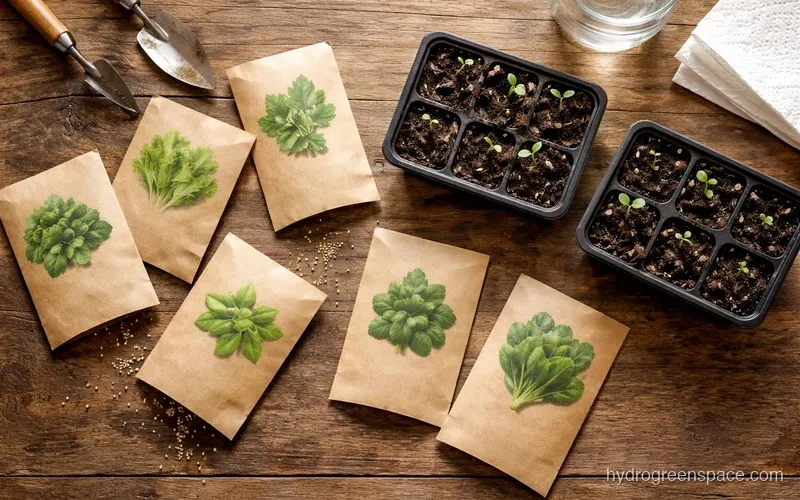
- Vegetable and herb seeds (lettuce, basil, cilantro, kale, spinach, tomatoes)
- Food-producing seedlings and starter plants (a tomato seedling qualifies; a flower seedling does not)
- Some sprouting seeds (alfalfa sprouts, mung beans; check with the retailer)
What does not qualify:
- Hydroponic system kits (AeroGarden, Kratky jars, DWC buckets, NFT channels)
- Net cups, air stones, air pumps, reservoirs
- Grow lights and timers
- Growing media: perlite, coco coir, clay pellets, rockwool
- Hydroponic nutrients and liquid fertilizers
The hardware side is a one-time cost. The seeds and nutrients are what you keep buying. If you set up your system right from the start, those recurring purchases are the only thing you need EBT to cover.
Are AeroGarden Pods EBT Eligible?
AeroGarden seed pods are sold as a packaged product that combines seeds, nutrients, and a grow sponge. Because they contain non-food components, they are not straightforwardly EBT eligible. The seeds inside technically qualify, but as a bundled product the pods generally do not. Retailers make the final call at the point of sale, and most major retailers treat them as non-eligible.
If you want to use EBT for seeds with an AeroGarden setup, buy bare seeds separately instead of pods. Seeds sold individually, whether at a grocery store, garden center, or online, are consistently treated as EBT eligible.
Where to Buy EBT Eligible Hydroponic Seeds
Amazon
Amazon is a SNAP-authorized retailer in most states, and you can use your EBT card at checkout for eligible items. Search for vegetable and herb seeds sold by weight or packet. Not every listing on Amazon is EBT eligible, but the product page will show “EBT eligible” if it qualifies. Lettuce varieties, basil, cilantro, and spinach are consistently available and eligible.
Tip: Filter your Amazon search by “EBT eligible” to skip non-qualifying listings entirely. The filter shows up in the left sidebar when you have EBT linked to your account.
Walmart
Walmart stores accept EBT in person, and Walmart.com accepts EBT for pickup and delivery in qualifying areas. Seed packets in the garden section are EBT eligible at checkout. Walmart often carries a decent selection of vegetable and herb seeds year-round, and prices tend to be lower than specialty garden retailers.
Farmers Markets
Many farmers markets now accept EBT, and some participate in programs like Double Up Food Bucks, which match SNAP spending dollar-for-dollar on fruits, vegetables, seeds, and food-producing plants. If your local market sells seedlings in spring, those qualify too. Check the USDA farmers market directory to find EBT-accepting markets near you.
Building a Budget Hydroponic Setup Where Seeds Are Your Main Cost
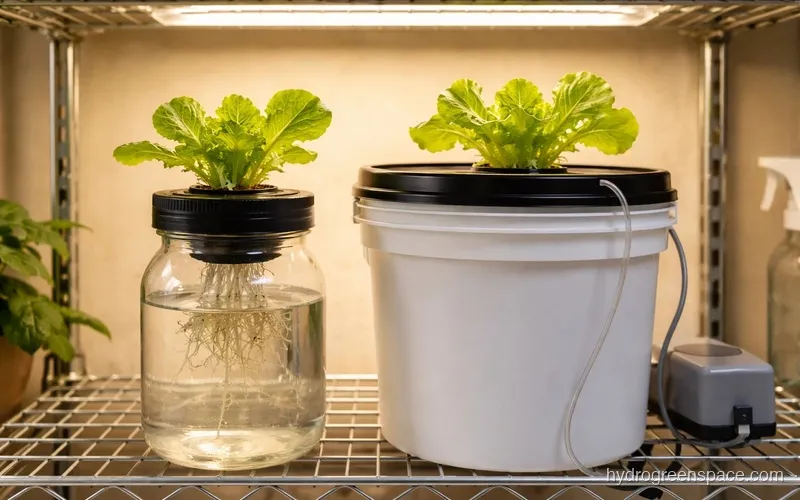
The goal is to front-load the hardware cost once and keep recurring expenses minimal. For that, two systems stand out: Kratky and deep water culture (DWC).
Kratky Method
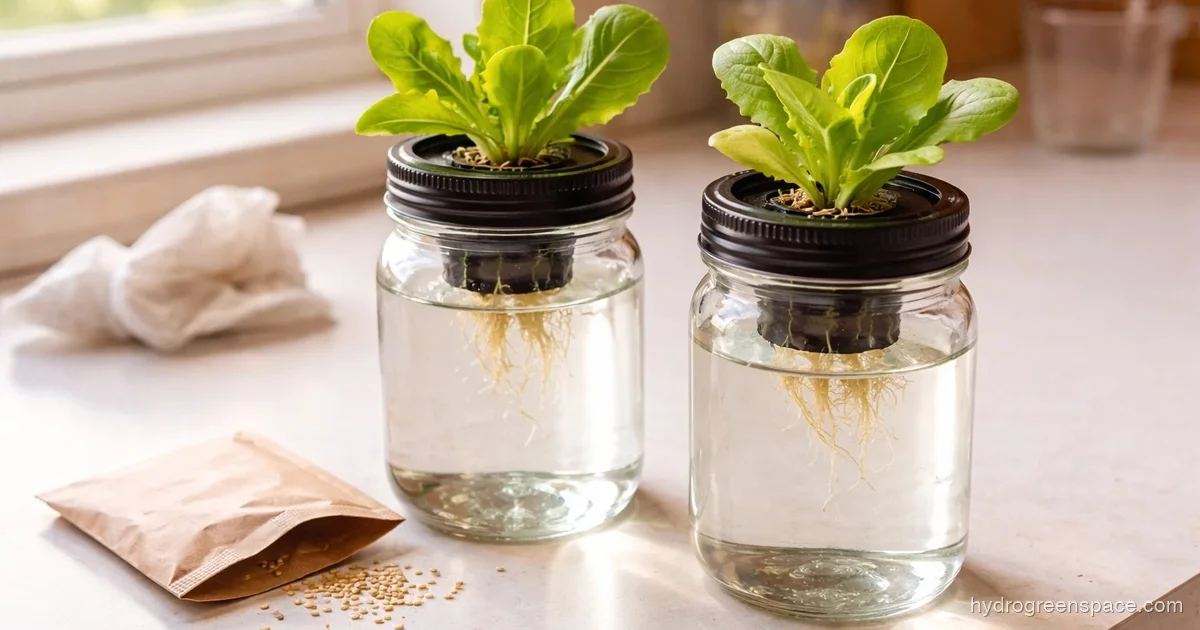
The Kratky method requires no pump, no electricity (beyond a grow light if you’re indoors), and no moving parts. You fill a container with nutrient solution, set a net cup in the lid, drop in your seed or seedling, and the plant does the work. When the solution runs low, you top it off.
For a complete beginner on a tight budget, Kratky is the right starting point. A mason jar, a net cup that fits the lid, and a small bag of perlite to hold the seed in place are all you need to get started. None of that costs more than a few dollars. The seeds you use to refill it each cycle are your only recurring purchase, and those are EBT eligible.
If you want to understand how different systems compare before committing, the guide to different hydroponic system types breaks down when each one makes sense.
Deep Water Culture (DWC)
A 5-gallon bucket DWC system handles larger plants and produces faster growth than Kratky, but it adds an air pump and air stone to the hardware list. A basic setup costs around $20 to $30 upfront (bucket, pump, net cup lid, air stone, tubing). After that, your ongoing purchases are nutrients and seeds. Standard hydroponic nutrient solutions are not currently EBT eligible, but if you want to explore low-cost nutrient options, compost-based DIY nutrients can bring that recurring cost down further.
Does EBT Cover Nutrients?
No. Liquid hydroponic nutrients like General Hydroponics Flora Series or similar products are classified as fertilizers, not food, and SNAP does not cover them. This is true even though plants need nutrients to produce the food you eat.
For a true budget build, you have two options. The first is to buy nutrients upfront with cash or a separate budget line, then stretch them as long as possible. A small bottle of a two-part hydroponic nutrient solution can last months at proper dilution rates. The second is to explore compost teas or organic nutrient inputs that you might already have access to. Neither approach is perfect, but both work.
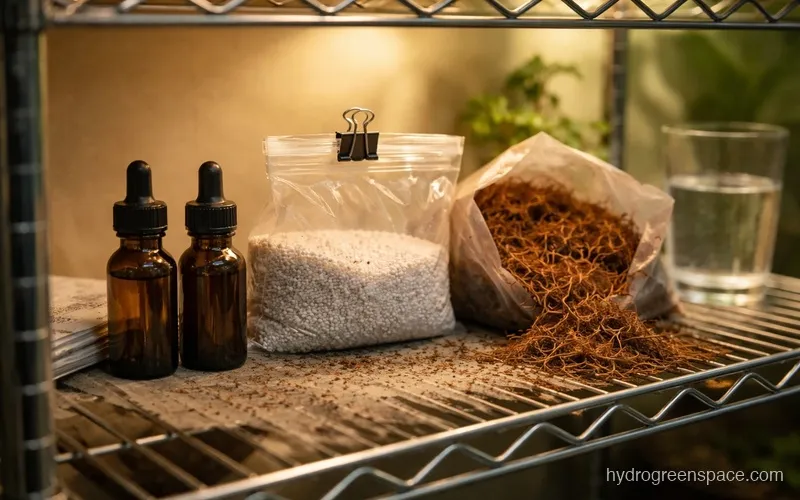
Putting Together a Realistic EBT Budget Setup
If your goal is a working hydroponic system where EBT covers as much as possible, here’s what a realistic build looks like:
One-time hardware costs (cash):
- Mason jar or food-safe container: $2–$5
- Net cups (pack of 10): $3–$6
- Perlite (small bag): $5–$8
- Air pump + air stone + tubing (if doing DWC): $10–$15
- Basic grow light (if no window): $15–$30
Recurring costs (EBT eligible):
- Lettuce or herb seed packets: $1–$4 per packet
- Replacement seedlings or starts (food-producing only): varies by market
Recurring costs (not EBT eligible):
- Hydroponic nutrients: $10–$20 upfront, lasts months
For a full breakdown of what starting costs look like across different setup types, the cost guide for starting hydroponics covers the numbers in more detail.
What About Grow Media?
Perlite, coco coir, clay pellets, and rockwool are all considered growing media, not food. They are not EBT eligible. This includes most seed-starting mixes that contain synthetic additives. Plain organic potting soil (not a hydroponic medium) sometimes passes the eligibility check depending on the retailer, but grow media specifically for hydroponic systems does not.
Budget option: clean gravel or river rocks work as a basic grow medium for DWC and Kratky and cost almost nothing if you have access to them. It’s not optimal, but it functions.
Once you’ve run your first Kratky jar through a full lettuce cycle, the whole picture starts to make sense. You’ll see what seeds you’re actually using, how often you need to top off the solution, and whether you want to scale up to something like a full indoor hydroponic garden build. The hardware stays the same. The seeds keep coming, and EBT keeps covering them. If you’re still figuring out where to begin, the beginner guide to hydroponics walks through system selection, costs, and what to expect across your first month.