How Much Does It Cost to Start Hydroponics at Home
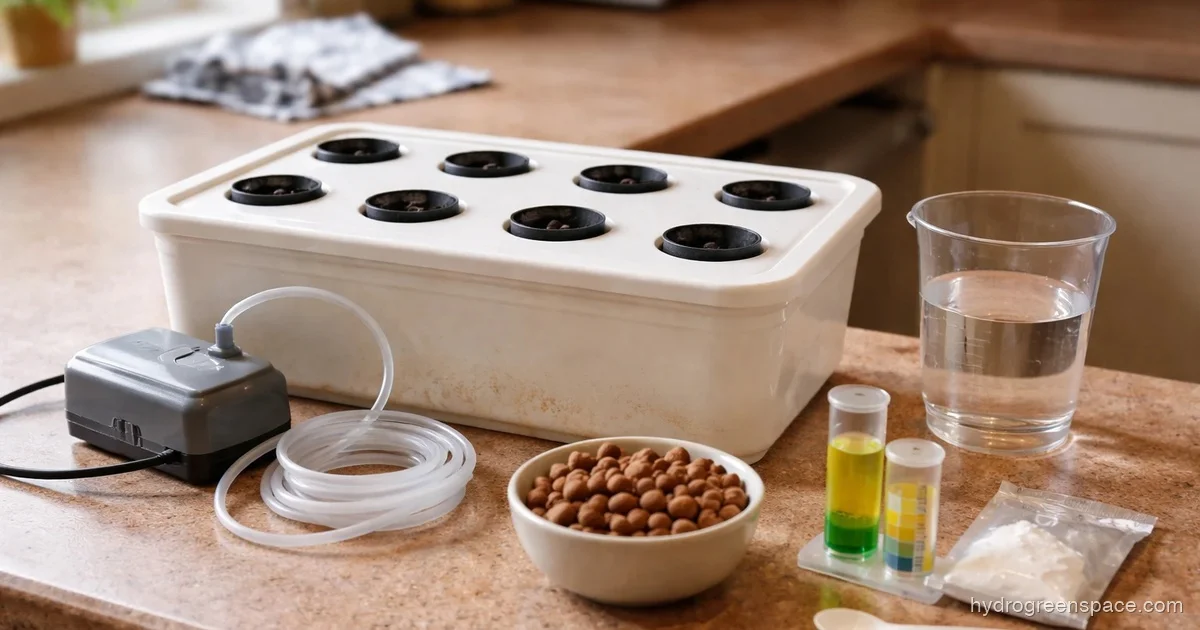
The first thing most beginners discover is that “how much does hydroponics cost” returns a lot of commercial farm pricing that has nothing to do with growing herbs on your kitchen counter. So let me give you the real numbers for a home setup, broken down by what you actually need to buy once versus what you’ll keep paying every month.
If you want the short answer: you can start hydroponics for as little as $30 using the Kratky method, or spend $200–$400 on a solid beginner kit with a grow light. A mid-range DWC setup with everything dialed in sits around $150–$300 upfront. Monthly costs after that run $15–$40 depending on what you’re growing and how much electricity your light draws.
What You’re Actually Buying: One-Time Startup Costs
These are costs you pay once and are done with (or replace only after a year or more):
| Component | Budget | Mid-Range | Premium |
|---|---|---|---|
| System (reservoir, pump, net pots) | $0–$30 DIY | $50–$120 kit | $150–$300+ |
| Grow light | $0 (window) | $40–$80 LED | $120–$250 LED |
| pH meter or drops | $10–$15 drops | $20–$40 meter | $60+ digital |
| Nutrients (starter bottle) | $10–$20 | $25–$50 | $50–$100 |
| Growing media (hydroton, rockwool) | $8–$15 | $15–$30 | N/A |
| EC/TDS meter | $10–$15 | $20–$35 | N/A |
| Total | $38–$95 | $170–$315 | $380–$650+ |
The wide range reflects real choices: whether you DIY your reservoir from a storage tote, whether you already have a sunny south-facing window, and whether you start with basic liquid nutrients or a three-part system.
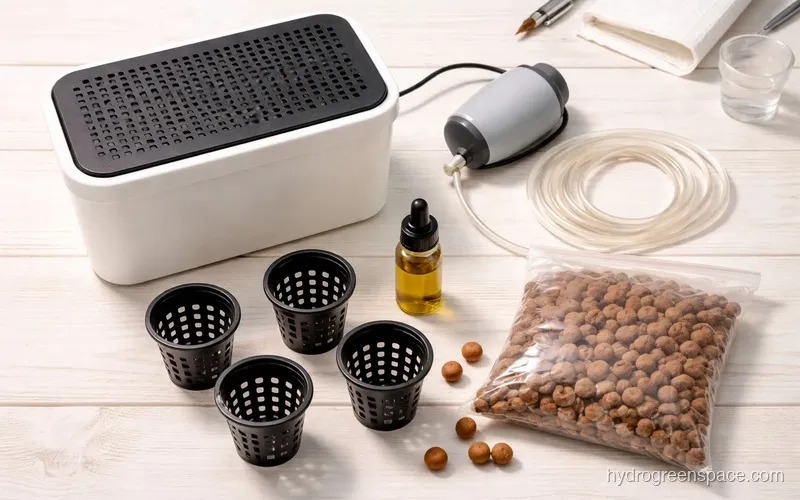
If you’re just trying to see if hydroponics is something you’ll stick with, start at the low end. A $10 bag of clay pebbles, a mason jar, and a $15 bottle of General Hydroponics Flora Series can get you your first lettuce head. Understanding how hydroponics works before you spend money is worth the 10 minutes.
Monthly Running Costs (What You’ll Keep Paying)
One-time costs get the attention, but your hydroponic ongoing monthly expenses are what determine whether this is actually cheaper than buying vegetables.
Nutrients: A one-liter bottle of a basic nutrient solution covers roughly 20–30 reservoir changes at typical dilution rates. At $20–$30 per bottle, that works out to roughly $5–$10/month for a small system. If you want to cut nutrient costs with DIY options, that’s a real route once you understand what you’re replacing.
Electricity: This one depends heavily on your grow light. A 45W LED panel running 16 hours/day uses about 22 kWh/month. At a national average of $0.16/kWh, that’s roughly $3.50/month. A 100W light doubles that. If you’re relying on a window, your electricity cost for the system is just the air pump, which draws almost nothing.
Water: Negligible for a home setup. A 5-gallon reservoir uses… 5 gallons. You’re adding maybe a gallon or two per week to compensate for evaporation and plant uptake.
Replacement parts: Plan for $5–$15/month averaged out over time. Air pump tubing, air stones, and net pots don’t last forever.
Realistic monthly total for a beginner home system: $15–$40/month.
Cost by System Type: Cheapest to Most Expensive
Not all systems cost the same to set up or maintain. Here’s the honest breakdown by method:
Kratky Method
The Kratky method (zero pump, lowest cost) is as cheap as hydroponics gets. No pump, no electricity (beyond lighting), no moving parts. A mason jar, clay pebbles, and nutrients. Full setup cost: $20–$40. Monthly cost: $3–$8 (nutrients only, no electricity for the system). The tradeoff is scale: Kratky works beautifully for lettuce and herbs but gets limiting for fruiting plants.
Wick Systems
Slightly more structure than Kratky, using a wick to draw nutrients up passively. Materials cost $15–$40 DIY. No pump needed. Similar monthly costs to Kratky. Good for starting out, but low yields compared to active systems.
Deep Water Culture (DWC)
DWC is what most beginners graduate to, and for good reason. A 5-gallon bucket hydroponic system costs $30–$60 to set up with a basic air pump and air stone. Yields are dramatically better than Kratky for most crops. Monthly cost adds $5–$10 for electricity and slightly faster nutrient use.
Nutrient Film Technique (NFT) and Other Active Systems
NFT, Ebb & Flow, and drip systems are where costs climb. The systems themselves run $100–$300+, and you add pump electricity and more complex nutrient management. Worth it for larger grows, but not the starting point for most home growers.
What I’d do: Start with Kratky or a single-bucket DWC. Spend your startup budget on a decent grow light and a real pH meter. Those two things affect your results more than anything else.
Is It Worth It? Honest Payback Math for a Home Grower
A small DWC setup growing lettuce can produce a head every 4–5 weeks once it’s established. At $3–$4 per head at a grocery store, a four-plant system producing monthly gives you $12–$16/month in vegetables.
If your system cost $200 upfront and costs $25/month to run, you’re at breakeven around month 15–18. That’s not a wildly fast payback. But two things change the math: growing crops you’d actually buy regularly (fresh herbs are $3–$5 per tiny packet), and scaling up once you’ve got the basics down.
If you’re purely doing this to save money on vegetables, the ROI is real but slow. If you’re doing it because you want fresh food at home, enjoy the process, or want to learn a skill, the cost math matters a lot less. The downsides of hydroponics worth knowing are real, mostly around the learning curve and setup investment.
How to Cut Your Hydroponic Setup Cost Without Cutting Corners
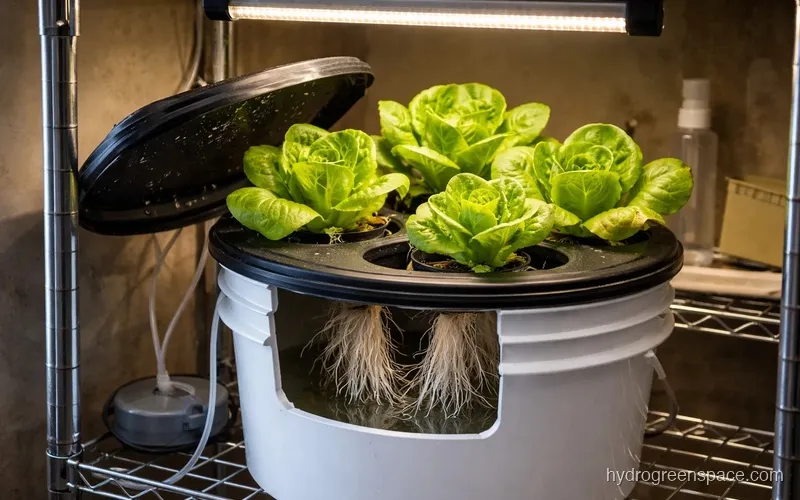
DIY your reservoir. A 5-gallon storage tote with a drilled lid and net pot holes does the same job as a $60 commercial reservoir. The 5-gallon bucket hydroponic system approach is exactly this: functional, cheap, and proven.
Skip the grow tent at the start. Grow tents are useful for light control and humidity, but they’re not essential for your first grow. A closet with a reflective surface costs nothing.
Buy nutrients in larger sizes. A 32 oz bottle of a two-part nutrient solution costs less per gallon mixed than buying the smallest size. If you know you’ll be growing consistently, the larger bottle pays for itself in 2–3 months.
Use pH drops before upgrading to a digital meter. pH drops cost $10 and work fine for beginners. The pool noodle hydroponics and similar cheap DIY growing media alternatives show that cost-cutting doesn’t mean cutting quality. A digital pH meter is worth buying once you have a few grows under your belt and know you’ll stay consistent.
Start small on growing media. A small bag of hydroton (clay pebbles) is enough to fill 6–8 net pots. Don’t buy the 50L bag until you know your system size.
What a Real Beginner Budget Looks Like
For someone starting from zero with no equipment:
$50 or less: A Kratky setup near a sunny window. Start with lettuce or basil (both grow fast and show you what the system can do).
$100–$150: Single DWC bucket, basic LED grow light (45W), pH drops, nutrients, and growing media. This is a real beginner setup that will actually produce.
$200–$300: A multi-site kit or two DWC buckets, a proper LED panel, a digital pH meter, a TDS meter, and a quality three-part nutrient solution. This is where you start building real skills.
The different types of hydroponic systems each have different startup costs and learning curves. If you want a complete picture of what equipment you’ll eventually need, how to feed hydroponic plants covers nutrient management once you’re up and running.
Your first grow will cost more than your second. Start with a budget that lets you learn without regret, then reinvest what you save on groceries into the next upgrade. For everything beyond the budget (system selection, setup, and what to expect in the first month), the beginner guide to hydroponics has it all in one place.