Tower Garden Review: Is It Worth the Price?
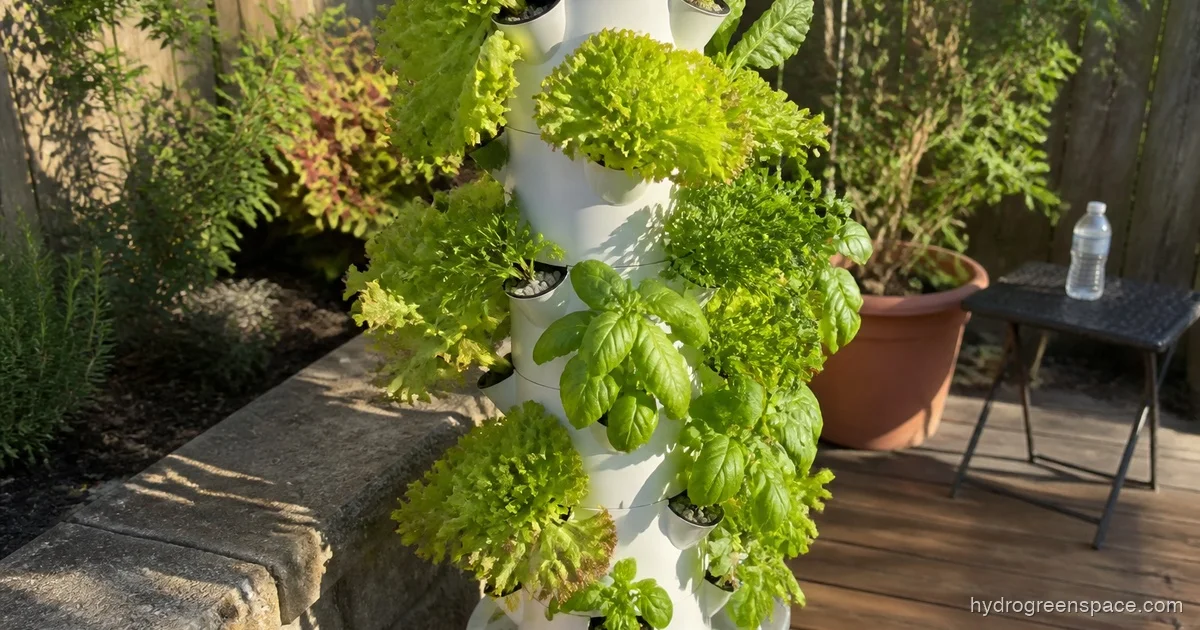
The Tower Garden costs somewhere between $500 and $700 depending on the model, and most of the reviews you’ll find online are written by distributors who earn a commission when you buy. That’s not a dig (it’s just worth knowing before you take their verdict at face value).
I’m not a Tower Garden distributor. I grow hydroponically at home and I’ve spent time with the Tower Garden FLEX and HOME models. This review gives you the honest picture: what works, what doesn’t, where the money really goes, and who should probably look at something else.
Quick Verdict
The Tower Garden is a well-built aeroponic system that genuinely grows food. It outperforms most vertical growing systems when used outdoors or under strong grow lights. For leafy greens especially, it can produce more than you’d expect in a small footprint.
But it’s expensive upfront, has real ongoing costs, makes noise 24/7, and performs poorly indoors without supplemental lighting. For most home growers on a budget, a DIY alternative or a more affordable vertical system will get close to the same results for a fraction of the price.
Buy it if: you want a reliable, low-maintenance outdoor vertical grower and you’re okay with the price. Skip it if: you’re growing indoors without a dedicated grow light setup, you’re cost-sensitive, or you just want to try hydroponics before committing.
How the Tower Garden Aeroponic System Actually Works
Tower Garden uses aeroponics, not traditional deep water culture or NFT. A pump at the base pulls nutrient solution up through a central tube and then mists the roots suspended inside the tower. Roots hang in air between misting cycles, which means they get excellent oxygen exposure between feedings.
This is genuinely a better system for root health than wick or flood-and-drain setups. If you want to understand the mechanics in depth, how aeroponic systems work is worth reading before you decide, as it explains why root zone aeration makes such a difference for fast-growing crops.
The nutrient solution circulates continuously (or on a timer depending on the model). Because the roots are never sitting in water, you get faster growth and lower disease risk compared to fully submerged systems. The tradeoff: if the pump fails or the power goes out for more than a few hours, roots dry out fast. Keep a spare submersible pump on hand. The pump is the single point of failure in any aeroponic system, and losing it without a backup means losing the crop.
→Check price on Tower Garden FLEX →PonicsPumps 400 GPH Submersible Pump (backup pump)Keep one on the shelf. It's cheap insurance for any aeroponic system.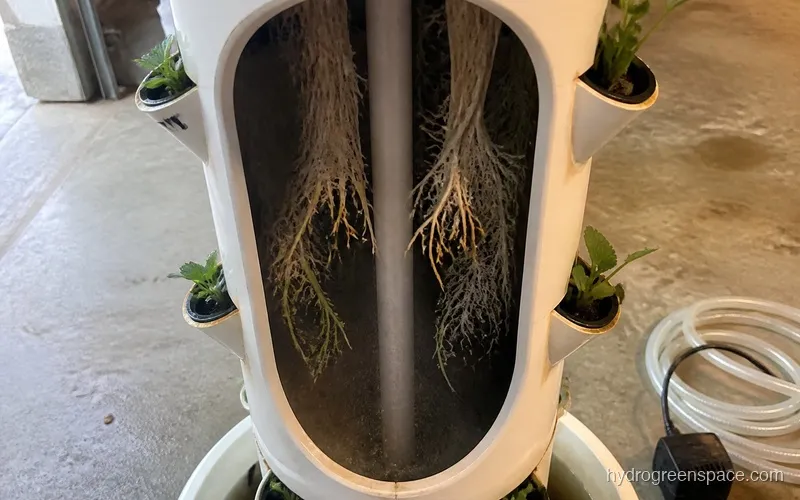
Tower Garden HOME vs. FLEX: What’s the Difference?
This is one of the most searched questions and the answer is simpler than it seems.
Tower Garden HOME is designed for indoor use. It has a smaller footprint and comes with a grow light add-on option. It holds 20 plant sites and is the one marketed toward apartments and small indoor spaces.
Tower Garden FLEX is designed for outdoor use but can work indoors. It holds either 20 or 28 plant sites (depending on configuration), runs taller than the HOME, and is built for patios and backyards where it gets natural sunlight.
In practice, the FLEX outdoors outperforms the HOME indoors significantly, mostly because natural sunlight is so much more powerful than any supplemental lighting option Tower Garden sells. If you have outdoor space, the FLEX is the better performer. If you’re genuinely indoor-only, the HOME is worth the look but you need to budget for quality grow lights separately.
Tower Garden HOME Growing System
A compact aeroponic tower designed for indoor use with 20 plant sites and an optional grow light attachment.
Best for: apartments, indoor greens and herbs
Check price on AmazonBudget for a quality third-party grow light. The Tower Garden branded light add-on is underspecced for a full tower.
Real Crop Performance by Plant Type
Not everything does equally well in a Tower Garden. Here’s the breakdown based on real use:
What grows great
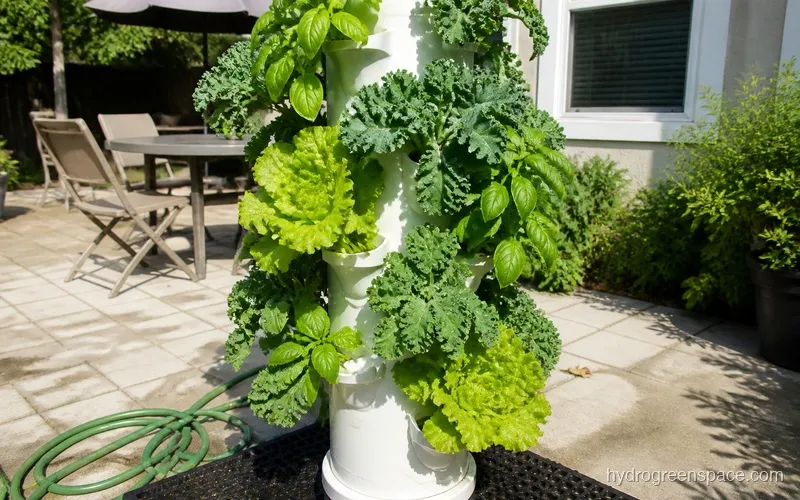
- Leafy greens: Lettuce, spinach, arugula, kale, and chard thrive here. Fast turnover, consistently good yields, easy to manage. This is where the Tower Garden earns its price.
- Herbs: Basil, cilantro, parsley, mint, and similar herbs do very well. The continuous misting keeps them hydrated without overwatering.
- Strawberries: Compact fruiting plants work surprisingly well. Expect smaller berries than soil-grown, but consistent production.
What’s marginal
- Tomatoes and peppers: You can grow them, but the tower form factor isn’t ideal for heavy fruiting plants. They get top-heavy, the root zone is cramped, and you’ll need to stake everything. If tomatoes are your goal, a dedicated best hydroponic system for beginners post can point you toward better setups.
- Cucumbers and beans: Possible, but expect a lot of management work for average yields.
What you cannot grow
Root vegetables (carrots, potatoes, beets, radishes) are out entirely. The system holds net pots with exposed roots; there’s nowhere for a root crop to form. Anything that grows underground is a non-starter.
For a full list of what works and what doesn’t, what you can grow in a hydroponic tower covers this in detail including some of the more surprising options.
The Full Cost Breakdown: Year One and Beyond
Here are the real numbers.
Initial investment
- Tower Garden FLEX (20-site): ~$545
- Tower Garden HOME: ~$695 with the grow light attachment
- Seedling starter kit (rockwool cubes + germination tray): ~$30 to $50
- Nutrients (Tower Tonic): ~$50 for a starter set
Year one startup total: $625 to $795 depending on model.
Ongoing costs
- Tower Tonic nutrients: ~$80 to $120/year for consistent growing
- Electricity (pump runs continuously): roughly $3 to $5/month, so ~$40 to $60/year
- Replacement net pots and growing media as needed: ~$20 to $30/year
- If running grow lights indoors: add another $15 to $25/month in electricity
Year two and beyond: roughly $140 to $210/year in consumables, not counting lighting.
When does it pay for itself?
If you grow leafy greens year-round, you’re replacing roughly $4 to $6 worth of produce per week. That’s $200 to $300/year in food. At that rate, you break even somewhere between year two and year four depending on your model, electricity costs, and how consistently you keep it growing.
If you’re growing intermittently or struggling with poor indoor light, that break-even point stretches out considerably. Whether indoor hydroponic gardens are worth it breaks down the economics in more detail if you want to run your own numbers.
The Noise Issue Nobody Talks About
The Tower Garden runs a pump 24/7 (or on a frequent timer cycle). The pump itself is quiet; it’s the water returning to the reservoir that makes noise. A light gurgling or dripping sound is constant.
For outdoor use, this is a complete non-issue. For indoor use, especially in a bedroom or home office, it’s more noticeable than you’d expect. It’s not loud, but it’s persistent. Think of it like a small desktop fountain running all day.
If you’re sensitive to ambient sound or you’re planning to put it in a sleeping area, that’s worth factoring in before you buy.
Tower Garden vs. DIY PVC Tower vs. Lettuce Grow
| System | Upfront cost | Plant sites | System type | Outdoor use | Indoor use | Maintenance | DIY skill |
|---|---|---|---|---|---|---|---|
| Tower Garden FLEX | ~$545 | 20 to 28 | Aeroponics | Excellent | Requires add-ons | Low | None |
| DIY PVC Tower | $80 to $150 | 20 to 40+ | NFT/flood | Good | Requires add-ons | Medium | Some |
| Lettuce Grow Farmstand | ~$500 to $850 | 12 to 36 | Aeroponics | Good | Requires add-ons | Low | None |
The DIY hydroponic tower from PVC pipe route is genuinely viable if you’re handy and cost-conscious. You’ll spend 3 to 4 hours building, but the system performs comparably to the Tower Garden for leafy greens at a fraction of the cost. The tradeoff is build time, no warranty, and slightly more maintenance.
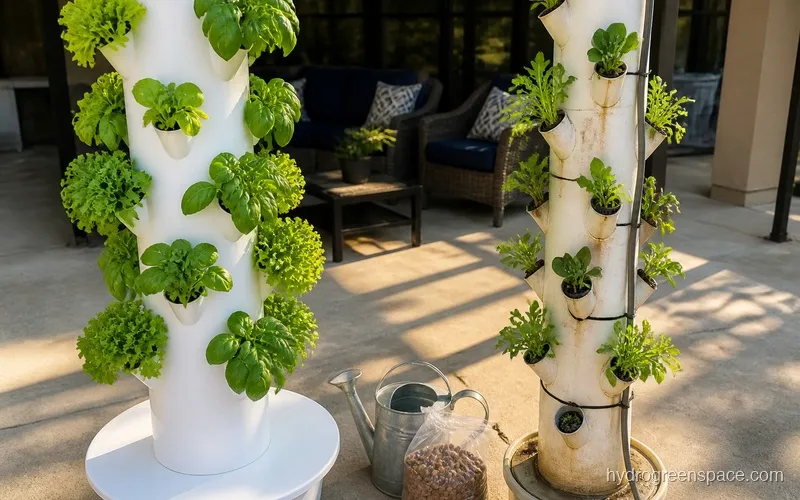
For a Lettuce Grow Farmstand review comparison, that’s a direct head-to-head worth reading if you’re deciding between the two premium options.
If you want to compare more vertical growing options before deciding, best vertical hydroponic systems has a full breakdown of what’s on the market right now.
The Indoor Light Problem
This deserves its own section because Tower Garden’s marketing undersells it.
Tower Garden FLEX and HOME work best outdoors because they need direct sunlight for 6 to 8 hours a day to produce at the level their marketing shows. If you’re growing indoors, the Tower Garden-branded grow lights are underspecced for a 28-site tower. You’ll get leggy, slow-growing plants unless you supplement with a dedicated grow light setup.
If you’re planning an indoor setup, budget for a quality full-spectrum LED (expect $150 to $300 for one that covers a tower properly) and factor that into your cost comparison. At that point, the total investment is pushing $900+.
Alternatively, look at a dedicated indoor vertical system built around proper lighting from the start. The Exo 16-plant vertical tower is one option that’s designed with indoor growing as the primary use case.
Who the Tower Garden Is Right For
It’s a good fit if you:
- Have outdoor patio or deck space with 6+ hours of sun
- Want a low-maintenance system that just runs
- Primarily want to grow leafy greens and herbs
- Have the budget and aren’t trying to break even in year one
Skip it and look elsewhere if you:
- Are primarily growing indoors without a strong grow light setup
- Want to grow fruiting vegetables as your main crop
- Are on a tight budget and willing to build a DIY system instead
- Are new to hydroponics and want to start small before committing
If you’re just starting out and not sure which direction to go, getting started with hydroponics will help you figure out what system type makes sense before spending any money. And if you want to understand the full range of different types of hydroponic systems available, that’s a good primer before locking in on any one approach.
Final Recommendation
The Tower Garden is a legitimately good aeroponic system. It’s not a gimmick, it’s not overbuilt hype, and it does produce real food. The issue is that it’s priced at a premium and sold hard by a distributor network, which means the reviews skew positive in ways that don’t serve the buyer.
If you’re an outdoor grower with good sun exposure who wants a clean, low-maintenance vertical system and you’re not trying to optimize for return on investment, the Tower Garden FLEX is a solid buy. It’s easy to set up, reliable, and genuinely fun to use.
Tower Garden FLEX Aeroponic Vertical Growing Tower
A 20 or 28-site aeroponic tower designed for outdoor use, with continuous root misting for fast growth and high yields in a small footprint.
Best for: outdoor leafy greens, herbs, strawberries
Check price on AmazonBest with 6+ hours of direct sun. Add a grow light if taking indoors.
If you’re shopping primarily on cost, planning to grow indoors, or want to grow anything beyond leafy greens and herbs, do the math before you commit. There are better fits for your situation, and the best seeds for your tower garden piece can at least help you plan what you’d actually be growing before making the call.