EXO 16-Plant Hydroponic Tower: Is It Worth It?
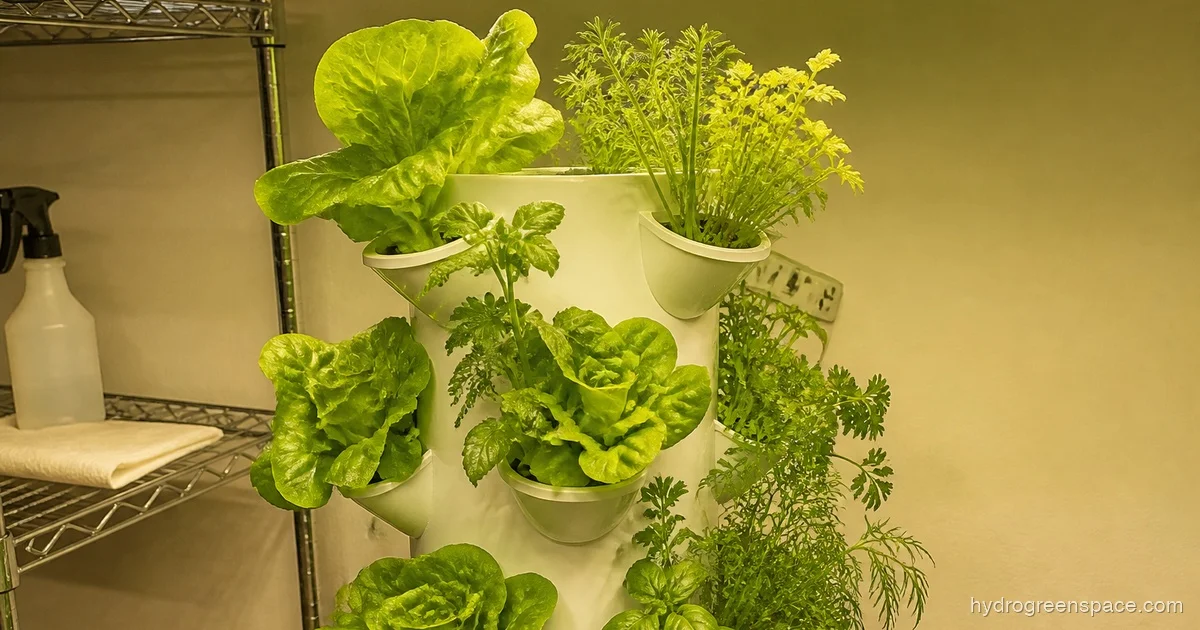
The EXO 16-plant vertical hydroponic garden tower system keeps showing up in grower forums because it hits a price point that Tower Garden and Lettuce Grow can’t match, while offering expandability that neither competitor does. At around $208, it’s easy to dismiss it as a budget option. After spending real time with it, I’d say the price difference isn’t about cutting corners. It reflects a different product philosophy, and that philosophy suits a lot of home growers better than the premium alternatives.
Here’s everything you need to know before buying: what comes in the box, how setup actually goes, what grows well and what doesn’t, the noise situation, and a head-to-head comparison against Tower Garden and Lettuce Grow Farmstand.
| System | Best For | Type | Budget |
|---|---|---|---|
| EXO 16-Plant Tower | Herbs and leafy greens | Vertical aeroponic | $$ |
| Tower Garden HOME | Larger plants + fruiting veg | Vertical aeroponic | $$$$ |
| Lettuce Grow Farmstand | Compact spaces, beginners | Deep water culture | $$$ |
What You Get in the EXO 16-Plant Kit
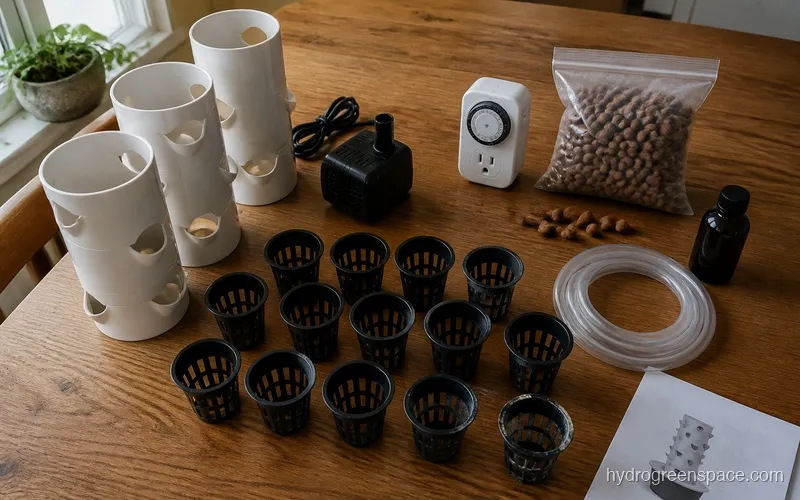
The kit ships with everything you need to start growing: the tower body sections, 16 net cups at 2 inches each, grow media, a nutrient starter, a submersible pump, a timer, and the reservoir base. Some kit versions also include a green bubbler attachment, which matters when we get to noise.
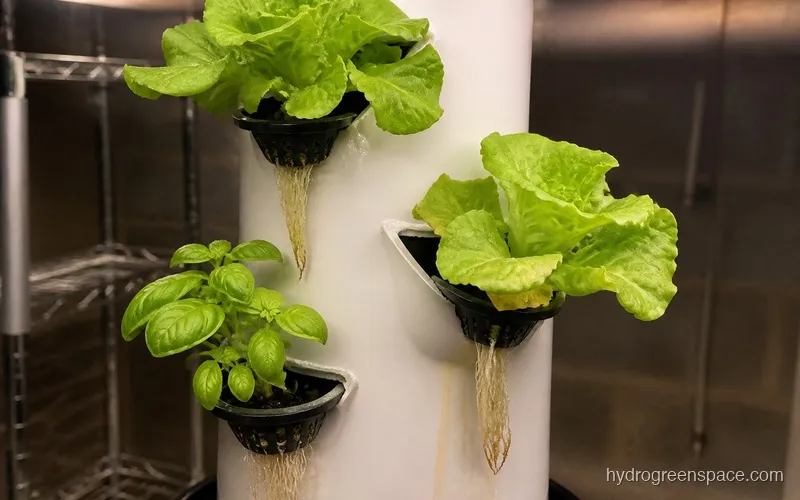
The net cups are 2-inch diameter. That’s worth noting upfront because it determines what you can realistically grow and how long you can grow it before the tower gets crowded. The pump sits in the reservoir at the base, water travels up through the central column, and the nutrient-rich water circulation carries it back down through the growing pockets and into the reservoir again. If you want to understand the full mechanics, how a hydroponic tower circulates water covers this in detail for any vertical tower design.
How to Set Up the EXO Hydroponic Tower
Assembly typically takes 20 to 30 minutes. The tower sections stack and lock together, the pump drops into the reservoir with the tubing running up the center column, and the automated timer pump gets plugged in. No drilling, no cutting, no tools required.
Here’s the sequence that makes it go smoothly:
- Rinse the reservoir and all tower sections before first use
- Stack and lock the tower sections on the base in order
- Thread the pump tubing up through the central column before snapping the top cap in place
- Fill the reservoir to the indicated fill line with clean water
- Add nutrients according to the included guide, or use a hydroponic nutrient calculator to dial in your ratios precisely
- Set the timer to 15 minutes on, 45 minutes off as a starting point
- Run the pump for a few minutes to confirm water reaches all 16 pockets before adding plants
Add your rockwool cubes or preferred grow media to the net cups, transplant your seedlings, and you’re running.
→Check price on VIVOSUN Rockwool CubesSoak in pH 5.5 water for 1 hour before use.Setting up an indoor hydroponic garden for the first time? That guide covers room placement, light positioning, and environmental basics that apply directly here.
Tip: Pre-soak your grow media in pH-adjusted water (5.5 to 6.5) for an hour before transplanting. Dry media can temporarily pull moisture away from young roots right when they’re establishing.
Fast growth is one of the genuine strengths of this system. Lettuce starts filling in around week 2 and reaches harvest size by week 3. Before you plant, it’s worth checking which seeds perform best in a tower setup so you start with varieties that actually suit the 2-inch cup format.
What Grows Well (and What Doesn’t)
This is where the 2-inch net cup becomes the defining constraint. The EXO tower excels with:
- Lettuce (any variety): fast, dense, and easy to manage in cut-and-come-again style
- Herbs: basil, cilantro, parsley, mint (with containment, more on that below)
- Spinach and arugula: both thrive in the moisture levels the tower maintains
- Kale: harvest outer leaves regularly to keep it from crowding adjacent pockets
- Strawberries: productive with consistent trimming as runners develop
Lettuce in a hydroponic tower is about as easy as growing gets. The 15/45 timer cycle keeps roots oxygenated without leaving them waterlogged, and varieties like buttercrunch, romaine, and oakleaf all reach harvest size in three weeks or less. Before you plant your first tower, reading through the best lettuce varieties for hydroponics is worth 10 minutes.
What struggles in the EXO tower:
- Tomatoes: the 2-inch net cups can’t support the root mass a mature tomato plant needs
- Cucumbers and squash: same root limitation, plus vine weight can make the tower unstable
- Peppers: they’ll survive to a point, but fruiting performance is poor in this format
Common mistake: Planting mint directly in the net cups without containment. Mint roots travel horizontally and will block drainage channels within a few weeks. Grow it in a mesh bag inside the net cup, or dedicate it to a separate section where you can pull it out cleanly.
The Noise Reality
Let’s address this directly because it’s the most common complaint across user reviews: yes, the pump can be noisy.
The culprit in most cases is the green bubbler attachment. Users consistently report that removing it after 2 to 3 weeks (once beneficial bacteria have established in the reservoir) drops the noise significantly. The bubbler is designed to add oxygenation during startup, but it creates turbulence that gets amplified through the plastic tower body.
With the bubbler removed and the pump resting on the included foam pad, most users describe the running sound as a quiet hum you stop noticing within a day. That said, if you plan to put this system in a bedroom or home office, run it overnight before committing to that placement.
If you’re running the EXO tower indoors with grow lights, positioning it in a corner helps absorb ambient sound. The guide to adding grow lights for indoor use also covers room placement factors that apply here, including temperature management from the light fixture.
Can You Expand Beyond 16 Plants?
Yes, and this is one of the EXO tower’s most meaningful differentiators. The modular tower garden design supports expansion sections that bring total capacity to 28 plants. You start with the base kit, grow with it, and add capacity when you’re ready.
Neither Tower Garden nor Lettuce Grow Farmstand offers meaningful modular expansion at a comparable price. The Farmstand comes in fixed sizes (12, 24, or 36 plants), and the Tower Garden models are fixed-capacity systems. With the EXO tower, you’re not locked into a capacity decision upfront. That’s a real advantage if you’re not sure how serious you’ll get about this.
EXO Tower vs. Tower Garden vs. Lettuce Grow Farmstand
Here’s where most buying decisions land. All three are vertical hydroponic towers for home use. The differences come down to price, plant capacity, plant variety support, and aesthetics.
EXO 16-Plant Tower — the value pick. Lowest price, expandable capacity, and the only modular option of the three.
EXO 16-Plant Vertical Hydroponic Tower
Modular vertical aeroponic tower that grows 16 plants and expands to 28, the best value entry point for vertical growing.
Best for: Herbs, lettuce, spinach, arugula, kale, strawberries
Check price on AmazonGrow light sold separately for indoor use.
Tower Garden HOME — the variety pick. Larger net cups mean you can grow tomatoes, peppers, and cucumbers that the EXO’s 2-inch cups can’t support.
Tower Garden HOME Growing System
Premium aeroponic tower that supports larger net cups and fruiting vegetables, built for serious growers who want more versatility.
Best for: Herbs, greens, tomatoes, peppers, cucumbers
Check price on AmazonLight kit sold separately.
Lettuce Grow Farmstand — the aesthetics pick. Fixed capacity and costs more than the EXO, but it’s the cleanest-looking system if the tower is going somewhere visible.
Lettuce Grow Farmstand
Self-watering deep water culture system in a clean vertical design, a polished beginner option with no expansion capability.
Best for: Leafy greens, herbs, compact spaces
Check price on AmazonFixed capacity; no expansion modules available.
The price gap is real. The EXO tower runs around $208 for 16 plants. The Lettuce Grow Farmstand starts around $248 for only 12 plants and doesn’t expand. The Tower Garden HOME with a light kit runs $500 or more.
Where Tower Garden earns its premium price is plant variety. Its larger net cups can support cherry tomatoes, peppers, and larger herbs that the EXO tower’s 2-inch cups can’t handle. If your goal is to grow fruiting vegetables alongside leafy greens in one system, the Tower Garden is worth the investment. For a full breakdown of the best vertical hydroponic systems on the market, that comparison covers every major option.
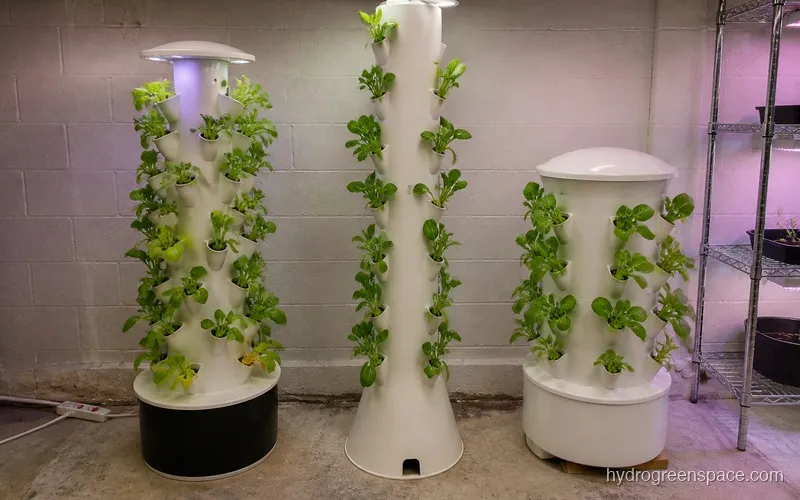
Where Lettuce Grow earns its spot is aesthetics. The Farmstand looks like a piece of considered furniture. If your setup is going in a kitchen or living room and appearance matters more than value, it’s the cleaner choice. The Lettuce Grow Farmstand reviewed in detail and the Tower Garden reviewed head-to-head both go deeper if you want to see specific performance data before deciding.
A Word on Maintenance
Vertical towers in general need a little more attention than a passive Kratky setup, but less than a recirculating DWC system. For the EXO tower specifically:
- pH management: check every 3 to 4 days and keep it between 5.5 and 6.5. The reservoir is large enough that small fluctuations are forgiving.
- Nutrient top-off: add water and nutrients as the reservoir level drops, typically every 5 to 7 days
- Reservoir flush: fully flush and replace the nutrient solution every 3 to 4 weeks to prevent salt buildup and bacterial growth
- Pruning: at full capacity, the 16 plants will start crowding each other around weeks 4 to 5. Harvest outer leaves aggressively to keep airflow between plants
The common mistakes new tower growers make are worth a quick read before you start. Skipping the pH check and letting nutrient concentration drift are the two issues that cause most early failures, and neither takes more than five minutes to manage.
Is the EXO 16-Plant Tower Worth It?
For leafy greens, herbs, and small fruiting plants, the EXO tower is hard to beat at this price. You get 16 growing sites, a working automated timer pump setup, real modular expandability to 28 plants, and lettuce that’s harvestable in three weeks. The noise issue is solved by removing the bubbler. The 2-inch net cup limitation is real but predictable: if you know going in that this is primarily a leafy greens and herbs tower, you’ll never feel constrained.
If you want to grow tomatoes, large peppers, or cucumbers, look at the Tower Garden instead. If aesthetics are your priority and budget isn’t a constraint, the Farmstand makes the cleaner impression. But if you’re setting up your first vertical hydroponic system for small spaces and want a steady supply of fresh greens without a $500 commitment, the EXO tower delivers without asking you to take a financial leap of faith.
The question isn’t really whether the EXO tower works. It does. The question is whether 16 sites of leafy greens and herbs aligns with what you actually want to grow. If you’re still working out what varieties to start with, the full vertical hydroponics guide covers crop selection, system matching, and what to expect in your first growing season.