Does Hydroponics Need Running Water? Not Always
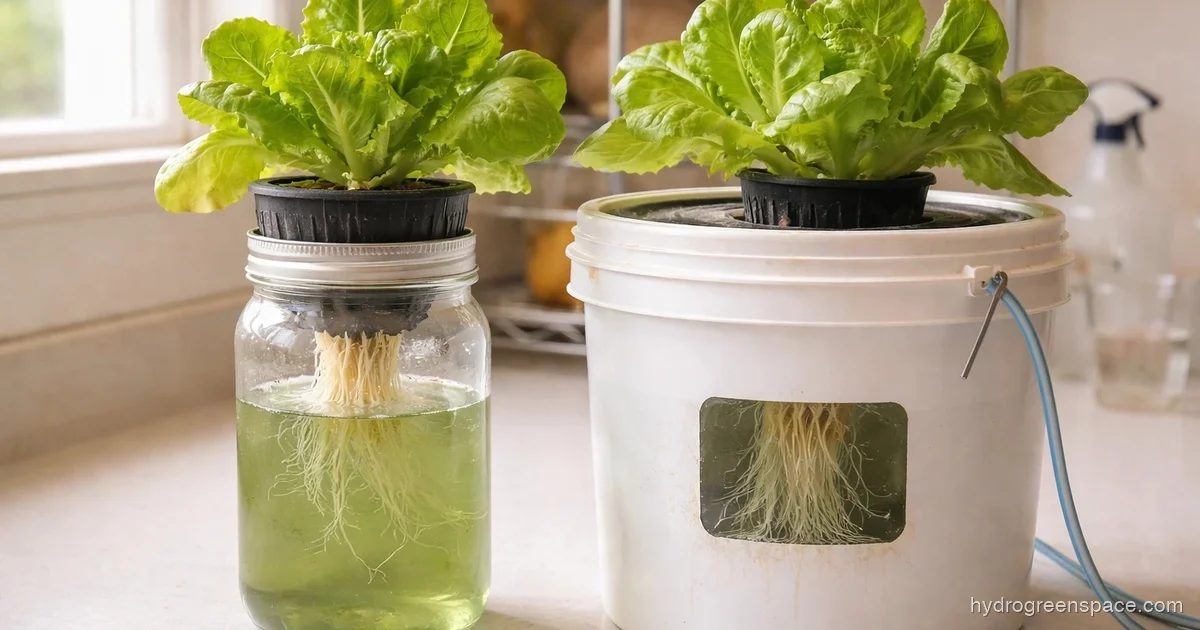
Most people picture hydroponics and think of pipes, pumps, and plumbing running all day long. That image is wrong for most home setups, and it stops a lot of beginners from getting started. Hydroponics doesn’t tap into your water line the way a hose or faucet does. Your plants live in a closed reservoir you fill yourself, and depending on the system you choose, that reservoir might just sit there quietly with no pump, no timer, and no moving parts at all.
The real question isn’t whether hydroponics needs running water. It’s whether your system needs water movement at all, and the answer varies a lot depending on which of the main types of hydroponic systems you’re working with.
The Closed Reservoir Idea (and Why It Matters)
Before anything else, let’s be clear about how hydroponics delivers nutrients to roots: you mix a nutrient solution in a reservoir, your plant roots access that solution, and you top it up as the plants drink it down. That’s it. There’s no connection to your tap, no drains, no ongoing water supply.
What varies between systems is how that solution gets to the roots. In some setups, roots hang directly into still water and absorb nutrients passively. In others, a pump pushes solution up through the system on a timer or continuously. The type of movement (or lack of it) is the biggest factor in what kind of grower you need to be.
Tier 1: No Pump, No Electricity, No Problem
The simplest answer to whether hydroponics needs running water: no. Not always. Two systems prove this convincingly.
The Kratky Method
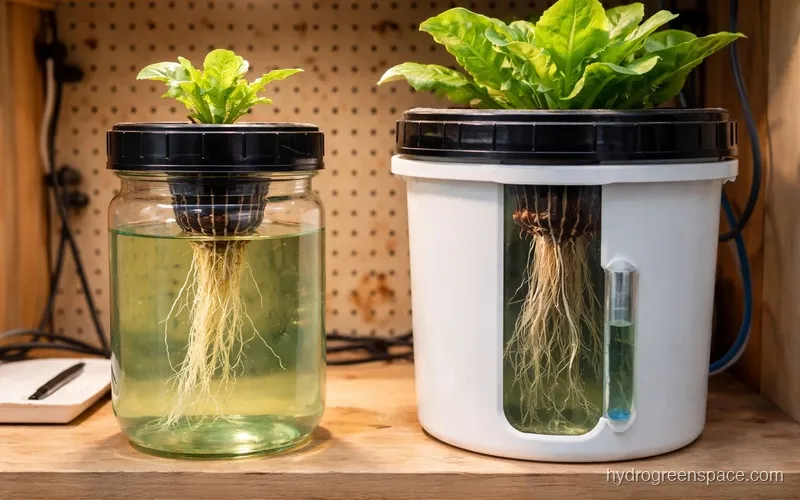
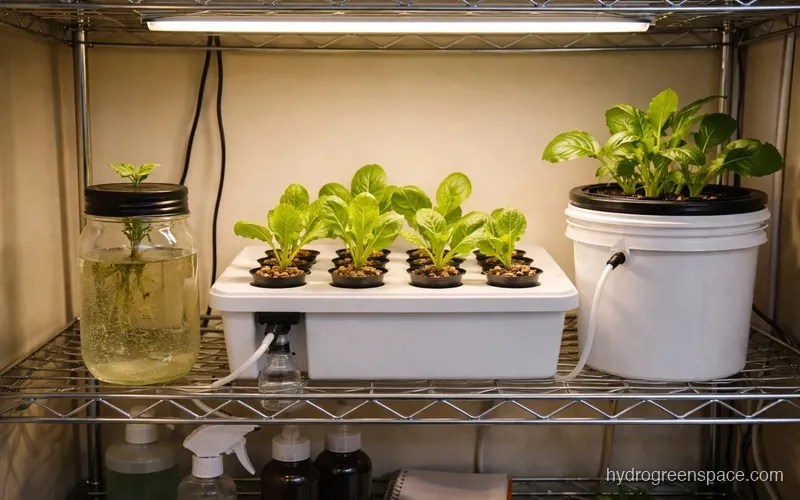
The Kratky method is exactly what it sounds like once you understand it: roots grow into a nutrient solution, drink it down over time, and the air gap that forms above the waterline gives roots the oxygen they need. You start with a container (a mason jar, a bucket, a storage tote) filled with nutrient solution, drop in a net pot with your seedling, and leave it. No pump, no electricity, no timer. The plant manages everything.
If you want to build a Kratky system with no pump at all, you’ll spend more time mixing the initial nutrient solution than you will on the actual build. The main thing to watch is the air gap: as the roots descend and the solution level drops, you need that gap to stay open. If you top up too aggressively and flood the gap, you cut off root zone aeration and stress the plant. Top up when the gap reaches 2-3 inches and you’re doing fine.
Kratky works best for leafy greens and herbs: lettuce, spinach, basil, cilantro. It’s a poor fit for tomatoes or peppers that fruit over many weeks and drink unpredictably.
What I’d do: Start with a single Kratky jar and one basil plant before anything else. It costs almost nothing, and you’ll understand root zone aeration, dissolved oxygen, and nutrient depletion from firsthand experience.
Wick Systems
The wick system is the other no-pump option. A cotton or nylon wick runs from the nutrient reservoir up into the growing medium (usually perlite or coco coir), drawing solution up passively. It’s genuinely quiet, genuinely hands-off, and genuinely limited: wicks can only move so much solution per hour, which means they can’t keep up with large, thirsty plants. Herbs and small leafy greens are the sweet spot.
For low-effort passive builds, wicks and Kratky are the two approaches worth knowing. Both can run with zero electricity, which means they’re also the answer to “can hydroponics work without electricity?” Yes, for small plants, they can.
Tier 2: A Pump, But Only When It’s Needed
Once you move past herbs and lettuce into faster-growing crops or larger volumes, passive systems hit their limits. That’s where timer-based setups come in.
Ebb and Flow Systems
Ebb and flow systems (also called flood and drain) run a pump on a timer that floods the growing tray with nutrient solution for 15-30 minutes, then drains it back into the reservoir below. The timer cycles a few times per day, not continuously. Between floods, roots sit in a moist medium with plenty of air. This is one of the better answers to the question of whether you can run hydroponics off a timer instead of continuously: yes, ebb and flow is designed exactly for that.
This approach works well for a wider range of crops including herbs, leafy greens, and fruiting plants if you dial in the cycle frequency based on your grow medium and plant size. Rockwool dries faster than clay pebbles, so it needs more frequent flooding.
Drip Systems
Drip systems work similarly: a pump delivers nutrient solution through emitters above each plant on a timed cycle. The timer approach means the pump isn’t running all day, which extends its lifespan and keeps electricity costs modest. You do need to watch emitter clogging, but it’s not the headache people make it out to be if you use filtered water or RO water.
Tier 3: Continuous Circulation
Deep Water Culture
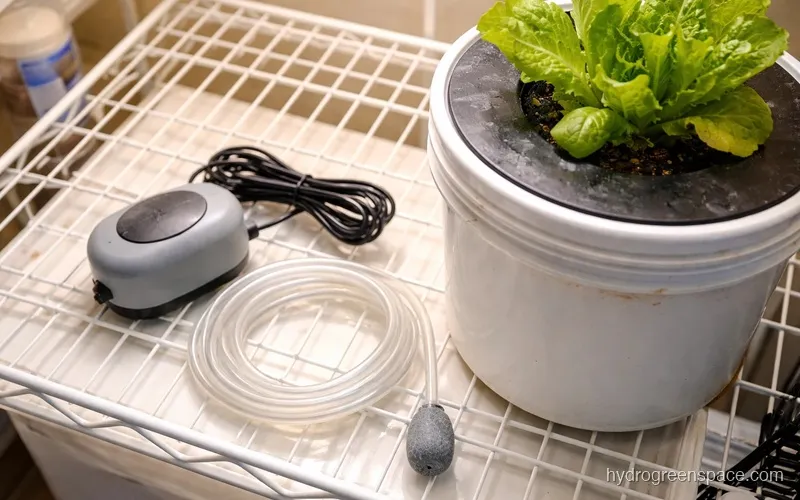
Deep water culture keeps roots submerged in nutrient solution 24/7. Because stagnant water goes anoxic fast and kills roots, an air pump with a stone runs continuously to oxygenate the solution. The pump is small (the kind used in fish tanks) and costs almost nothing to run. The water itself doesn’t circulate between containers unless you’re running a recirculating DWC, but the air pump never stops. A simple bucket setup is the most common starting point for home DWC growers.
Dissolved oxygen is the metric that matters in DWC: aim for 6-8 mg/L. Water temperature plays into this directly since warm water holds less oxygen, which is why DWC growers in warm climates often add a water chiller or wrap reservoirs in insulation.
NFT: The One That Actually Does Flow
Nutrient Film Technique (NFT) is the system that most closely matches the “flowing water” image people have of hydroponics. A thin film of nutrient solution runs continuously through sloped channels, over bare roots, and back into a reservoir below. The pump runs constantly, not on a timer. If it stops for more than a few hours, roots dry out and you lose the crop fast.
So to answer the specific question: does NFT always need flowing water? Yes. NFT is the one system that truly depends on continuous flow. It’s also the reason NFT isn’t a beginner-friendly recommendation.
How Often Does Hydroponics Need New Water?
This depends on the system, but a useful rule of thumb for most home setups: check nutrient solution levels every 2-3 days and top up with plain pH-adjusted water as needed. Full reservoir changes (replacing the whole solution) typically happen every 1-2 weeks in active systems. Kratky runs until the reservoir is almost empty before you’d consider a top-up or refill.
What you’re watching for: EC drift (nutrients getting too concentrated as plants drink water faster than nutrients), pH creep, and visible root health. If your EC climbs and pH drops, your plants are drinking more water than solution. Top up with plain water to bring EC back down.
Recirculating vs. Static: Which Is Right for Beginners?
Recirculating systems (DWC buckets connected in a loop, NFT, and some drip setups) continuously cycle solution through multiple containers. The benefit is consistent nutrient delivery across a larger garden. The trade-off is more hardware, more potential failure points, and the need to monitor solution quality more closely across the system.
Static systems (single Kratky containers, individual DWC buckets, wick setups) are simpler to manage, easier to troubleshoot, and the clear winner for anyone starting out.
If you’re weighing your options, the article on getting started with an indoor hydroponic garden walks through the setup decisions in detail, and the piece on what it actually costs to start hydroponics will give you realistic numbers before you buy anything.
The Beginner Recommendation
If you’re newer to this and worried about pumps, electricity, or plumbing: start with Kratky. One jar, one plant, one batch of mixed nutrient solution.
When you’re ready to scale and want more control, a DWC bucket is the next natural step. Add an air pump, grab a 5-gallon bucket, and you’re running a system that can carry larger crops all the way to harvest.
Once you’ve done both, you’ll have a much clearer sense of whether a recirculating setup or choosing your first hydroponic system for a bigger garden is the right call for your space and goals. And if you’re still not sure whether a hydroponic garden is worth the effort, those early grows will answer that question better than anything else. For the full overview of what a new grower needs to know before starting, the beginner guide to hydroponics covers it all in one place.