Indoor Hydroponic Garden for Beginners: Start Here
The most common reason beginners quit hydroponics before they start is information overload. They search for a simple setup, land on an article covering six system types with comparison tables, and close the tab. You don’t need to understand every system before you grow your first plant. You need to make one good decision and get started.
This guide walks you through exactly that: which system makes sense for your situation, what you actually need to buy, and how to handle the two things that scare beginners most (pH and cost) before they become problems.
If you want to understand what hydroponics actually is before jumping into setup, that’s worth a few minutes. But if you’re ready to grow, keep reading.
Pick One System, Not Six
For most beginners growing indoors, the real choice comes down to two options.
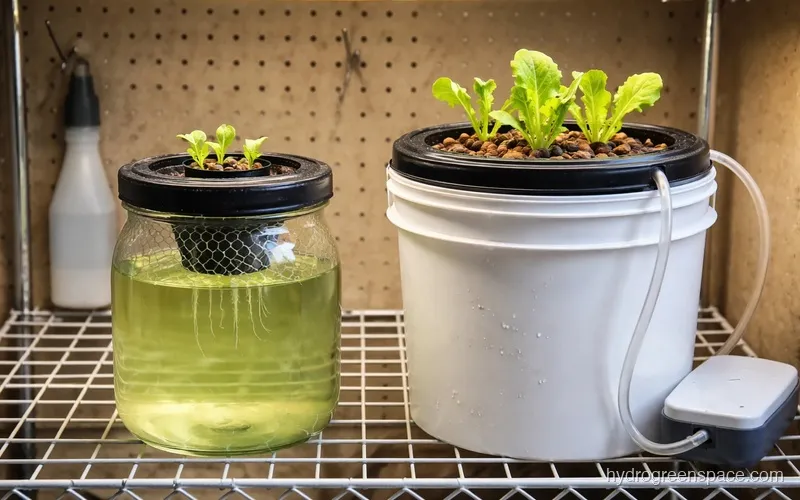
Deep water culture (DWC) with a pump or Kratky (no pump, passive).
That’s it. Everything else is either more complex or less effective for a home setup.
Use Kratky if:
- You want as few moving parts as possible
- You’re growing leafy greens (lettuce, spinach, herbs)
- You don’t want to monitor water levels obsessively
- You’re testing hydroponics before committing
Use DWC if:
- You want faster growth and higher yields
- You’re planning to grow fruiting plants eventually (tomatoes, peppers, cucumbers)
- You’re comfortable with a simple air pump and airline setup
- You want a system that scales
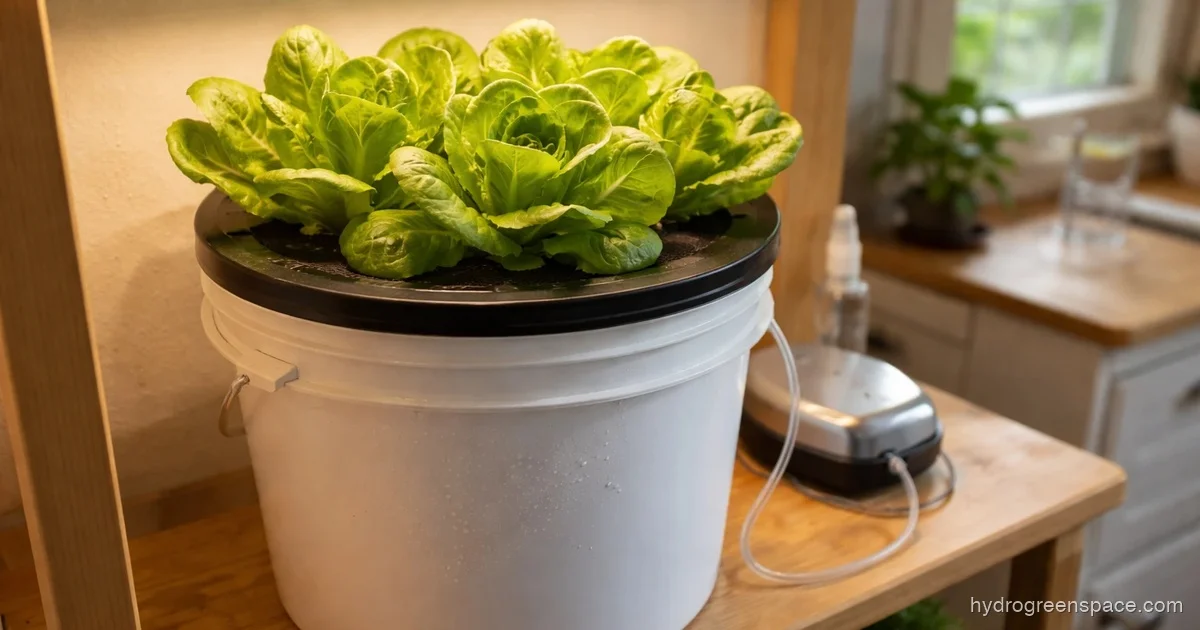
The Kratky method is genuinely simple: a container, net pots, nutrient solution, and light. No pump, no electricity beyond the grow light. A simple 5-gallon bucket system works the same way for DWC, just with an air stone and pump added. If you’re not sure which fits you, start with Kratky for herbs and lettuce, and move to DWC when you’re ready to grow bigger plants.
What You Actually Need (and What You Don’t)
The “beginner hydroponic garden setup” product lists you’ll find online include a lot of nice-to-haves. Here’s the minimum viable setup for either system.
The essentials:
- A container (mason jar, bucket, or storage tote depending on your system)
- Net pots (2-inch for herbs and lettuce, 3-inch for larger plants)
- A growing medium (hydroton clay pebbles or rockwool cubes)
- A two-part or three-part liquid nutrient solution (General Hydroponics Flora Series is a reliable starting point)
- A pH meter and pH up/down solution
- LED grow lights if you don’t have a south-facing window with strong light
What beginners add too early:
- EC/TDS meters (useful, but pH is more urgent to get right first)
- Expensive timers (a cheap mechanical outlet timer works fine)
- Multiple grow lights before you know your plant count
- A full reservoir monitoring system
If you want a bundled starting point, checking out best beginner grow kits can save you from buying mismatched parts. Kits aren’t always the best value, but they remove the compatibility guesswork.
For which vegetables to start with, lettuce, basil, and spinach are the right call. They grow fast, forgive minor nutrient errors, and give you visible results in 3-4 weeks. Tomatoes and peppers are rewarding but need more dialing in, and they’ll punish early mistakes harder.
The pH Problem (and Why It’s Simpler Than You Think)
pH is the number one reason beginners see their plants stall or die and don’t know why. The fix isn’t complicated, but you have to take it seriously from day one.
Hydroponic plants need their nutrient solution at a pH between 5.5 and 6.5. Outside that range, they can’t absorb certain nutrients even if the nutrients are present. The plant looks nutrient-deficient, you add more nutrients, the problem gets worse.
The setup is simple: mix your nutrient solution in your reservoir, test pH with a digital meter, then add pH Up (potassium hydroxide) or pH Down (phosphoric acid) until you hit your target. For most vegetables and herbs, aim for 5.8 to 6.2. Lettuce likes 6.0 to 6.5.
Check pH every time you top off the reservoir. Water evaporates but pH-affecting minerals don’t, so your reservoir pH will drift over time. A quick check before you add water takes 30 seconds and prevents most crop problems.
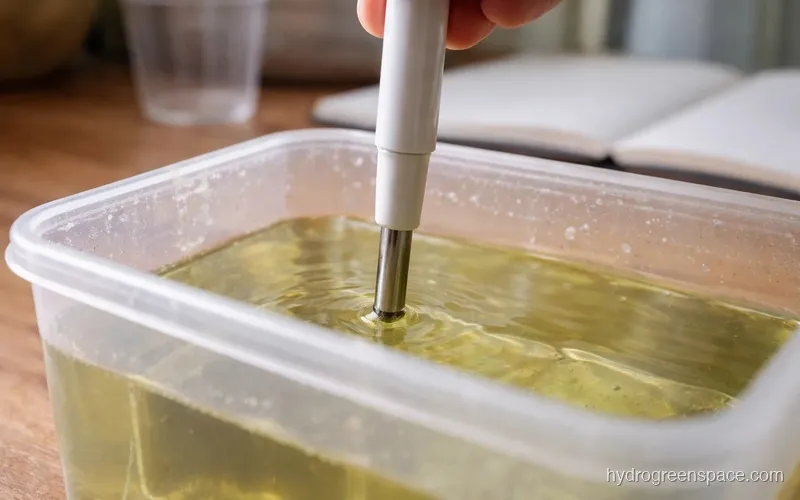
Common mistake: Cheap pH strips are not accurate enough for hydroponics. They’ll get you in the ballpark but not close enough to diagnose a problem. A digital pH meter in the $15-$25 range is all you need. Calibrate it with the included calibration solution before first use.
For a deeper look at managing pH over time, the full guide to pH in hydroponics covers drift, calibration, and what to do when your readings look right but plants still struggle.
What Does It Actually Cost?
Here’s a real breakdown for a small indoor setup that can grow 4-6 plants of lettuce or herbs.
| Item | Estimated Cost |
|---|---|
| 5-gallon bucket or storage tote | $5-$15 |
| Net pots (pack of 10) | $5-$10 |
| Hydroton clay pebbles (small bag) | $10-$20 |
| Liquid nutrient solution (starter size) | $20-$35 |
| pH meter + calibration solution | $15-$25 |
| pH Up and pH Down | $10-$15 |
| LED grow light (100W equivalent, small panel) | $30-$60 |
| Air pump + airstone + tubing (DWC only) | $10-$20 |
Total for Kratky setup: $65-$125 Total for basic DWC: $85-$160
Those numbers assume you’re buying individual parts. If your budget is tight, building a cheap hydroponic system from hardware store materials can bring the entry cost down further.
Running costs are low. Nutrients for a small system run $5-$10 per month. Electricity for an LED grow light is negligible. Water use is minimal compared to soil growing. The upfront cost is the main barrier, and it’s lower than most people expect.
Setting Up in a Small Space
An indoor hydroponic garden for beginners doesn’t need a dedicated room. A corner of a kitchen, a shelf in a spare room, or a basement wall all work fine. What you’re managing is light, temperature, and airflow, not floor space.
Most LED grow lights need to be 12-18 inches above the plant canopy for leafy greens. As plants grow taller, you adjust the light height. A simple adjustable rope hanger keeps this easy.
Temperature should stay between 65-75F for most vegetables and herbs. Below 60F slows growth; above 80F invites root problems. If you’re setting up in a basement, check temperatures in both summer and winter before picking your grow location.
Airflow matters more than beginners expect. A small clip fan running on low keeps air moving across the canopy, strengthens stems, and prevents humidity from sitting on leaves and causing mold. It doesn’t need to be powerful, just consistent.
Does Your Indoor System Need a Pump?
The direct answer: no. Kratky and wick systems don’t use pumps. DWC does.
Whether you need a pump depends on your system choice, not on some rule that hydroponics requires one. If you’re growing leafy greens in a passive Kratky setup, you’ll never need a pump. If you want to grow heavier fruiting plants or run a recirculating system, a pump becomes necessary.
For a no-pump Kratky variation that works well with smaller net pots, pool noodles make decent low-cost net pot holders. It sounds quirky but it’s a legitimate approach.
If you’re curious how different types of hydroponic systems compare across the full range, that breakdown is worth reading once you’ve got your first setup running. Understanding the landscape is more useful after you’ve grown something than before.
Once your setup is running and plants are growing, the next thing to get right is feeding schedule and nutrient ratios. How to feed your plants covers that in detail, including how to read deficiency symptoms before they turn into crop loss.
If you want the full roadmap before you commit to a system, the beginner guide to hydroponics covers everything from system selection to first harvest in one place.
Your first grow will teach you more than any guide can. Pick your system, get the basics in place, and put something in the water. Everything else you’ll learn from the plants themselves.