
Garage Hydroponics: How to Grow Year-Round
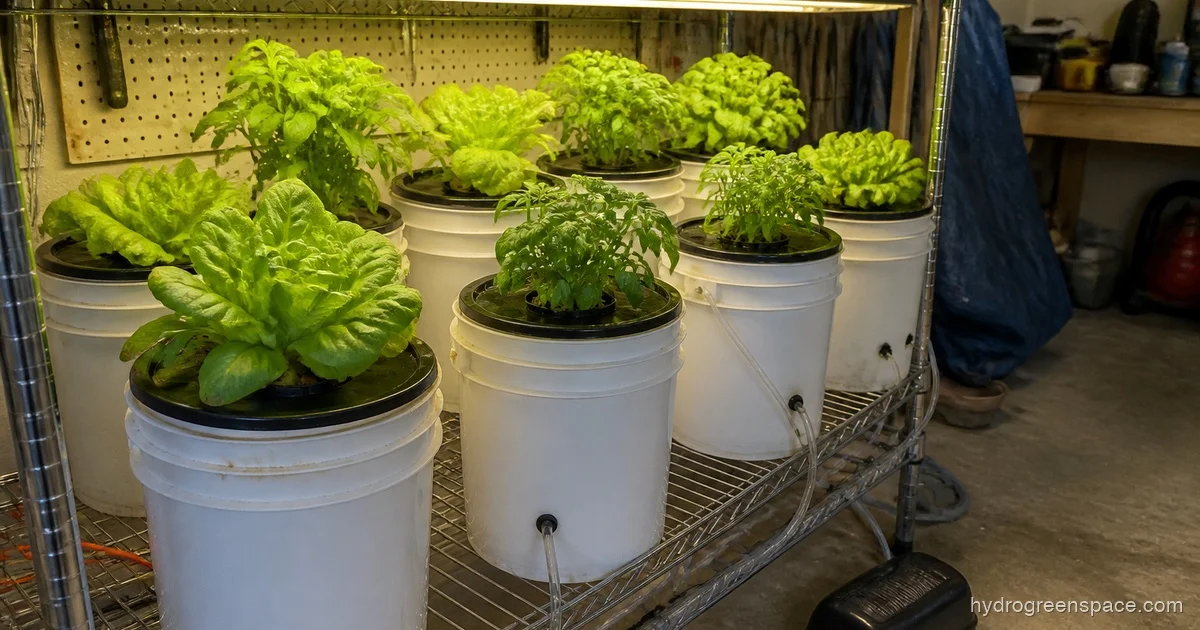
Your garage is probably one of the best spaces you have for a hydroponic setup. It’s out of the way, has more square footage than a closet, and you don’t have to explain to guests why your living room smells like nutrient solution. But a garage is not a basement or a spare bedroom. It comes with real challenges that require some planning before you get started.
The short answer to “can you do hydroponics in a garage?” is yes, and people do it successfully year-round. The longer answer is that you need to plan for temperature extremes, electrical capacity, and the fact that garages are dusty, gapped, and occasionally used to park cars. Get those three things right and a garage grow outperforms most indoor setups.
The Real Challenges of a Garage Environment (And How to Solve Them)
Unlike a spare room, an uninsulated garage can swing 40°F in a single day during spring or fall, hit 95°F in summer, and drop below freezing in winter. Your plants won’t survive that unmanaged, but your system can, with some planning.
Temperature: The Biggest Variable
Most hydroponic crops do best between 65°F and 80°F. Lettuce and leafy greens tolerate the cooler end of that range. Basil, tomatoes, and peppers want it warmer. A garage that routinely drops below 55°F or climbs above 90°F will shut your production down fast.
Summer heat is the harder problem. Warm nutrient solution holds less dissolved oxygen, and once your reservoir climbs above 72°F you’re looking at root rot risk. A few things that actually help: an insulated reservoir (wrap it in foam board or use a dark, opaque tote), a small aquarium chiller if your summer heat is extreme, and keeping your grow area away from the garage door wall, which absorbs the most heat from sun exposure.
Winter cold is more manageable than it sounds. LED grow lights generate heat, and in a small enclosed grow area, that heat accumulates. A 4x4 grow tent inside an uninsulated garage can stay 10-15°F warmer than the surrounding garage air just from the lights. Below freezing gets tricky, and a small space heater with a thermostat controller handles it, but you’re adding to your electrical load (more on that below).
What I’d do: In climates with real winters, I’d run the grow area inside a grow tent rather than open in the garage. The tent holds heat from the lights, blocks drafts, and makes environmental control dramatically easier. It also contains the humidity, which your garage floor will appreciate.
Ventilation: Enclosed Spaces Need Airflow
Garages feel well-ventilated because of gaps, but those gaps let in cold air, dust, and pests rather than creating real circulation inside your grow space. Plants need fresh air for CO2, and stagnant humid air around your canopy invites mildew.
A basic setup: one inline fan pulling air through a carbon filter (basil and tomatoes are fragrant, so this matters), and a small oscillating clip fan blowing across the plant canopy. For a grow tent inside a garage, pull fresh air from inside the garage (not from outside) and exhaust it back into the garage. This keeps humidity and smell inside the garage rather than pushing it into your living space.
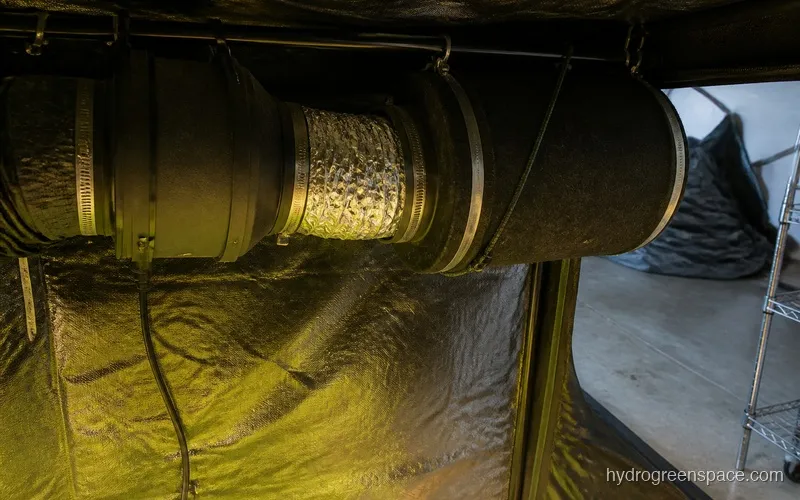
Does a garage hydroponic setup need ventilation? Yes, but the scale depends on your setup. A single 5-gallon bucket grow doesn’t need much. A 4x4 tent with six plants growing under 600W equivalent of LED absolutely does.
Dust, Pests, and Garage Coexistence
Garages collect dust, and dust clogs your air stones, settles on leaves, and gets into your reservoir. Keep your reservoir sealed. Use a net or cover with an opening just large enough for the plant stems, and nothing more. A light layer of reflective panda film or plastic sheeting on the garage floor around your grow area dramatically reduces dust migration.
Pests enter through every gap in a garage door, wall penetrations, and even your drain line if you have one. Fungus gnats are the most common offender in garage setups. With hydroponics the gnats themselves don’t usually damage roots the way they do in soil (there’s no growing medium to lay eggs in), but they’re annoying and can spread mold spores. Yellow sticky traps catch adults; keeping your reservoir sealed handles the rest.
Parking a car in the same garage as your plants raises one concern worth taking seriously: exhaust fumes. If you start the car with the garage closed, exhaust finds its way into your grow space. Either pull the car out, let it air for 10 minutes before entering the garage, or move your grow to a zone with better separation from the car area. Carbon monoxide is not something to improvise around.
Choosing the Right Hydroponic System for a Garage
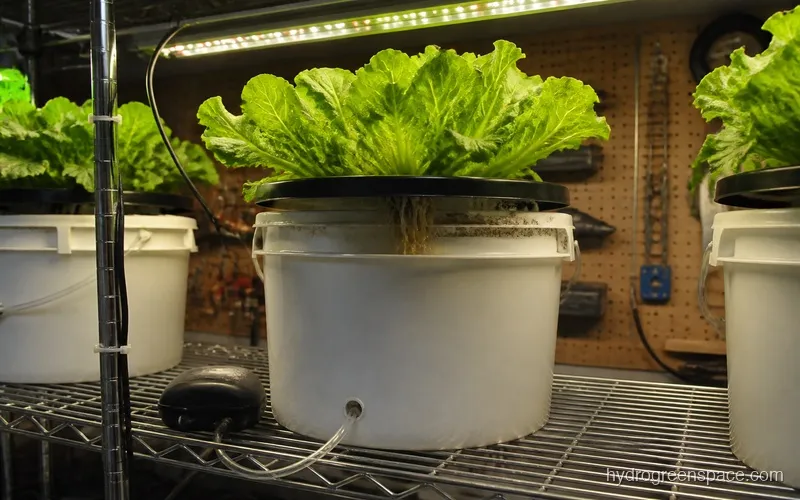
For most people starting garage hydroponics, DWC (deep water culture) is the right call. It’s the most forgiving system when environmental conditions fluctuate, uses the fewest moving parts, and is easy to monitor. If your garage gets hot, you’re watching one reservoir, not 20 individual drip emitters or a recirculating film channel that can dry out in two hours. You can read more about building a DIY deep water culture system if you want to start there.
If you want to step up from a single bucket, a multi-bucket DWC system or a recirculating setup in a larger tote handles more plants without adding much complexity. Compare different types of hydroponic systems if you’re curious about what else works. NFT, ebb and flow, and Kratky all have their place, but for a garage with temperature variability, DWC’s buffered reservoir gives you more time to react when something goes wrong.
What Plants Grow Best in a Garage Hydroponic Setup?
Leafy greens are your most reliable year-round crop in a garage. Lettuce, spinach, kale, and herbs like basil, mint, and cilantro grow fast, don’t need as much light intensity, and tolerate the slightly cooler temperatures that garages run in winter. You’ll get harvests in 4-6 weeks instead of months.
Tomatoes and peppers grow well in a garage DWC setup but require more light, more heat, and significantly more headroom. If your garage ceiling is 8 feet or higher and you’re willing to invest in a quality LED, they’re absolutely doable. Just don’t underestimate how tall an indeterminate tomato gets under adequate light.
Electrical Planning for a Garage Grow
This is where garage hydroponics trips up a lot of new growers. Most garages share one or two 15-amp or 20-amp circuits across all the outlets: lights, garage door opener, power tools, and a refrigerator if you have one. Add a 200W LED, a submersible pump, an inline fan, and a small space heater and you’re pulling significant load from a circuit that was never designed for it.
Here’s a simple way to think about it: a 15-amp circuit at 120V gives you about 1,800 watts before you hit the limit (you want to stay under 80%, so call it 1,440 watts safely). A 200W LED draws around 200 watts actual from the wall. A small air pump is 5-10 watts. An inline fan is 20-50 watts. So far you have 250-260 watts. A 1,500W space heater on low (750W setting) brings you to about 1,000 watts, which is getting close. Running your heater on its own dedicated circuit is smart if you’re in a cold climate.
Warning: Do not use extension cords as permanent wiring for a hydroponic setup. They overheat under sustained load. Use a properly rated power strip with surge protection, or better yet, have an electrician add an outlet on its own circuit in your grow zone. It’s a $150-200 job and it removes the biggest fire risk in the setup.
For a full picture of what gear you’ll need and what it draws, the hydroponic equipment checklist breaks it down by system type.
Do You Need Running Water for Garage Hydroponics?
No. Most home growers in a garage use a 5-gallon or larger reservoir that they fill manually with a hose or carry water to. You top off the reservoir every few days and do a full change every 1-2 weeks depending on your crop and system size. A dedicated water source nearby makes it more convenient, but a laundry tub in the garage or even a garden hose connection handles it fine. For more on this, does hydroponics need running water covers exactly what you need and what you don’t.
How Much Does a Garage Setup Cost?
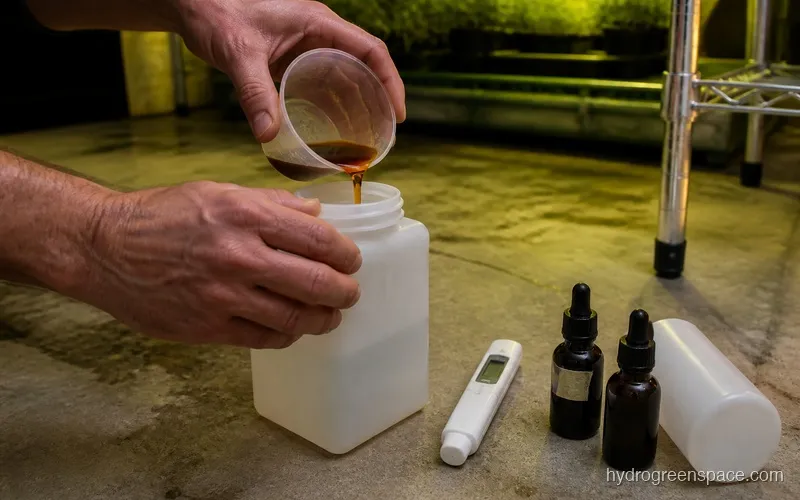
A functional DWC setup for a garage (one 5-gallon bucket, a quality LED panel, an air pump and stone, nutrients, pH kit, and a small oscillating fan) runs $150-300. That covers one to four plants depending on how you size it. If you want to see a full breakdown before committing, the cost to start hydroponics breakdown walks through every line item.
A grow tent adds another $60-120 and is worth it for environmental control in most garages. A cheap option on getting started is the how to build a cheap hydroponic system guide, which keeps the initial investment minimal while giving you a real, functional system.
How to Set Up Hydroponics in a Garage (The Actual Steps)
- Pick your corner. Choose a spot away from the garage door wall and clear of your car’s exhaust path. A back corner or side wall works well.
- Set up your grow tent if using one, or mark out your grow area with panda film on the floor.
- Install your LED grow light according to the manufacturer’s recommended height for seedlings, then raise or lower as plants mature.
- Set up your DWC reservoir: bucket or tote, net pots, air stone, air pump, and tubing. Fill with water and add nutrients to target EC. Adjust pH to 5.8-6.2.
- Add your ventilation: clip fan blowing across the canopy, inline fan on a timer or thermostat if you’re using a tent.
- Place a thermometer/hygrometer inside the grow space and check it morning and night for the first week. You want to know your real temperature range before your plants tell you.
- Transplant seedlings or start seeds in net pots with hydroton or rockwool. For the full process of building out the system, how to build an indoor hydroponic garden walks each step in detail.
Once you’ve dialed in the temperature and got your first harvest, a garage grows like any other indoor space, except you have more room to expand. If you want to see how garage setups compare to other indoor options before committing, the indoor hydroponic growing guide covers every environment from countertop to dedicated grow room. A single DWC bucket turns into four, four turns into a multi-site recirculating system, and suddenly the garage is the most productive square footage in your house.