Bedroom Hydroponics: Grow Plants Without Losing Sleep
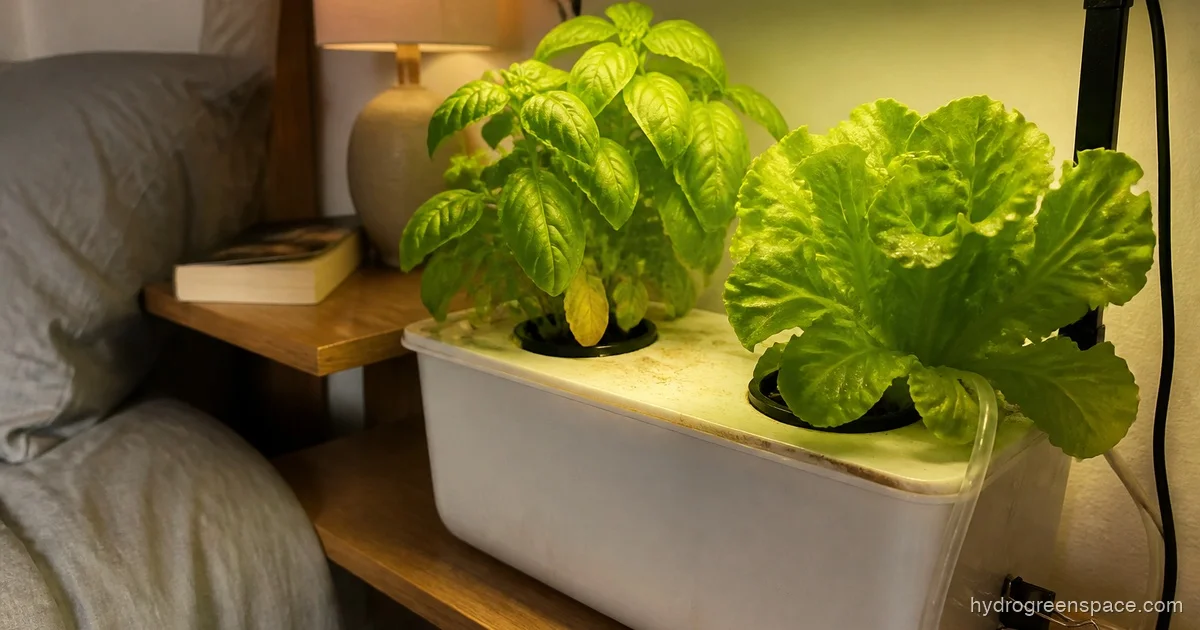
Running a hydroponic garden in a bedroom is completely doable, but the people asking about it aren’t growing in a spare room they never use. They’re asking because they live in a one-bedroom apartment, or their only available space is next to the bed where they sleep every night. That changes everything.
The usual grow room advice assumes you can close the door and walk away. When you’re sleeping six feet from your system, “close the door and walk away” isn’t an option. This article covers bedroom hydroponics specifically for that situation: the light that keeps you awake, the pump hum at 2 a.m., the humidity climbing while you breathe, and the faint smell that shouldn’t be there but is.
How Much Space Do You Actually Need?
The smallest functional bedroom hydroponic setup fits on a shelf or a nightstand corner. A 4-pod or 6-pod Kratky or deep water culture system takes up about the footprint of a medium-sized cutting board. No pump, no timer, minimal setup. That’s your entry point if space is genuinely tight.
If you have a corner, a 2x2 area gives you room for a proper system: a small NFT channel, a 5-gallon DWC bucket, or a compact countertop unit like an AeroGarden. You can cover a lot of herbs and leafy greens in that footprint without the system dominating the room.
One thing I’d caution against: thinking you can tuck a system into an enclosed closet and manage it from the bedroom. A closet grow needs its own ventilation and becomes its own project. If that’s your direction, setting up a proper grow tent is the cleaner path. For bedroom use, open-air placement on a shelf or table is simpler and more manageable.
The Real Problem: Grow Lights and Sleep
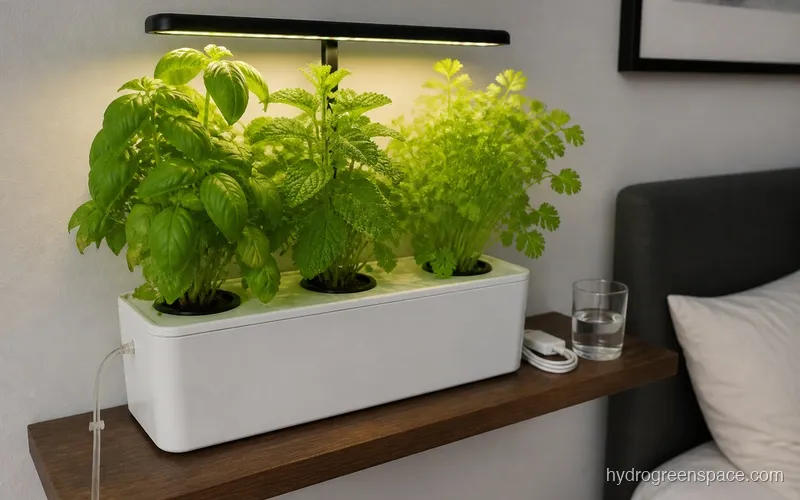
Grow lights are bright. Most full-spectrum LEDs run 16–18 hours a day. If your light cycle runs through part of the night, even a light behind a curtain or pointed at a wall will disrupt your sleep.
The fix has two parts.
Adjust your light schedule. Set your grow light timer so lights-off coincides with when you go to bed, or at minimum two hours before. Plants don’t care whether lights-on is at 6 a.m. or noon. You control that. If your light runs 16 hours starting at 6 a.m., it goes off at 10 p.m. That’s livable. If it runs 18 hours starting at 8 a.m., it runs until 2 a.m. That’s a problem.
Contain the light. Even with a good schedule, light spill during the “on” hours while you’re in the room can be annoying. If the system is on a shelf, a simple blackout curtain on a tension rod over the shelf faces forward and blocks most of the glare. Some growers rig a cardboard enclosure (not pretty, but functional). The goal isn’t eliminating light from the room during the day, just making sure none of it is pointed at your face at 11 p.m.
For more on matching light spectrum and duration to what you’re growing, choosing the right grow light setup covers the full picture.
Pump Noise: What’s Acceptable and What Isn’t
A Kratky or passive hydroponic setup makes zero noise. No pump, no bubbler, nothing. If bedroom noise is a dealbreaker for you, that’s your answer: start with a simple Kratky or beginner system that requires no pump at all.
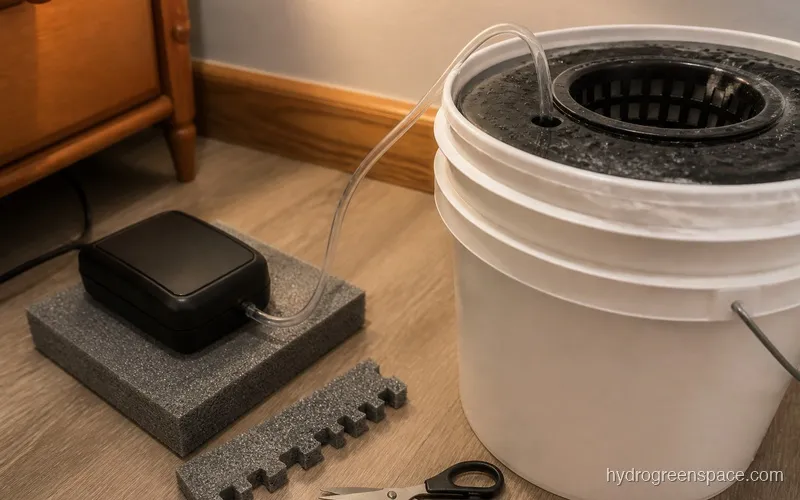
If you want a system with active aeration (DWC, NFT, or similar), the noise question is real. A cheap aquarium air pump in a 5-gallon bucket can be surprisingly loud (not just the motor, but the bubbling water). At 3 a.m. in a quiet room, you’ll notice it.
Here’s what actually works:
- Quality pump matters. A Hailea or Hydrofarm Silent Air pump runs noticeably quieter than generic aquarium pumps. The price difference is maybe $15 and worth every cent if you’re sleeping near it.
- Decouple the pump from the surface. A pump sitting directly on a hard shelf vibrates the whole shelf. Set it on a folded towel or a small piece of foam. This cuts most of the perceived noise.
- Put the pump on a timer too. Some growers run the air pump on a 15-minutes-on, 15-minutes-off cycle overnight. Roots don’t deoxygenate that fast, and the cycle reduces overnight noise significantly. This works for DWC, but don’t do it with NFT or any flow-dependent system.
Humidity and Sleeping in the Same Room
Plants transpire. In a closed bedroom, that moisture goes into the air you’re breathing. A small 6-plant system adds maybe 10–20% relative humidity to a typical small bedroom, which is not always a problem but worth tracking.
The target range for your bedroom is 45–55% relative humidity. Below 30% and you’ll have dry sinuses. Above 65% for extended periods and you’re setting up for mold, both in the room and on your root zone.
A $15 hygrometer on your nightstand tells you where you are. If humidity is climbing, add a small USB fan pointed toward a cracked window or run your AC for a bit before bed. You don’t need a dehumidifier for a small setup; air circulation is usually enough.
If you’re running a larger system (multiple buckets, 12+ plants), humidity management gets more serious. At that scale, the apartment hydroponic setup guide is more relevant to your situation, as it covers managing a system in a smaller shared living space with more plants.
Do Bedroom Hydroponic Systems Smell?
A healthy hydroponic system has almost no smell. The plants smell like the herbs or vegetables they are (pleasant, mild, not offensive). The issue is when things go wrong.
The two causes of bad smell in hydroponic systems are algae and root rot. Both are preventable.
Algae grows when light hits your nutrient solution. In a bedroom system, this is common because the room isn’t dark, and ambient light and grow light spill reach your reservoir. Cover all reservoir surfaces. Black buckets, black tubing, opaque lids. Any light reaching the water means algae eventually. Algae in hydroponic systems is a whole topic, but blocking light is 80% of the solution.
Root rot smells like standing water or sewage and usually starts when roots get too warm or oxygen-deprived. In a bedroom system, this is easier to prevent because the room is temperature-controlled. Keep your nutrient solution between 65–72°F, keep the pump running, and inspect roots weekly. Healthy roots are white and slightly fuzzy. Slimy brown roots are the beginning of a smell problem. Root rot in hydroponics covers exactly what to look for and how to recover.
If you want to go beyond prevention, a carbon filter rated for your room size will scrub any residual plant smell. Most bedroom setups don’t need one, but if you’re growing anything pungent (basil, certain tomato varieties), a small inline carbon filter connected to a USB exhaust fan pointed at an open window is nearly invisible and works well.
Warning: Never use scented air fresheners to mask hydroponic smell. If something smells bad in your system, it’s a signal of a real problem. Covering it up delays the fix and makes the underlying issue worse.
Is It Safe to Sleep Near Hydroponic Plants?
Yes, with a reasonable setup. The common concern is CO2: plants absorb it during the day and release it at night. In a large outdoor forest, that’s meaningful. In a bedroom with 6 herb plants, the CO2 output overnight is negligible compared to what you exhale yourself.
The more practical safety concern is electrical. A grow light, a pump, and a timer running near a bed mean you want proper cord management: no cords under rugs, no extension cords daisy-chained, no water near outlets. Standard electrical safety, but worth being deliberate about in a sleeping space.
Structural spills are the other risk. A tipped reservoir soaking into a mattress or hardwood floor is a bad day. Elevate your reservoir off carpet if possible, and put it on a waterproof tray. Silicone baking mats work well for this: they’re flat, cheap, and don’t slide. If you’re building your own system, DIY hydroponic systems has specific guidance on reservoir stability and leak prevention.
What to Grow in a Bedroom Setup
Stick with low-odor, short plants for a bedroom. Herbs like basil, mint, and cilantro work well in compact systems. Lettuce and spinach are fast-growing, genuinely useful, and stay under 12 inches. Both are forgiving for beginners.
Avoid fruiting plants (tomatoes, peppers, cucumbers) in a true bedroom setup. They need more light, more vertical space, more nutrients, and they create more humidity and smell. They’re also slower to harvest, so you’re managing the system longer per crop.
An indoor herb garden hydroponic system is probably the most practical starting point for a bedroom, since herbs are what most people actually want to grow, they’re ready in 3–5 weeks, and the systems are small enough to sit on a nightstand.
Starting Small Is the Right Call
A bedroom hydroponic setup doesn’t need to be elaborate to be useful. A 6-pod passive system with a small LED, a timer, and a hygrometer on your nightstand costs under $100 and will grow you fresh herbs year-round without disrupting your sleep once the schedule is dialed in.
If you hit the limits of a small passive setup and want to scale up, you’ll be better equipped to make that call after a cycle or two of growing. What works in a bedroom long-term is a system you forget is there, and that only happens when the light, noise, and humidity are managed from day one.
Once you’re comfortable with the basics, a closet hydroponic setup is a natural next step, giving you more plant capacity without taking over your main living space. If you want a broader view of every indoor growing option before deciding where to expand, the indoor hydroponic growing guide covers all the common setups side by side.