Best Hydroponic Growing Medium: Full Comparison
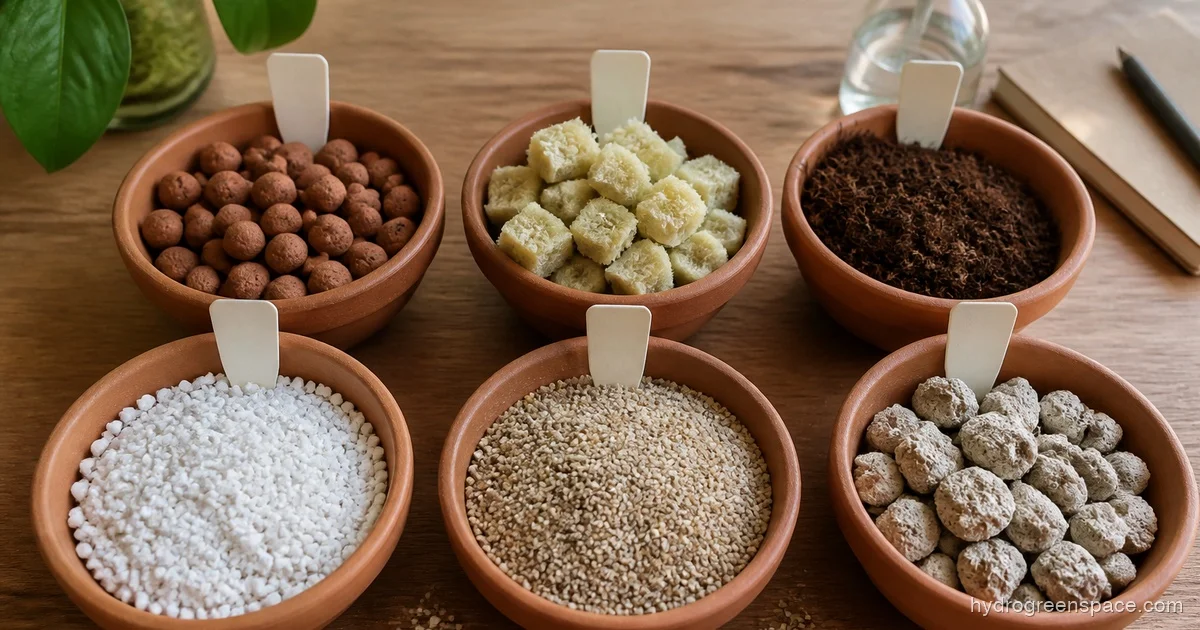
Picking the wrong growing medium is one of the most common reasons beginner hydroponic setups struggle right out of the gate. Not because the medium itself is bad, but because someone grabbed rockwool for a Kratky jar or clay pebbles for a wick system without checking whether the two were compatible. The best growing medium for your setup depends almost entirely on the system you’re running and what you’re growing. This article maps each of the six core media to the systems they actually work with, covers the cost and reusability numbers honestly, and ends with a simple decision framework so you can make the call without second-guessing yourself.
| Growing Medium | Best For | Reusable | Cost |
|---|---|---|---|
| Clay Pebbles (LECA) | DWC, Kratky, Ebb & Flow | Yes | $$ |
| Coco Coir | Drip, Ebb & Flow, Kratky | No | $ |
| Rockwool | Seed starting | No | $ |
| Rapid Rooter Plugs | Seed starting, propagation | No | $ |
What Growing Media Actually Does (and Why It Matters)
Before comparing options, it’s worth being clear on what a hydroponic substrate is doing. It’s not feeding your plants. It’s holding roots in position, managing how water and oxygen move around those roots, and in some cases, buffering the moisture between watering cycles. If you want a thorough look at the mechanics, the role of growing media in hydroponic systems breaks it down well.
The key properties to compare across any medium are:
- Water retention: how long does it hold moisture between watering cycles?
- Aeration: how much oxygen reaches the root zone?
- pH stability: does it affect your nutrient solution’s pH?
- Reusability: can you sterilize and reuse it, or is it single-use?
- Cost: upfront cost and cost-per-use over multiple grows
Every tradeoff in a hydroponic growing media comparison comes back to those five factors.
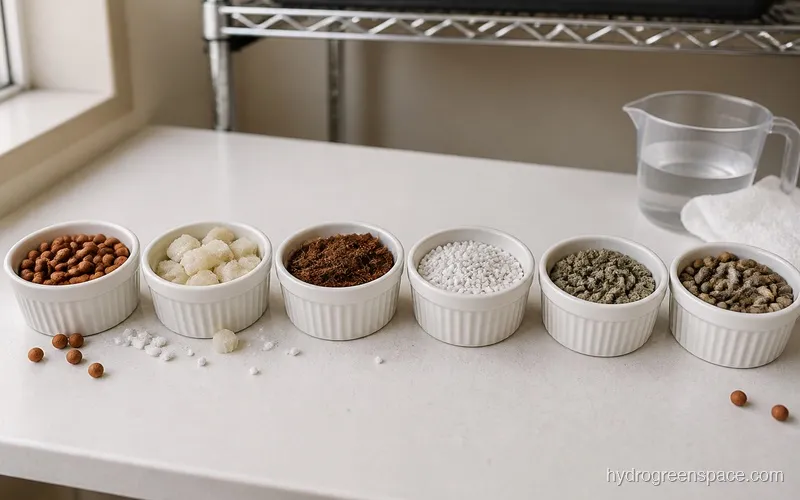
The Six Core Media: Side-by-Side
| Medium | Water Retention | Aeration | pH Effect | Reusable | Approx. Cost |
|---|---|---|---|---|---|
| Clay pebbles (LECA) | Low | Excellent | Neutral | Yes (many cycles) | $15–$30 for 10L |
| Rockwool | Medium-high | Good | Slightly alkaline | Limited (1–2 uses) | $15–$40/sheet or bag |
| Coco coir | Medium-high | Good | Slightly acidic | Partially (1–2 uses) | $10–$25/brick |
| Perlite | Low-medium | Excellent | Neutral | No (degrades) | $10–$20 for 8qt |
| Growstones | Medium | Very good | Neutral | Yes | $20–$35 for 9L |
| Peat pellets | High | Low-medium | Acidic | No | $8–$15 for 50 pellets |
A few things jump out from this table. Clay pebbles win on reusability by a wide margin. With proper sterilization between grows, a single bag can last years. Rockwool’s water retention and sterile structure make it excellent for seedlings and propagation, but its single-use nature adds up over time. Coco coir sits in the middle on almost everything, which is part of why it’s so popular with intermediate growers.
Tip: If you’re comparing coco coir and clay pebbles for the first time, this breakdown of coco coir in hydroponics and the clay pebbles vs LECA guide cover each in depth before you commit to a bag.
Matching Medium to System Type
Listing properties is useful, but what you actually need to know is: “I have a DWC bucket, so what do I put in my net pot?” Here’s the matrix.
Deep Water Culture (DWC)
Clay pebbles are the standard here, and for good reason. DWC suspends roots directly in oxygenated nutrient solution, so the medium only needs to anchor the plant and provide some initial support during germination. You don’t need high water retention because the roots are already sitting in water. LECA’s open structure lets roots push through easily and dries out fast enough between top-feeds to prevent rot near the crown. If you’re building your first DIY DWC system, a bag of clay pebbles is all you need.
Rockwool cubes are often used for starting seedlings before transplanting into DWC net pots. The cube goes into the net pot, you fill around it with clay pebbles, and the roots soon outgrow it into the reservoir below.
PowerGrow Systems Clay Pebbles (LECA) 10 lb
Pre-washed, pH-neutral clay pebbles that work across DWC, Kratky, and ebb-and-flow systems. Rinse and reuse indefinitely.
Best for: DWC, Kratky, ebb-and-flow
Check price on AmazonRinse thoroughly before first use to remove dust.
NFT (Nutrient Film Technique)
NFT channels run a thin film of nutrient solution continuously, so there’s almost no medium involved. Small net pots sit in the channel and the medium only needs to hold a seedling in place until roots reach the film. Rockwool cubes and peat pellets work well for this starter role. Clay pebbles work too. You’re not relying on the medium for any moisture management here.
VIVOSUN Rockwool Grow Cubes 1.6-Inch
28-plug sheet of 1.6-inch starter cubes from a trusted hydro brand. Use for seeds and cuttings before transplanting into net pots.
Best for: Seed starting, DWC and NFT transplants
Check price on AmazonSoak in pH 5.5 water for an hour before use.
Ebb and Flow (Flood and Drain)
This system floods a tray with nutrient solution on a timer, then drains it completely. The medium needs to do real work here: hold enough moisture to keep roots hydrated between floods, but drain completely so roots don’t sit in standing water. Clay pebbles and growstones both perform well. Coco coir is also a good fit because its medium-high retention bridges the gap between flood cycles, particularly for fruiting plants that are thirstier.
Avoid perlite alone in ebb and flow, because it floats, which creates a mess when the tray floods. If you want to use perlite, mix it with a heavier medium like clay pebbles (roughly 30% perlite, 70% pebbles) to get aeration benefits without the float problem. The perlite vs vermiculite guide covers mixing ratios and which applications each suits better.
Kratky Method (Passive DWC)
Kratky is passive: the jar or container is filled once (or topped off periodically) and there’s no air pump. The growing medium sits in a net pot above the water line, and as roots grow down into the solution, an air gap forms naturally above the waterline. Clay pebbles work fine, but coco coir is actually excellent here because its higher moisture retention supports the plant during the early stage when roots haven’t yet reached the reservoir. For Kratky-specific setup, the Kratky method guide walks through net pot sizing and fill levels. Avoid rockwool in Kratky jars, as it stays too wet and can cause crown rot in a passive system with no drainage cycle.
Drip Systems
Drip systems continuously or periodically drip nutrient solution from above. This is where coco coir shines most. It retains enough moisture to stay consistently damp between drip cycles, wicks evenly, and supports robust root development. Clay pebbles also work but need more frequent drip intervals because they drain so fast. Rockwool blocks are common in commercial drip operations, though they require proper pH adjustment before use (more on that in the rockwool preparation guide).
General Hydroponics CocoTek Coco Coir Brick
Hydro-specific coco coir with low sodium content that expands to about 2.5 gallons. Works best in drip and ebb-and-flow systems.
Best for: Drip systems, ebb-and-flow, Kratky
Check price on AmazonMix with 30% perlite for better aeration in drip systems.
Reusability and Real Cost Over Time
The upfront price of a growing medium tells you almost nothing about its actual cost. Here’s a more honest look:
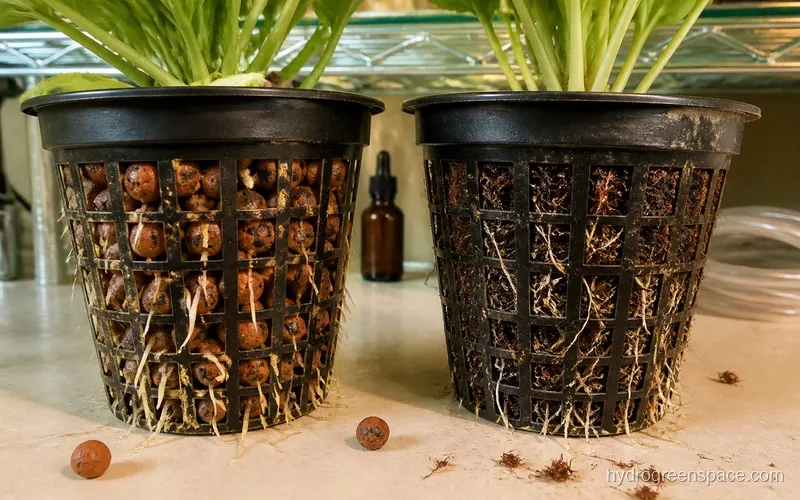
Clay pebbles (LECA) can be sterilized with a diluted hydrogen peroxide or bleach solution and reused indefinitely. A $25 bag that lasts 10 grows costs $2.50 per grow. That’s the most economical medium available over time.
Coco coir can technically be reused once or twice, but it compacts and loses structure after the first grow. Most home growers treat it as single-use, making the cost roughly $15–$25 per grow for a mid-size setup. It’s still a reasonable value because it’s cheap upfront and performs well.
Rockwool is effectively single-use for most home growers. It’s difficult to sterilize without damaging the fibers, and used rockwool poses disposal concerns because the fibers don’t break down. If you’re spending $30 per tray every grow, costs add up fast. That’s why many growers use rockwool for seed starting only (where you need just a few cubes) and switch to something reusable for the main grow. The rockwool alternatives guide covers what to use instead if you want to avoid it entirely.
Perlite is technically reusable but degrades into dust over multiple grows and isn’t worth the effort to clean. Treat it as disposable.
Peat pellets are single-use, biodegradable, and designed for propagation only. Don’t try to run a full grow in them.
Can You Mix Growing Media?
Yes, and sometimes you should. A few combinations that actually make sense:
- Clay pebbles + rockwool cube: standard DWC and NFT setup. The cube holds the seedling, pebbles fill the net pot.
- Coco coir + perlite (70/30): improves aeration in drip systems where pure coco can become compacted. Works well for fruiting plants.
- Clay pebbles + coco coir (layered): coco on the bottom of the net pot for moisture retention, pebbles on top to prevent algae and keep the crown dry.
What doesn’t work: mixing two high-retention media like coco and peat together. You end up with something that stays waterlogged and suffocates roots. If you’re adjusting your nutrient mix alongside your medium choice, the hydroponic feeding guide walks through how medium type affects your feed schedule and EC targets.
Beginner Decision Framework
If you’re just getting started and want a simple answer:
Running DWC or Kratky? Start with clay pebbles. They’re forgiving, reusable, and widely available at any garden center.
Running a drip system or ebb and flow? Use coco coir. It works with almost any plant, holds moisture well between cycles, and performs reliably without much fussing.
Starting seeds or cuttings? Use rockwool cubes or rapid rooters. They create the consistent, moist environment that germinating seeds and rooting cuttings need. Once roots are established, transplant into your main medium of choice. The Rapid Rooter vs rockwool comparison can help you decide between the two.
→Check price on Rapid Rooter PlugsOrganic alternative to rockwool for seed starting.Tight budget, long-term grower? Invest in clay pebbles now and reuse them. The upfront cost is higher than perlite or peat, but you’ll recover it within two or three grows.
If you’re making a lot of early mistakes and aren’t sure whether your medium is the issue, common beginner mistakes in hydroponics covers the most frequent culprits and how to tell them apart.
For a full overview of how each substrate fits into different system types and what to prioritize at each experience level, the growing media for hydroponics guide covers the complete range before you commit to a build.
Once you’ve chosen your medium and dialed in your system, the next variable that separates average results from great ones is how consistently you’re feeding your plants. Get that right and your medium choice becomes almost secondary.