Perlite vs Vermiculite: The Hydroponic Grower's Guide
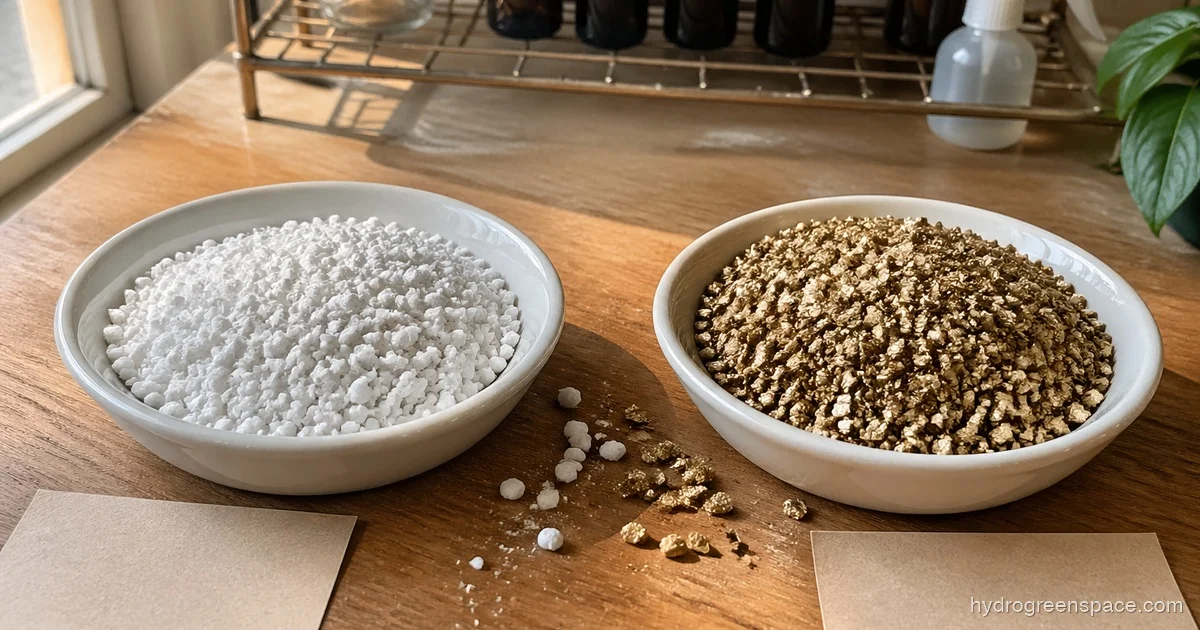
Perlite and vermiculite sit next to each other in every garden center, look vaguely similar in the bag, and get lumped together constantly in hydroponic forums. They are not interchangeable. One of them, used in the wrong system, will suffocate your roots or send nutrients crashing. Knowing the actual difference changes how you set up every grow.
Here is the practical breakdown: what each material does, which systems they belong in, and the exact scenarios where you mix them vs. use one alone.
What Perlite and Vermiculite Actually Are
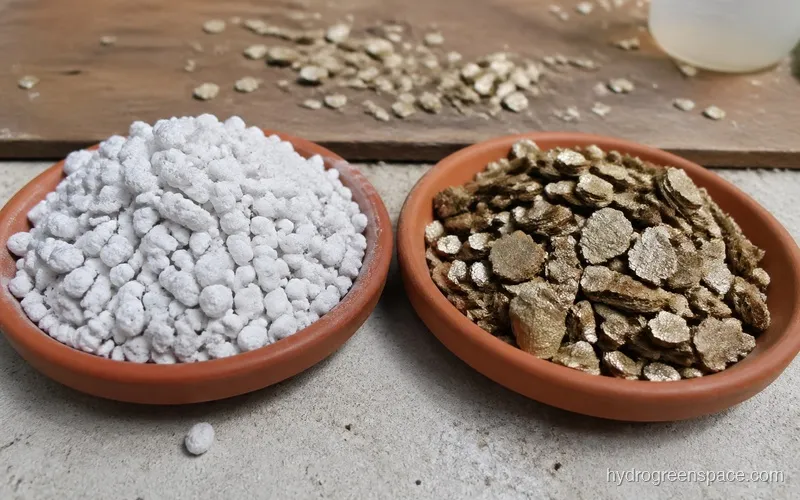
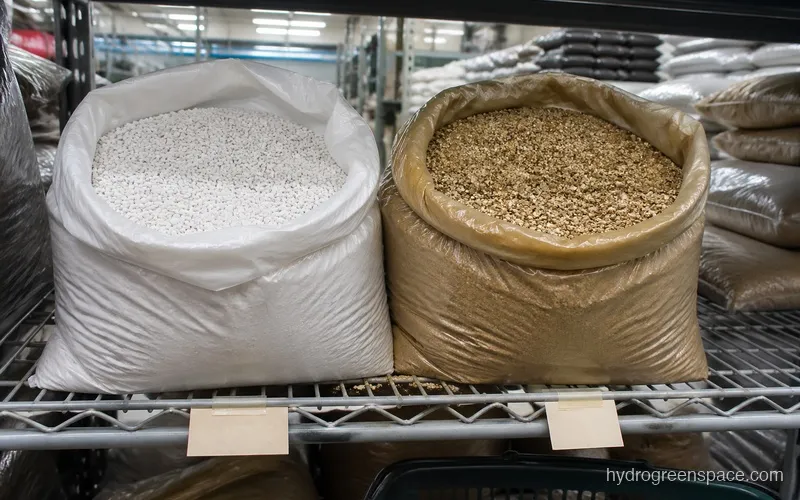
Perlite is volcanic glass that gets superheated until it expands into lightweight white pellets. The finished product is inert, pH-neutral, and almost completely non-absorbent. Water drains through it fast, air pockets form between the particles, and roots get continuous oxygen. That is the whole job.
Vermiculite starts as a natural mineral (a type of phyllosilicate) and gets expanded through the same heating process. But the result is completely different. Vermiculite is plate-like, spongy, and highly absorbent. It holds water and dissolved nutrients against root surfaces far longer than perlite will. It also has a measurable cation exchange capacity (CEC), which means it can temporarily hold positively charged nutrient ions like calcium, magnesium, and potassium and release them slowly.
That CEC distinction matters. A lot of newer growers read “CEC” and assume vermiculite is adding nutrients to the system. It is not. The CEC just means ions stick to the particle surface rather than draining away instantly. In a well-managed hydroponic system, this can help buffer nutrient swings slightly. In a poorly managed one, it can mask deficiencies because you think the plant has access to what the medium is actually holding back.
The Core Tradeoff: Drainage vs. Water Retention
Think of these two materials as being at opposite ends of a dial.
Perlite sits at maximum drainage, minimum retention. Vermiculite sits at maximum retention, lower drainage. Neither extreme is ideal for most hydroponic grows on its own.
Pure perlite in a drip or ebb-and-flow system dries out too fast between cycles unless your timer is dialed in tightly. Pure vermiculite holds so much water it limits root-zone oxygenation, leaving you with saturated, low-oxygen conditions that invite pythium and root rot.
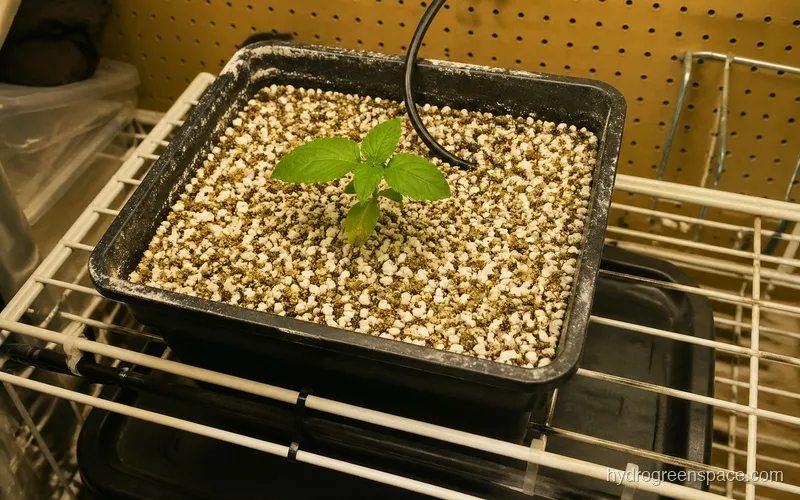
The 50/50 perlite-vermiculite mix that gets thrown around everywhere is not arbitrary. It sits in the middle of that dial, offering decent drainage with enough moisture retention to keep roots from drying between irrigation cycles. For systems that flood and drain or drip on a schedule, that balance is genuinely useful.
Warning: If you are running a system with long dry periods between irrigation cycles, lean toward more perlite (70/30 perlite-to-vermiculite or even straight perlite). Waterlogged roots in a low-oxygen medium will fail faster than roots that dry slightly between cycles.
Which System Gets Which Medium
Here is the system-by-system breakdown.
Deep Water Culture (DWC)
Skip both materials as your primary medium for DWC. Roots hang directly in oxygenated nutrient solution, so you do not need a medium to manage moisture. Net pots in DWC are typically filled with clay pebbles (LECA) or left mostly empty with a small rockwool cube holding the stem.
If you use perlite in a DWC net pot, it can fall through into the reservoir if pebbles are small, and it floats. Vermiculite is worse: it will cloud your reservoir and affect pH stability. For DWC builds, neither material belongs in the net pot beyond a seedling plug.
NFT (Nutrient Film Technique)
Same logic as DWC. NFT channels run a thin film of solution, and the roots mostly air-hang. Perlite has no place here. Vermiculite especially not, since it holds water in a system designed to minimize retention.
Drip Systems
This is where the 50/50 perlite-vermiculite mix earns its reputation. Drip systems irrigate on a schedule, and the medium sits in a pot or container between cycles. You want enough retention to keep roots from drying out, but enough drainage that water does not pool around the root zone.
The mix works well in drip system builds because it holds irrigation well between cycles without going anaerobic. If your drip cycles are frequent (every 1-2 hours), lean more perlite. Less frequent (every 4-6 hours), the 50/50 or 60/40 vermiculite-heavy mix helps buffer the dry periods.
Ebb and Flow (Flood and Drain)
Ebb and flow floods a grow tray and then drains completely. The medium needs to hold enough moisture to bridge the gap between floods, but drain completely when the pump stops.
Pure perlite drains well but dries too fast for longer flood intervals. A 50/50 mix gives you the bridging moisture without waterlogging roots during the flood phase. Standalone vermiculite will not drain fast enough when the tray empties, leaving wet pockets sitting in the medium long after the drain cycle finishes.
For 5-gallon bucket setups running ebb and flow or top-feed drip, perlite-dominant mixes (60-70% perlite) are a reliable choice for most plants.
Vermiculite for Seedlings, Perlite for Grow-Out
This is the part most growers figure out after killing a few seedling trays.
Vermiculite is genuinely good for germination. The high moisture retention keeps seeds from drying before the taproot emerges. A thin layer of vermiculite over seeds in a propagation tray holds humidity at the seed surface without compacting. For seedlings through their first 1-2 weeks, that retention works in your favor.
Once roots are established and you are moving into active vegetative growth, you want the balance to shift. Established roots need oxygen flow and drainage, not the nursery-mode moisture that vermiculite provides. Transition into more perlite-heavy media at transplant — whether that is straight perlite, a 50/50 mix, clay pebbles, or rockwool, depending on your system type.
Does Vermiculite Affect pH?
Yes, it can. Vermiculite is naturally slightly alkaline (pH around 7-7.5), and when you first introduce it to your system, it can nudge solution pH upward. The effect is usually small but can matter if your system runs tight tolerances.
Before using vermiculite for the first time, rinse it thoroughly and let it soak in pH-adjusted water (5.8-6.2) for a few hours. This pre-saturates it and reduces the initial pH drift when you fill your system.
Perlite is essentially pH-neutral (6.5-7.5 with minimal buffering). It does not require the same treatment, though rinsing any growing medium before use is good practice regardless.
Reusing Perlite and Vermiculite Between Grows
Perlite holds up well across multiple cycles. After a grow, flush it with hydrogen peroxide solution (3% diluted, 1 part H2O2 to 5 parts water), rinse thoroughly, and let it dry completely before reuse. Inspect for root debris and discard heavily matted chunks. Used perlite that is cleaned properly retains its structure and drainage properties for several more cycles. For information on how hydroponic growing media behaves across reuse cycles, this covers the full overview.
Vermiculite is trickier to reuse. Its plate-like structure compresses over time, and after a grow cycle, it will not retain the same structure or drainage performance. It also holds onto more organic material in its layers. You can sterilize it, but reuse past two cycles gets unreliable. Budget accordingly.
Cost Per Grow Cycle
Perlite runs roughly $10-18 for a 4-cubic-foot bag, which fills a lot of pots. For a small 4-plant drip setup with 1-gallon containers, a single bag lasts multiple grows if you clean and reuse.
Vermiculite is slightly more expensive at $12-20 for a similar volume, and since reuse is more limited, the effective per-cycle cost is higher.
For budget-friendly setups, perlite-only or a perlite-dominant mix minimizes ongoing cost. The per-cycle math shifts once you start factoring in yield differences from better moisture management, but for a beginner or someone testing their first few crops, straight perlite is a reasonable starting point.
Which One Should You Use?
Here is the decision framework:
- DWC or NFT: neither. Use clay pebbles or rockwool for your net pot/channel. Explore LECA vs perlite if you want to compare the options directly.
- Drip system: 50/50 perlite-vermiculite, or lean perlite-heavy (60-70%) if your irrigation runs frequently.
- Ebb and flow: 50/50 mix, or perlite-dominant if your flood intervals are long.
- Germination and seedlings: vermiculite-dominant (70/30) or straight vermiculite in propagation cells.
- Reuse priority: lean perlite. It holds up better across grows.
- Budget-conscious single-medium choice: perlite. It performs well across more system types and costs less per cycle over time.
The most common beginner mistake with growing media is treating this as a brand preference instead of a systems question. Match the medium to the system’s moisture cycle, not to what is on sale.
If you are thinking about other inorganic media options, rocks and aggregates used in hydroponics gives you a comparison against expanded clay and other alternatives. For growers moving toward organic or hybrid systems, coco coir as an alternative handles moisture retention differently than either of these materials and is worth understanding before you settle on a medium for your next build. For a full comparison of all the major substrate types and how they interact with different system designs, the growing media for hydroponics guide brings it all together.